Over 30 Countries to Participate in the Inaugural London Design Biennale


FREE City, the Mexico proposal. Image © FernandoRomeroEnterprisE

FREE City, the Mexico proposal. Image © FernandoRomeroEnterprisE

A total of 34 countries will participate in the inaugural London Design Biennale, according to a press release from the organization. Set to open on September 7th, the Biennale will center on the theme Utopia by Design, looking at “sustainability, migration, pollution, water and social equality,” among other issues. 

The theme was chosen in honor of the 500th anniversary of the publication of Thomas More’s “Utopia,” and the Biennale will be “the centerpiece” of the Somerset House’s year-long programme celebrating the text. “We chose the inaugural theme, Utopia by Design, to celebrate the 500th anniversary of the publication of  Thomas More’s classic, and to reflect on the rich history of the modernist design it inspired,” said Christopher Turner, the Director of the London Design Biennale. 

The Biennale “will present newly commissioned works in contemporary design, design-led innovation, creativity and research,” bringing together “designers, innovators and cultural bodies” to explore “the role of design in our collective futures.” A diverse group of countries from five continents are set to participate: Albania, Australia, Austria, Bahrain, Belgium, Chile, Croatia, France, Germany, Greece, India, Indonesia, Israel, Italy, Japan, Korea, Lebanon, Mexico, the Netherlands, Nigeria, Norway, Pakistan, Palestine, Poland, Portugal, Russia, Saudi Arabia, SouthAfrica, Sweden, Switzerland, Tunisia, Turkey, UK and the USA.


US installation. Image © CooperHewitt, Smithsonian Design Museum


The Cybersyn operations room, inspiration for the Chilean installation. Image © Gui Bonsiepe


Aid Drop Yaniv Kadosh_ACT Shenkar, Israel’s proposal. Image © Sasha Flit


'Monstera Deliciosa, Volume I', South Africa proposal. Image © Southern Guild


The Cybersyn operations room, inspiration for the Chilean installation. Image © Gui Bonsiepe

The Cybersyn operations room, inspiration for the Chilean installation. Image © Gui Bonsiepe

Among the projects that have already been unveiled is Mexican architect Fernando Romero’s “exploration of the potential of charters cities” through an installation that examines “the pyschologcial roots of Utopia from German designer Konstantin.” Nigeria’s project, meanwhile, will look at floating cities as a potential solution to flooding in the country, while Greece’s project will “contextualize current population movements.” 

The Chilean installation, “The Counterculture Room” by Fab Lab Santiago will consist of a 1:1 scale installation of a project carried out by the government of Salvador Allende in 1971, which aimed to create a real time communication network between workers and authorities.

Israel’s proposal looks at an option to parachute first aide into disaster zones, while Lebanon “will bring a lively depiction of Beirut’s street spirit” to the River Terrace by the Waterloo bridge. 

In addition, the UK will be represented by Edward Barber and Jay Osgerby and curated by the Victoria and Albert Museum. Other organizations that will represent their countries include: the Cooper Hewitt, Smithsonian Design Museum (USA), DAMnation (Belgium), German Design Council, Directorate-General for the Arts (Portugal), Moscow Design Museum (Russia), Triennale Design Museum (Italy), India Design Forum, Southern Guild (South Africa),and The Japan Foundation.


US installation. Image © CooperHewitt, Smithsonian Design Museum

US installation. Image © CooperHewitt, Smithsonian Design Museum


Aid Drop Yaniv Kadosh_ACT Shenkar, Israel’s proposal. Image © Sasha Flit

Aid Drop Yaniv Kadosh_ACT Shenkar, Israel’s proposal. Image © Sasha Flit

Japan's proposal. Image © Yasuhiro Suzuki

Japan's proposal. Image © Yasuhiro Suzuki

'Monstera Deliciosa, Volume I', South Africa proposal. Image © Southern Guild

'Monstera Deliciosa, Volume I', South Africa proposal. Image © Southern Guild

http://ift.tt/1pYJGBf

Mix Italian Dressing with Barbecue Sauce for the Perfect Marinade for Any Meat

You need just two things to make a marinade versatile enough for any meat, fish, or other food: a bottle of Italian salad dressing and a bottle of barbecue sauce.

Read more…


http://ift.tt/25uB5Xb

This $24 Meat Thermometer Buzzes Your Phone When Dinner’s Ready

You’ve got two choices when it comes to checking on the progress of your dinner in the oven. You could poke at it with a kitchen thermometer until you think it’s done, or you could sit on the couch and wait for your phone to tell you when it’s ready.

Read more…


http://ift.tt/22Ljziz

Photo

via DefineYourGrind http://ift.tt/1LXxVVl

Rochdale Canal, Manchester, Englandphoto via sharon

Rochdale Canal, Manchester, England

photo via sharon

http://ift.tt/1lsocZL

Learn How to Memorize Information With This Video From a World Memory Champion

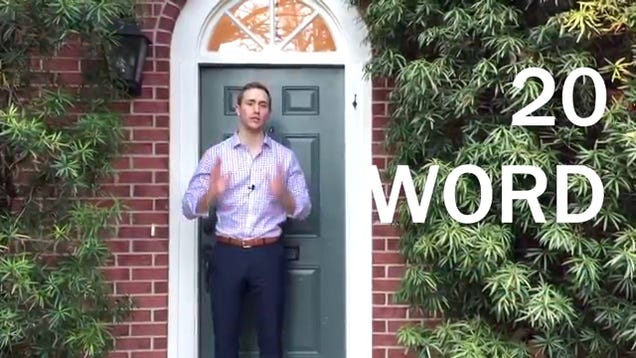
Can you memorize 20 random words in a couple of minutes? Yes, you can, after watching World Memory Championship winner Alex Mullen take you through a sample memory palace.

Read more…


http://ift.tt/1Skl5gt

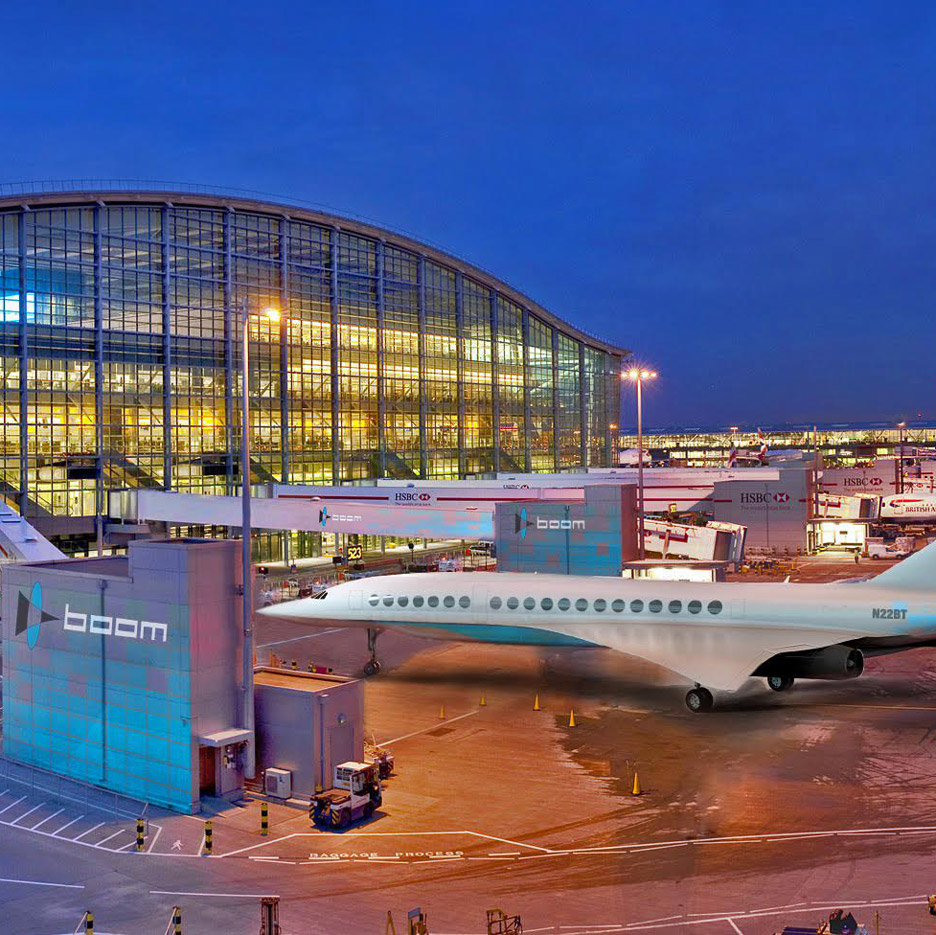
Supersonic Boom aircraft will be the “fastest passenger plane ever”


A group of aviation experts has unveiled plans for a supersonic speed plane named Boom, which is being developed as a replacement for Concorde. (more…)

http://ift.tt/1LXoO7f

Mosconi 3 Condominium / Frazzi Arquitectos


© Federico Kulekdjian


© Federico Kulekdjian


© Federico Kulekdjian


© Federico Kulekdjian

  • Construction Management: Matías Frazzi
  • Collaborators: Ariel Damiani, Javier Antruejo, José Frazzi, Mam
  • Structures: Claudio De Caroli
  • Electrical: Fabián González – Isem
  • Construction: Contratos Separados

© Federico Kulekdjian

© Federico Kulekdjian

From the architect. In our spatial searches, mosconi 3 adds to the concepts of open ground floor and permeability between urban and semi-private spaces, experimentation in the succession of spaces and boundaries within 3 functional units that make up the project.


Longitudinal Section AA

Longitudinal Section AA

Detail 2

Detail 2

Continuity with the street is through am open ground floor on which a series of boxes containing the housing units appear to float: a heavier box that encloses the first two identical floors, and another lighter box off from the previous one with a glazed light transition.


© Federico Kulekdjian

© Federico Kulekdjian

A prism clad in wood (services container) creates the ground floor access generating the boundary between the semi-public and semi-private space.

This same services box is the one that will articulate the different spaces of each floor.


© Federico Kulekdjian

© Federico Kulekdjian

The functional units feature a succession of terraces between environments, a spatial continuity that links the different urban spaces (courtyards) and generate cross ventilation and natural lighting.


© Federico Kulekdjian

© Federico Kulekdjian

The structure of the parasol system made of iron and wood, fixed and mobile, is what will limit the entry of light and heat, as well as security and privacy, as a transition element between urban-terrace-private space, which contributes to sustainability, and finishes the volume of the project, closing and intensifying the concrete boxes.


© Federico Kulekdjian

© Federico Kulekdjian

Drawing

Drawing

© Federico Kulekdjian

© Federico Kulekdjian

http://ift.tt/22LmJTj