“There is Much More at Stake Than Simply Being In or Out” – Rem Koolhaas Speaks Out Over a Potential EU ‘Brexit’


EU Barcode (OMA*AMO). Image © flickr user eager. Licensed under CC BY 2.0.

EU Barcode (OMA*AMO). Image © flickr user eager. Licensed under CC BY 2.0.

In a recent interview with the BBCRem Koolhaas (OMA) has spoken out against the campaign seeking to remove the United Kingdom from the European Union, upon which the British people will vote in a referendum next week. Reflecting on his time spent at London’s Architectural Association (AA) in the 1960s and ’70s, Koolhaas fears that advocates for withdrawal may be looking at the past through rose-colored glasses.

If you look at the arguments to leave you can see this is a movement of people who want to fundamentally change England back into the way it supposedly was before.


Rem Koolhaas. Image Courtesy of flikcr user Strelka. Licensed under CC BY 2.0.

Rem Koolhaas. Image Courtesy of flikcr user Strelka. Licensed under CC BY 2.0.

Instead, Koolhaas explains, before entering the EU in 1973 the United Kingdom was a “world of pea soup and a complete absence of coffee.” Joining the EU injected both the AA and the country as a whole with a rush of new cultures. “The school was unbelievably English,” he continued. When he returned around eight years later, the school was staffed by people from Germany, Czechoslovakia, and France. “It had completely transformed. I think that that moment of transformation was something that on a bigger scale happened to England as a whole. It opened up itself, helping to modernize the whole of English mentality, the whole of English civilization.”

A long time supporter of the European Union (EU), Koolhaas also has professional ties to the situation and the ideas behind what is at stake. In the early 2000s the research division of his firm, AMO, worked extensively with the EU to develop new identity and branding strategies. These collaborations resulted in a new “Barcode Flag,” which featured a complex arrangement of colors from the flags of each member state and a set of panoramic murals expressing the evolution of the continent. Trusting in the enormous potential of the union, OMA*AMO had hoped the project would result in an EU that would be seen as “bold, explicit, popular.”

There is much more at stake, I think, than simply being in or out.


EU Barcode. Image © OMA*AMO

EU Barcode. Image © OMA*AMO

http://ift.tt/1V1Otcy

Polycarbonate Cabin / Alejandro Soffia


© Juan Durán Sierralta

© Juan Durán Sierralta


© Juan Durán Sierralta


© Juan Durán Sierralta


© Juan Durán Sierralta


© Juan Durán Sierralta

  • Budget: U$365 / sqm2

© Juan Durán Sierralta

© Juan Durán Sierralta

In 1953 Le Corbusier wrote a letter to the Chilean Architects, and was sent through Emilio Duhart, a very important Chilean Architect that was drawing for him the buildings that he was doing in that moment in India. In this letter he emphasize the need on taking care of people while developing a design process. He said that “in that moment academic ideas where left behind, and the smallest measurements, the shorter distances or the smallest built spaces, become precious as a glass of water in the desert”. 

Since I was in the School of Architecture, I faced  little projects, like cabins, vacation homes, etc. But they they were not just small in terms of area, they had also a small budget. So my first professional challenges where to manage doing good design with a few money. The big problem afterwards was that I kept on receiving this kind of assignments, because in some way or the other, I had specialized on doing ‘low cost design’. 


© Juan Durán Sierralta

© Juan Durán Sierralta

© Juan Durán Sierralta

© Juan Durán Sierralta

So I started developing different strategies for reaching this goal of good design. I went on survey for prefabricated architecture, thinking of the technical possibilities of building with more control, faster, and cheaper. And I had some interesting experiences as my SIP Panel House in Santo Domingo, Chile. But prefabrication techniques require some industrial processes, related to commercial markets, that have a limit if you want to go down on the building cost. So then I tried working on ‘low tech’ design. In a country like Chile, you usually find precarious contexts were buildings rise. So is easy then to get in touch with local precarious techniques and workforce. And this precariousness is very well related to design in terms of the capacity of solving architecture problems with less time, local materials and little technological knowledge. This was the strategy that I used in my ‘Hostal Ritoque” in Quintero, Chile.


Elevation / Section

Elevation / Section

Diagram

Diagram

Model

Model

This Polycarbonate Cabin is a small house for rent, just beside another bigger house for holydays in the coast of Guanaqueros village. The owner lives on renting this two houses for people that are left outside the main beach resorts of the country. It’s a small scale personal enterprise to offer a place to stay and enjoy the beach, so in the beginning there was a very tight budget to build, just U$365 / sqm. So in this case I tried again working with low tech design, working with just one carpenter, with the techniques he knew, assimilating all this conditions in the beginning of the design process.


© Juan Durán Sierralta

© Juan Durán Sierralta

But there was another problem. The site had already a built house, and even a pre-existing room beside of 9 sqm. So there was a tight area also to build this second holiday house, and that meant lack of sunlight. That’s why I used two design operations aiming to solve this problem. The first was mismatching the walls of both rooms to create a light patio within the pre-existing room. And the second operation was to build with polycarbonate, the large wall that separate both house were it develops an 90 cm wide corridor. With this two operations we could give the house a very tight relation with the site, and a lot of sunlight for this Cabin.


© Juan Durán Sierralta

© Juan Durán Sierralta

This polycarbonate cabin is named like that because it has a long polycarbonate wall on the setting sun side. This white wall can reflect light and be translucent. As was told before, this little cabin is located in a site that has already a house. Being so close to each other, this polycarbonate wall gives light both the inside of the cabin, and the walkway between the houses. The structural system is done with standard boards of raw pine wood. All the house was built just by one craftsmen within 2 months.


© Juan Durán Sierralta

© Juan Durán Sierralta


© Juan Durán Sierralta

© Juan Durán Sierralta

http://ift.tt/1UnuJ5V

This Week’s Most Popular Posts: June 10th to 17th

This week Apple showed off the latest updates to their operating systems while E3 gave us glimpse of new consoles and games. Meanwhile on terra firma, we learned about flirting with finesse, what bankruptcy actually means, and compared popular meditation apps. I know I’ll be putting those apps to use this weekend.

Read more…

http://ift.tt/21qOonn

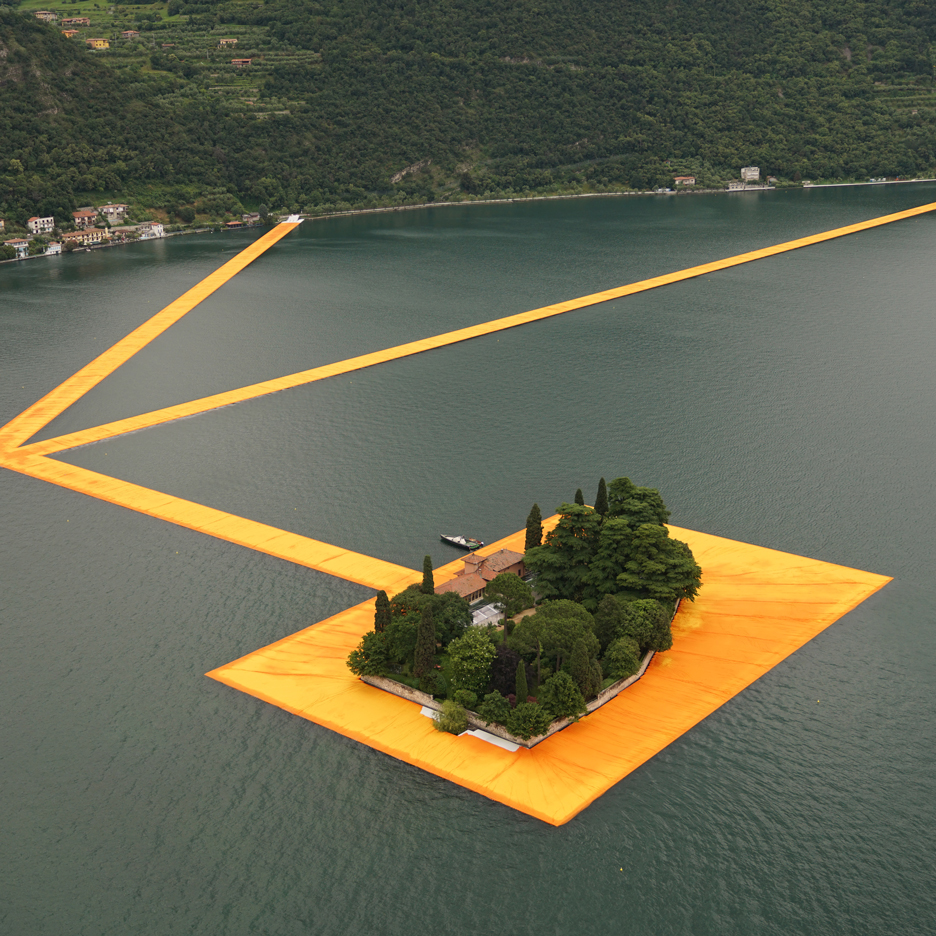
Christo’s Floating Piers stretch out across an Italian lake


Three kilometres of saffron-coloured pathways temporarily connect the shore of Italy‘s Lake Iseo to islands at its centre in this installation by Bulgarian artist Christo (+ slideshow). (more…)

http://ift.tt/1UDZTDm

Don’t Forget to Include the Cost of Tipping in Your Wedding Budget

When planning a wedding, most people are prepared for big costs like the venue, caterer, and photographer. One area that often gets overlooked, though, is tipping. And it can add up.

Read more…

http://ift.tt/1UdD0qI

West 8 Reveal Plans for Sculpture Park at Duke University


Courtesy of West 8

Courtesy of West 8

Urban design and landscape firm West 8 has released images of a newly designed sculpture park for Duke University. To be known as Three Valleys Sculpture Park, the 140 acre design will be set within the sprawling Duke Forest, alongside the Olmstead Brothers’ designed Campus Drive, and will help to strengthen the link between Duke’s east and west campuses.


Courtesy of West 8

Courtesy of West 8

Central to the park’s design is its interaction with the hub-and-spoke plan of the Nasher Museum of Art, designed by Rafael Viñoly Architects. The park will surround the building, transforming existing parking lanes into green space and creating new entrances into the 5 glazed corners of the museum’s atrium. Gently curving pathways will bring pedestrians to terrain for sculpture as well as a new vantage point from which to view the museum.


Courtesy of West 8

Courtesy of West 8

Further along the path, the three valleys from which the park gets its name will be given new bridges to replace outdated culvert systems, creating a more practical stream ecology and giving students and visitors the ability to enjoy the landscape for the first time. West 8’s vision plan also includes improvements to Campus Drive, museum gardens and plazas, a sculpture slope and a series of walkways.

Other current West 8 projects include a collaboration with SHoP Architects for Philadelphia’s Schuylkill Yards and a revitalization of the Silverton district in West London.


Courtesy of West 8

Courtesy of West 8

Courtesy of West 8

Courtesy of West 8

Courtesy of West 8

Courtesy of West 8

http://ift.tt/23glTKO

Hello Hackerspace! This is your Friday Open Thread

Happy Friday! For you living in Boston, Happy Bunker Hill Day and for those you you in Iceland, Happy Icelandic National Day! For the rest of you, it’s the end of the week and here on Hackerspace, the community run forum of lifehacker, it’s time to sit back, relax and hang out.

Read more…

http://ift.tt/1tAvqAA

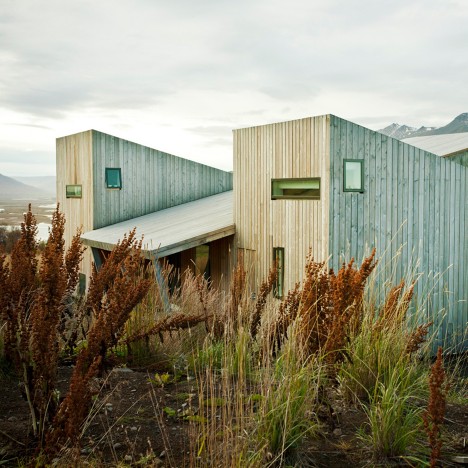
Today we like: Icelandic architecture and design

Villa Lola by Arkis

Today is Icelandic Independence Day and we’re celebrating by revisiting some of the country‘s best architecture and design projects on Dezeen!

Examples include a wooden cabin split into asymmetric apartments (pictured), and playground equipment made from rubbish washed up onto the shores of the island nation. See more Icelandic architecture and design »

http://ift.tt/1XZqsKl

Today’s Best Deals: Aukey Wall and Car Chargers, LED Bulbs, and More