When I used to teach graduate students in furniture design, I would assign them an abstract problem that required them to sit in the studio and draw through free association over a long period of time without getting up from their seats. After about 45 minutes, most students would start to squirm and get uncomfortable. If they hadn’t been in my class they would likely have stood up, checked their e-mail, gone online, or found other distractions. But I encouraged them to push through the discomfort because, after many years of running the same exercise, I had learned that right after the “squiggly” stage, something incredible happens. Often, a whole new direction for their work would emerge—something completely unfamiliar and unexpected.
What was it about those uncomfortable moments that unleashed their creativity? Was it something magical or mysterious? Hardly. I believe it was boredom, pure and simple—something all of us (and artists and designers in particular) need more of in our lives.
When curious minds are given enough time, space, and freedom, the imagination has room to roam. We all harbor imagination, but most adults are trained to rein it in—so much so that it falls asleep. So we need to give it time and space to reawaken.
In our digitally determined lives, when every moment is accounted for and distraction is just an iPhone swipe away, where do we find space for imagination to flourish and for ideas to percolate? At a time when our culture celebrates disruptive, inventive thinking, we need to work harder—by actually doing nothing—to foster breakthrough moments that lead us in new directions, create improved systems and structures, and enhance the quality of our everyday lives.
In today’s world, boredom is almost a bad word—a concept banished from our lives by relentless work schedules and nonstop entertainment options. Distraction is easier than ever to find and harder than ever to resist. But until we push back and avoid getting sucked into the void of mindless media consumption, we will discourage our overextended minds from opening up to allow for creativity and discovery. Being creative hurts. It strains our brains. It requires hard work. Being creative isn’t simply opening a spigot and watching the ideas gush out. For a lot of us it’s more like opening a vein. Artists and designers make discoveries in unexpected ways. A lot of people looking to innovate or discover new knowledge ask a specific question or pose a problem and labor to find answers. But artists and designers have found that true breakthroughs result when they drive the inquiry down a new path. They question the question. And willingly stumble into the unknown.
This reversal of a more standard methodology is at the heart of art and design thinking. I call it “critical making” rather than “design thinking”—a type of innovation and knowledge creation that emerges from the realm between thinking and making. Through their work, artists and designers hone the skill of radical questioning and develop their perception, imagination, and dexterity. They show that making can be a powerful new form of thinking—a way to conceptualize new ideas in expansive, elastic, nonlinear ways and to see beyond traditional perceptual and cognitive divisions. They recognize invisible patterns, relationships, and forms of order. They adroitly deconstruct, combine, and recombine concepts, materials, and methods. They comfortably thrive amid uncertainty.
And they value both process and failure. This sharpens intuition, empathy, and understanding. To them, failure is not a stopping point, but rather a call to reassess, to dig deeper, to come at a question from a new perspective. When an idea fails at first, the materials themselves can suggest alternate paths. And the processes can take them in new directions. With these insights and abilities, artists, and designers humanize questions and answers, problems, and solutions. More than most, they understand “user-centered experience”—or simply, human experience.
When I would discuss the sequenced drawing exercise with my students afterward, we would conclude that when creative people are bored and uncomfortable, their imaginations route them into completely new territory. But students also said that following their imaginations into these unknown spaces could be unsettling. Our natural inclination is to pull back and stay grounded in what we know. But the push through can be that small “aha,” something that our alumni still reference as what most acutely taught them how to sustain and encourage creative breakthroughs.
Over years of teaching, I have watched students become less capable of sustaining that bored and uncomfortable moment for prolonged periods of time. As the rhythm of our day-to-day lives has changed and as technology “interferences” increase, we are more likely to check our Instagram accounts or sneak in a bit of online shopping rather than sitting through willful boredom.
Recent signs of people opting to put themselves through “technology detox” offer hope for a resurgence of boredom. The rising mindfulness movement and an uptick in meditation practice, even in the boardroom, both point to an increasing awareness of what human minds need in order to function best.
Someday, when you reflect back on your life, will you remember the time you spent on Facebook or surfing the web? Or will you think about the time when a creative spark fired up a new idea? Will you have filled your time with observing other people’s content? Or will you have actively participated in creating your own?
Perhaps it’s time to pay more attention to allowing ourselves not to pay attention. Maybe now is the perfect moment to bring back boredom.
Rosanne Somerson is the president of the Rhode Island School of Design. She founded the school’s furniture design department in 1995 and continues to maintain her own studio, where she designs and makes furniture.
When making meatballs, you want small pieces of garlic to be evenly distributed throughout the ball, otherwise you could end up chomping down on big, raw chunks. You could chop the allium into tiny little pieces, or you could just grate it in.
Index funds are an easy way to get started with investing. We’re fans of an easy, “set and forget” portfolio that you can set up once and benefit from over time, and index funds are the backbone of this kind of investing. When it comes to picking one out, Consumer Reports suggests a few traits to consider.
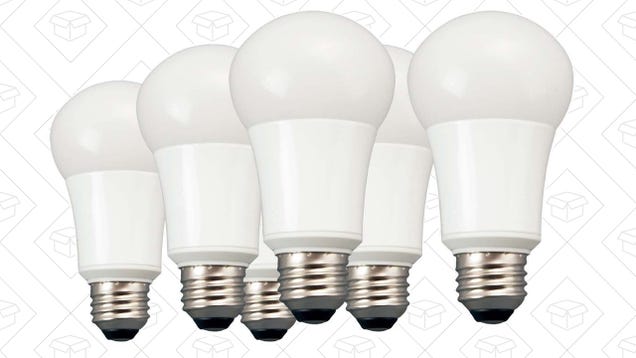
If you’re ready to take the plunge into LED lighting, this 6-pack of higly-rated TCP soft white (2700K) bulbs is down to just $18 on Amazon right now, one of the best per-bulb prices we’ve ever seen. They aren’t dimmable, so you won’t want to put them in certain fixtures, but it’s a great bulk pack for filling out ceiling lights and lamps throughout your house.
Google is your portal to everything out there on the World Wide Web…but also your portal to more and more of your personal stuff, from the location of your phone to the location of your Amazon delivery. If you’re signed into the Google search page, and you use other Google services, here are five search tricks worth knowing.
Location: Av. Dorrego 2133, C1414CLD CABA, Argentina
Arquitectas Autoras: Irene Joselevich, Ana Rascovsky
Equipo De Proyecto: Arq. Fernanda Torres, Arq. Florencia Rissotti, Arq. Inés Toscano, Arq. Ayelén Barreto, Arq. Paula Mariasch, Louise de Sagazan, Carmen de Cordoue, Celia Hofmann, Felicitas Navia
Area: 1200.0 sqm
Project Year: 2015
Empresa Constructora: BRACAR SRL
Asesores: Iluminación Arq. Pablo Pizarro, Cálculo estructural Ing. Daniel Paco
Frente al pedido de diseñar una tienda departamental lo primero en lo que pensamos fue en el recorrido que hace el cliente. Que ve, como se siente, que distancia camina, que paisaje lo rodea. Que elementos hacen que la experiencia sea divertida, no repetitiva, atrayente.
Dado las dimensiones del galpón, nuestra intervención funciona como un paisaje interior, haciendo que la circulación dentro de un edificio de 70 m de largo, con un primer piso y un subsuelo, sea fluida y sin perder la sorpresa.
Planta
Corte
Diagrama
Repensando el objeto-escalera y cargándolo de funciones se generó un sistema de tarimas rodeadas de vegetación que funcionan como acceso al primer piso, generando espacios de exhibición de producto, alojando un café por debajo, un depósito, y una serie de estanterías y bancos en su recorrido.
La fachada se trabajó como una piel metálica y continua, que envuelve la construcción existente y mediante un pliegue genera el acceso y la vidriera.
Cada tipo de producto exigió la creación de un tipo de equipamiento específico que responde no solo a la mejor manera de exhibición del mismo, sino a colaborar en la composición general de un paseo diverso y heterogéneo. Para esto generamos un catálogo extenso de displays (estanterias,walk-ins,mesas,cubos,tarimas,percheros sueltos,probadores,cajas) y con variadas materialidades (madera,hierro,chapa,osb,laqueados,vidrio).
Los sectores de la planta se articulan a través de esta serie de equipamientos dispuestos como islas que generan subespacios, cortan largas perspectivas y crean atmosferas diferenciadas para los distintos productos y marcas.