Go Home Bay Cabin / Ian MacDonald


Go Home Bay Cabin  / Ian MacDonald


Go Home Bay Cabin  / Ian MacDonald


Go Home Bay Cabin  / Ian MacDonald


Go Home Bay Cabin  / Ian MacDonald

  • Architects: Ian MacDonald
  • Location: Ontario, Canada
  • Architect In Charge: Ian MacDonald
  • Design Team: Sam Laffin
  • Project Year: 2013
  • Structural: Blackwell Partnership Inc.; David Bowick
  • Builder: Darlington Construction
  • Millwork: Kobi’s Cabinets
  • Client: Ian MacDonald


From the architect. The four-season family cabin by architect Ian MacDonald is a deeply thoughtful response to the cultural heritage landscape of Go Home Bay, an enclave of Ontario’s Georgian Bay archipelago. The area was once immortalized by the Group of Seven and abounds with natural beauty. Rocky islands are topped by scraggly white pines shaped by the west winds. However, the landscape is also increasingly vulnerable to development. Over-scaled structures have become evermore commonplace, dominating the context, dwarfing the surroundings and spoiling one’s experience of the natural realm.


Floor Plan

Floor Plan

This cabin is an important, positive alternative to the prevailing trends. It uses contemporary language while embodying the distinguishing and modest characteristics of the vernacular cottages that have unobtrusively dotted the area since the 1890s. The amber-hued interiors, framed in rough-sawn fir, are efficient, compact and distilled down to the necessary essentials for peaceful weekends outside of the city. The simplicity belies a profound connection to the surrounding nature that is at once strong and sensitive, stirring and peaceful.


MacDonald strategically sited the structure to respect the beautiful shoreline, and to create a sense of anticipation for visitors. When visitors approach by water (it is 16-miles from the nearest dock, with no in-road access), the property’s mature trees fragment their views of the low-slung volume. It is only as visitors climb up from the dock through a juniper meadow, surrounded by tall white pines, that they see the cottage clearly as a charcoal-coloured cedar shingle box. The lightness on the land is instantly evident in the construction: MacDonald cantilevered the form off concrete piers so that it floats over a whaleback outcropping of granite.


Elevation

Elevation

Elevation

Elevation

He carefully sequenced interior spaces to underscore a rich connection to the landscape. Entering into a simple vestibule from the east, visitors’ views are largely withheld to delay and therefore intensify their effect. Visitors then pass into the long kitchen, which doubles as a corridor along the back of the cabin, connecting the principal areas and ending in a cozy sitting cove complete with a woodstove and views to the extensive forest behind. This space serves as counterpoint to the big water views in the adjacent main room where some 42 linear feet of windows look west toward the open Go Home Bay channel. Here, the ground plane drops out of view, and the short middle ground is lost. This obscuring engages the visitor’s imagination, resulting in a more grand perception of the scale of the landscape, and defining one’s primary memory of the place.


Sustainable features lighten the building’s footprint. The main construction materials were coordinated on a single barge to reduce the embodied energy of transportation. Furthermore, MacDonald drew on his knowledge of the site’s weather patterns — the inner bay locale can be stiflingly hot in the summer due to a lack of airflow — to improve passive thermal comfort. The irrigated green roof ameliorates cooling, sunshades integrated with the envelope reduce heat gain, and the main space, capped by operable clerestories, transforms into a screened-in porch with lift and slide doors to improve cross ventilation. This porosity in the architecture helps the inhabitants mark the changes in the days, the seasons and the climate, ultimately forging a more profound connection to the land. 



http://ift.tt/21ox3LP

All the Hidden, Awesome Stuff in iOS 10 Apple Didn’t Announce

iOS updates aren’t nearly as exciting as they used to be, so the best stuff is often the tiny, little features that slip through the keynote cracks but make your iPhone or iPad work much better.. Case in point, some of the hidden stuff in early iOS 10 betas is way more exciting than what Apple actually announced
this week.

Read more…

http://ift.tt/1Yu98f6

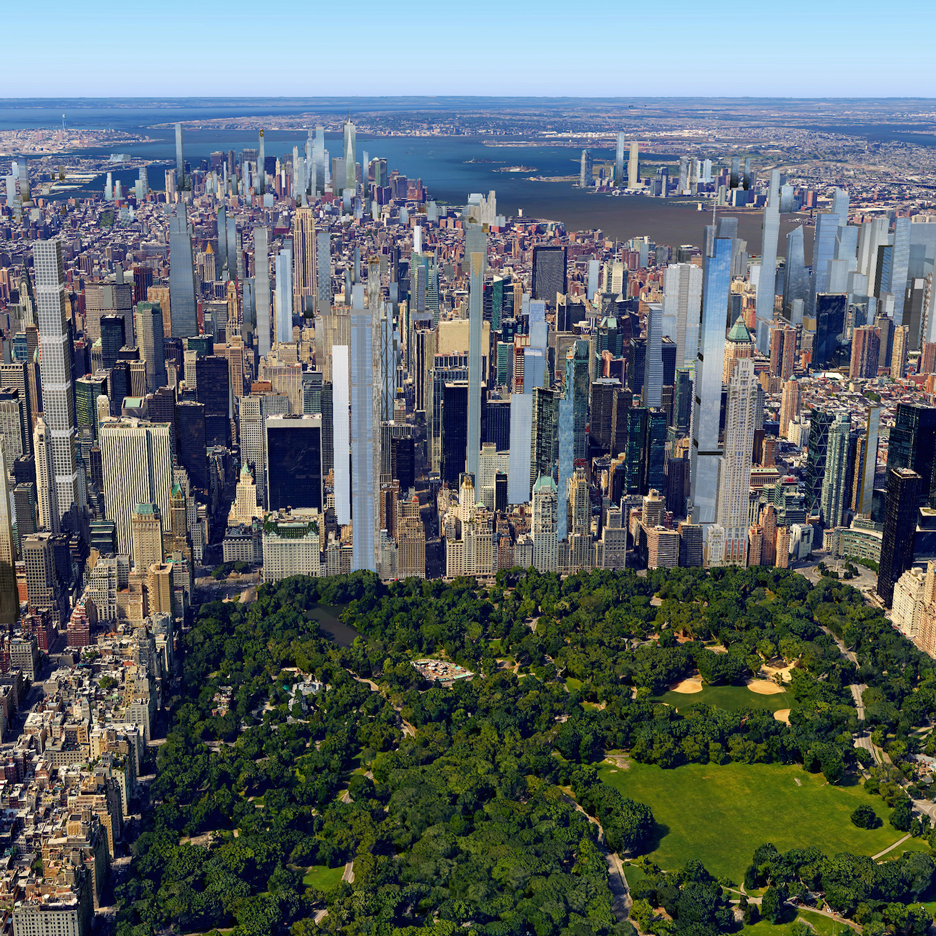
New York’s 2020 skyline shown in new visualisations


These visualisations show the swathe of skyscrapers set to spring up across New York by 2020. (more…)

http://ift.tt/1Q8ehaX

Dezeen Mail issue 310 features this week’s best stories and discussions

The Symmetric Bath by thelivinglenses by thelivinglenses

The hidden gem under The Alcazar of Seville. This place is a cool underground chamber for the high dynasty to bath when the blazing summer sun came out.

via 500px http://ift.tt/1UAQuwn

Adjaye Associates chosen for Latvian Museum of Contemporary Art


David Adjaye‘s firm has been selected to design a major new art museum in Riga, Latvia (+ slideshow).  (more…)

http://ift.tt/1PwdhI1

THE TURRETS of BRUGGE… by magdaindigo by magdaindigo

Tour of Europe 04 2016

Day 12

The Meebrug is the oldest bridge in Bruges.
The first mention of the Meebrug dates from 1290. The current name was only first used in 1440.
In 1390 the original wooden bridge was replaced by a stone copy built by the famous bridge builder Bruges Jan van Oudenaarde .
The Meebrug is a simple arch bridge paved with cobblestones.

The turrets, ahhhh how people of Brugge love them, put them everywhere, but here, on Brugse Vrije, the 16th century rear facade of the manor on the ‘Groenerei’, they wow you.

I wish you a day full of beauty and thank you for your visit, Magda, (*_*)

For more of my other work visit here: http://ift.tt/1pWUPma
Please do not use this image on websites, blogs or any other media without my explicit permission. © All rights reserved

via 500px http://ift.tt/1rs3yMP

Adjaye Associates Selected to Design Latvian Museum of Contemporary Art


© Malcolm Reading Consultants

© Malcolm Reading Consultants

The Latvian Museum of Contemporary Art Foundation has selected Adjaye Associates to lead the design for a new contemporary art museum in downtown Riga. Selected from a pool of 7 finalists including wHY and Lahdelma & Mahlamäki, the winning design features a strongly animated roof geometry designed to pull soft northern light into each of the gallery spaces.

Adjaye Associates, working with local firm AB3D, envisioned the museum as a social incubator, a welcoming and porous space where people could be brought together through a variety of formal and spontaneous interactions. The jury found that the proposal’s distinctive silhouette would give the museum a strong presence within its context of planned commercial and residential developments, and that is orientation and materiality showed a keen awareness of the vernacular and cultural contexts.


© Malcolm Reading Consultants

© Malcolm Reading Consultants

“The winning proposal is a beautiful and poetic response to the challenge of the design brief but above all it is specific to Riga,” said Jury Chair David Bickle. “The team thoroughly understood the effect of soft northern light in experiencing and creating art and this insight was the inspiration for their scheme. Through the use of wood and form, the concept design subtly references Latvian architecture, proposing a very animated structure with a lively entrance that will enable the museum to create architectural presence in a new and emerging district. The design is very welcoming and porous – it has the potential to be loved.”

The Latvian Museum of Contemporary Art will be located in a new business and leisure center of Riga known as New Hanza City (NHC), a 24.5 hectare development on the site of the city’s former railway goods station. The project will be joined by the headquarters of ABLV Bank, a hotel, conference center, exclusive apartment district, a pre-school, and urban gardens for recreation. The new museum will cost rough €30 million and will house a unique collection spanning art and visual culture in Latvia and the Baltic Sea region from the 1960s to the present day.

David Adjaye, Principal of Adjaye Associates, said about the project:

“I am honoured to have been selected for this ambitious and much-needed project. This museum will be a beacon that both celebrates Latvia’s incredible artistic legacy and meaningfully links the country to the international art community. The entire process – from collaborating with AB3D to cultivate a design that both understands and enhances its context, to the transparent nature of the competition – has been a pleasure, and stands as a testament to Latvia’s profound commitment to the importance of contemporary art to its cultural life.”

The jury also made special acknowledgements to Henning Larsen Architects and Sauerbruch Hutton, awarding an honorable mention to Sauerbruch Hutton’s entry for its “modest beauty and anti-icon rationale.”

The museum is scheduled to open in November 2021. 

http://ift.tt/25ZZ6YU