Month: June 2016
Refurbishment of the Pavilion Dufour Château De Versailles / Dominique Perrault Architecte

© Andre Morin
- Architects: Dominique Perrault Architecte
- Location: Palace of Versailles, Place d’Armes, 78000 Versailles, France
- Area: 32300.0 ft2
- Photographs: Andre Morin, Courtesy of Dominique ADAGP, Christian Milet, Model, Patrick Tourneboeuf
- Artistic Direction, Chandeliers And Furniture Design: Gaëlle Lauriot-Prévost Design
- Civil Engineering: Khephren Ingénierie S.A.
- Mep: INEX SAS Ingénierie
- Acoustics And Lighting: Jean-Paul Lamoureux
- Security / Ada: AADT / Folacci
- Ergonmist: Thomas Vallette FCBA
- Economist: RPO
© Andre Morin
The re-development of the pavilion dufour and the old Wing creates two new public spaces in the château de versailles. the old administrative offices have now made way for a new reception area between the cour royale (royal courtyard) and the cour des princes (princes’ courtyard), as well as a large staircase leading to the gardens. visitors to the palace are invited to follow a loop, just like in most of the world’s greatest museums.
© Andre Morin
The feeling of “narrowness” has now disappeared: by digging a trench under the buildings and the cour des princes, the redevelopment opens up new spaces on the ground level and creates larger volumes on the garden level.
Section
The new reception area, entirely dedicated to enhancing visitor experience, starts in the Galerie des lustres (chandeliers Gallery) on the ground floor of the old Wing. this high-ceilinged space, which opens on to the cour royale and the cour des princes, is the first room visitors see as they make their way into the palace. the versailles they discover – draped in metal, elegant and modern – echoes the stone and woodwork of the historic buildings.
© Christian Milet
The gallery allows immediate access to the cour royale, where the visit begins. before they exit, visitors follow a lower path on the garden level, underneath the cour des princes, which takes them to a string of new rooms including a bookstore in refurbished tanks, restrooms, a checkroom and a cloakroom.
© Christian Milet
The main attraction on this level is the natural light brought into the new space by a gold-colored glass corridor. acting like a large prism, the glass panels reveal the facades of the old Wing and the wide marble staircase which connects the inside to the outside, and the château to its gardens.
Section
The loop begins and ends with the reception area and the marble staircase alongside its golden prism: The two new spaces are thus connected like the clasp on a necklace.
© Patrick Tourneboeuf
the pavilion dufour and the old Wing are revived on their upper levels as well as their foundations. on the se- cond floor, a new restaurant and adjoining tea rooms in gold and listed wood paneling, now welcome visitors. finally, the third floor now hosts a new auditorium, covered in wood sheathing like an upside-down boat hull and surrounded with period rooms on either side.
© Model
This redevelopment evidences the intrinsic qualities of classical architecture: under the guise of stillness and sym- metry, everything remains the same and yet everything changes. historical heritage is entirely preserved, while allowing for new contemporary usages that remain to be invented. the pavilion dufour and the old Wing of the palace are part of a whole, and yet they also exist as an independent area, separate from the rest of the château. by working “under the skin” of the buildings, the redevelopment offers a functional, sustainable and efficient solution while preserving the larger layout of the palace and the outline of its wings.
© Andre Morin
Throughout each era in its long history, the château de versailles has acted as a showcase for modern talents. With the pavilion dufour, the old Wing and the perrault staircase, the château remains faithful to its heritage.
Courtesy of Dominique ADAGP
A Stylish Apartment in Stockholm by Scandinavian Homes

This two-storey 1,765 square-foot apartment is located in Stockholm, Sweden. It was designed by Scandinavian Homes in 2016. Photos by: Kronfoto
Gerry Judah unveils enormous spiked sculpture for Goodwood
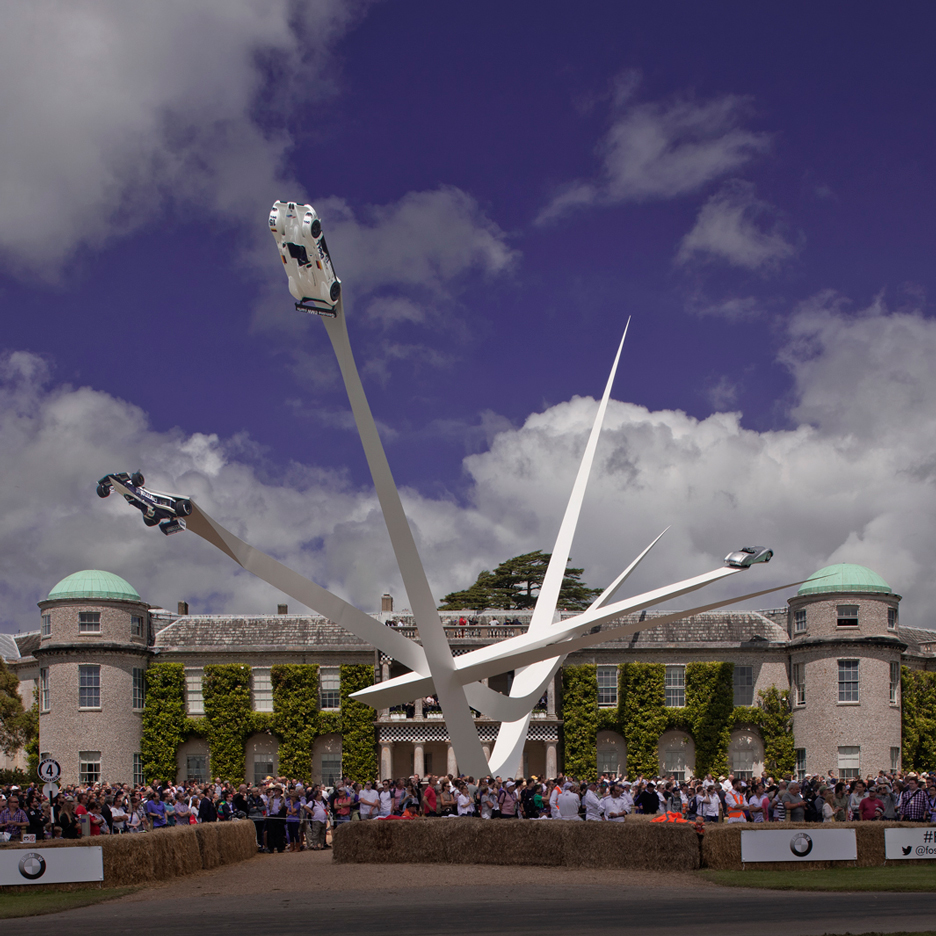
British artist and designer Gerry Judah‘s latest sculpture for the Goodwood Festival of Speed is a set of six giant steel spikes that curve upwards to the sky, supporting three historic BMW cars (+ slideshow). (more…)
“Elections belong to the people…….”
“Elections belong to the people. It’s their decision. If they decide to turn their back on the fire and burn their behinds, then they will just have to sit on their blisters.”
– Abraham Lincoln

How to Use Testimonials to Boost Business
Here are the best places to use testimonials from satisfied customers so potential customers will be assured that your business is one they can trust.
West Sussex, Englandphoto via katlou

House in Saigon / AD+studio

© Quang Dam
- Architects: AD+studio
- Location: Ho Chi Minh City, Ho Chi Minh 70000, Vietnam
- Design Team: ÂuÝNhiên, Nguyễn Hữu Thể Trang, NguyễnThịThuNgọc, NguyễnNgọcDiệuKhuê, VõĐìnhHuỳnh, VõTrườngGiang
- Area: 300.0 sqm
- Project Year: 2016
- Photographs: Quang Dam
- Contruction: ĐinhĐứcAnhVũ
- Model: Võ Trường Giang
- Visualization: Nguyễn Hữu Hiếu, Nguyễn Ngọc Hoài Phương
© Quang Dam
From the architect. The building site can be reached from 2 different directions: one from a 3 meter-wide lane that can only be used by motorbikes and another is from a 5 meter-wide lane. The site is landlocked by many closely placed buildings: the front of the 5m lane has the 4 storeys (15 meters high) townhouses and the back of this site adjacent with 7.5 meters high 2 storeys house. As a result, it forms the site with a distinctive zigzag shape, with “the Knots” effect in the middle.
© Quang Dam
The design solution is to divide the house into 3 blocks with different height levels to accommodate different building functions. These blocks are then connected by courtyard acting as transition space; bringing lights and natural ventilation throughout the site. The courtyard space is the design solution to “the Knots” part of the site and performed as flexible space to provide light, shade, air, privacy, and shelter.
Sketch
There are corridors stretches across 3 blocks at different levels which not only allow better circulation throughout building but also capturing lights reflected through changing shade of the materials during the different times of day.
© Quang Dam
The folded-roof system wrapped all space blocks together to define as one unity. The “angular geometry” roof system designed with different changing height levels corresponds to roof-scape and blends itself with the surrounding buildings. When it is seen from 5meter wide road, the unequal height of the house in comparison with other houses on the wider lane can be seen as the main viewpoint in the context.The louver system extends from roof to building facades in combination of folded roof pattern create an aesthetic connection of both external and interior spaces; also performs as comfortable shading system all year around.
© Quang Dam
Flour motion by michalagjoel

Flour has an amazing effect on pictures

 Sig Nordal