Month: June 2016
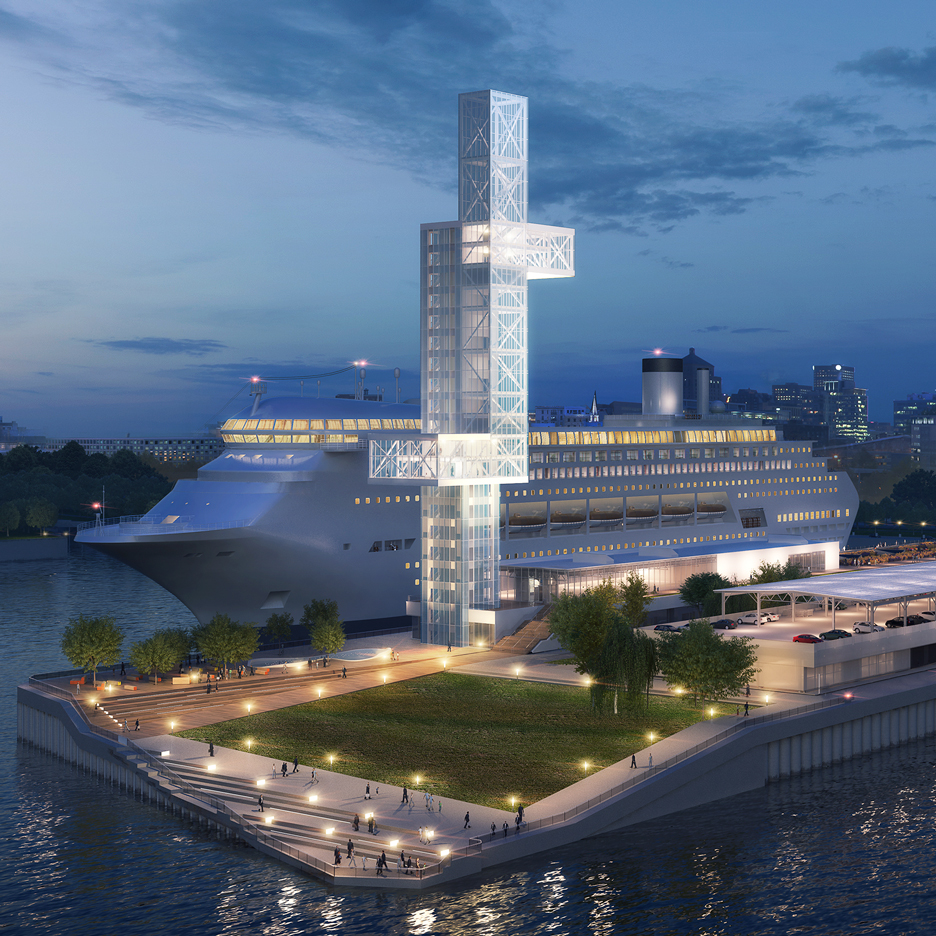
Milan – Italy (by RobinTphoto)

BC Passive House Factory / Hemsworth Architecture

© Ema Peter
- Architects: Hemsworth Architecture
- Location: Pemberton, BC V0N, Canada
- Area: 1500.0 sqm
- Project Year: 2014
- Photographs: Ema Peter
© Ema Peter
The BC Passive House Factory is an all wood construction demonstration project located in Pemberton, BC. Conceived as a simple, light filled, wooden box, the new 1500 sm facility is designed for the manufacturing of prefabricated ‘Passive House’ panels. The design, fabrication, and construction of the new facility exemplifies the client’s, BC Passive House (BCPH), mission in wood construction, prefabrication, energy efficiency, and sustainable design practice.
© Ema Peter
Section
© Ema Peter
The main inspiration for the design came from the belief that the industrial, everyday buildings that make up a vast amount of our built environment can be just as important, and well considered, as our ‘public’ buildings. 360-degree clerestory windows provide natural daylight and views to the surrounding mountains. The exterior wood ‘2×4’ cladding acts as fixed screens for the clerestories and have been designed to provide a varied ‘openness’, offering greater solar shading on the south and west facades, while maintaining the stunning views to the surrounding mountains. The abundance of daylight on the exposed wood finishes transforms a typical factory floor into a warm, comfortable, and inviting space to work in.
© Ema Peter
The facility is the first of its kind in North America and will assist BCPH in their promotion of the Passive House Standard and sustainable, energy efficient, wood based construction.
© Ema Peter
OMA’s Pierre Lassonde Pavilion doubles the size of Quebec art museum
RIBA Releases Longlist for 2016 House of the Year

Courtesy of RIBA
After announcing the list of 2016 National Awards yesterday, the Royal Institute of British Architects (RIBA) has released today the longlist for the 2016 House of the Year Award. Given to the best new house or extension in the UK, this year’s list features residential architecture of all different sites and sizes. Last year’s top prize was awarded to Skene Catling De La Pena‘s Flint House for their earthly, sloping addition to the Buckinghamshire countryside.
Find the complete longlist after the break.
Ansty Plum / Coppin Dockray; Ansty, Wiltshire, England
© Katie Lock
Contemporary Lean-to / Doma Architects; Harrogate, Yorkshire, England
© Ruth Donnelly
Contour House / Sanei Hopkins Architects; Baslow, Derbyshire, England
© Peter Landers
Covert House / DSDHA; Clapham Old Town, London, England
© Christoffer Rudquist
Edge Hill / Sutherland Hussey Harris; Darras Hall, Newcastle upon Tyne, England
© Sutherland Hussey
Garden House / Hayhurst and Co.; Hackney, London, England
© Killian O'Sullivan
House of Trace / Tsuruta Architects; Lewisham, London, England
© Tim Croker
Le Petit Fort / Hudson Architects; Jersey, Channel Islands
© Edmund Sumner
Modern Mews / Coffey Architects; London, England
© Timothy Soar
Murphy House / Richard Murphy Architects; Hart Street, Edinburgh, Scotland
© Keith Hunter
North Vat / Rodic Davidson Architects; Dungeness, Kent, England
© Helene Binet
Outhouse / Loyn & Co; Forest of Dean, Gloucestershire, England
© Charles Hosea
Private House in Cumbria / Bennetts Associates; Cumbria, England
© Brian Ormerod
The Cheeran House / John Pardey Architects; Reading, Berkshire, England
© James Morris
The Narrow House / Sanei Hopkins Architects; Brighton & Hove, England
© Peter Landers
The Owers House / John Pardey Architects; Feock, Cornwall, England
© James Morris
House 19 / Jestico + Whiles; Old Amersham, Buckinghamshire, England
© Grant Smith
Private House 1109 / GA Studio Architects; Cheshire, England
© Charlie Coleman
Tin House / Henning Stummel Architects; Shepherd’s Bush, London, England
© Luke Caulfield
Zinc House / LJR+H Chartered Architects; near Monikie, Angus, Scotland
© Mark O'Connor
News via the Royal Institute of British Architects (RIBA).
Pierre Lassonde Pavilion at the Musée National des Beaux-arts du Québec / OMA

© Bruce Damonte
- Architects: OMA
- Location: Parc des Champs-de-Bataille, Québec City, Canada
- Project : Expansion of the Musée national des beaux-arts du Québec (MNBAQ)
- Lead Design Architect: OMA (New York)
- Partner In Charge: Shohei Shigematsu
- Associate Architect: Provencher_Roy Architectes (Montreal)
- Client: Musée national des beaux-arts du Québec
- Area: 14900.0 sqm
- Project Year: 2016
- Photographs: Bruce Damonte, OMA
- Team (Oma): Jason Long, Ceren Bingol, Patrick Hobgood, Luke Willis, Rami Abou-Khalil, Richard Sharam, Tsuyoshi Nakamoto, Sandy Yum, Sara Ines Ruas, Ted Lin, Markus von Dellingshausen, Andy Westner, Jackie Woon Bae, Carly Dean with Sue Lettieri, Michael Jefferson, Mathieu Lemieux Blanchard, Martin Raub, Demar Jones, Cass Nakashima, Rachel Robinson
- Team (Provencher Roy Architectes): Michel Roy, Claude Provencher, Pascal Lessard, Jonathan Audet, Réal Baril, Anik Bastien-Thouin, Mélanie Caron, Véronique De Bellefeuille, Konstantin Demin, Danielle Dewar, Daniel Legault, Layla MacLeod, Sonia Mailloux, Guillaume Martel-Trudel, Céline Coralie Mertenat, Katell Meuric, Fanette Montmartin, Franck Murat, Audrey Piché Mandeville
- Structure: SNC Lavalin
- Mep: Bouthillette Parizeau / Teknika HBA
- Code: Technorm
- Acoustics: Legault & Davidson
- Vertical Transport: Exim
- Cost Control: CHP Inc.
- Lighting: Buro Happold
- Façade Design: FRONT
- Façade Engineering: Patenaude Trempe, Inc., Albert Eskenazi, CPA structural Glass
- Auditorium: Trizart Alliance
- Local Advisor (Competition): Luc Lévesque
- Contractor: EBC
© Bruce Damonte
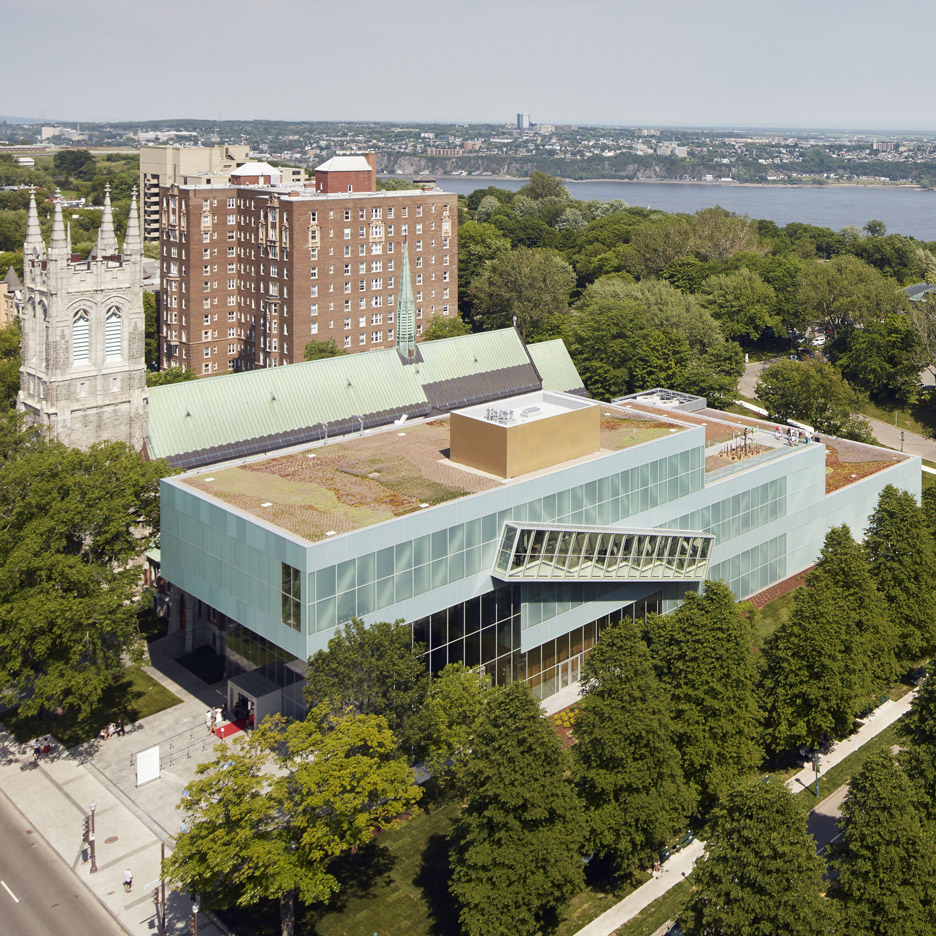
From the architect. The Pierre Lassonde Pavilion—the Musée national des beaux-arts du Québec’s fourth building is interconnected yet disparate—is a subtly ambitious, even stealthy, addition to the city. Rather than creating an iconic imposition, it forms new links between the park and the city, and brings coherence to the MNBAQ.
© OMA
The intricate and sensitive context of the new building generated the central questions underpinning the design: How to extend Parc des Champs-de-Bataille while inviting the city in? How to respect and preserve Saint Dominique church while creating a persuasive presence on Grande Allée? How to clarify the museum’s organization while simultaneously adding to its scale?OMA’s solution was to stack the required new galleries in three volumes of decreasing size to house temporary exhibitions, permanent modern and contemporary collections, and Decorative Arts and design, as well as Inuit artworks, creating a cascade ascending from the park towards the city. The building aims to weave together the city, the park and the museum as an extension of all three simultaneously.
© Bruce Damonte
Ground Level Plan
© Bruce Damonte
While they step down in section, the gallery boxes step out in plan, framing the existing courtyard of the church cloister and orienting the building towards the park. The park spills into the museum (through skylights and carefully curated windows) and the museum into the park (though the extension of exhibitions to the terraces and the outdoor pop-out staircase).
© Bruce Damonte
The stacking creates a 12.6m-high (42 ft) Grand Hall, sheltered under a dramatic 20m (66 ft) large cantilever. The Grand Hall serves as an interface to the Grande Allée, an urban plaza for the museum’s public functions, and a series of gateways into the galleries, courtyard and auditorium.
© Bruce Damonte
© OMA
© Bruce Damonte
The cantilevered structure is supported by a hybrid steel truss system and accommodates galleries uninterrupted by columns. The layered façade is simultaneously structural, thermal and solar, addressing the seemingly contradictory needs of natural light and thermal insulation for Québec’s harsh winter climate. The triple layered glass façade is composed of a 2D printed frit that pattern mimics the truss structure, a 3D embossed glass, and a layer of diffuser glass. In the galleries, insulated walls are located behind the translucent glass system, with a gap between that lights the building at night like a lantern in the park. The Grand Hall is enclosed by a glass curtain wall with glass fins that allow virtually unobstructed and inviting views to the Charles Baillairgé pavilion through a glass wall and ceiling. The contrast between the translucent gallery boxes and clear grand hall reinforces the reading of the building’s stacking and cantilevering massing.
© OMA
Complementing the quiet reflection of the gallery spaces, a chain of programs along the museum’s edge—foyers, lounges, shops, bridges, gardens—offer a hybrid of activities, art and public promenades. Along the way, orchestrated views from a monumental spiral stair and an exterior pop out stair reconnect the visitor with the park, the city, and the rest of the museum. Within the boxes, mezzanines and overlooks link the temporary and permanent exhibition spaces. On top of each of the gallery boxes, roof terraces provide space for outdoor displays and activities.
© Bruce Damonte
New exhibition spaces are connected to the museum’s existing buildings by a 130m (427 ft) long passageway, creating a permanent home for the museum’s 40m (132 ft) “Hommage à Rosa Luxemburg” by Jean-Paul Riopelle. Through its sheer length and changes in elevation, the passage creates a surprising mixture of gallery spaces that lead the visitor, as if by chance, to the rest of the museum complex.
© OMA
OMA wins competition for the Beaux Arts Museum in Quebec expansion
//cdn.embedly.com/widgets/platform.js
Pierre Lassonde Pavilion / OMA
© Bruce Damonte
- Architects: OMA
- Location: Parc des Champs-de-Bataille, Québec City, Canada
- Project : Expansion of the Musée national des beaux-arts du Québec (MNBAQ)
- Lead Design Architect: OMA (New York)
- Partner In Charge: Shohei Shigematsu
- Associate Architect: Provencher_Roy Architectes (Montreal)
- Client: Musée national des beaux-arts du Québec
- Area: 0.0 sqm
- Project Year: 2016
- Photographs: Bruce Damonte, OMA
- Team (Oma): Jason Long, Ceren Bingol, Patrick Hobgood, Luke Willis, Rami Abou-Khalil, Richard Sharam, Tsuyoshi Nakamoto, Sandy Yum, Sara Ines Ruas, Ted Lin, Markus von Dellingshausen, Andy Westner, Jackie Woon Bae, Carly Dean with Sue Lettieri, Michael Jefferson, Mathieu Lemieux Blanchard, Martin Raub, Demar Jones, Cass Nakashima, Rachel Robinson
- Team (Provencher Roy Architectes): Michel Roy, Claude Provencher, Pascal Lessard, Jonathan Audet, Réal Baril, Anik Bastien-Thouin, Mélanie Caron, Véronique De Bellefeuille, Konstantin Demin, Danielle Dewar, Daniel Legault, Layla MacLeod, Sonia Mailloux, Guillaume Martel-Trudel, Céline Coralie Mertenat, Katell Meuric, Fanette Montmartin, Franck Murat, Audrey Piché Mandeville
- Structure: SNC Lavalin
- Mep: Bouthillette Parizeau / Teknika HBA
- Code: Technorm
- Acoustics: Legault & Davidson
- Vertical Transport: Exim
- Cost Control: CHP Inc.
- Lighting: Buro Happold
- Façade Design: FRONT
- Façade Engineering: Patenaude Trempe, Inc., Albert Eskenazi, CPA structural Glass
- Auditorium: Trizart Alliance
- Local Advisor (Competition): Luc Lévesque
- Contractor: EBC
© Bruce Damonte
From the architect. The Pierre Lassonde Pavilion—the Musée national des beaux-arts du Québec’s fourth building is interconnected yet disparate—is a subtly ambitious, even stealthy, addition to the city. Rather than creating an iconic imposition, it forms new links between the park and the city, and brings coherence to the MNBAQ.
© OMA
The intricate and sensitive context of the new building generated the central questions underpinning the design: How to extend Parc des Champs-de-Bataille while inviting the city in? How to respect and preserve Saint Dominique church while creating a persuasive presence on Grande Allée? How to clarify the museum’s organization while simultaneously adding to its scale?OMA’s solution was to stack the required new galleries in three volumes of decreasing size to house temporary exhibitions, permanent modern and contemporary collections, and Decorative Arts and design, as well as Inuit artworks, creating a cascade ascending from the park towards the city. The building aims to weave together the city, the park and the museum as an extension of all three simultaneously.
© Bruce Damonte
Ground Level Plan
© Bruce Damonte
While they step down in section, the gallery boxes step out in plan, framing the existing courtyard of the church cloister and orienting the building towards the park. The park spills into the museum (through skylights and carefully curated windows) and the museum into the park (though the extension of exhibitions to the terraces and the outdoor pop-out staircase).
© Bruce Damonte
The stacking creates a 12.6m-high (42 ft) Grand Hall, sheltered under a dramatic 20m (66 ft) large cantilever. The Grand Hall serves as an interface to the Grande Allée, an urban plaza for the museum’s public functions, and a series of gateways into the galleries, courtyard and auditorium.
© Bruce Damonte
© OMA
© Bruce Damonte
The cantilevered structure is supported by a hybrid steel truss system and accommodates galleries uninterrupted by columns. The layered façade is simultaneously structural, thermal and solar, addressing the seemingly contradictory needs of natural light and thermal insulation for Québec’s harsh winter climate. The triple layered glass façade is composed of a 2D printed frit that pattern mimics the truss structure, a 3D embossed glass, and a layer of diffuser glass. In the galleries, insulated walls are located behind the translucent glass system, with a gap between that lights the building at night like a lantern in the park. The Grand Hall is enclosed by a glass curtain wall with glass fins that allow virtually unobstructed and inviting views to the Charles Baillairgé pavilion through a glass wall and ceiling. The contrast between the translucent gallery boxes and clear grand hall reinforces the reading of the building’s stacking and cantilevering massing.
© OMA
Complementing the quiet reflection of the gallery spaces, a chain of programs along the museum’s edge—foyers, lounges, shops, bridges, gardens—offer a hybrid of activities, art and public promenades. Along the way, orchestrated views from a monumental spiral stair and an exterior pop out stair reconnect the visitor with the park, the city, and the rest of the museum. Within the boxes, mezzanines and overlooks link the temporary and permanent exhibition spaces. On top of each of the gallery boxes, roof terraces provide space for outdoor displays and activities.
© Bruce Damonte
New exhibition spaces are connected to the museum’s existing buildings by a 130m (427 ft) long passageway, creating a permanent home for the museum’s 40m (132 ft) “Hommage à Rosa Luxemburg” by Jean-Paul Riopelle. Through its sheer length and changes in elevation, the passage creates a surprising mixture of gallery spaces that lead the visitor, as if by chance, to the rest of the museum complex.
© OMA
Dezeen Mail issue 311 features this week’s best stories and discussions
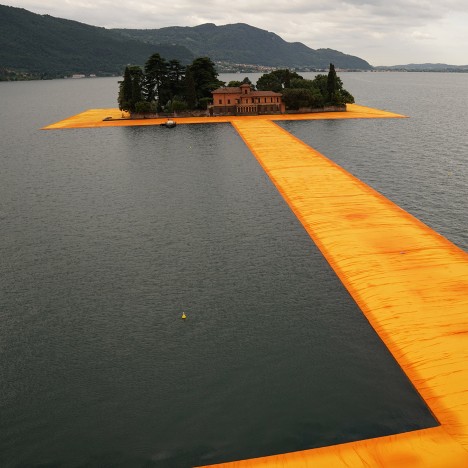
Floating saffron-coloured pathways on Italy’s Lake Iseo (pictured), updates on the UK’s European Union referendum and the opening of Herzog & de Meuron’s Tate Modern extension feature in this week’s Dezeen Mail.
Read Dezeen Mail issue 311 | Subscribe to Dezeen Mail


 Sig Nordal