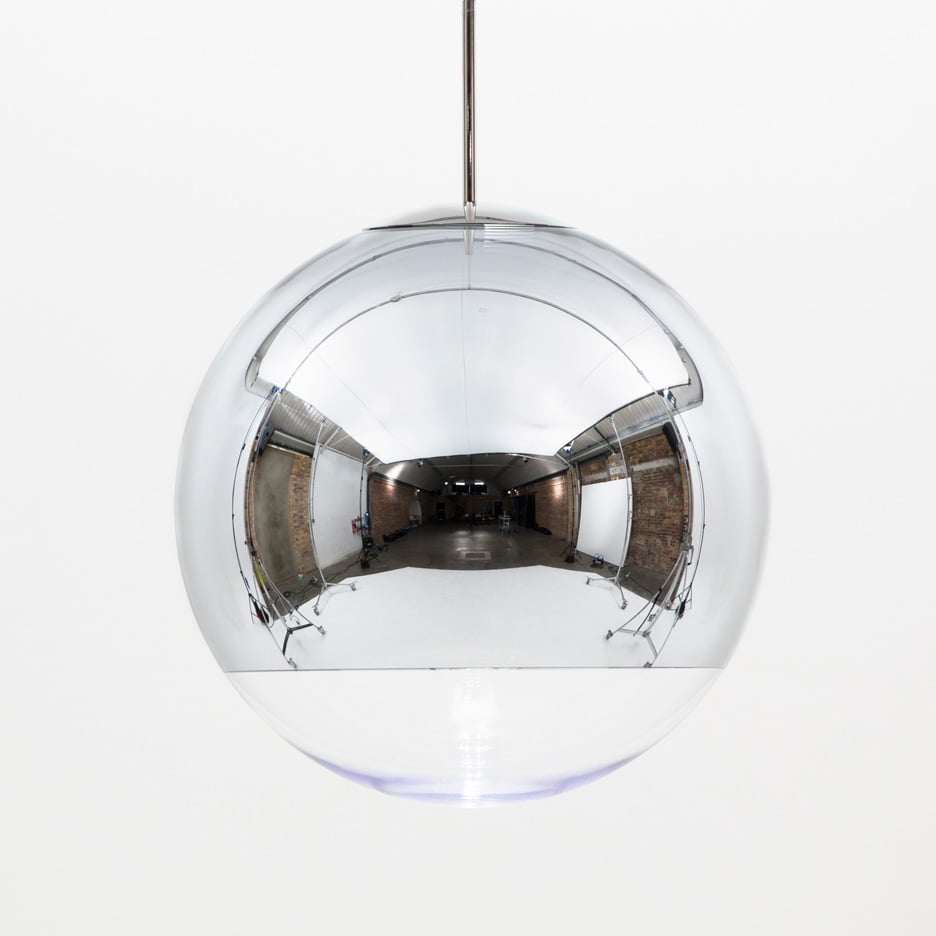
Most Loved: in this exclusive movie, British designer Tom Dixon says the light that helped turn his company into an international brand would have been less successful if the design had achieved what he set out to create. (more…)
The Palace of Westminster as seen from the River Thames. Image Courtesy of Flickr user Alex Brown
At 6:20pm on the evening of October 16, 1834, a fire began in the old Palace of Westminster in London – the foremost seat of parliamentary governance for both the United Kingdom and the British Empire across the seas. The inferno, which burned until the early hours of the morning, destroyed so much of the medieval complex that neither restoration nor preservation were considered viable options – a new palace would have to rise from the ashes to surround the largely undamaged Westminster Hall.[1] The fire gave the United Kingdom a chance not only to replace what was considered as an outdated, patchwork of government buildings, but to erect a Gothic Revival landmark to spiritually embody the pre-eminence of the United Kingdom across the world, and the roots of modern democracy.
Courtesy of Country Life Books
From the late 11th century until the reign of Henry VIII, the Palace of Westminster served as a royal residence. Various monarchs of England and the subsequent United Kingdom (England, Wales, Scotland and Northern Ireland) made their own additions and renovations to the palace as the centuries passed. The Great Hall of the palace, now known as Westminster Hall, was completed in 1099 by William II; Richard II would later remodel the space, removing the Norman columns that supported the roof and replacing them with a “hammerbeam” wooden roof that remains in place to this day. After Henry VIII moved the royal residence away from Westminster in 1534, the palace transitioned to use by the British Parliament.[2]
The 1830s and 1840s proved a tumultuous time for the United Kingdom: mainland Europe was awash with revolutions, famine struck both Britain and Ireland, and political upheaval was changing the landscape of British government. When the House of Commons (the elected body of the government) launched a design competition for the new Palace of Westminster, they specified that entries must be in either Neo-Gothic or Neo-Elizabethan styles – a symbolic gesture that would connect the new building to the order, stability, and prowess of the nation’s past.[3]
Plan. Image Courtesy of Yale University Press, Ltd.
A rectangular site, measuring roughly 800 by 350 feet (244 by 107 meters) along the bank of the Thames River, was laid out for the competitors.. Alongside preserving Westminster Hall, architects were required to provide chambers for both the House of Lords and the House of Commons, a variety of offices, and accommodations for officials who needed to be on call at all times.[4] Out of the 97 entries submitted, the parliamentary committee awarded the first prize to Charles Barry – architect of numerous churches, country houses (including Highclere Castle, of Downton Abbey fame), and civic buildings.[5]
Drawing of the 'Estimates' design for the House of Lords by Pugin. ImageCourtesy of Yale University Press
Although Barry’s initial proposal, with drawings by Augustus Pugin, made a large enough impression to win him the competition, it was only selected with the caveat that it required significant revision. Over the next several years, the building evolved substantially in both plan and elevation: the two parliament chambers moved to accommodate a new octagonal central hall, sections of the building were realigned, and the two towers grew taller, with the northern one becoming a clock tower (now housing the bell, Big Ben). In this process, what had originally been a comparatively economical proposal became increasingly extravagant, drawing ire from the people against both Parliament and Barry.[6]
Elevation. Image Courtesy of Merrell Publishers Limited
The foundation stone for the Palace was laid on April 27, 1840 by Sarah Barry, Charles Barry’s wife. From that moment, 775,000 cubic feet of stone were shipped in and assembled into a palace comprising 1,180 rooms, two miles of corridors, and 126 staircases.[7] The chosen stone was a sandy limestone from Anston Quarry in Yorkshire and, while the material was comparatively cheap and suited to intricate carving, it proved ineffective at withstanding the coal pollution for which industrial London was notorious and ultimately had to be replaced between 1928 and 1960.[8]
Elevation, Plan, Section. Image Courtesy of Merrell Publishers Limited
The final, built incarnation of the new Palace of Westminster featured a full 914 feet of horizontal frontage along the River Thames, punctuated by raised turrets and the three main towers that dominate the complex.[9] Victoria Tower, the tallest and largest of the three, was built to crown the Sovereign’s Entrance (as, according to tradition, the Monarch may never tread near the House of Commons) and to house Parliament records. The Central Tower, which was built for ventilation, takes the form of a spire, visually contrasting it with the towers at either end of the Palace. The clock tower, very recently named Elizabeth Tower in homage to Queen Elizabeth II, yet commonly known as Big Ben, presented a challenge to Barry who struggled to produce a design that made the clock itself sufficiently prominent. The ultimate solution was to project the clock story out from the sides of the tower; the four clock faces themselves were designed by Pugin. [10,11]
Elizabeth Tower (also known as "Big Ben" for the bell within). Image Courtesy of Flickr user Eric Huybrechts
Delays and conflicts plagued Barry throughout the project. Both Houses of Parliament constantly scrutinized the architect, requiring him to justify revisions before numerous committees, explain why construction was taking so long, and generally interfering in the design process. A particular frustration was Parliament’s insistence that Barry work with Doctor David Boswell Reid, a Scottish scientist of dubious credibility whose schemes for ventilation took up vast swathes of interior space and greatly increased the flammability of the Palace. The House of Commons rejected its chamber almost immediately after its completion in 1850, criticizing the acoustics and layout of the space and forcing Barry to radically alter it. Such delays were blamed solely on Barry, despite that he had faithfully followed Parliament’s instructions. Rumors swirled as to whether the architect would resign from the project; instead, he passed away in 1860, leaving the remaining work to be completed by his son.[12]
The original, unsatisfactory design for the House of Commons. ImageCourtesy of Yale University Press
The revised form of the House of Commons, February 1852. ImageCourtesy of Yale University Press
The new Palace of Westminster was finally completed in 1867, 33 years after fire had consumed its medieval predecessor. Its Gothic splendor, while recalling the the continuity of the past, became a potent symbol of a changing nation; when revolutions overturned much of Europe, the United Kingdom’s parliamentary reforms defused the worst of the upheaval in the British Isles.[13] The monumental new Houses of Parliament, while garbed in an interpretation of time gone by, stood as a prominent icon of a newer, more democratic order – one that has survived both the ravages of time and the Blitz of the Second World War to remain one of London’s most iconic architectural landmarks.
House of Commons. Image Courtesy of Burton Skira, Inc.
References [1] Cooke, Robert, Sir. The Palace of Westminster: Houses of Parliament. New York, NY: Burton Skira, 1987. p69-75. [2] Montague-Smith, Patrick W., and Hugh Montgomery-Massingberd. The Country Life Book of Royal Palaces, Castles & Homes: Including Vanished Palaces and Historic Houses with Royal Connections. London: Country Life Books, 1981. p65-68. [3] Cannadine, David. The Houses of Parliament: History, Art and Architecture. London: Merrell, 2000. p13-15. [4] Port, M. H. The Houses of Parliament. New Haven: Published for the Paul Mellon Centre for Studies in British Art (London) by Yale University Press, 1976. p32-33. [5] Port, p41. [6] Cooke, p98. [7] Jones, Christopher. The Great Palace: The Story of Parliament. London: British Broadcasting, 1983. p101. [8] “The Stonework.” UK Parliament. Accessed June 14, 2016. [access]. [9] Cowan, Henry J., and Trevor Howells. A Guide to the World’s Greatest Buildings: Masterpieces of Architecture & Engineering. San Francisco: Fog City Press, 2000. p102. [10] Cannadine, p131. [11] “The Towers of Parliament.” UK Parliament. Accessed June 14, 2016. [access]. [12] Jones, p103-107. [13] Cowan and Howells, p103.
Photographs: Courtesy of Flickr user Alex Brown, Courtesy of Merrell Publishers Limited, Courtesy of Yale University Press, Ltd., Courtesy of Flickr user David McKelvey, Courtesy of Burton Skira, Inc., Courtesy of Flickr user Karoly Lorentey, Courtesy of Flickr user Eric Huybrechts, Courtesy of Flickr user Martin Pettitt, Courtesy of Country Life Books
Ah, napping. Who doesn’t love to nap? I like to keep busy but every now and then the urge hits me and I know it’s time to act on it and go lay down, if only for 20 minutes or so. If we look at babies, kittens and puppies, they nap all the time. Why? Why do these teeny tots need so much sleep? Well we all know sleep is mandatory for mental and physical development in children but that holds true even for adults too. Sleep is important and necessary. Period. But what about napping. Why do we resist the urge to nap and why, also, do we feel the urge to nap?
Many of us are up early, off to work and/or to see the family off to work and school. Our days are busy and by midday many of us are ready to drop from exhaustion. By the time evening arrives, we’re too wired for sound to even relax enough to sleep. It’s a vicious cycle and many of us experience it. In comes napping. The one thing so many of us wish we could do, yet we don’t. Here are some reasons why you should be doing it more.
Refresh recharge rejuvenate.
The 3 r’s, but the important and necessary 3 r’s. Often we forget that most days by midafternoon we are running on empty and just recycling old crap in our minds and in our lives. When we have a little power nap, we allow our brain to shut down and off and recharge allowing for new and fresh ideas. This will also prevent us from burnout, which is something so many of us suffer from.
Happy camper.
Not only can we recharge and rejuvenate, but if we were plagued with negative thoughts throughout most of the day, having a nap will help us to dump those thoughts and wake up happier. If you’re one of the lucky ones who has great dreams during a nap, then quite possibly you will experience a happy dream and wake up with a smile. No more negative thoughts.
Our defense mechanism.
Our body has funny way of telling us things and sending us messages. Too many of us simply ignore these messages and we shouldn’t be. When we can no longer focus on the task at hand, when we no longer have energy to do one more errand or get through one more hour of the day, it’s time for a nap, even a power nap. Close your eyes for 10 minutes and see how much better you will feel. Your body is screaming at you to stop. Listen to it.
Chill out.
Sometimes we just need to lock ourselves in a room, forget the fight we just had with our spouse or family member, close our eyes and sleep it out. If we stay in an angry state for too long, our risk of heart attack, high blood pressure and stroke increases. It’s important to let go of stress so as to not create or provoke dis-ease. You may think it would be impossible to calm down after a fight but you’d be surprised how fast you can fall asleep after a fight. You’re emotionally and mentally exhausted. You’ll be asleep in no time.
Watch me go.
Having naps also contributes to higher productivity. When we nap for at least 20 minutes, when we awake we are fully charged, our minds are clear and we can work at peak performance. Fresh ideas may come flooding in or perhaps we think of different ways to see old ideas. The fog has been cleared and we have a better focus. Maybe something came to you in a dream. Napping definitely can help us create and be more productive. Try and you’ll see.
Many of today’s thought leaders, celebrities, most successful business people and top performers still have naps daily. They know and get the powerful benefits of getting a bit of shut eye, half way through the day.
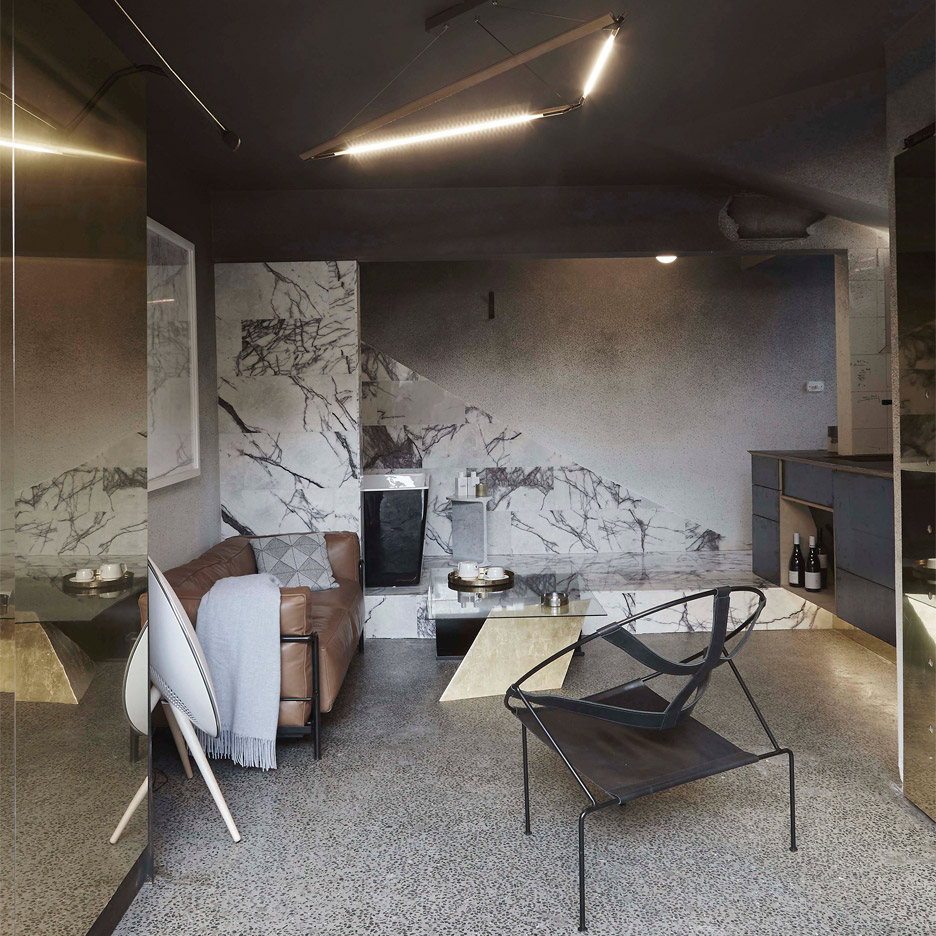
Architecture studio Edwards Moore has converted a small Melbourne apartment into a Airbnb-style rental property, where guests are invited to buy the furniture, art and accessories when they leave. (more…)
Though the site frontage is narrow and locate the slope areas , and also permitted only 4 floor by the legal constraints, we are asked to plan the 5 houses from client.
While cramming the volume in a narrow site of the dense residential areas, with consideration to the line of sight interference and ventilation, brightness of dwelling environment.
The L house will be located in the centre of a southern Alsatian village. It is composed of a main building and two adjoining constructions, organised according to the pattern of a traditional farm. A simple and widely opened garden occupies the middle of the compound. We have attempted to unify the appearance of the whole building by using in a similar colour for its roof and its walls. Its grey tone is a reminiscence of the wood patina, typical of the old barns of this region.
The apparent coherence of the construction is however constituted of different materials and surfaces.
The roof is covered with metallic corrugated panels; the surrounding walls are made of concrete structure covered with an exterior insulation and a dark-grey coating. Comparable to the doors of traditional farms, all the shutters of the house are made of sliding perforated metallic panels, which play with the interior and exterior light.






 Sig Nordal