Do You Really Need A New Job?

Popular statistics say that we will change our career 7 times in our life. Sometimes we need it, and sometimes we don’t. It’s hard to identify when we should change our job. There are a lot of factors involved that should be considered – sometimes we feel like we really need a change and sometimes we lose focus of how lucky we are to have what we do. It’s a serious issue for a lot of people and definitely worth the consideration. Some of us have worked at our job for many, many years. It’s our life, socially and financially. Here are a few things to consider before making any crazy decisions.

If you love what you do, you’ll never have to work a day in your life.

Newspaper with hot topic "Changes Ahead" lying on office desk.1. Do you have it good?

When I was in my twenties I had a very good job. I didn’t know how good it was, or how good I had it there, but I knew I was doing well for a boy in his early twenties. I went on with my savings to travel and enjoy my life after that , but when the going went tough afterwards it was when I really woke up and realized how good I had it. Although I enjoyed all the time I took off afterwards, nothing could rep lace the upward momentum I had at that first job. When I returned to work I was fortunate enough to retain my position and continue my progress – but with the humble realization that I had it much better than my peers. I was lucky to get my job back, and am still thankful to this day. It’s the realization that’s important.

2. Are you really having a bad day?

We all have bad days at work. Sometimes it’s not even the work that’s the problem; maybe we stubbed our toe before work and everything see med to go downhill after that, or we woke up on the wrong side of the bed. Before you feel like quitting your job, remember all the bad days you had, but take note of all the good days. The normal days where nothing special happened, or the great days where you made a customer very happy – these all outshine your bad days heavily. Remember that you will have bad days anywhere you go. If you have a job now, be grateful that you do and remind yourself that at least at this job you know how to handle the bad days like an adult.

3. Do you feel undervalued?

You have been working there for years, but you never feel like you have been given the respect you deserve, or the shifts you want. As you have become a staple of the store, you seem to have blended into the wallpaper as well. New employees are complimented on their learning efforts, and good work ethic is simply expected of you. Before you have a meltdown and quit your job, calm the steam and just talk to your supervisor. In an adult workplace, anything can be solved by acting like adults. Our brash emotions unfortunately don’t stop in adulthood and we still have strong feelings throughout our life. Instead of acting impulsively by making huge, life changing decisions, have a small staff meeting with your peers & supervisors and let everyone help you release the steam. Your boss will applaud you for being open, and remember to support you at work. Ask for a raise if you feel like you deserve it. There’s no harm in asking for anything.

4. Every job is a job

You have been working for years, and you are downright tired of it. Well, the reality is, you will also have to work for many more years! We’re not allowed to stop, and when you do stop, trust me, it’s not so pretty! Remember that if you are tired of your job and get a new one, that one will just be a job too. It will be a job with new bosses, new routines you may or may not like, new habits and new everything. But it will still be a job. If you are tired of your job now, just take a break. You can take a few weeks off – just ask. If that doesn’t work, demand it. You’re allowed to do that. Go somewhere for a bit, switch up your routine, do something exciting. But don’t leave your job because trust me you will just become bored of the next one too. Just try to enjoy every day.

5. Be grateful for your job.

I know, you’ve been there for 11 years too long already. But make an effort to remind yourself that you are grateful you have that luxury. Some people are from countries that have populations of over 100 million, where overpopulation and unemployment issues are massive. In our country people also struggle to find jobs, and kids are certainly having a hard time too. Be grateful you have somewhere to call “work” and be proud of yourself for it. You worked for it.

6. Take pride in what you do.

If you can be proud of what you do, you will be happy at work everyday. Take pride in the satisfaction you give customers for your service (no matter how grumpy they can be) and take pride in the solutions you offer to customers and other employees. If you’re proud at what you do, you are good at what you do, and if you are good at what you do, you are valuable. You are making a contribution to society and it is not going unnoticed. Thank you for that.

The post Do You Really Need A New Job? appeared first on Change your thoughts.

http://ift.tt/29Mb9C0

our suitcase of abandoned memories @ grandma is all gone house…

via Statues in Focus http://ift.tt/29B5DP0

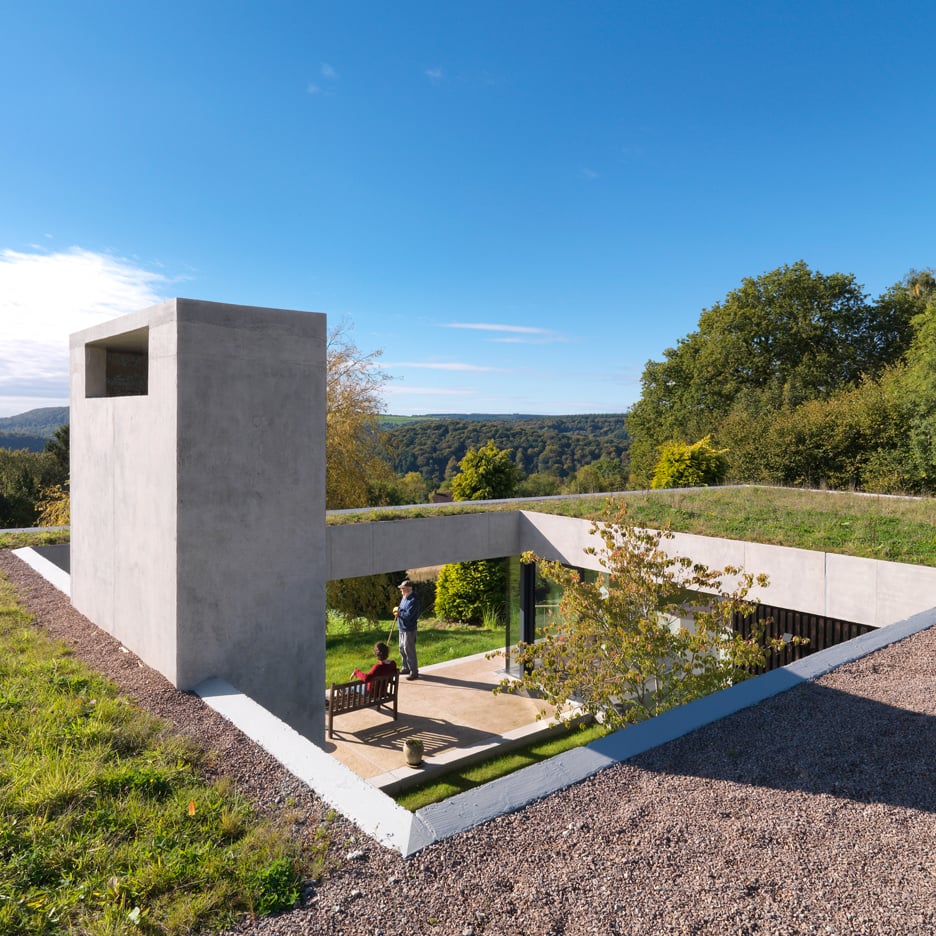
Loyn & Co builds “earth shelter” that nestles against a Gloucestershire hillside


Glazed courtyards puncture the expansive grass roof of this English countryside house by Loyn & Co, which is in the running for both the Stirling Prize and the RIBA House of the Year award (+ slideshow). (more…)

http://ift.tt/2aeIWkq

Lambeth Marsh House / Fraher Architects


© Jack Hobhouse

© Jack Hobhouse


© Jack Hobhouse


© Jack Hobhouse


© Jack Hobhouse


© Jack Hobhouse

  • Contractor: Forma Ltd
  • Structural Engineer: Constant Design Ltd
  • Joinery: Fraher and Co

© Jack Hobhouse

© Jack Hobhouse

From the architect. Lambeth Marsh House had been left unoccupied for over 10 years and is a two storey listed house situated within the Roupell Street Conservation area in central London. The conservation area designation was first developed by John Palmer Roupell in the 1820’s. Roupell, a gold refiner, lived with his family at 16 Meymott Street, which was at that time known as ‘Cross Street’. Roupell developed the land for artisan workers – in the form of modest, brick built, two storey terraced houses fronting conventional streets.


© Jack Hobhouse

© Jack Hobhouse

Plan Proposed 1

Plan Proposed 1

© Jack Hobhouse

© Jack Hobhouse

Our concept and challenge was to breathe new life into all floors whilst respecting the heritage of this listed building and restoring some of the lost historic detailing.


© Jack Hobhouse

© Jack Hobhouse

The run down fabric of the existing building required extensive refurbishment with a sensitive approach. Restoring the panelled replaces, wood panelling to walls, architraves and skirting to their original condition celebrates the history of this building.


© Jack Hobhouse

© Jack Hobhouse

The addition of a contemporary rear and side extension compliments these features and updates the building. A large open plan living space creates a new light airy space whilst a new glass roof extension feeds light into the plan of the building.


© Jack Hobhouse

© Jack Hobhouse

Throughout the traditional settings modern furniture updates the traditional spaces. Many antique chairs were refurbished and re-upholstered and minimalist light fittings compliment the sympathetic interior. Materiality was very important to help produce a sensitive contemporary design, whilst assisting our conservationist approach. 


© Jack Hobhouse

© Jack Hobhouse

http://ift.tt/29XqYna

A Home Nestled in the Woods of Eastern Townships, Quebec

FA House by Jean Verville architecte (24)

FA House is a private home located in Eastern Townships, Quebec, Canada. It was designed by Jean Verville architecte FA House by Jean Verville architecte: “Nestled in the privacy of a hemlock forest, FAHOUSE presents an amazing building that seems to emerge from a children’s story. Exploiting the contrasts between opacity and light, the architect Jean Verville develops a graphic assemblage, which rises like two giant conifers, intensifying the dreamlike..

More…

EID Ground / Allies and Morrison


Courtesy of Allies and Morrison

Courtesy of Allies and Morrison


Courtesy of Fatma Al Sehlawi


Courtesy of Allies and Morrison


Courtesy of Allies and Morrison


Courtesy of Allies and Morrison

  • Architects: Allies and Morrison
  • Location: Doha, Qatar
  • Area: 43000.0 sqm
  • Project Year: 2016
  • Photographs: Courtesy of Allies and Morrison, Courtesy of Fatma Al Sehlawi
  • Client: Arup for Msheireb Properties
  • Structural Engineer: Arup

Courtesy of Allies and Morrison

Courtesy of Allies and Morrison

From the architect. Allies and Morrison was commissioned to develop design proposals for the reconstruction of the historic Eid ground in Doha located on a prominent site across from the Al Koot Fort, immediately south of the new National Archive building and adjacent to the Jassim Bin Mohammed heritage house to the west.


Courtesy of Fatma Al Sehlawi

Courtesy of Fatma Al Sehlawi

The ground is a roughly rectilinear plot of approximately 4000sqm. Part of the Msheireb Downtown Doha Masterplan, the project was occasioned by the construction beneath the site of one of the developments central cooling plants. The new structure incorporates vents and escape stairs from the below ground infrastructure. The above ground construction includes not only the prayer ground itself, and the associated Qibla wall, but screening walls, sun screens and amenities such as public conveniences and drinking fountains.


Courtesy of Allies and Morrison

Courtesy of Allies and Morrison

Allies and Morrison’s design concept is based on the resolution of site geometries and the pure geometries and specific orientation of the sacred ground. The sacred space of the Eid ground is a perfectly level platform set slightly above the sloping ground plane, and a pure rectangle set within the irregular rectangle of the site. The interstitial spaces between the site boundary and prayer ground plan house the infrastructure requirements as well as the prayer ground amenities. Retractable shading devices will provide protection for the northern and southern parts of the Eid ground.


Courtesy of Fatma Al Sehlawi

Courtesy of Fatma Al Sehlawi

http://ift.tt/29zu4QR

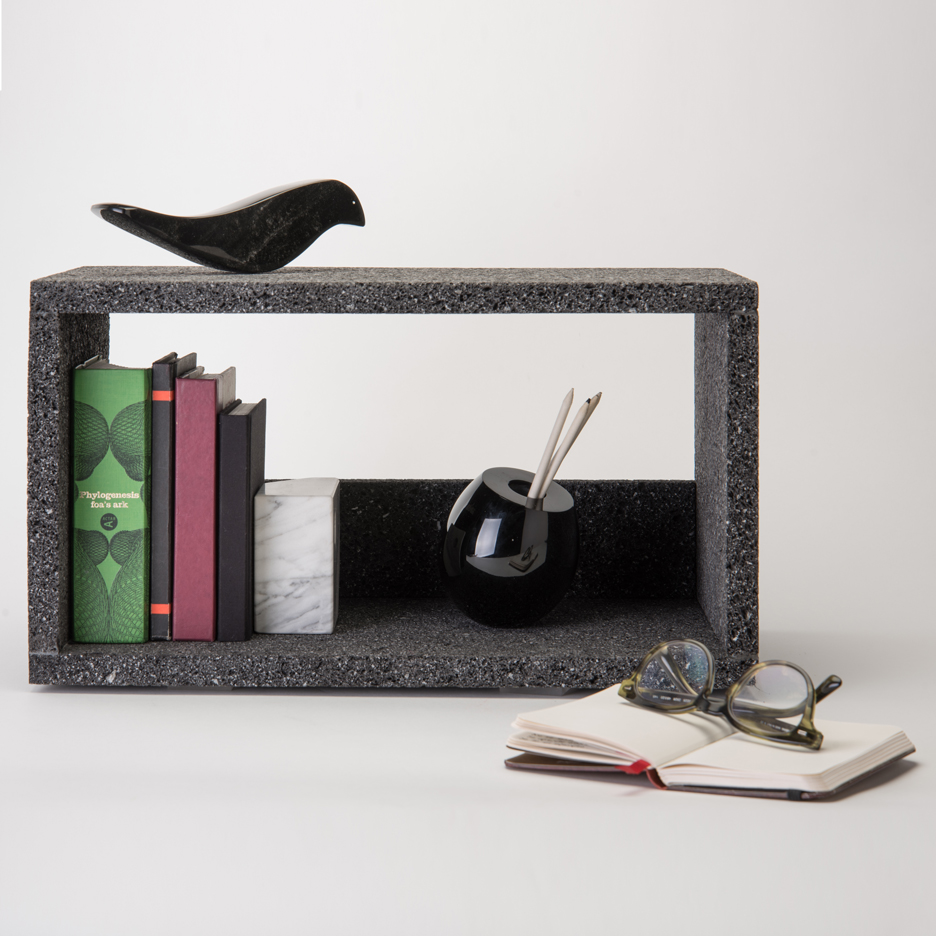
Peca crafts shelves and cubbyholes from volcanic rock


Mexican design studio Peca has handcrafted a collection of shelves by carving blocks of lava stone (+ slideshow). (more…)

http://ift.tt/29XfhwM

Moving Landscapes / Matharoo Associates


© Edmund Sumner

© Edmund Sumner
  • Project Team: Gurjit Singh Matharoo (Principal Architect) , Professor MC Gajjar (Architecural Advisor), Avneesh Tiwari (Architect) , Mohit Maru(Trainee), Irene Giubinni(Trainee), Shilpa Sushil (Trainee)
  • Client: Mr. Trilok Goyal
  • Structural Engineers: Matharoo Engineers, Rajendra Singh Matharoo (Principal), Hitesh Rathi
  • Mechanical Engineer: Harshad Jhaveri & Associates
  • Interior Designer: Matharoo Associates
  • Landscape Architect: Vagish Naganur
  • General Contractor: Shree Ram Builders, Ahmedabad
  • Structural System: Concrete walls and Slabs, Steel columns
  • Site Area: 3500 sq m

© Edmund Sumner

© Edmund Sumner

The idea for moving landscape germinated from stumbling upon a stone, Bidasar Forest, that possesses an impression, as if, of tropical arid landscape fossilized within itself. Its polished surfaces against the native verdure of the Ahmedabad region made for the perfect setting, blurring the lines between reality and illusion.


© Edmund Sumner

© Edmund Sumner

The nations booming economy in the last decade has made individual houses accessible to a larger section of society. Coupled with the demand for an independence that protects individuality, the age old tradition of joint family living has disintegrated into small nuclear families. Despite this change of cultural attitude in the present Indian context, a large number of families, bound by family business and obliged by traditional ingrained values, still choose to live together. Whilst this allows them to benefit from shared responsibility across generations, it often leads to the creation of autonomous suites within a house that isolates families even under the same roof. The challenge therefore lies in simultaneously integrating the requirements of these opposing lifestyles – making it equally imperative to provide opportunities for communal collision, while providing privacy.

Situated on the outskirts of Ahmedabad, the house is meant to accommodate one of the city’s most prolific real-estate developers and his wife, along with his two sons’ families and extended visiting members. The client also shares the grounds with his two other brothers’ houses and their joint families in a large 20000 m2 plot.


© Edmund Sumner

© Edmund Sumner

The plan of the house is interpreted as a linear pavilion, ensuring that every space in the house is lined with glass on the facing sides – the first enclosure. The rest of the structure is in 200mm thin walls in concrete, eliminating the need for any beams and columns and making for cleanest interior volumes. Additionally, this saves constructed dead space by about 3% and for the 18,000 total covered area, this equals to 540 sq.ft or the size of an average sized room.

This pavilion is oriented around the margin of the site as three wings. The flanks holds the house’s private spaces with suites for each of the sons’ families, while the central one hosts the living space for all communal activities. The residual corner voids by the turning of the blocks, are snugly protected by tall circular walls to form smaller sheltered spaces – while one cradles the houses’ utility space, the other acts as a court distant from the joint families gaze. These also carry the staircases and lift, rendering outer spaces clear of all encumbrances for the Bidasar drama to unfold. The composition as a whole footprint defines a large multi family courtyard at the heart of the site.


© Edmund Sumner

© Edmund Sumner

The second enclosure is a layer of massive 15’ high, 9’ wide and 1’6”mm thick Bidaser stone walls along the entire perimeter – an impregnable shell. Akin to the amethysts hard exterior cracking open to reveal its crystalline heart, at the push of a button, this imposingly heavy stone wall cracks open, as it becomes an array of panels spinning gently about their centres or sliding away to reveal a transparent cocooned interior. Can be employed at will whenever desired and dissolved when not.


Plan / Elevation

Plan / Elevation

This layer of stone panels help create a buffer between the inside and the outside, protecting the inner layer shell of concrete and glass from intense sun light and 45o heat, thereby reducing the total heat gain on the air-conditioning. Moreover, this space doubles up as passages, verandahs, entrance vestibule and circulation space, and also as protection from rain, eliminating the need for air-conditioning in 8000sq.ft out of a total of 18000 habitable space. This saving is substituted with enhanced living and direct contact with nature in what we term as value architecture.


© Edmund Sumner

© Edmund Sumner

Savings from the air-conditioning and sealing the house, is then channelled into making inhouse custom designed motorized pivots and giant sliding systems. Architecturally and structurally both, this entire layer is kept completely detached from the inside structure, almost as a heat buffer, and is only supported on hidden structures within in the sliding and pivoting systems, making for the awe in having thick concrete slabs floating on moving stones.


© Edmund Sumner

© Edmund Sumner

Lights are machined out of alabaster stone providing for the most natural ambience.
Most furniture is bought out from various design houses in Italy and a sole bar table is one custom designed by the Architects. It is a 3 dimensional mobius strip in stainless steel, locally fabricated, that can be subject of discussion and intellectual discourse after a couple of drinks. Lights and water under the moving walls light the water to make the heavy stones appear floating on water.

Toilets too open on opposite ends and the water closet, the shower and the basin, all three are positioned on 3 side of the duct, the fourth side left for easy service access and ventilation to the duct from outside.To carry on with the material & weight amazement further the thick concrete basin counter is cantilevered from the floor to ceiling mirror. In line with the same philosophy of the easy maintenance and serviceblity AC units have been kept on the roof with just holes cut in slab for blower. This approach of integrating the services and interiors in construction itself doesn’t only make it easy to service; it also saved a lot of time off construction. The entire building was ready in 18 months time from start to furnish.


© Edmund Sumner

© Edmund Sumner

Resonating with the harshest aspects of nature, in motion, these walls intermingle with the glass inside and the wild landscape outside, the third enclosure, to sometimes allow a glimse of the outdoors, sometimes reflect it and sometimes reflecting themselves. It is in this layering of space and screen, the houses’ entire envelope becomes an interface to mediate between the artifice of the inside and verdant site outside.


© Edmund Sumner

© Edmund Sumner

The houses environs look deep inside their interior, as the house merges into an illusion of landscape constantly moving that we sometimes catch ourselves reflecting amongst, reflecting on the nature both within us and outside of us. The epitome of their experience is to be found at the entrance passage of the house, where all of these reflections find the surface of water to make the landscape a truly moving one.

Text: Robert Taylor & Trisha Patel

http://ift.tt/29LBJuR

ST Nursery / HIBINOSEKKEI + Youji no Shiro


© Studio Bauhaus - Ryuji Inoue

© Studio Bauhaus – Ryuji Inoue


© Studio Bauhaus - Ryuji Inoue


© Studio Bauhaus - Ryuji Inoue


© Studio Bauhaus - Ryuji Inoue


© Studio Bauhaus - Ryuji Inoue

  • Surface Area: 882.90 sqm
  • Building Area: 768.74 sqm

© Studio Bauhaus - Ryuji Inoue

© Studio Bauhaus – Ryuji Inoue

As number of children has been decreasing recently, the number of brothers and sisters is decreasing in proportion to it. As a result, the children in different ages are not connected strongly.


© Studio Bauhaus - Ryuji Inoue

© Studio Bauhaus – Ryuji Inoue

It is also a problem that the number of children who cannot communicate with others well has been increasing due to above fact. This site is located in the area where we can see this tendency remarkably.


© Studio Bauhaus - Ryuji Inoue

© Studio Bauhaus – Ryuji Inoue

In this kind of area, by using “connection” as a key concept, we set an environment where the children can feel those around them each other all the time by designing floor planning. In this environment, we also set not only communication space at the end of the entrance where they can see residents in the area and those who graduated from the kindergarten but also the garden classified by age where the children of other ages can see.


© Studio Bauhaus - Ryuji Inoue

© Studio Bauhaus – Ryuji Inoue

We planned to increase the opportunity where the children can communicate with nature and others while they are playing. It created an environment where they develop communication with others and consideration to others.

As a whole structure, we arranged the buildings as if they were the huts along the river, which had been scene of the area long time ago.


© Studio Bauhaus - Ryuji Inoue

© Studio Bauhaus – Ryuji Inoue

The roofs are connected and have grade in accordance with direction and function. It provides up and down in space by producing a difference of height of the ceiling in the building, and draws children’s curiosity. 

What is noticeable is dining room. In the dining room, comfortable wind blows through by high side sash that is connected by roofs, and it is a comfortable and bright space.


© Studio Bauhaus - Ryuji Inoue

© Studio Bauhaus – Ryuji Inoue

The space that is produced by connecting the buildings is used as patio and the garden classified by age. We planned size of the patio to have an appropriate distance where the children can see on the same level. In toilet for the children, section of picture book, dining room and nursery room for infant that face the patio, they can establish the relationship that they can see each other naturally in life.


© Studio Bauhaus - Ryuji Inoue

© Studio Bauhaus – Ryuji Inoue

Regarding the garden classified by age, it is divided not only by difference of their growing but also is arranged that they can see the children of other ages each other while dividing. We created an environment where the children of other ages or the same age learn together through each garden, and feel each other.


© Studio Bauhaus - Ryuji Inoue

© Studio Bauhaus – Ryuji Inoue

This floor planning produces not only the relationship among children but also the one that teachers of the nursery school see each other. It means that it contributes to communication among the teachers of the nursery school.


Plan

Plan

A space that is derived from image of cafeteria along the river where they can relax without taking off shoes is set around entrance. It is a place where parents and nursery school as well as the area and the children can communicate.


© Studio Bauhaus - Ryuji Inoue

© Studio Bauhaus – Ryuji Inoue

As a result of above facts, we made sure that more communication has been realized than before, and we can look forward to growth of the children in this nursery school.


© Studio Bauhaus - Ryuji Inoue

© Studio Bauhaus – Ryuji Inoue

http://ift.tt/29HiAbe