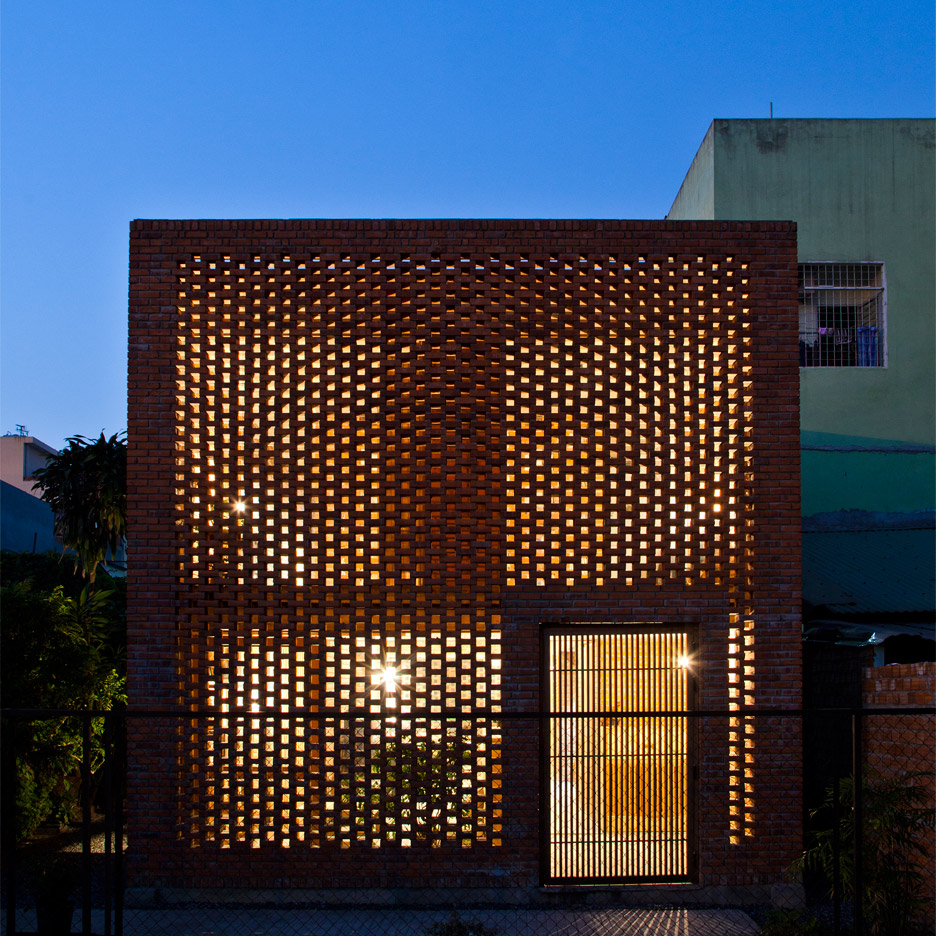
A touch of Milky Way by Kjartan Guðmundur …

Photo essay: British photographer Anthony Gerace has produced a series of images offering a snapshot of the crumbling architecture and infrastructure of Cornwall – a stronghold of the Brexit campaign (+ slideshow). (more…)


Bovero House is located in the municipality of Arroyo Leyes in the province of Santa Fe, 10 km from the provincial capital in a residential area of high landscape value. This commune with the City of Rincon, Colastiné and others were formerly the site of summer homes of Santa Fe families, due to the lack of land in the city and improving transportation networks and services, in recent years this area has grown exponentially with families who establish permanent residence here. Thus, on Provincial Route No. 1 there are a lot of subdivisions and developments that expand the conglomerate known as Greater Santa Fe.
Due to the low level of land where the building lots are located and the reclaimed lands from the floodplain of the rivers, the sector’s problems are flooding both by rising rivers as well as runoff rainwater. Thus it is required to place the houses at a safe altitude, so we had to raise the house one meter from the ground level to match the existing defense level.
The requirement was to solve a home of approximately 80m2 for a literature teacher, whose children had already left, so no immediate future extensions were required, with a tight budget, through the government mortgage program Procrear on a corner of 16x55m.
The house seeks to claim the linearity of the lot setting an urban facade on the access road and opening the facade into the eucalyptus forest that persists in front of it as undeveloped space. Therefore the program is solved linearly with the sequence living room-kitchen-bathroom-bedroom, introducing a courtyard in the center of the house that incorporates the landscape into the house and organizes the kitchen as a meeting place around a breakfast that is part of the yard.
The pre-existence of two large Eucaliptus trees and a lot of typical coastal landscape (Espinillos) set the tone for preserving the largest possible number of trees by inserting the house into the landscape. In turn, we took into account the shadows of the Eucalyptus in the decision to set the house east-west, which allowed us to open the house to the north with the best sunlight conditions.
The interior space is delimited by the wall enclosure which in its configuration addresses three issues: the structural support of the house, it is the programmatic element that organizes in its depth the support of the interior spaces that are free-standing, and the symbolic element that covers the literature collection that is part of the routine of the inhabitant.
The tight budget led to the decision to try to avoid subsequent finishes after construction was over, and that the construction itself was to be its own material expression. The materials are exposed defining the colors and textures of the construction as result and expression of the implicit technique in the process that does not seek to hide its essence.

The founders and board members of non-profit organisation Architecture for Humanity, which filed for bankruptcy last year, are being sued for the alleged misuse of donations. (more…)
What’s your New Year’s resolution? To be happier? Healthier? More successful? Improve your relationships?
No matter what your goal, there is one thing you can do to improve the likelihood of succeeding.
Research has repeatedly confirmed that acts of gratitude, such as counting your blessings, showing appreciation and helping others, can result in more happiness and better health. In one study, participants who kept a weekly gratitude journal were more optimistic and healthier after 10 weeks than a comparison group that recorded things that irritated or displeased them.
It also turns out that a grateful heart is a healthy heart. In another study, a group of people with heart disease were asked about their feelings of gratitude. Those who felt more gratitude were less depressed, slept better and had more energy. And after keeping a gratitude journal for 40 days, the participants also showed reduced inflammation (a key risk factor in heart disease) and improved heart rhythms.
Because gratitude can reduce feelings of stress, it also could improve resistance to cancer and increase immunity.
But the benefits of gratitude multiply when it becomes more than just a feeling. People who take the time to show gratitude with words and actions can spread the positive effects to others.
Finding the path to gratitude, however, isn’t always easy. Sometimes we are locked into habitual patterns that cause us to dwell on the negative and overlook all the good things in our lives.
Start your new year with gratitude by taking these four approaches:
Pause and think about what you’re grateful for. It might be as basic as food on the table and a roof over your head. It might be the past hour, day, or week that’s been peaceful and trouble free. It might be the friends and family who love you. Don’t overlook the mundane and the obvious. Feel gratitude for all that is right in your world.
Now write it down. Nothing is too big or too small. And nothing can be repeated too often. Taking a moment to remember and record your blessings actively reminds you of their importance. Try to do this daily so that you begin each day with a feeling of gratitude.
Don’t keep all that gratitude goodness to yourself. Feeling grateful for your friends and family? Tell them. It doesn’t have to be a big deal. A simple “Thanks for all the love and support. I really appreciate it,” works fine. Discover how good it feels to say thank you out loud for gifts or favors, or tell co-workers and service people how much you appreciate their hard work.
Maybe the biggest benefits of gratitude occur when you pass it on. People who donate time and money, regularly do good deeds for others, and make gratitude a habit as well as a feeling, not only boost their good feelings but make the world a better place for everyone else too.
Finally, moods are fleeting. When we get stuck in a rut or start listening to that inner voice in our head that isn’t being supportive, it is easy to fall victim to catastrophizing about the world around us. There are five primary emotions that humans experience: anger, fear, worry, grief and joy. Four of them are negative emotions. Focusing on the gratitude in your life helps re-wire your brain against negativity.
By working with gratitude you become able to process emotions and experiences with a different perspective. You establish a neural pathway to happiness. You begin to unconsciously react differently to situations that previously baffled you. You are able to see changes in yourself that are then in return reflected in the world around you.
Gratitude is one aspect of thinking that also helps individuals practice mindfulness. Mindfulness can be defined as “a mental state achieved by focusing one’s awareness on the present moment, while calmly acknowledging and accepting one’s feelings, thoughts and bodily sensations.” The next time you are feeling out of control or disturbed, stop, breathe in through your nose, out through your mouth and begin adding to your gratitude list.
If you struggle coming up with something to put on your list, I will provide one free of charge. Your first item can be that you caught yourself and realized something didn’t feel right.
That is the greatest gift you can give yourself and a great start to your own gratitude list!
The post The secret to positive change? Gratitude. appeared first on Change your thoughts.

The “Googleplex” is back on. After the Mountain View City Council announced last year that they would be awarding the majority of the land needed to construct the futurist masterplan designed for Google by BIG and Thomas Heatherwick to fellow tech giant LinkedIn, the future of the ambitious glass-canopied corporate campus seemed to be dead in the water, with the architects even releasing images of a pared down design that would occupy a much smaller footprint. But all of that has now changed thanks to a surprising property swap between the two companies that will see over three million square feet of real estate switch hands.
The deal involves 1 million square feet of existing buildings (including LinkedIn’s current headquarters), and 2.4 million square feet of undeveloped real-estate. Google will receive the land necessary to see through their original Googleplex vision, while in return, LinkedIn will obtain property elsewhere in Mountain View and nearby Sunnyvale that will allow it to build a single cohesive corporate campus of their own.
With LinkedIn out of the way, Google is now free to pursue constructing the massive development that Google has described as “lightweight block-like structures which can be moved around easily as we invest in new product area,” covered by “large translucent canopies” that will “[control] the climate inside yet [let] in light and air.”
For more information on the specifics of the deal, you can view the transaction details at Silicon Valley Business Journal, here.
News via Silicon Valley Business Journal. H/T Recode.
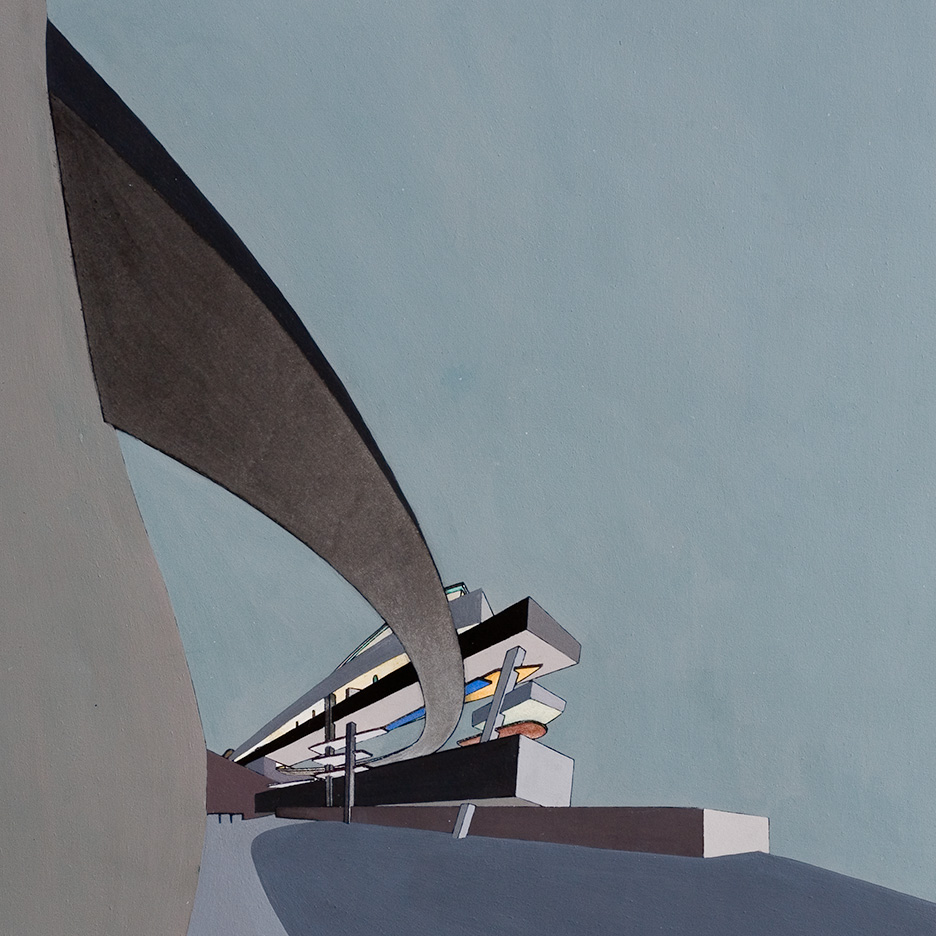
Movie: in this exclusive video, the late Zaha Hadid‘s long-standing business partner Patrik Schumacher reflects on meeting the architect for the first time as a student and the impact of her early paintings. (more…)
Not enough hours in the day? Here are six things you can do to get through your to-do list with time to spare.