KotorAPSS Forum 2016: RE-USE Symposium and THE DEBATE (Project Solana)


With its upcoming double symposium KotorAPSS further establishes a small Montenegrin town as an international hot spot for architectural thinking and advances the debate on decaying places of the recent past and their possible futures.

Boka Kotorska Bay cuts the Adriatic Montenegrin coast like a Norwegian Fjord. Once a hideout for pirates and smugglers it also was an important commercial trade hub and naval base.

The region once belonged to the Illyrian Kingdom, the Roman Empire and later to the Byzantine Empire. The Venetians ruled until the late 18th century, followed by the Austrians, and troops of Napoleon. From here Mediterranean cultures spread into the Balkan. Especially since UNESCO declared the natural and culture-historical region Kotor a world heritage site in 1979 the city and the bay have become an increasingly popular daytrip location for cruise ship tourism along the Adriatic coast.


Spomen Dom in Kolašin © Luka Bošković

Spomen Dom in Kolašin © Luka Bošković

While the distant past is embodied in the old town behind the thick city walls there is also a younger history that has left its traces, the recent past that manifests itself outside the historic center: Industrial developments from the first half of 20th century that have lost their uses and the empty shells of grand architectural projects built during the 1960s and 1970s in Ex-Yugoslavia when the Adriatic coast was a popular celebrity hot spot. While in Kotor local authorities sticking to the preservation of the past to further develop the cultural heritage as a consumption good for tourists that anchor in high-rise-like cruise ships in front of the city everyday.  A lack of planning legislations in the past has enabled developers to scatter the landscape with their luxury look-alike all inclusive resorts.


KotorAPSS 2013 © Boriša Medenica

KotorAPSS 2013 © Boriša Medenica

This is the point of departure for KotorAPSS, The Architecture Prison Summer School, that seeks to redefine the approach on urban planning and design in the region. But how can the planning culture in Montenegro be positively influenced? “The simple answer is: You need to have decent architectural scene. And the most important step towards this is education,” states initiator and Montenegrin architect Dijana Vucinic. Since 2012 KotorAPSS has attracted thinkers and architecture scholars from all over the world and involved them not only in educating future architects of the Balkan region but also in forcing communication and public discussions with the intention to spark change on many levels.

KotorAPSS itself started off reactivating a massive abandoned structure at the center of the World Heritage Site that up until today resists a touristic appropriation: The former Austrian Hungarian prison from the 19th century is reflected in the summer school‘s name. Its thick cooling walls provide a unique location for focused working experience during hot Balkan summers.


Dom Revolucije in Nikšić © Luka Bošković

Dom Revolucije in Nikšić © Luka Bošković

Originating from the academic framework of APSS, in 2014 a curatorial team with Bostjan Vuga (Sadar+Vuga, Llubiljana), Simon Hartmann (HHF, Basel), Dijana Vucinic (DVARP, Podgorica) and German publishers Ilka and Andreas Ruby (Ruby Press, Berlin) initiated the exhibition in the Montenegrin Pavillon at the 14th Architecture Biennale di Venezia. The “Treasures in Disguise“-exhibition provided a spatial experience of the derelict ruins of the recent past, presenting them de-contextualized from their various socio-historical connotations. The Dom Revolucje (Home of Revolution) in Niksic – an oversized cultural palace originally designed in the late 1970ties but never completed – was part of the exhibition in the Palazzo Malpieri. In early 2016 the collaboration of Swiss architects HHF and Slovenian office Sadar+Vuga culminated in the winning proposal for the adaptation and reconstruction of the 22.000 square meter building as an urban landscape, suggesting a partial appropriation and re-integration into everyday life as an experimental approach to the reuse and preservation of post-modernistic socialist ruin.

The current show of this year’s Montenegrin pavilion at Venice Biennale, under the patronage of the Ministry of sustainable development and tourism and Government of Montenegro, takes up the objective to further establish and broaden the debate on decaying places of the recent past and their possible futures. With “Project Solana” commissioned by Dijana Vucinic architectural scholars Bart Lootsma and Katharina Weinberger are hosting four projects outlining different sustainable futures for the Solana Ulcinj, with a surface of 14.9 square kilometers one of the largest plants for salt production in the Mediterranean region. Lootsma and Weinberger describe the largest post-industrial landscape as “a completely artificial, man-made biotope which has taken on almost global importance as a crucial node in the migratory patterns of birds. As such, the Solana Ulcinj is the front line of all kinds of conflicts: between nature and culture; the local and the global; economy and environmental awareness.”  ecoLogicStudio (London), LOLA (Rotterdam), LAAC (Innsbruck), and Marko Stjepčević and Nemanja Milićević from Podgorica developed four visionary future approaches to the site especially for the Biennale.

Montenegro Pavilion at 2016 Venice Biennale to Investigate One of Europe’s Largest Post-Industrial Landscapes
//cdn.embedly.com/widgets/platform.js

All four practices and the curators will participate in this year’s KotorAPSS Forum in Kotor between July 20 and 24. The double symposium „Re-Use“ and „The Debate“ continue to explore, discuss and conceptualize the reuse of abandoned and derelict buildings and places.


KotorAPSS 2014 © Ivan Čojbašić

KotorAPSS 2014 © Ivan Čojbašić

The discussion will be preceded by the RE-USE symposium on the 23rd of July. Participants include urbanist and researcher Haris Piplas of Urban-Think Tank, architecture offices HHF (Basel) and Sadar+Vuga (Llubiljana), architecture critic Maroje Mrduljaš, and KOSMOS architects, the “virtual office” of four Russian partners – each working for different architecture offices in Basel, New York and Moscow. With their urban make-over of an old factory site in central Moscow in summer 2015 KOSMOS demonstrated how USSR-era Moscow architecture could be creatively and cheaply revitalized. Also present is Ian Anderson of famous design practice The Designers Republic and the talk will be moderated by Luise Rellensmann, an architecture critic with a special interest in the heritage and conservation of the contemporary past and Miloš Kosec a theorist specializing in re-use approach.

THE DEBATE taking place on the 24th of July is the last of three symposiums accompanying the “Project Solana”. It will present and discuss the results of Project Solana Ulcinj for the national and international audience of KotorAPSS. THE DEBATE will be moderated by Siniša Vuković, a conflict management specialist researching various forms of international conflict resolution, negotiation and mediation.

Vuković gave an intro on the upcoming debate:

“Although it may seem counterintuitive, conflicts represent one of the most fundamental social dynamics. Based in a perception of incompatible interests, conflicts inspire social change, cultural formation, and psychological development. However, conflicts are often solely associated with a state of perplexity, due to the fact that they tend to represent volatile, unpredictable and often very destructive state of affairs. Yet, at a closer look, we can see that such circumstances are all but a rule to the norm. In fact, our everyday lives are actually a complex network of regulated conflicts. From traffic rules, to political elections, from sporting events, to urban planning, we see competing goals regulated through mutually acceptable means of communication. The source of all conflicts is a lack of information. Resulting from inability of unwillingness to acquire knowledge, the scarcity of understanding leads to a state of suspicion, mistrust and apprehension. The only remedy to such pernicious relations is open communication that can bring clarity, foster trust, and reduce uncertainty. The exchange of information will bridge the gap between those that entered the talks convinced that they are destined to be at odds. Talking will help them gain clarity about each others’ intentions, and help them realize that they have much more in common than what they initially thought. And most importantly, it will help them establish guidelines that will regulate their seemingly incompatible interests in a predictable manner. The present debate aims to provide a unique platform of communication for all societal agents interested in the future of Solana.

Solana represents an exceptional landscape, deserving a careful and meticulous consideration. Prior to the APSS debate, numerous important steps have been taken, which have raised awareness among numerous facets of society about Solana’s relevance. Architects, urban planners, landscape designers, ornithologists, members of civil society, decision-makers, and many others have emphasized unique features of Solana, in a way that often resembled mutual exclusivity. For this reason, the APSS debate will catalyze an in depth exchange of ideas how to best deal with such a complex issue as is the future of Solana. The debate will begin with the presentation of four proposals that were presented at the 15th International Exhibition of Architecture – La Biennale di Venezia, as part of the Montenegrin Pavilion. These four proposals will offer new ideas and visions on how to placate a variety of societal needs. While their scope may be very comprehensive, they will not shy away from constructive critique, in the hope of fostering sophisticated improvement and deeper sensitivity of social realities. As a result, in the second part of the debate, the four proposal will be contrasted with opinions and views coming from non-architectural spheres of life: from local communities, to wildlife preservationists, from social scientist to salt fields entrepreneurs. The variety of opinions and views, while seemingly incompatible at first, will be geared toward concrete suggestions and guidelines for future actions that will promote long-term sustainability: actions that will be inclusive of everyone’s needs, and sensitive to everyone’s expectations.”   

  • Title: RE-USE and THE DEBATE: 3rd Symposium on Project Solana Ulcinj
  • Type: Symposium
  • Organizers: KotorAPSS
  • From: July 20, 2016 09:00 AM
  • Until: July 24, 2016 07:00 PM
  • Venue: Old Cinema KINO BOKA, Old town Kotor
  • Address: Kotor, Montenegro

http://ift.tt/29ARHDG

Philippe Starck and Luc Arsène-Henry build steel wine cellar for Château les Carmes Haut-Brion


French designer Philippe Starck has teamed up with architect pal Luc Arsène-Henry to create a cellar for a Bordeaux wine estate, designed to to look like a “raw metal blade plunged in the terroir” (+ slideshow). (more…)

http://ift.tt/29OOvY6

142 South Street / Sandy Rendel Architects


©  Oliver Perrott

© Oliver Perrott


©  Oliver Perrott


© Richard Chivers


© Leigh Simpson


© Richard Chivers

  • Building Contractor: Myriad Construction
  • Structural Engineer / Qs / Project Management: Stephen Evans Associates
  • Interior Joinery Design (Kitchen And Staircase): : Jeremy Pitts
  • Planning Consultant: Chris Barker, ECE Planning

© Richard Chivers

© Richard Chivers

From the architect. Sandy Rendel Architects has completed 142 South Street, a new house within the scenic South Downs National Park on the banks of the River Ouse in Lewes, East Sussex.


©  Oliver Perrott

© Oliver Perrott

Replacing a derelict workshop on a brownfield site that historically functioned as a wharf for the old quarry and cement works behind, the house occupies a prominent position at the entrance to the town. The local planning authority aspired for a ’landmark’ building to mark the entrance to the town and stipulated a bold design. As the first building you see, it is highly visible from the approach on the A26, as well as across the river and from above on Cliffe Hill.


Ground Floor Plan

Ground Floor Plan

Sitting on a long and narrow strip of the riverbank overlooking the Railway Land Nature Reserve, the Corten steel clad house is set against the dramatic backdrop of white cliffs. Built off the roughcast concrete river wall, the five-bedroom home enjoys expansive views to the south and west over the river and low-lying flood plain. The chalk face of Cliffe Hill rises steeply to the east providing an imposing backdrop.


© Richard Chivers

© Richard Chivers

The main body of the house features a simple two-storey asymmetrical pitched roof structure whose ridge is carved away to break down its scale and reflect the contours of the cliff face behind. The simple plan arrangement has been subtly distorted at each end to draw in key views and also to provide a covered terrace at the southern end and a sheltered courtyard at the entrance, buffering the sound of the adjacent road.


© Leigh Simpson

© Leigh Simpson

Emphasising the building’s form, a simple palette of self-finished materials has been carefully selected to be robust and weather naturally, developing a character that reflects the qualities of the site and surrounding area. On the ground floor on the riverside the exposed frame is constructed of board-marked concrete echoing the tone and texture of the rugged in-situ concrete river wall below. In contrast, the street elevation features walls of handmade ash-glazed Sussex brickwork traditional to the town, which gives a softer texture and more intimate scale to the street.


Section

Section

The roof and external first floor walls are wrapped in a continuous skin of Corten steel expanded mesh that articulates the form of the upper volume.  The homogenous appearance of the surface conceals gutters, eaves and other traditional architectural elements resulting in clean, crisp detailing. Contrasting with the muted tones of the masonry base below, the decorative


©  Oliver Perrott

© Oliver Perrott

Corten rainscreen weathers naturally to a striking red ochre colour with a subtle variety of tone and texture. The mesh echoes the colour of the local soft red clay brickwork and tiles, whilst still remaining distinct, alluding to the industrial heritage of the area.


Detail

Detail

The 257m2 house is entered through a small courtyard followed by an enclosed and dramatic hallway lined with blackened sawn oak boards. From here the interior opens out as you move further into the house, and walls of floor-to-ceiling frameless glass windows reveal expansive views of the river and nature reserve beyond. Developed in close collaboration with Jeremy Pitts Design, the oak wall lining and joinery continue into the open plan living space. Exploiting different treatments further emphasises the material qualities and allows for the development of patina with use over time.  Complementing the oak interior, mid-grey terrazzo tiling flows throughout the ground floor and connects through the glazing to the skirt of external paving around the building.


©  Oliver Perrott

© Oliver Perrott

The layout is flexible to accommodate changes as the young family grows up. The three interlinked central first floor rooms will allow different configurations over time, without physical changes to the building being required.


©  Oliver Perrott

© Oliver Perrott

142 South Street is a sustainable, contemporary family home that maximises dramatic and extensive views up the river towards the centre of the town and out over the river floodplain. The distinct form and profile of the house makes a positive contribution to its surroundings and adds to the rich architectural heritage of the town.


©  Oliver Perrott

© Oliver Perrott

http://ift.tt/29MKfcO

Maison D’education De La Legion D’honneur / Belus & Hénocq Architectes


© Raphaël Chipault

© Raphaël Chipault


© Raphaël Chipault


© Raphaël Chipault


© Raphaël Chipault


© Raphaël Chipault

  • General Contractor: Belus & Hénocq Architectes, Main mission 
  • Engineer Of Wood Structure: Sylvain Rochet, Teckicéa
  • Cost: €3,9m excluding VAT

© Raphaël Chipault

© Raphaël Chipault

From the architect. In the heart of the landmarked park of the Maison d’Education de la Légion d’Honneur, aligned with the former canal now filled in, the project takes the form of a bayonet grafted onto the gable awaiting an unfinished building. This composition makes it possible for each wing to have a particular relation with the site. The East wing signals the presence of the building in the perspective of the park while the West wing is turned toward the world outside.


© Raphaël Chipault

© Raphaël Chipault

Plan

Plan

© Raphaël Chipault

© Raphaël Chipault

The Maison d’Education de la Légion d’Honneur, founded on the site of the former abbey is located at the center of Saint-Denis, direct neighbor of the cathedral basilica. In this protected setting, the land allocated to the operation is located on the Cour Bayard. Its landscape compose of undergrowth differs significantly from classic treatment of the rest of the park. There is a building dating from the 1950’s with its back to the city and standing at a distance. However, this in-between is the southern edge of the Croult, a river now covered over and the public entrance to the park in the summer months. In this context, the site layout serves to reveal the different landscaped sequences that it organizes into a whole. Conceived as an architectural promenade in a belvedere over the park, the central gallery contains vertical circulations and shared services. It leads to the wings where each room enjoys a unique view and an easterly or westerly orientation. At the front end is the educational center extending from the ground floor like a sort of advanced post in the perspective of the former canal.


© Raphaël Chipault

© Raphaël Chipault

Section

Section

© Raphaël Chipault

© Raphaël Chipault

Not seeking a rivalry with the monumental architecture of the buildings by Robert de Cotte, Jacques Gabriel, Charles Bonhomme and Charles De Wailly, here the use of wood adds a bit of warmth to the whole. The composition of the façades reinterprets classic codes by proposing a regular rhyme comprised of alternating voids and solids. The dimension of the openings echoes those of the infirmary building and their design is matched with those implemented by Roland Simounet on the other side of the enclosing wall. Outside any labeling program, the project is conceived as an experiment within the framework of low carbon process of construction.


© Raphaël Chipault

© Raphaël Chipault

Plan

Plan

© Raphaël Chipault

© Raphaël Chipault

http://ift.tt/29QjZfR

DADA & Partners Create a Spacious Contemporary Home in Chhatarpur, India

Theresa May faces a challenge of Churchillian proportions | Michael White

Thoughts of past Tory prime ministers also taking office at times of national crisis will likely be playing on the mind of No 10’s newest occupant

Even the most assured of all-conquering politicians, a Churchill, Thatcher or a cocky young Blair, relishing their long-imagined moment of arrival at the top of Disraeli’s “greasy pole” of power, feels a sense of awe at the hallowed rituals of the day: the drive to the palace, the kissing of the royal hand, the entry through the big black door, the snappers on the pavement outside, inside the staff’s wary applause.

Which of them could not be aware of the burdens of history now falling on them. In war and peace, crisis and calm, they have fallen on every prime minister since the canny Norfolk squire, Robert Walpole, first established the de facto office, became its longest occupant (1721-42) and in 1732 occupied the jerry-built terraced house in Downing Street, handily across the park from King George II who gave it to him. Many prime ministers have disliked the place – and still do.

Related: Theresa May’s first job: decide on UK’s nuclear response

Continue reading…

Politics blog | The Guardian http://ift.tt/29OJv5s

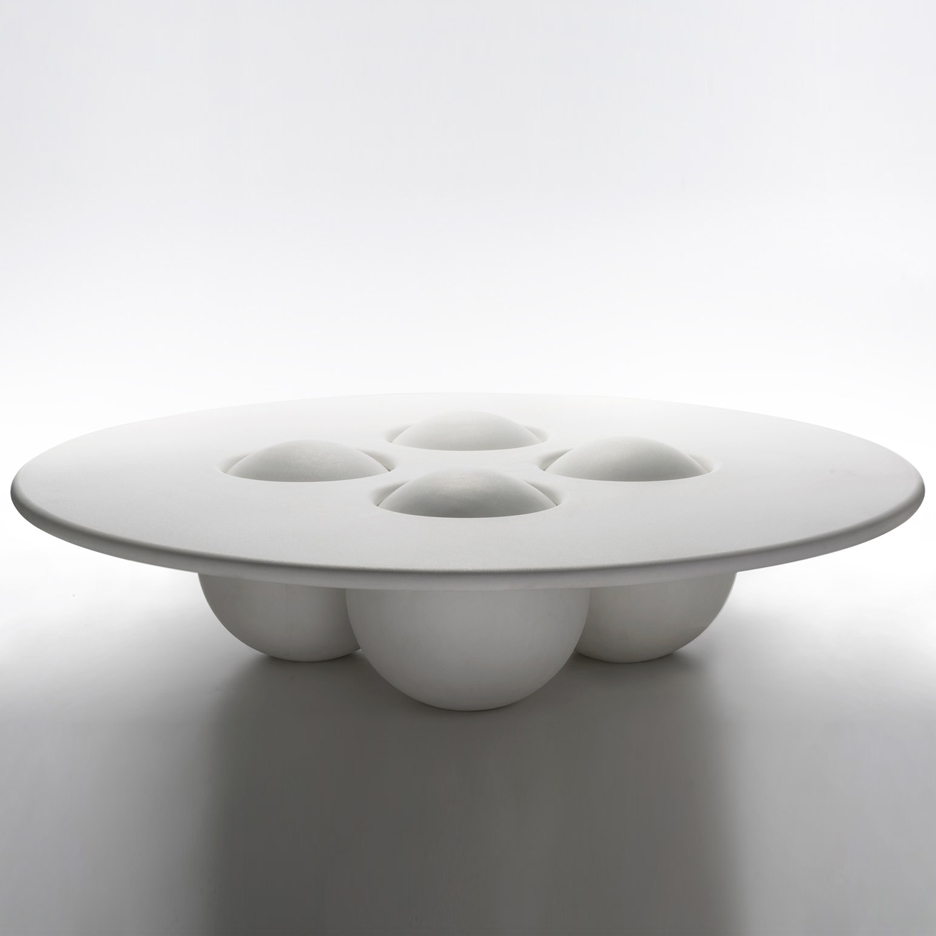
2001: A Space Odyssey inspires Brooksbank & Collins’ coffee table


London design duo Brooksbank & Collins has designed a coffee table based on Stanley Kubrick’s science-fiction movie 2001: A Space Odyssey (+ slideshow). (more…)

http://ift.tt/29HPGZY

Bhutan Happiness Centre / 1+1>2


© Hoang Thuc Hao

© Hoang Thuc Hao


© Hoang Thuc Hao


© Hoang Thuc Hao


© Hoang Thuc Hao


© Hoang Thuc Hao

  • Architects: 1+1>2
  • Location: Bumthang, Bhutan
  • Architect In Charge: Hoang Thuc Hao
  • Design Team: Pham Duc Trung, Nguyen Thi Minh Thuy, Le Danh Quan, Ngo Duc, Pham Gia Thang, Do Quang Minh, Vu Xuan Son
  • Area: 1413.0 sqm
  • Project Year: 2015
  • Photographs: Hoang Thuc Hao
  • Site Area: 9234 m2

© Hoang Thuc Hao

© Hoang Thuc Hao

From the architect. In 2008, Bhutan has been the first country in the world applying the GNH rate (Gross National Happiness) instead of GDP. To celebrate this, The Bhutan Royal and Government have decided to build a center for happiness, where everyone can visit and share their experiences and philosophy about happiness living through meditation, and learn how to be happy and independent from materials.


© Hoang Thuc Hao

© Hoang Thuc Hao

Two in the four main GNH rates are environment protection and preserving culture and identity. Therefore the Bhutan Government has required the GHN center to be environmental friendly and representing local contemporary and traditional cultural identity through design.


© Hoang Thuc Hao

© Hoang Thuc Hao

The project includes a 100 seat convention house, a meditation hall for 250 people, administration, kitchen and dining room, and 5 accommodation houses. The cluster locates on the high mountain close to the river of Bumthang, northeast Bhutan.


Plan / Section

Plan / Section

The design principles are the harmonies among different natural materials: soil – stone – wood; between indoor and outdoor spaces; between technology and traditional vernacular experiences. The half meter wall made of stone and soil ensure keeping the heat in cold winter. The concrete and wooden beam structure; solar energy and water through a natural filter system have helped save energy and increase the connection between human and nature. Existing pine trees were used to build the administration and accommodation centers. With the ecologically sensitive approach, the buildings are part of the natural system.


© Hoang Thuc Hao

© Hoang Thuc Hao

The main meditation hall is inspired from the harmonies and Asian symbols of the earth and heaven with the first storey in round shape and the second in square shape. The idea is to create a balance life for human in which people do not dominate but live peacefully with nature and support each other to create a sustainable universe. 


Details

Details

The convention house with the eclipse shape is inspired from the Buddha tree together with the use of typical vernacular decoration details in a contemporary context.


© Hoang Thuc Hao

© Hoang Thuc Hao

The entire site slightly locates within the beautiful pine forest, becoming an integral part of it.
The opening ceremony took place in October 2015 with the attendance of the Princess and Royal of Bhutan. The Bhutan Center of Happiness is now well operated and welcome by the people of Bhutan as well as international tourists.


© Hoang Thuc Hao

© Hoang Thuc Hao

http://ift.tt/29Mc2Kq

House in Goa / Ankit Prabhudessai


© Prashant Bhatt

© Prashant Bhatt


© Prashant Bhatt


© Prashant Bhatt


© Prashant Bhatt


© Prashant Bhatt


© Prashant Bhatt

© Prashant Bhatt

From the architect. Elegantly placed on a bush hammered granite is a slightly tilted yellow white Frangipani tree which welcomes the visitors with its intoxicating fragrance and beautiful flowers . I tried to tell the stories about the relationship of the indoors to the outdoors , of the body with nature and that of our traditional connection with the roots of interlayered aesthetic history with transparent and rhythmical legibility through the contemporary interpretation of architecture. It is a transformation project of  my house that was built 14 years ago perched at the foothills of the commercial capital of Goa,  Margao.


© Prashant Bhatt

© Prashant Bhatt

We like to entertain a lot of people in the house, so one major brief was to modify the layout of the house in such a way that it keeps in mind the tradition. There are many areas that are positioned throughout the house so as to cater to various sizes and type of social gathering.


© Prashant Bhatt

© Prashant Bhatt

The main concept of the house was to blur the line between indoors and outdoors. The spaces in the house blend into each other creating a free flowing plan that connects the front lawn to the green backyard interlaid with elements from the Goan – Portuguese history.


© Prashant Bhatt

© Prashant Bhatt

We cannot overlook the fact that Goa was ruled by Portuguese for nearly 400 years, but the architecture that sprung up from this era was developed by Goans keeping  the tropical climate of Goa in mind inspirited by the Portuguese architecture context.


Ground Floor Plan

Ground Floor Plan

Inspired by the concept of Architect Le Corbusier, the planning of the house is choreographed around framing of views and scenes that alternate between controlled views of the nature and wide panoramas that create a variety of different atmosphere and experience throughout the house


© Prashant Bhatt

© Prashant Bhatt

The house is never revealed at once. The circulation is planned in such a way that the spaces are slowly unfolded to the visitors in an experiential and spatial journey throughout the house. 


© Prashant Bhatt

© Prashant Bhatt

A lotus pond acting as a reflection pool welcomes the guest towards the balçao (traditional name for entrance porch).


© Prashant Bhatt

© Prashant Bhatt

A teak wood door with a ‘janger dancer’ sculptural face placed on the lintel, an industrial cage light adorned with a tube shaped filament bulb  and the red IPS (Indian Patented stone) finished bench with Azulezos or Goan painted tiles embedded in it define the entrance porch or balçao. Adding to the charm is the floor finished with the bush hammered black granite. Clean architectural elements combined with pure geometrical volumes create a well balanced, almost minimalistic composition at the entrance.


© Prashant Bhatt

© Prashant Bhatt

http://ift.tt/2a7nIF5