Arzuria Gallery / SCDA Architects


© Mario Wibowo

© Mario Wibowo


© Mario Wibowo


© Mario Wibowo


© Mario Wibowo


© Mario Wibowo

  • Architects: SCDA Architects
  • Location: Jakarta, Special Capital Region of Jakarta, Indonesia
  • Area: 680.0 sqm
  • Project Year: 2014
  • Photographs: Mario Wibowo
  • Design Team: Jacqueline McIver, Esther Lau, Wahyuni Kurniawati, Andrew Ng, Nucharee Sakulkamnerdsap, Tanya Valderrama-Mattac, Aleksandra Koroleva
  • Developer: PT Arzu Utama Realty
  • Main Contractor Mandiri : Cheng Meng Furniture Group Pte Ltd PT Alre Udara Jaya, PT Global Furnika
  • Structural Engineer: WEB Structures Pte. Ltd.
  • M&E Engineer: PT. Metakom Pranata
  • Quantity Surveyor: Rider Levett Bucknall Pte. Ltd.
  • Lighting Consultant: Nipek Pte. Ltd.

© Mario Wibowo

© Mario Wibowo

A peek preview into SCDA’s most recent luxury high-rise residential project in Jakarta, the design of Arzuria sales gallery reflects the main development’s clean lines and sculptural form. Housing an exhibition space and sales offices, as well as two fully furnished and fitted-out typical units, the gallery spans over two levels connected by an origami-inspired, blackened steel staircase. 


© Mario Wibowo

© Mario Wibowo

Situated by the main development’s basement boundary, the sales gallery was also intended to function as an observation point from which prospective buyers could witness the construction progress. To maximize the view, the gallery’s northern façade features glazing spanning the full height of its two floors, and framed by a timber-clad portal that opens out towards the building site. In the evening, warm uplights reveal the rich texture of the belian wood chosen for the portal, creating a striking contrast with the rest of the structure’s envelope finished in smooth, composite cement panels. Folding inwards, the eastern façade indicates the main entrance, whilst the southern side is covered with expanded aluminium mesh screening off the strong tropical sun. 


© Mario Wibowo

© Mario Wibowo

Section

Section

© Mario Wibowo

© Mario Wibowo

Inside the main exhibition space, a towering 1:100 scale model of the Arzuria development stands between the reception counter and the discussion area. Passing by through a generous lounge, the visitors arrive at the 2-bedroom show suite complete with the tower’s signature balconies that span the unit’s entire length. Here, they serve as additional circulation, connecting the show suite’s different rooms as well as providing views towards the construction site. The gallery’s second floor houses the sales offices and the 3-bedroom show suite. Just as the rest of the building’s interiors, the show suites were fully designed and styled by SCDA’s Interiors team, creating a holistic experience and offering a fresh take on contemporary Jakartan lifestyle.


© Mario Wibowo

© Mario Wibowo

http://ift.tt/29svhJB

Elongated Industrial Box – Ding Hui Yuan Zen & Tea Chamber / He Wei


© Zou Bin

© Zou Bin


© Zou Bin


© He Wei


© Zou Bin


© Zou Bin

  • Architects: He Wei
  • Location: Beijing, China
  • Project Team: Chen Long, Wang Qi,Zhao Zhuoran
  • Client: Better Lift Art Club Co., Ltd
  • Land Area: 300sqm
  • Area: 400.0 sqm
  • Project Year: 2016
  • Photographs: Zou Bin, Courtesy of He Wei
  • Lighting Design Team: Zhang Xin, Han Xiaolong, Zhou Xuanyu
  • Special Adviser: Xue Xiaoming, Zhang Yicheng
  • Site Area: 300 sqm

© Zou Bin

© Zou Bin

From the architect. This is a factory renovation project. Rebuilt into an office in its latest renovation, the old factory experienced several times of renovation after its construction in 1970s. Unlike other factories with large space, the factory doesn’t have a big space span while the height is normal showing no special features. However, a 100 square meters backyard is quite impressive. Based on the owner’s requirement, designers need to reconstruct it into a Zen Chamber.


© He Wei

© He Wei

As a Zen Chamber, it should have the Eastern spirit and ancient concept. Certainly, the ancient concept is not a simple display of traditional symbols. This design wishes to convey the essence of the Chinese private gardens, such as “seeing a bigger picture from small matters” and “the path winds through high peaks”.


© Zou Bin

© Zou Bin

The core of the design is restructuring the circulation of the space. Designers gave up the simple layout of the existing circulation space with hanging stairs directly attached to its entrance. The design creates a longer circulation for people to calm down when entering the main space in the philosophy of Zen Tea. An extra-long, zigzag path is made: people can enter the building from the west side after passing through a long and narrow semi-outdoor corridor. They will enter the backyard after turning to the north and walking through the entire Zen Chamber.


Section

Section

Architect added a folded stairs in this area, located between the long ramp and paralleled stairs. People will see the inner courtyard and a big tearoom through the grating racks while stepping up the stairs. Then they can reach to the second floor through a long, narrow, and closed space. The second floor is served as the main public space of the building, including a Guqin (a representative instrument of traditional Chinese musical culture) room, small tearooms, meditation room and a large tearoom.


© Zou Bin

© Zou Bin

The changing rhythm of the brightness is another key of renovation. Around the inner court, the newly created space changes its appearance between the natural light and the artificial light arranging the transparent, semi-transparent and close-up visual effects. After entering the building, people could enjoy the courtyard in different time and different perspectives, and vice versa, which is also a practice of sampling the Chinese garden.


© Zou Bin

© Zou Bin

http://ift.tt/29wPucx

Star Wars Home / White Interior Design


© HighliteImages

© HighliteImages


© HighliteImages


© HighliteImages


© HighliteImages


© HighliteImages


© HighliteImages

© HighliteImages

“Everyone lived a child,” the designer with the “Star Wars” elements to meet the dreams and innocence owner in mind, to create a happy space scene, to let homeowners dream world beyond reality to give achieve. The open space design and use of materials defined floor space, with an open, surrounded by dynamic lines designed to amplify the effect of space, and the integration of the owner’s habits and moving lines, creating a natural interaction between people.


© HighliteImages

© HighliteImages

Spatial pattern designed to meet the basic requirements of homeowners (two bedrooms, a study, a kitchen) and storage demands, the designers all links to other spaces in the entrance with a move to integrate online, and through the line dividing door way piece hidden in the wall is an enlarged scale space.


Floor Plan

Floor Plan

Extending from the main entrance of white storage cabinets integrated video wall design, the door on a white sheet irregularities irregular line is (Darth Vader) Das. Vader Darth Vader lightsaber left after cutting marks. The table is in accordance with the Imperial Army TIE fighter TIE Fighter construction of the build, with the double-bladed lightsaber Darth Maul Darth Maul chandelier used to create a fun dining space scenes, like the embodiment of a member of the Imperial Army.


© HighliteImages

© HighliteImages

Kids room Millennium Falcon Millennium Falcon driver cabin design concept, originally designed to drive windows viewfinder, shutter use inkjet printing to create a way to outer space Rebel and Imperial forces battle scenes, children’s clothes holding cabinet cabin space is also designed cabinet in a small space like the embodiment of the Resistance.


© HighliteImages

© HighliteImages

Space design the most important change is to make life comfortable and designers to play with heart, innocence as a starting point to create a unique space design.


© HighliteImages

© HighliteImages

http://ift.tt/2a3Im9o

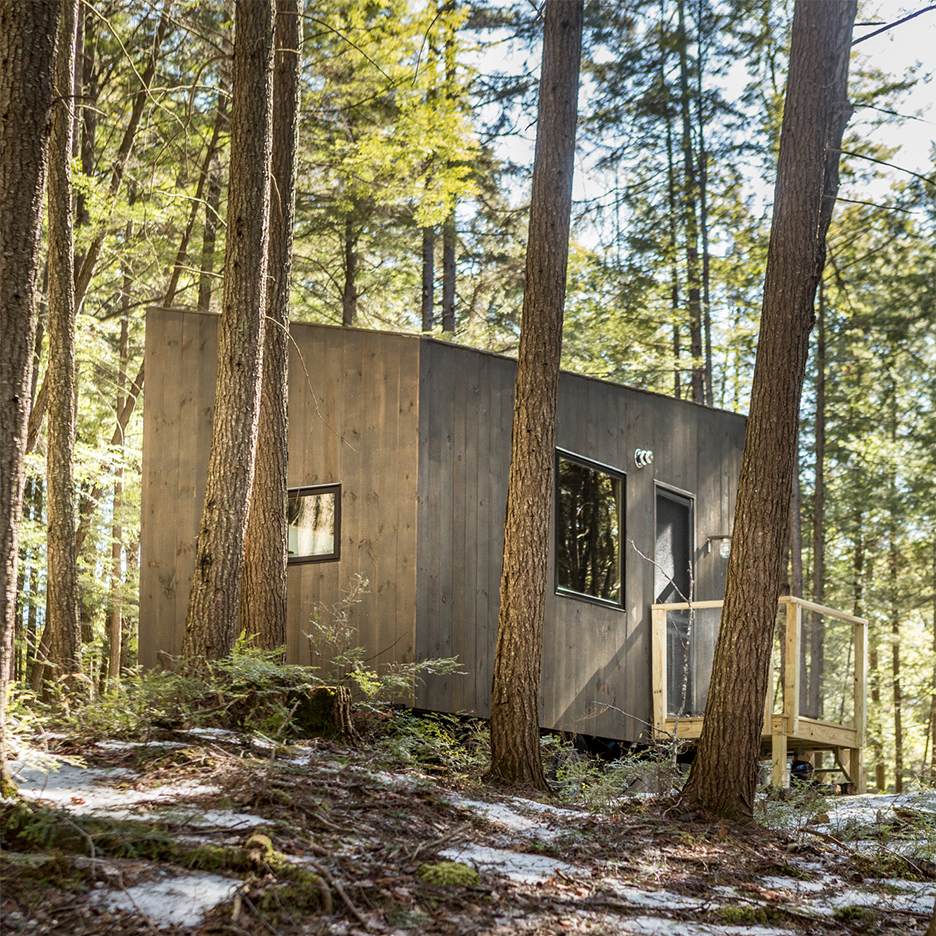
Harvard students create tiny vacation houses for stressed-out city dwellers


Graduate students from Harvard University have launched a company that designs, builds and rents out wilderness micro cabins to urban residents “looking to escape the digital grind and test drive tiny-house living” (+ slideshow). (more…)

http://ift.tt/2a3Hd1t

Reading Africa from Outside: C. B. George’s Picks

Death of Rex Nhongo Side by Side Crop

“Writing about Africa (italics to denote place of public imagination as opposed to continent of fifty countries and a billion people) as a non-African is a tense business. You risk accusations of essentialism from the authenticity police, especially if your work appears to contradict their own essentialism. “Write what you know!” they bluster. And thus with one trite aphorism historical fiction is consigned to . . . well, history.

“My novel The Death of Rex Nhongo is set in Zimbabwe, but it’s not about that. Instead, it’s a loose-limbed thriller of betrayal and moral bankruptcy. In fact, now I think about it, I can honestly say that I have written what I know. Unfortunately, I don’t know everything. And it’s about that, too.

“To be fair to the essentialists, there has been an awful lot of rubbish written by non-Africans set in Africa. But, there’s been some good stuff, too . .” . — C.B. George


Heart of Darkness
By Joseph Conrad

“Conrad’s novella of a journey up the Congo River in search of the mysterious ivory trader Mr. Kurtz is a peculiar, ambiguous, and utterly gripping tale. Also, it has surely been subject to more criticism than any other work of fiction, with Chinua Achebe memorably describing its author as “a bloody racist.” Was he? I’m tempted to be flip here and quote Avenue Q (“Everyone’s a little bit . . . “). Either way, Conrad writes, “The conquest of the earth, which mostly means the taking it away from those who have a different complexion or slightly flatter noses than ourselves, is not a pretty thing when you look into it too much.” And there’s not much arguing with that.”


Brazzaville Beach
By William Boyd

“William Boyd is a masterful storyteller, and this novel is the apotheosis of his craft. Ecologist Hope Clearwater reflects on the two sets of events that have defined her life — her relationship with a deluded, brilliant, bonkers mathematician, and her work at a chimpanzee research center. Boyd deploys a thriller engine to propel us through an extraordinary examination of what makes us human and what makes humans animals.”


The Poisonwood Bible
By Barbara Kingsolver

“The first time I read The Poisonwood Bible, it paralyzed me — if Kingsolver could make a story do this, what point to my superficial tinkering? Fortunately, I quickly remembered I am a novelist and therefore bullheaded. This is about an American family who move to Congo at the time of independence with their deluded missionary father — religious conquest is also “not a pretty thing.” If you want to know more, you have to read it. In fact, you simply have to read it.”


The Catastrophist
By Ronan Bennett

“Another novel set around Congolese independence. Another novel of male delusion — I’m spotting a theme. Does Africa provide the perfect backdrop for such characters, or do they simply appeal to me? I’ll save that question for therapy. In this case, Gillespie follows Italian journalist Inès to Léopoldville in the hope of rekindling their relationship. He is mystified that a woman would prefer to commit to a righteous cause than his rather detached charms. I feel his pain.”


The Rift
By Alex Perry

“A book of nonfiction and the only one on this list that is actually about Africa (though still not “about Africa“). A former correspondent for the likes of Newsweek and Time, Perry reflects on largely unreported stories from the continent of rapid growth, technological development, failing aid and intervention, and, most of all, local solutions to local problems. That it’s written by a non-African is an irony of which Perry is all too aware, but it remains an insightful, humble, hopeful piece of work.”

The Barnes & Noble Review http://ift.tt/29EeYbs

Abandoned Church by gilliamlynn78 Found this abandoned church…

via Abandonedforgotten http://ift.tt/29tRa6G

Ulumbarra Theatre / Y2 Architecture


© Peter Clarke

© Peter Clarke


© Peter Clarke


© Peter Clarke


© Peter Clarke


© Peter Clarke

  • Collaborators: Matthew Dwyer, Peter Tonkin, Nicholas Gammaldi, Richard Bryant, Michael Roberts, Walter di Giangregorio, Felicity Brown, Milan Kothari, Sofia Ward, Levi Kalms, Devla Kabas, Maria Plancarte Fexas, Amy Ang, Julia Morris, Renee Wheedon, Lindy Zerman, Kristina Tsalikis, Oliver Lagasca

© Peter Clarke

© Peter Clarke

From the architect. Built in 1861 the Sandhurst Gaol stands as part of a government precinct overlooking its city. Bendigo
Senior Secondary College surrounds the Gaol, hosting around 1800 year 11 and 12 students on a tight campus block. In 2006 the gaol complex was transferred to the college, beginning a period of consultation with the college and community on the adaptation of this heritage listed facility into a high quality civic centre for Performing Arts.


© Peter Clarke

© Peter Clarke

Ulumbarra Theatre provides a series of teaching spaces across hospitality, music and performing arts all in conjunction with a 4-star rated, 1000 seat community theatre. Facilities are spread across 4 main levels (with additional backstage components) and totals around 6,500m2, with heritage components threaded throughout. It is designed to create a central heart for the college that connects to both the campus facilities and the surrounding community. The complexities of the brief come in with the incorporation of a dual client body and the social history of the site including the constructed memory that often comes with a heritage building.


© Peter Clarke

© Peter Clarke

Plan

Plan

© Peter Clarke

© Peter Clarke

The design draws on the prison’s heritage while inverting its relationship with the community from place of imprisonment to a welcome place of gathering. To the north, the new pubic face of the centre addresses
Gaol Road; inviting visitors through a break in the old gaol wall. The Theatre’s fly tower and contemporary facilities are deliberately located to rear of the site, drawing patrons through the heart of the former prison.


© Peter Clarke

© Peter Clarke

Section

Section

© Peter Clarke

© Peter Clarke

This journey leads to central hall connecting Ulumbarra’s old and new spaces. The Gaol’s radiating Pentoville plan becomes apparent when viewing the addition of the black box hospitality wing to the south. Ulumbarra encourages exploration of the site’s heritage with elements of the new lightly touching the old.


© Peter Clarke

© Peter Clarke

Frequently occupants are given new incites; from windows that frame old guard towers to reflections of the gaol viewed in the glazing of courtyards. The palette is deliberately restrained; the new providing a contemporary backdrop that allows the heritage elements to retain their clarity and status. Outside the Gaol’s Kitchen Gardens have been reinvigorated to form an alfresco dining area that connects with the central body of the college, creating a fluid engagement with the student body.

By working extensively with all stakeholders, the facility has been designed to turn its inherent complexities into opportunities. The planning allows for various occupants to work simultaneously either as independent users or in collaboration and the integration of the college’s Hospitality and Arts programs is crucial to the success of project.


© Peter Clarke

© Peter Clarke

Ulumbarra provides unique opportunities for its students to work both in industry relevant environments and with world class professionals, attracted to this regional centre due to the facilities available at Ulumbarra.


© Peter Clarke

© Peter Clarke

The community further benefits from access to a range of facilities including a drama room that doubles as a theatre, a dance studio and the commercial kitchens. Ulumbarra’s adaptation ensures that a redundant heritage facility retains a civic purposes and is transformed into an enriched community asset that intrinsically values both Bendigo’s history and its future.

http://ift.tt/29CN5RV