
Private members club Soho House is considering expanding into the fast-growing co-living market, according to founder Nick Jones. (more…)
Private members club Soho House is considering expanding into the fast-growing co-living market, according to founder Nick Jones. (more…)

Today, thanks to our partnership with Sketchfab, we take you on a virtual tour of some of the most breathtaking historic fortresses across Europe. The design of castles and fortress complexes are particularly interesting because of their strategic siting and defense mechanisms. As strongholds of territorial claim, fortress complexes are meant to be self-sustaining in times of conflict and contain not only defense fortifications but a suite of supporting structures such as chapels, schools, and housing. This effectively turns fortress complexes into a village within a village. These richly detailed scans hosted on Sketchfab allow us to see in detail the urban planning strategies of different historic periods and places.
For a more immersive experience, all of these models can be viewed on a virtual reality headset such as Google Cardboard.
Portugal’s King Joseph ordered the Fortress of Our Lady of Grace to be constructed in 1763, and it’s considered to be a masterpiece of 18th century military architecture due to its multi-walled reinforcements. Located just a stone’s throw away from the Spanish border, the fortress occupies the highest hill in the region which may have been a contributing factor to its various military victories in the 1800s. The hill was once the site of the ancient Chapel of Our Lady of Grace which is the namesake for the fortress. The star-shaped structure has recently been appointed UNESCO World Heritage status.
Located on a rocky hilltop of the Carpathian Mountains in Transylvania, the Râșnov Fortress sits 650 feet above an adjoining town. Dating as far back as the 12th century, the fortress was designed as a place of refuge for extended periods of time, containing nine towers, two bastions and a drawbridge. Having been used as a defensive fortress as late as the Revolution of 1848, the fortress was only ever forced to surrender once, in 1612.
Castelul Corvilinor, as it is known in Romanian, is considered to be the most beautiful Gothic-style castle in Romania. The structure was originally built as a medieval keep on a former Roman Camp. It served as a fortress until the mid-14th century when it was transformed as the castle residence for Iancu of Hunedoara, Transylvania’s ruler at the time. The castle is well appointed with iconic Gothic elements such as high buttresses. It also contained rich inner courtyards and an impressive drawbridge. The infamous Vlad the Impaler is rumored to have been imprisoned in this castle.
The castle is part of a large complex in the Dordogne region of France. Beginning as a simple wooden tower in the 12th century, the site gradually grew into a vast complex over multiple phases of building. Strategically located at the intersection of two important thoroughfares, the Château was occupied during multiple wars in French history including the Hundred Years’ War. However, the complex came to be abandoned by the early 17th century. Thanks to its location in the Vezere valley, home of the world-famous Lascaux Caves, the Château coincidentally also sits above a cave containing a prehistoric painting.
The most impressive aspect of this castle is its strategic sighting within a cave mouth, in its location in modern-day South Central Slovenia. Seemingly lodged into rock, the castle was reportedly difficult to access and easy to defend from attacking troops. The castle’s most famous resident is Erazam of Predjama, a knight and member of nobility who came into conflict with the powerful Habsburgs in the 15th century. The meandering tunnels and cavities of the cave proved useful to Erazam; one passage leads to a secret exit at the top of the cliff, which was used to bring supplies into the castle during a siege which lasted for a full year.
The castle, which was built in 1354, is believed to have been built atop a much older preexisting Gallo-Celtic structure. The Burg Metternich, as it is alternatively known, has a long history of multiple contested changes of ownership between noble families in the region. However, the castle was in dismal state until its private owner began rehabilitation in the 1970s.
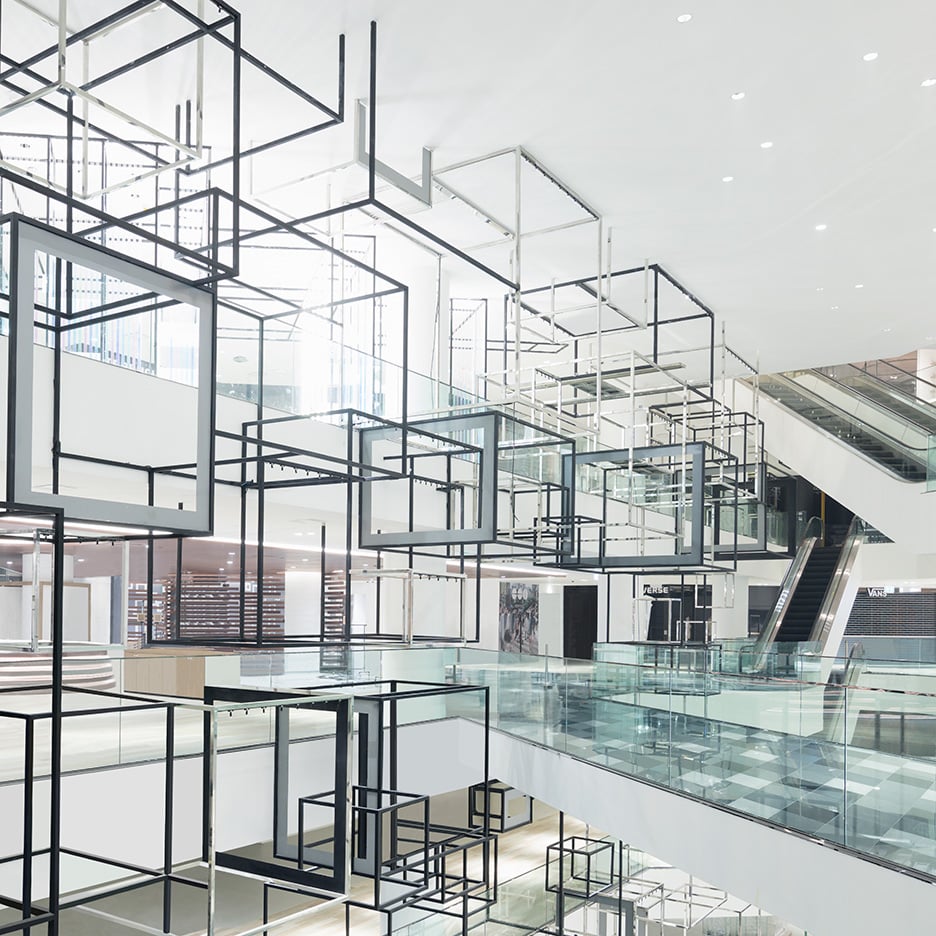
Movie: Oki Sato of Nendo explains the concept behind the Japanese studio’s redesign of a 40,000-square-metre shopping mall, in this video Dezeen filmed in Bangkok for retail development company Siam Piwat. (more…)

The project is located on the paulista shore in the region of the Rain Forest and the land has a mountainous topography with dense vegetation. The introduction of this house to this landscape has the objective of optimizing the connection between architecture and nature, privileging the view looking out to the ocean and the incidence of sunlight in the internal spaces. Furthermore, the positioning of the house on the site obeyed the previously-open area in the vegetation.
The main volume of the house is elevated from the ground and seems built into the topography. The house, therefore, projects itself out from the mountain. The contact elements between the slope and the construction – as for example the wooden decks – were shaped to respect the existing land, thereby creating an organic interaction between nature and the architectural elements. In the part that it comes out of the mountain, the structure touches the ground with only two pillars.
The 3 floors of Jungle House create a clear programmatic division for the project: the ground floor houses a large covered wooden deck, connected to a small room for the children; on the first floor there are six bedrooms – five of them with small verandas with hammocks – and a tv room; the third and last floor is the social area of the house, including a swimming pool, a living room and the kitchen.
Thus, the architecture defined an inverted vertical organization of the program when compared to what is usually done in single-family houses: while the pool and the social areas are on the roof, the bedrooms are located on the floor below. The deck is on the ground floor- protected by the projection of the house – is an ample and generous space that configures a shaded shelter for the children to play. The utility rooms are also located on this story.
From the wooden deck on the ground floor starts the stairs to access the house volume that “interrupts” the concrete slab. Before entering the closed space, one passes an intermediary space, enveloped by concrete and which houses a luminous work by the artist Olafur Eliasson. The interiors project sought to create a modern atmosphere, offering a cozy feeling necessary to remain in this tropical environment.
The landscape recomposes the native species. When one is in the house, the relationship with the surrounding vegetation occurs not only through the view but also through the plants that surround the wooden decks. On the ground floor, you can stroll in the midst of trees; on the first floor, light enters filtered through the tree-tops; and on the roof, there is the vegetation with the ocean in the background.
The architecture of the house privileged the use of exposed concrete and wood, as much in the interior spaces as well as the exterior. The bedrooms have wooden sun-screens, small brises-soleil, mounted as folding doors that can be manipulated by the users according to the climactic needs.
In the Jungle House, the project began with a transversal cut which allowed for the positioning of the pool to be semi-built-in to the slab thereby not losing any area on the floor below. Furthermore, the infinity pool as well as the raised border relative to the height of the deck makes it such that the view and the landscape serve as an extension of the pool waterline. To lessen the height of the top floor and thus get an external proportion more horizontal to this volume, the floor in the living room was lowered by 27 cm relative to the external wooden deck.
This last floor offers a spatial sensation which synthesizes the principles of the house: on one side, there is a deck which houses the hot tub and the sauna – where there is an intense relation between the architecture and the mountain and its vegetation; on the other side, a ground fireplace and the pool; in the center – between these two free spaces – is the living room open to both sides and with cross-ventilation. This social space has a radical relation with nature, by means of both the view of the ocean as well as the proximity to the forest in the mountain.
Mom. Either we have one, we are one, or will become one. Her love will always be with us, no matter how far from her are we. Until we have our own children we won’t understand all the love, and all the worries that can fill one mom’s heart.
In all Disney’s stories, there is a mom. Some figures are good, some are downright evil. Just like in real life.
Take just now this fun, quick quiz, to find out which Disney mom are you most like!
The post Which Disney Mom Are You Most Like? appeared first on Change your thoughts.

The Australian Institute of Architects has announced the winners of its 2016 SA Architecture Awards, which honor projects undertaken by architects in South Australia that “[respond] to the challenges of today and needs of tomorrow.”
Winners have been sorted into 16 categories, such as Public Architecture, Commercial Architecture, and Sustainable Architecture.
The 2016 Winners of the SA Architecture Awards Are:
Public Architecture:
Jack McConnell Award – Stretton Centre / HASSELL
Commendation – Glenunga Hub / Greenway Architects
Educational Architecture:
Dr John Mayfield Award – Flinders at Tonsley / HASSELL
Commendation – Cardijn College Music Centre / Tridente Architects
Residential Architecture – Houses (New):
The John S Chappel Award – West End Residence / Ashley Halliday Architects
Award – Tusmore Residence / Grieve Gillett Andersen
Award – Grass Trees / Max Pritchard Gunner Architects
Commendation – Friedrichstrasse House / Troppo Architects
Commendation – Waitpinga Retreat / Mountford Williamson Architecture
Residential Architecture – Houses (Alterations & Additions):
The John Schenk Award – Veil and Mortar / KHAB Architects
Award – Fade to Grey / Grieve Gillett Andersen
Commendation – LOCH / John Adam Architect
Commendation – Cawley Tree House / C4 Architects
Residential Architecture – Multiple Housing:
Commendation – Gibson & 7th / Williams Burton Leopardi
Commercial Architecture:
Keith Neighbour Award – Base 64 / Williams Burton Leopardi
Award – South Australian Drill Core Reference Library / Thomson Rossi
Commendation – Beresford Wines Cellar Door & Tasting Pavilion / Alexander Brown Architects
Heritage:
David Saunders Award – Base 64 / Williams Burton Leopardi
Award – Tonsley Main Assembly Building and Pods / Woods Bagot and Tridente Architects
Commendation – Torrens Island Quarantine Station / Habitable Places
Commendation – Saint Francis Xavier Cathedral Pipe Organ Project / Grieve Gillett Andersen
Interior Architecture:
Robert Dickson Award – Oggi / studio-gram
Award – UniSA Student Lounge / Phillips/Pilkington Architects
Award – Centre for Senior Learning, Pulteney Grammar School / Walter Brooke & Associates
Commendation – Elders Head Office / JPE Design Studio
Urban Design:
Commendation – Riverbank Bridge / Tonkin Zulaikha Greer, Taylor Cullity Lethlan and Aurecon
Commendation – Tonsley / Oxigen
Commendation – Henley Square Remade / T.C.L with Troppo Architects
Small Project Architecture:
Marjorie Simpson Award – House on Mayfair / Grieve Gillett Anderson
Award – 4 Structures at Henley Square / Troppo Architects and T.C.L
Commendation – Waterfall Gully Shelter and Toilet Block / Flightpath Architects
Sustainable Architecture:
Award – Tonsley Main Assembly Building and Pods / Woods Bagot and Tridente Architects
Award – Tonsley / Oxigen
Enduring Architecture:
Jack Cheesman Award – South Australian Forensic Science Centre / SA Public Buildings Department, Government of South Australia
Colorbond® Award for Steel Architecture:
Award – South Australian Drill Core Reference Library / Thomson Rossi
The City of Adelaide Prize:
Prize Winner – Pink Moon Saloon / Sans-Arc Studio
Commendation – Zoos SA Nature’s Play Ground / Phillips/Pilkington Architects and WAX Design
News via the Australian Institute of Architects.
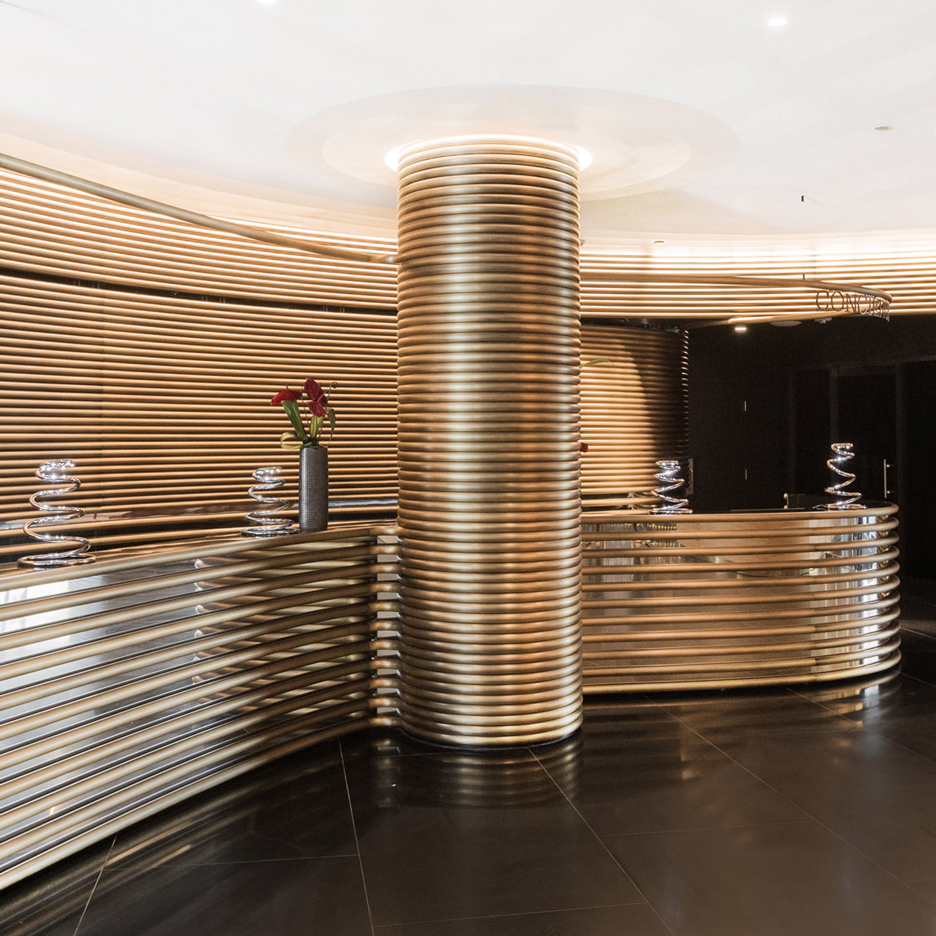
The hotel in Washington DC made famous by the Watergate scandal has reopened with interiors by London studio Ron Arad Architects (+ slideshow). (more…)

San Francisco – California – USA (by Howard Ignatius)

💙 Golden Sunset !! on 500px by almalki abdullrahman, Taif, Saudi… http://ift.tt/1OCZBZL


