Incidental Space: Inside the Swiss Pavilion at the 2016 Venice Biennale


«Incidental Space»  A project by Christian Kerez / curated by Sandra Oehy. Image © Laurian Ghinitoiu

«Incidental Space» A project by Christian Kerez / curated by Sandra Oehy. Image © Laurian Ghinitoiu

As part of ArchDaily’s coverage of the 2016 Venice Biennale, we are presenting a series of articles written by the curators of the exhibitions and installations on show.

All architecture is exhibitionist. Exhibitions are not simply sites for the display of architecture, they are sites for the incubations of new forms of architecture and new ways of thinking about architecture. [1] – Beatriz Colomina

An architecture biennale can be more than a place to simply represent and celebrate the status quo in architectural production. The Biennale’s state of exception and its spatial distance from where people normally work open up a space for examining and critically questioning the conditions of everyday work and production. Although, technologically speaking, more is possible today than ever before, in recent years architects’ creative latitude has been greatly reined in by an enormous—and growing—burden of rules and regulations. Against this background, the architectural exhibition is becoming an ever more relevant medium for a critical practice of architecture. Understood in these terms, an exhibition is no longer just a place for representing architecture ex post facto, as it is still often treated today. Instead, the fact of the exhibition space’s autonomy, and its distance from the “real” world of public and private architecture, has a potential that is increasingly being recognized and put to use. Exhibitions are becoming a place for researching and producing an experimental and critical architectural practice: a place not for the presentation of finished products, but for the production of content. The simultaneous limitations and license to experiment lent by the exhibition space focuses the object of research, allowing for the emergence of new insights, interpretations, and meanings. This calls into question the supposed boundary between architecture and the exhibition. Inquiry becomes a form of display.


«Incidental Space»  A project by Christian Kerez / curated by Sandra Oehy. Image © Laurian Ghinitoiu

«Incidental Space» A project by Christian Kerez / curated by Sandra Oehy. Image © Laurian Ghinitoiu

Thinking Incidental Space: The Exhibition as Inquiry

Even today, Biennale pavilions tend to stage more or less classical architectural exhibitions using models, drawings, and photographs—media, in other words, that refer to a reality outside the exhibition space. But architecture can also be represented using the medium of architecture itself. This is where Christian Kerez enters in: for him, the exhibition Incidental Space stands on equal footing with his other architectural projects. In any of his projects, Kerez’s central concern as an architect is the knowledge to be gained through architectural means.


«Incidental Space»  A project by Christian Kerez / curated by Sandra Oehy. Image © Laurian Ghinitoiu

«Incidental Space» A project by Christian Kerez / curated by Sandra Oehy. Image © Laurian Ghinitoiu

It is in pursuit of this knowledge that Kerez, for the exhibition in Bruno Giacometti’s Swiss Pavilion in the Giardini, has built a space as an architectonic project. This space is an event that takes place at a specific location and justifies itself there. This space is meant to stand only for itself, as a claim or a thesis; not to serve as an illustration of some other space beyond itself, or gesture toward some particular tendency in architecture. It is not a reproduction or portrayal; instead, it is a process and an ephemeral manifestation. This space is an experiment: a fundamental research project investigating how architectural spaces might be conceived and might be built, both in the imagination and in technical terms. In this experiment, space has primacy above all else: space as a concept, as an idea. But the physical manifestation of the space is also meant to be an event, one that gives every visitor a means of accessing the project. In this way, the Swiss Pavilion becomes a place of direct architectural-spatial observation and experience; in the Giardini, architectural space as such is put on display. In this beautiful and unique location, surrounded by old trees, Incidental Space engages in a dialogue with its contextual location, commenting on the architectural domain of follies, whose only purpose is to enhance and accentuate the uniqueness of the landscape. At the same time, it reflects on the location’s connotations as a historic exhibition space, a place where architecture surpasses the limits of everyday architecture, bound as it typically is to functionality, permanence, and communicability. 


«Incidental Space»  A project by Christian Kerez / curated by Sandra Oehy. Image © Laurian Ghinitoiu

«Incidental Space» A project by Christian Kerez / curated by Sandra Oehy. Image © Laurian Ghinitoiu

With this as a starting point, Kerez’s Incidental Space attempts to explore the outer limits of what can be achieved in architecture today—in terms of both technical feasibility and the limits of our own imagination. How can you use the medium of architecture to contemplate an architectural space that is entirely abstract and as complex as possible? How could this kind of imaginary space even be visualized, and how could it be produced? The goal of this project was not to create a built space using any specific construction method, design method, or spatial program. Instead, with the help of an abstract architectural objective, it aimed to produce an “atomized” space, a small space with maximum possible complexity and with infinite interior extension—a space whose visual character cannot be something easily decoded, that doesn’t depict or represent any other space, that defies univocality and withdraws from any unambiguous legibility. In short, Christian Kerez sought to create a space that in no way corresponds to what architecture has hitherto considered to be architectural space.


«Incidental Space»  A project by Christian Kerez / curated by Sandra Oehy. Image © Laurian Ghinitoiu

«Incidental Space» A project by Christian Kerez / curated by Sandra Oehy. Image © Laurian Ghinitoiu

An assignment formulated in this way demands a design process far removed from the intentionality of artistic sovereignty. For Kerez, the actual work of architectural design isn’t found in drawing, model-building, speaking, or writing. Instead, it is fundamentally about making decisions:

On architectural design: every construction is the outcome of a series of traceable decisions. But for many buildings, these decisions all just accumulate without any relation to each other. The finished building, to a certain degree, represents a catalogue of the measures that were taken. But a holistic spatial experience or a cogent architectural statement can only come about when all the decisions in the design process are reciprocally determined by one another. In that way, they take on their own imperative. In other words, a decision no longer becomes a question of personal taste, but one of architectural consistency. It is no longer a question of personal authority; the decision takes on a generally valid character, comprehensible to anyone. In this way, the search for criteria becomes the actual work of design; decisions result from this. These criteria of judgment can in turn only be derived from an overall architectural problem, an idea, which must be further reconsidered with every successive decision. Every new architectural problem demands its own specific means of investigation and specific means of reflection for valid criteria to be derived from it. And if, for us, the architectural problem includes the search for alterity, or for the enigmatic, that changes nothing in this definition of architectural design. On the contrary, it confirms this definition by different means.

Many buildings, particularly in contemporary architecture, achieve a holistic character via a shortcut in the design process: they borrow from architecture that has already been built, from something that has already been holistically worked out. This was precisely the shortcut that was precluded for us in our contribution to the Biennale in the Swiss Pavilion, since we didn’t want the built space to refer to some other space. We didn’t want it to atrophy into mere illustration. Instead, the space was meant to assert itself as an event at a particular location, for a particular time. For this reason, there was no option to depend on any existing work of architecture to attain some measure of certainty and efficiency in the design process. Instead, with our goal of generating new experiences, we were forced to understand architectural design as an intellectual adventure, full of risk. Nonetheless, Incidental Space is emphatically not a space that has been created at random, or worse, a space that has generated itself.

In contrast to an architecture of disconnected elements, a holistic approach to architecture can only come about through the simultaneity of all forms of representation and all modes of looking. This means that all decisions, even if they were reached sequentially, must nonetheless coincide in the moment of looking at the structure. This precludes a linear design process, in which decisions are made independently of each other in disconnected sequence. – Christian Kerez


«Incidental Space»  A project by Christian Kerez / curated by Sandra Oehy. Image © Laurian Ghinitoiu

«Incidental Space» A project by Christian Kerez / curated by Sandra Oehy. Image © Laurian Ghinitoiu

As an architectural project, Incidental Space attempts to overcome the contradiction in terms between the enigmatic and the technically precise; it seeks to tease out a wayward space using a method that insists, as one of its criteria, on the maximum possible complexity. The space results from a deliberate combination of disparate processes. The character of this premise is not aesthetic or creative. Yet at the same time, the space doesn’t emerge by itself, it is not discovered; instead, it is sought out and then developed. By linking digital with manual processes, with the help of a variety of technical tools of translation, a highly detailed architectural space is teased into existence. It is transformed into a space created and formed by the caprices of the incident, where incident is understood in the sense of an “occurrence of an action or situation that is a separate unit of experience,” or as “something dependent on or subordinate to something else of greater or principal importance.”  In other words, it becomes an Incidental Space. 

[1] Beatriz Colomina, quoted on the back cover of Exhibiting Architecture: Place and Displacement, eds. Thordis Arrnius, Mari Lending, Wallis Miller, Jeremie Michael McGowan (Zurich: Lars Müller Publishers, 2014). 

http://ift.tt/29jASlf

Bordeaux wine museum by XTU Architects features bulging gold-striped body


This huge bulbous building by XTU Architects creates a wine museum on the Bordeaux riverfront (+ slideshow). (more…)

http://ift.tt/29oH0at

House H / Abiboo


© Joao Morgado

© Joao Morgado


© Joao Morgado


© Joao Morgado


© Joao Morgado


© Joao Morgado

  • Architects: Abiboo
  • Location: Madrid, Spain
  • Architect In Charge: Alfredo Munoz-Herrero
  • Design Team: Ronan Bolaños, Felipe Samarán, Jesus Amezcua, Delia Rodriguez, Oscar Hernando, Luis Rocca, Daniel Jimenez, Carla Anton, Jordi Mas, Manel Rio, German Gil, Emiliano D’Incecco, Rodolfo Pomini, Jesus Reyes, Ivan Sanchez, Mariluz Jimeno, Cristina Domecq
  • Area: 1500.0 sqm
  • Project Year: 2015
  • Photographs: Joao Morgado
  • Structures: ABIBOO Architecture & Jorge Torrico + Alvaro Ruiz
  • Mep: JG Ingenieros, Plenum Ingenieros
  • Construction Project Manager: Carlos Garcia
  • Contractor: Contratas y Obras
  • Plot Area: 3720 m² – 40000 sqf

© Joao Morgado

© Joao Morgado

 House H  is located in an exclusive area in Madrid. The house has a floor area of 16,145 sq. ft. (1.500 m2) and is the answer to the broad and diverse functional needs of the client, a well-known international sportsman.


Ground Floor plan

Ground Floor plan

In the residence, growth occurs in a non-hierarchical order, each space has different characteristics but similar importance. The villa is designed as a sponge, with multiple micro-spaces designed especially in relation with sensorial experiences and inter-related to each other.


© Joao Morgado

© Joao Morgado

The ground floor has the typical program associated with a villa along with many patios that make the house look bigger due to its integration with the site. The first floor includes spaces like office, guest rooms and play area. The basement includes spaces associated with oneself (meditation rooms, gym, spa) and with others (party areas and lounges).


© Joao Morgado

© Joao Morgado

The discontinuity expands from the inside to the materiality of the facades. The secondary areas are built with a façade in exposed concrete, while the day spaces in the center of the floor plan are in stucco and glass. Finally the night areas are shown to the outside in a metallic ventilated façade that reflects the light and create a strong contrast between all the different materials used.


© Joao Morgado

© Joao Morgado

The environmental commitment of the project is noticeable not only in the use of eco-friendly materials; the villa also pays special attention to passive strategies that respond to sun radiation, natural light and wind. The design leverages the local micro-climate through the existence of patios, water bodies, natural ventilation strategies and water management solutions while takes advantage of active environmental solutions such as the use of geothermal heat pumps That Reduce Considerably The CO2 Consumption.


© Joao Morgado

© Joao Morgado

http://ift.tt/29jDQ4N

Studio Arthur Casas Designs an Exquisite Townhome in New York City

OM Townhouse by Studio Arthur Casas (6)

OM Townhouse is a private residence located in New York City, USA. It was designed by the Brazilian firm Studio Arthur Casas. OM Townhouse by Studio Arthur Casas: “Built in 1910, this ground floor flat with garden, located near Central Park, undergone a complete renovation that transformed dark compartmented spaces into an open and luminous dwelling. Only structural walls and installations from the upper levels were kept, allowing total reorganization..

More…

Sakura / Nerma Linsberger


Courtesy of Nerma Linsberger

Courtesy of Nerma Linsberger


Courtesy of Nerma Linsberger


Courtesy of Nerma Linsberger


Courtesy of Nerma Linsberger


Courtesy of Nerma Linsberger

  • Architects: Nerma Linsberger
  • Location: Vienna, Austria
  • Client: BWSG
  • Area: 12500.0 sqm
  • Project Year: 2016
  • Photographs: Courtesy of Nerma Linsberger
  • Budget: 18,0 MM Euro

Courtesy of Nerma Linsberger

Courtesy of Nerma Linsberger

Urban Concept
The property is located on a very busy intersection.
By intervening in the provided work plan it was possible to create better light and sunlight conditions.
In order to defuse the “T”-point, a V-shaped courtyard is cut into the building.
The portico accesses and the ancillary room areas are concentrated throughout the courtyard.
A passage in the East creates a pedestrian connection between Brünnerstraße and a park in the West.


Courtesy of Nerma Linsberger

Courtesy of Nerma Linsberger

Building Structure
The North- and Courtyard-wing are connected by a portico; the East-wing is connected by paired apartments.
The South-West part of the building has apartments located on the ground floor which are situated 60 cm above the adjoining terrain. The rest of the ground floor houses a 5-group kindergarten and ancillary rooms.


Courtesy of Nerma Linsberger

Courtesy of Nerma Linsberger

Apartment Structure
A large variety of apartment ground plans are created through the particular body structure of the building. Openness and the dynamic of the space structure may add to the diversity of living units.
By putting together B-type apartments bigger flats are created, each with a correspondently large sanitary units. The possibility to interconnect the rooms between the B and C-type apartments is given, as well as the possibility to merge them together.
The apartments are designed in a very compact way and are economically optimized. The flats offer the same quality and category of living having less usable space.


Plan

Plan

Facade
The portico is shielded from the street by a “skin” made of a steel mesh. Big cuts in the façade allow different view variations and sequences into the surroundings. The steel mesh covers over the plastered façade on the East part of the housing complex. The façade in the courtyard is composed of loggias and windows of 2 different sizes


Courtesy of Nerma Linsberger

Courtesy of Nerma Linsberger

Reduction of Cost Through Planning  
Creating compact apartments. Less usable space – same apartment category and equal quality of living. The portico is designed in a way to minimize the amount of elevators and staircases, which creates lower costs in the building process, as well as in the everyday life usage. The sanitation core is build with short pipe systems.


Section

Section

Social Sustainability
Flexibility and suitability for everyday use is one of the central components of the planning. This is possible through the ground plan design (flexible living-kitchen area, neutral living spaces, the ability to connect rooms, merging apartments) and the possibility of being able to be part of the designing process of the apartment by its future owners.
The complex is equipped with easily reachable bike and baby stroller storage spaces on the ground and on the upper floors. Accessibility in all the community areas is, of course, a must. The ground floor apartments have different combination possibilities which can be adapted for the special needs of handicap people and people in need of care.
Due to the compactness of the flats, a big variety of different community spaces is offered. The diversity of the community areas reaches from a recreational communal kitchen large number of guests, to a managed in- and outdoor areas for children to play.
Clear circulation areas, good lighting and a variety of visual relationships create fear free paths and spaces. Every apartment has its own loggia with a balcony which shows good use of proportions.


Courtesy of Nerma Linsberger

Courtesy of Nerma Linsberger

Costs Reduction
In addition to the original measures in the leading idea to sink costs, the reduction of costs in the design of community areas will also play an important role. The idea is that areas which are designed together by its inhabitants are valued more and are better taken care of. Through this process the quality of living becomes better, the maintenance costs are reduced and therefore, the sustainable longevity of the designed inside and outside spaces is assured. The energy efficient building design and the use of low-maintenance and durable materials (e.g. wood-aluminum windows with triple isolation) help to reduce heating and operating costs.
In addition to the reduction in the costs through the Construction Law Model (Baurechtsmodell), the long-term security of the object for the Social Rented Apartments is secured through the 100 year Construction Law Agreement (Baurechtsvertrag).


Plan

Plan

Living in a Community
The project has a differentiated system of meeting and communication rooms with varying degrees of privacy; for example – community rooms and a communal kitchen.
Due to the system of circulation areas of the housing complex, small manageable social spaces are created. Through the large diversity of free spaces the identification of the inhabitants with their housing complex is strengthened. Additionally, the incorporation of the lower social groups in the managed living apartments on the ground floor should create further community building and should reduce prejudice.


Courtesy of Nerma Linsberger

Courtesy of Nerma Linsberger

Living for Changing Needs
Changes within the apartment are with relative ease possible and offer different possibilities with changing living needs in nearly all phases of life. The rooms will be used for resting, working, playing learning and other uses.

http://ift.tt/29meTWI

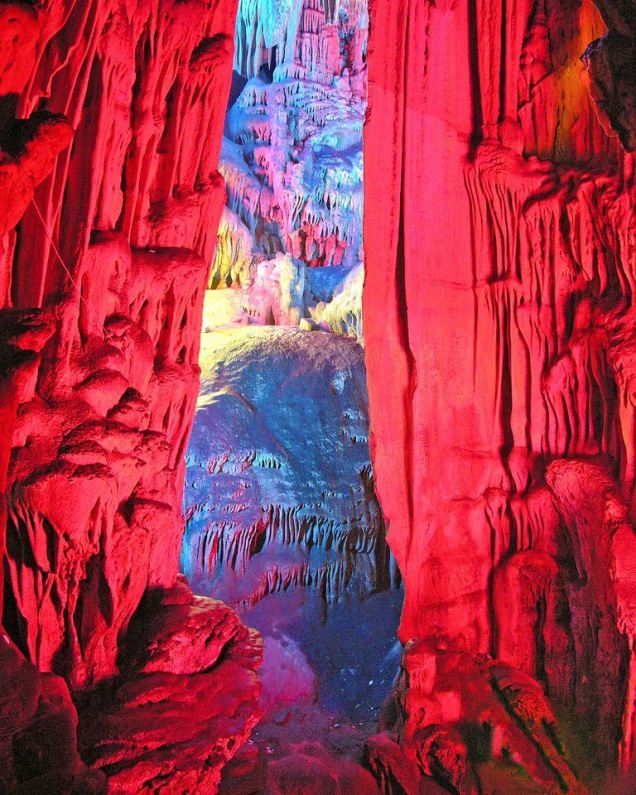
My http://ift.tt/1XZ918K Amazing caves of China

from Instagram: http://ift.tt/29knPMY

My http://ift.tt/1XZ918K Majestic landscape, Zhangjiajie China

from Instagram: http://ift.tt/29md8sC

My http://ift.tt/1XZ918K Kilauea Volcano, Hawaii

from Instagram: http://ift.tt/29km2aG

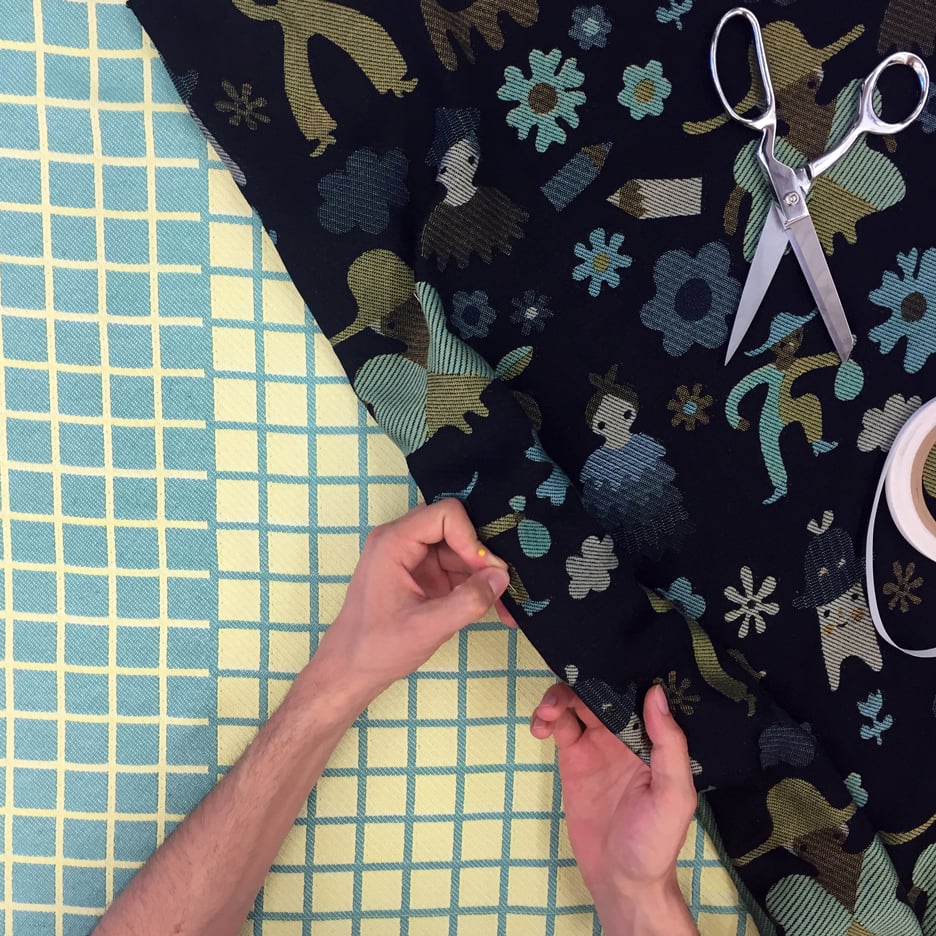
Wovns platform turns uploaded digital designs into Jacquard fabric


Digital platform Wovns can turn any design into woven fabric that can be produced in small quantities, without the usual minimum order requirements for manufacturing. (more…)

http://ift.tt/29ADv2C

My http://ift.tt/1XZ918K White River, Ocho Rios, Jamaica

from Instagram: http://ift.tt/29jtK3T