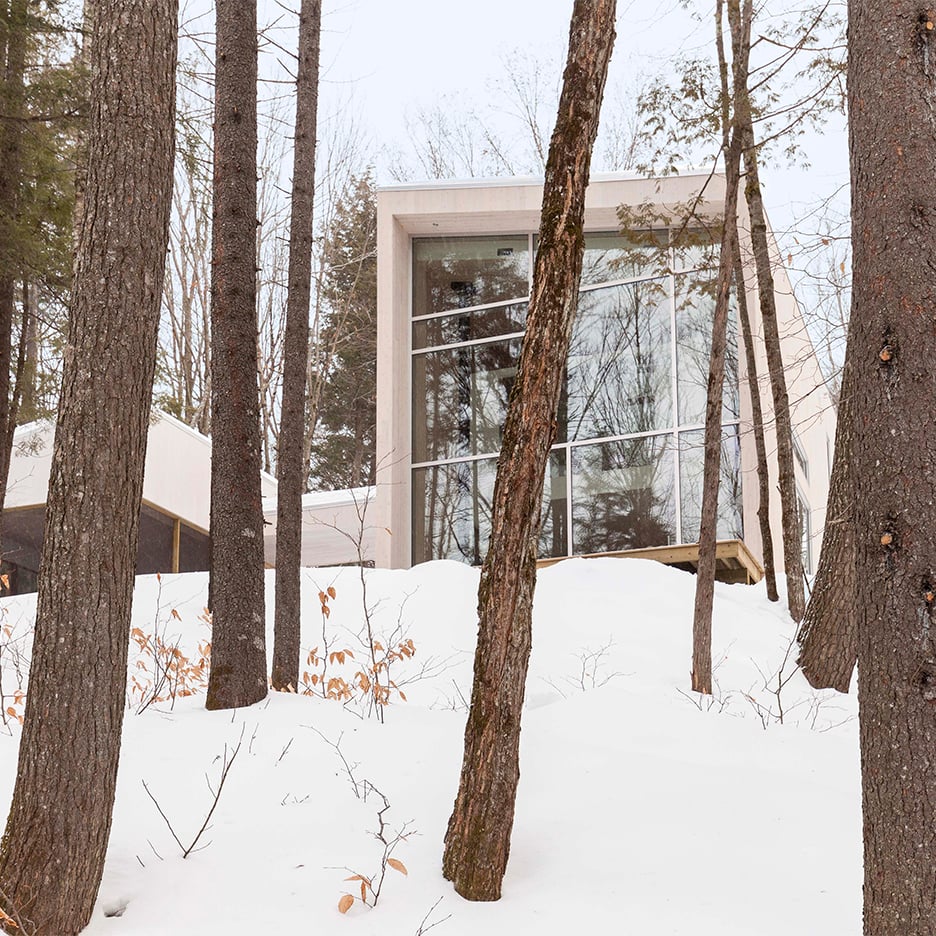
Atelier Pierre Thibault has completed a holiday home in rural Quebec with a giant window wall that provides expansive views of the scenic terrain (+ slideshow). (more…)
Mapo_ New development and a hybrid urban landscape
Mapo is a district undergoing considerable transformation in Seoul through a recent redevelopment craze. Large enterprises, hotels and apartment complexes unable to bear the cost of rent in existing urban centers are entering Mapo’s competitive market. Therefore, the image of Mapo is changing with the development of large apartments complexes behind a single layer of high-rise buildings positioned along the edge of the main streets. In contrast, a part of Mapo district remains undeveloped and intact as it was built from the 1960’s with small scale buildings.
Carver Global_ A strategy for a hybrid urban landscape
In terms of architecture, ‘Carver Global’ sought to achieve harmony with the urban structure of different scales, occupying an important position between apartment complexes and small scale buildings. The project’s intention was to suggest the possibility of ‘incremental development’ in this district which is a mixture of newly constructed apartment complexes and an historic urban structure.
Rather than vertically extending the existing building which was relatively large-scale compared its surroundings, a strategy of horizontally extending the mass by segmentation was selected. The new program was inserted over the parking space behind the existing building and connected to the existing building. Through this maneuver, ‘Carver Global’ acts as ‘a neutral medium’ connecting the dual urban landscape of the street-facing large scale buildings with the small scale architecture located behind the site.
Horizontal Extension_ Adaptation to a limited time schedule
The method of horizontal extension was not just an architectural strategy considering urban surroundings but a means for resolving the client’s requirement that the building would be ready for use in two months. By horizontally extending the building, the client could utilize the existing building before the completion of the whole project.
The project’s time constraint not only influenced the extension method, but also the remodeling method of the existing building. Within a short amount of time the sandwich panel construction of the existing building (formerly used by a package delivery company) needed to be transformed to correspond to the image of a cosmetic company. Metal fabric was selected as a suitable material which could be applied over the existing finishing without having to remove it, effectively improving the façade. This process of hiding and supplementing the existing look also acts like a metaphor for the transforming role of cosmetic products. The metal fabric exterior not only coincides with the image of a newly emerging cosmetic brand, but simultaneously transforms the urban landscape of the neighborhood. Furthermore, as a material which does not exert a negative influence on the neighboring residential environment it creates a positive effect in the building’s relationships with its neighbors.
Section
Spatial Characteristics_ An office for a small to mid-sized company
From the standpoint of an office building of a recently established small to mid-sized company in a society, it was important to conceive a space which could instill pride in the employees in addition to creating a positive image for the company’s customers and investors. In particular, the planning required that the space for this professional cosmetic company should be differentiated from the office spaces of other types of businesses.
In comparison to the scale of the building, the size of entrance and lobby were over-emphasized. When the large, heavy, metal door which harmonizes with the building’s colorless exterior is opened, the visitor is greeted by a magnificent bright white space completely different than the exterior. In this large double height space sits a long information desk, while the lights of the ‘stretched ceiling system’ shine like sunlight as people gather together bringing life to this space. The building is connected to the extension wing by a terrace and rooftop garden which not only plays a circulation role by linking the two buildings, but was designed as a space where employees and visitors could encounter a diverse array of experiences in everyday life.
Section
Horizontal Substitute of a Vertical Core_ Transformation into an architectural journey
Normally, spaces for executives are strategically placed on the upper levels in high-rise office buildings. This represents the organization’s hierarchy and an order which reflects the desire to amplify the company’s greatness. However, this “height strategy” could not be applied in this three-storey building project.
Instead, the president’s room was strategically placed on the farthest from the main entrance. In addition, each mass was separated using a ‘skip floor’ system with a small hall and skylight placed in between each mass, intentionally creating a long and interesting ‘journey’ to the president’s room.
In this way, the core of a high-rise building was transformed into a horizontal form, creating a ‘spatial strategy’ traversed not through machinery but through an architectural device.
The city council of the Flemish city of Aalst have awarded KAAN Architecten with the commission for a new library and home of the Academy of Performing Arts. The building will also integrate the existing “Pupillenschool” (formerly a military school for children) to anchor the new tenant into the Belgian town’s rich history. The complex will be located at the corner of Oude Graanmarkt and Espalnadestraat, becoming a new cornerstone project where the many communities of Aalst can gather, learn and engage in cultural activities.
The design of KAAN’s functional addition starts with the building’s load-bearing shell – thick walls that allow for large open spaces on the interior and complement the Pupillenschool’s historic brick facade. Small group spaces and private reading rooms cluster around the central atrium, which houses bookshelves and spacious reading areas. The building takes direction from recent trends in library design, serving as an open and accessible place for people to work in its primary function, while also being a home for books.
The addition’s relationship to the old school was inspired by the irregular street grid of the historic center of Aalst. At certain points in the downtown, streets converge erratically, creating small public squares that hold street cafés and meeting places. Likewise, the library intersects with the existing building to create two small plazas, one serving as the entrance area for the complex and the other as a terrace housing a reading café.
On the other side of the building, the Academy for Performing Arts will contain classrooms and a theater for music, dance, drama and singing. The building will be balanced between areas of movement and noise, and silence and reflection, which KAAN believes will create a greater sense of community to the complex.
Throughout the addition, windows and skylights have been designed to provide optimal light to reading areas and to radiate light out at night, corresponding to a greater illumination plan devised for the whole of the city center. Windows will also provide curated views of the city and to important historic prints affixed to the walls. The interior surfaces will be dominated by wood cladding, increasing the the warmth and intimacy of the open spaces and contrasting with the cool grey floors and ceiling panels.
The building is scheduled to be completed in 2018.
Design Team: Bas Barendse, Tjerk de Boer, Sebastiaan Buitenhuis, Sebastian van Damme, Raluca Firicel, Narine Gyulkhasyan, Joost Harteveld, Martina Margini, Giuseppe Mazzaglia, Kevin Park
Main Contractor: Groep Van Roey NV
Construction Consultant: UTIL Struktuurstudies
Installation Consultant: Studiebureau R. Boydens NV
This updated version of the traditional keffiyeh scarf by Beirut-based architect Salim al-Kadi has been designed “for our contemporary landscape” (+ slideshow). (more…)
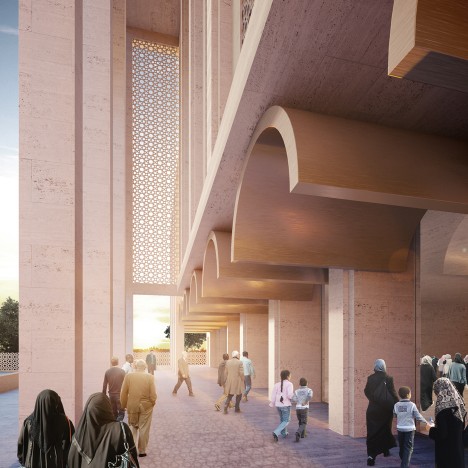
John McAslan + Partners is developing new designs for the huge Baitul Futuh Mosque complex in south London, which was damaged by a fire last year. (more…)
From the architect. The goals for this project were multi-faceted and ambitious- Design a new, modern, sustainable and energy efficient home that had the highest level of craft and attention to detail. The floor plan is open and spacious, providing function and flexibility, three of the five bedrooms are designed with flexible use in mind- they can be master bedrooms, an in-law unit, home office or family room. The house can be easily adapted to the needs of the owner, and it can change in time as the family grows and matures and needs change.
Special attention was paid to energy efficiency starting with the 10Kw solar PV system, which provides the energy for the 300% efficient mini-split heat pump heating and air conditioning. The house has an abundance of large windows, minimizing the need for lighting, which is 100% LED or high efficacy. Where possible materials were sourced to be reclaimed or made form recycled content. Indoor life quality is enhanced by the natural light, access to the exterior form every room and attention to indoor air quality.
The house was designed to be virtually maintenance free with pre-finished or naturally weathering materials.
1st Floor Plan
2nd Floor Plan
3rd Floor Plan
The architect/builder team were focused on providing the highest quality construction, with an obsessive attention to refining every detail, expressing the natural characteristics of materials and refining the sense of craft and quality in even the smallest details.
441 Tamalpais was designed and built as if we were going to live here. We considered the plan, details and materials we want in our house, and which we hope will adapt well to your house.
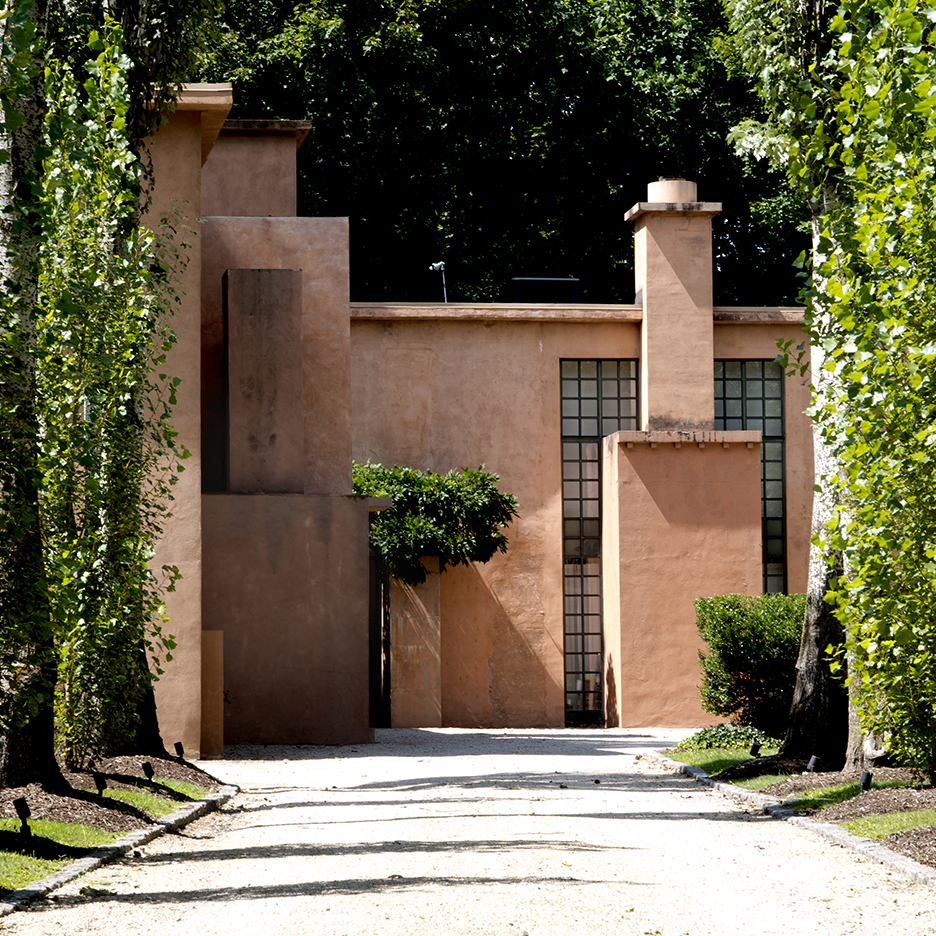
Kean University in New Jersey is purchasing three properties owned by late American architect Michael Graves, including the Princeton house and studio where he developed his Postmodern designs for 40 years. (more…)




 Sig Nordal