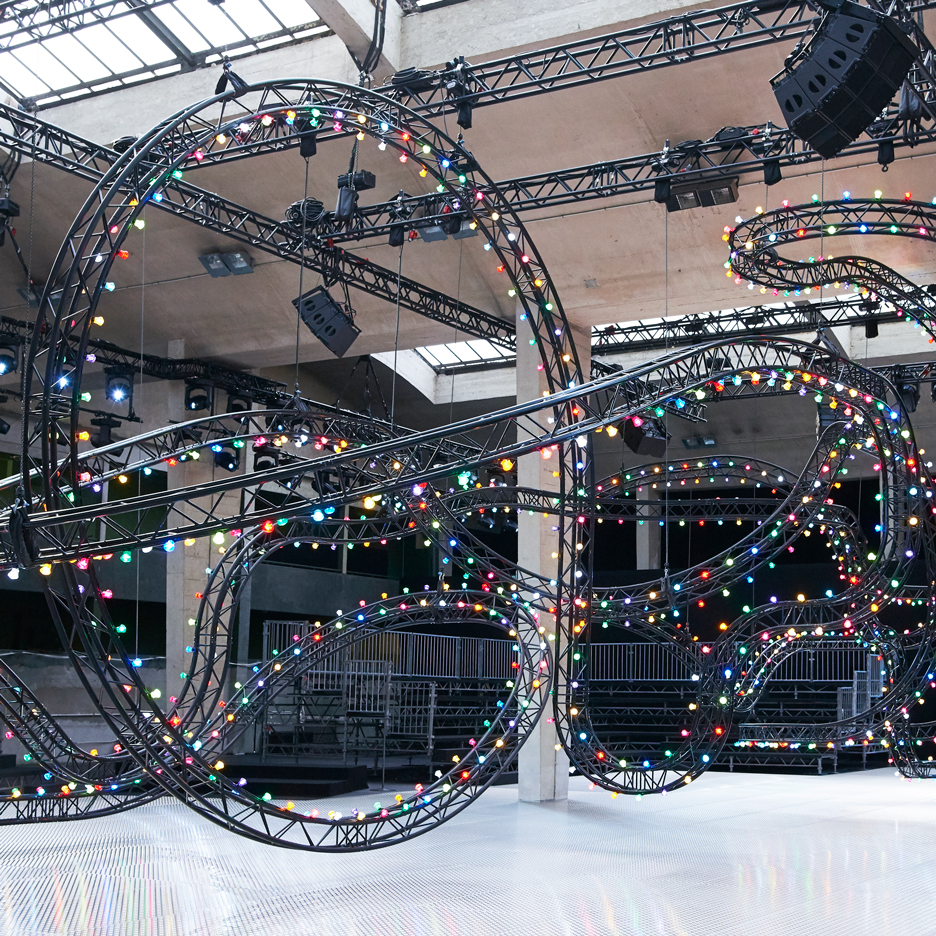
Villa Eugénie designs funfair-themed set for Dior Homme


Brussels production studio Villa Eugénie designed a looping rollercoaster studded with multicoloured lights for Dior Homme’s summer 2017 catwalk show (+ slideshow). (more…)

http://ift.tt/29j6tA3

C.F. Møller Designs New Headquarters for LEGO


Courtesy of C.F. Møller

Courtesy of C.F. Møller

Danish firm CF Møller have been tapped by the LEGO Group to design a 52,000 square meter (560,000 square foot) global hub for the company’s headquarters in Billund, Denmark. The design, which draws inspiration from the colored modular bricks for which LEGO is known, will provide new flexible work arrangements and community spaces centered around a brightly lit 4-story atrium, as well as a new public park for the campus.


Courtesy of C.F. Møller

Courtesy of C.F. Møller

The new construction will contain offices for a large portion of LEGO’s Danish-based employees, while also serving as a facility to welcome guests and LEGO employees from around the world. To foster interaction between these different groups, the building is designed to be open, with plenty of points where spontaneous meetings can occur. The new atrium will serve as the connection point for the facility, where wide curving staircases are shared by employees and guests and they move throughout the building.

LEGO-familiar motifs and elements have been employed throughout the complex, including round skylight apertures in the atrium reminiscent of holes in a LEGO block and facade panels that evoke the blocks’ stud pattern. The iconic LEGO yellow is featured throughout the interiors and as a pop of color on the building’s exterior.

Another feature of the new office building will be the LEGO People House, an area containing “playspace” facilities as suggested by input from LEGO employees.

“LEGO People House creates a unique social environment that serves as a vibrant, global gathering point, not only for the employees working there on a daily basis but also for the many LEGO employees from the rest of the world, when they visit Billund. It will house exciting facilities, where employees can be physically active and socialize, both during and outside working hours. It is our clear intent that the atmosphere will be both informal and inspirational, making it ideal for employees to get together with colleagues from around the world,” explains Claus Flyger Pejstrup, Senior Vice President at the LEGO Group, and responsible for the LEGO Group Headquarters in Denmark.


Courtesy of C.F. Møller

Courtesy of C.F. Møller

In addition to the facility’s progressive workplace design, the building also strives for progressive environmental practices; the structure has been oriented to provide optimal daylighting conditions for the office space and will be constructed to meet low-energy consumption standards. To embrace the surrounding community, the new park will be integrated into the master plan for Billund Municipality.

“In close collaboration with LEGO and employees, we have ensured that the project radiates openness, quality and sustainability – all key LEGO values,” says Klaus Toustrup, partner at CF Møller.

LEGO Group’s Development Department / Bosch & Fjord
//cdn.embedly.com/widgets/platform.js

Bjarke Ingels Lays Foundation Brick at LEGO House
//cdn.embedly.com/widgets/platform.js

http://ift.tt/29wNQx3

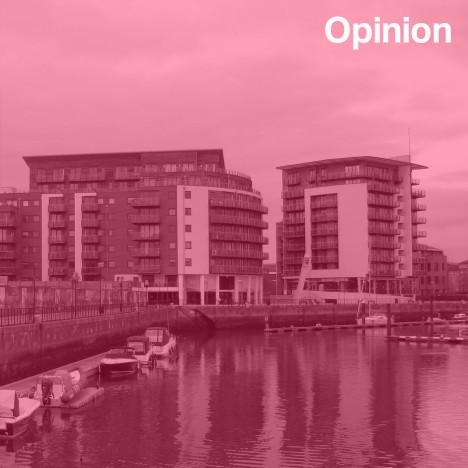
“Europe has been for the lucky few in the UK”

ocean village southampton_opinion_dezeen_sqb

Opinion: Richard Rogers’ vision for a more European form of British architecture promised to create modern and prosperous urban environments. But this “new Europe” failed to reach the suburban council estates and cul-de-sacs that backed Brexit, says Owen Hatherley. (more…)

http://ift.tt/29hxena

10 Characteristics Successful Business Owners Share

Why do some people succeed, while others fail to reach their goals? Here’s one business owner’s observations about what successful people do that others don’t.

http://ift.tt/1kinD4d

Improving Workplace Communication-5 Steps

Good communication in your small business is important for your employees’ morale and productivity. Here are five steps to improving employee communication.

http://ift.tt/29xOQRd

Internet Marketing Mistakes That Make You Lose Sales

Seven common Internet marketing mistakes that small businesses make. These mistakes lead to lost business and lost sales.

http://ift.tt/29r7Ca8

From Productivism to Scenography: The Relighting of Norman Foster´s Hongkong and Shanghai Bank

Three decades ago the Hongkong and Shanghai Bank (HSBC) Headquarters by Norman Foster emerged onto the architectural seen as an exemplary product of industrial design. The open layout with its exposed steel structure generated a powerful corporate identity for the bank. But the restrained atmosphere of white architectural lighting and the lack of distinctive façade lighting has lost its attractiveness after sunset. Now the colorful and dynamic relighting presents a remarkable example of how an architectural icon has shifted from a productivist ideology towards a scenographic image. To the western observer the multicolored light language may give off a playful impression, but to the local culture the transformation evokes grandiosity.


Hongkong and Shanghai Bank Headquarters, Hong Kong, in 2015. Architects: Foster + Partners. Photographer: Simon McCartney. Image © illumination Physics


Hongkong and Shanghai Bank Headquarters, Hong Kong, 1986. Architects: Foster + Partners. Lighting design: Claude and Danielle Engle Lighting. Photographer: Ian Lambot. Image © ERCO, www.erco.com


Hongkong and Shanghai Bank Headquarters, Hong Kong, in 1986. Architects: Foster + Partners. Lighting design: Claude and Danielle Engle Lighting. Photographer: Ian Lambot. Image © ERCO, www.erco.com


Hongkong and Shanghai Bank Headquarters, Hong Kong, in 2015. Architects: Foster + Partners. Photographer: Simon McCartney. Image © illumination Physics


Hongkong and Shanghai Bank Headquarters, Hong Kong, in 1986. Architects: Foster + Partners. Lighting design: Claude and Danielle Engle Lighting. Photographer: Ian Lambot. Image © ERCO, www.erco.com

Hongkong and Shanghai Bank Headquarters, Hong Kong, in 1986. Architects: Foster + Partners. Lighting design: Claude and Danielle Engle Lighting. Photographer: Ian Lambot. Image © ERCO, http://www.erco.com

The briefing for Norman Foster was ambitious when the Hongkong and Shanghai Bank asked him to create “the best bank building in the world.” To add to the complexity the client requested a short timescale, which led to the pragmatic solution of a high degree prefabrication and the suspension structure which allowed the contractors to build efficiently both downwards and upwards. The architecture therefore embodies a functional product, as Kenneth Frampton characterizes this style: an open undecorated system with a flexible network and articulated structure characterized by industrial production.

Foster’s structure enables a generous daylight-filled atrium with a 50 meter-high glass wall and a large mirrored sunscoop that reflects sunlight down through the atrium to the public plaza below. For Chris Abel, the British born architectural theorist, the financial institution emanated a sense of a sacred building, as he wrote for The Architectural Review: “There is a lot more that is Gothic than Classical in all this structural and spatial magic, contrary statements about Foster’s work notwithstanding. If the ‘medieval’ services towers, ‘flying braces’ and ‘incomplete’ appearance of the building had not already promoted the idea, then the soaring proportions of the atrium … and the great translucent eastern window, easily justify the building’s popular description as a ‘cathedral of commerce.’”[1] But the productivist attitude suppressed the use of colorful stained glass windows—or any modern light-based equivalent—typical of gothic cathedrals and focused on white for daylight and illumination.


Hongkong and Shanghai Bank Headquarters, Hong Kong, 1986. Architects: Foster + Partners. Lighting design: Claude and Danielle Engle Lighting. Photographer: Ian Lambot. Image © ERCO, www.erco.com

Hongkong and Shanghai Bank Headquarters, Hong Kong, 1986. Architects: Foster + Partners. Lighting design: Claude and Danielle Engle Lighting. Photographer: Ian Lambot. Image © ERCO, http://www.erco.com

Foster and his lighting designer Claude R. Engle abstained from any decorative or expressive lighting effects in order to achieve a clear architectural message, with lighting as a servant for performance. Regarding the office lighting Engle used only three components: daylight, cool florescent lighting and warm halogen-tungsten lighting. This strategy allowed an easy conversion from a cool lit office area into a warm lit meeting zone for clients without a new installation. In that way the lighting design revealed a very pragmatic approach without losing a representative expression. For the high atrium, the recessed downlights seemed to vanish in the mirror ceiling thereby working with light and not luminaires as a design parameter. Special downlights with narrow beams minimized the glare for a discreet look. Hence when viewed as part of the city the HSBC skyscraper appeared to be softly glowing from within with a nice transparency for detecting interior patterns.


Hongkong and Shanghai Bank Headquarters, Hong Kong, 1986. Architects: Foster + Partners. Lighting design: Claude and Danielle Engle Lighting. Photographer: Ian Lambot. Image © ERCO, www.erco.com

Hongkong and Shanghai Bank Headquarters, Hong Kong, 1986. Architects: Foster + Partners. Lighting design: Claude and Danielle Engle Lighting. Photographer: Ian Lambot. Image © ERCO, http://www.erco.com

However, 30 years later the atrium lighting no longer fulfilled the bank’s expectations regarding their visual identity. In the meantime, Hong Kong had become much brighter, more colorful, and dynamic concerning lighting. The relighting of the HSBC atrium, designed by Simon McCartney & Peter Kemp and installed in 2015, now presents a distinct counterpoint. The subtle contrasts of cool and warm color temperatures have been substituted by saturated colored light. The LED and lighting control technology have opened an unprecedented flexibility to change hue and saturation. Clean lines emphasize the horizontal structure of the floors and the sunscoop mirror ceiling. They add spectacle and drama to the grand hall. In contrast to the original design the luminaires are clearly visible now.


Hongkong and Shanghai Bank Headquarters, Hong Kong, in 2015. Architects: Foster + Partners. Photographer: Simon McCartney. Image © illumination Physics

Hongkong and Shanghai Bank Headquarters, Hong Kong, in 2015. Architects: Foster + Partners. Photographer: Simon McCartney. Image © illumination Physics

The large opaque eastern façade, which fills the atrium at daytime with diffuse daylight and which did not have a representative illumination in the original concept, is turned by the new lighting into a colorful pixel screen. Here, invisibly installed luminaires and light sequences are synchronized with the atrium edges and the mirror ceiling. The expressive static building structure vanishes in the evening in favor of a bright, dynamic spectacle of colored lines and pixels to reflect a modern corporate identity for clients and employees. In contrast, the relighting of some executive areas in the HSBC building were more conservative regarding the relighting and luminaire design, with downlights and pendant elements.

However, the first major lighting change at HSBC was even more extravagant than the atrium lighting, and was already installed about a decade earlier, in 2003, for exterior branding. Thus the façade illumination has changed from a discreet glow from within into colorful light lines and bright search lights to create a beacon of light for the Hong Kong skyline, designed by Simon McCartney for Laservision. Since 2004 the Hong Kong Tourism Commission has tried to become a benchmark for city marketing in Asia with the largest sound and light show in the world. With globalization, rising economic competition and political changes, the city has looked to tourism to increase business and to mark a strong, modern and dynamic identity. For the nightly 14 minute show, called “Symphony of Light,” the team from Laservision analysed the skyline and its buildings in regard to the visibility of structures to select significant architectural forms and textures. The show has already undergone five phases of upgrades and now incorporates 45 buildings located on both the Hong Kong and Kowloon sides of Victoria Harbour. Without the façade lighting update, the HSBC building would not have been recognizable as a relevant player for the urban light show.


Symphony of Lights, Hong Kong. Lighting design: Laservision, http://ift.tt/15WY699. Image © Laservision 2016

Symphony of Lights, Hong Kong. Lighting design: Laservision, http://ift.tt/15WY699. Image © Laservision 2016

Nevertheless the 2003 façade lighting did not cover the new expectation of higher visibility and more explicit messages of brand communication. For that reason the façade lighting was amplified with a media wall for the 150th HSBC anniversary in 2015. The new sophisticated media screen, designed by Simon McCartney & Peter Kemp at illumination Physics, enables a legibility from a distance of 100 meters, as well as from the opposite side of Victoria Harbour 2-3 kilometers away. Small vertical LED strips, applied to the inside of the façade, enable a high transparency for the façade and yet the strips appear invisible from outside at daytime. Additionally, the old façade lighting was completely updated with LED technology, which led to an increase of possible hues, more saturation, far less energy consumption and longer lamp life for less maintenance. Synchronized with the façade lighting, the media walls offer a very flexible infrastructure for independent content or echoing the effects of the architectural lighting on the screen or vice versa. The triangular animations and kaleidoscopic patterns refer clearly to the HSBC logo for luminous branding. There’s even a smart phone application which enables people to follow the scenography in real-time on their phone wherever they are. With this new media content the HSBC strives again for visual leadership in Hong Kong´s skyline.

Erected on the ground of a British colony as a distinctive British high-tech office tower, localized with a feng shui geomancer, the HSBC building resides now on an autonomous territory of China. The search for a new identity, significantly influenced by globalization, has led to a new luminous mask to conceal a tough and cold finance building. This colorful overlay of pattern, made of light, has turned the HSBC into an obvious dualism: at daytime it conveys the cool rational image of productivism, but at night the explicit scenography demonstrates a soft emotional character. The brightness of the façade has induced a loss of transparency in favor of luminous decoration, where light has become a brand message. For the western observer this multi-colored and dynamic attention-seeking might embody a loss of clear identity for a respected bank. However, the grand light gesture at HSBC, in combination with the city-wide Symphony of Light show, has positioned Hong Kong as one of the world’s most visited cities, where people regard the colorful scenery at night as more beautiful than at daytime.

But not everyone is excited about the luminous prosperity of Hong Kong. Environmentalists and astronomers have already pointed out the negative effects of light pollution. Jason C.S. Pun, Astronomer at the University of Hong Kong, has found that the night is on average 1000 times brighter in his city than a natural night due to the light used for advertisement and decoration. This loss of the night makes seeing stars impossible.


Hongkong and Shanghai Bank Headquarters, Hong Kong, in 2015. Architects: Foster + Partners. Photographer: Simon McCartney. Image © illumination Physics

Hongkong and Shanghai Bank Headquarters, Hong Kong, in 2015. Architects: Foster + Partners. Photographer: Simon McCartney. Image © illumination Physics

The trend of global urbanization will bring more buildings into our cities where owners will not tolerate a modest visual identity at night, but seek to send explicit luminous messages into the urban environment. Hence, conflicts will intensify with the public and environmentalists about nocturnal lighting. This 30 year review of the HSBC’s lighting history may even appear small when compared to contemporary skyscraper developments. For instance the super-tall Shanghai Tower by Gensler from 2015 has already set a new benchmark for monumental urban scenography. Its media facade was implemented from its opening, covering the entire 632-meter skyscraper, and appears as an urban movie screen. It is a challenge to imagine how this building and its environment will look in 30 years: Will the latest LED technology last without a larger relighting within this time? Which lighting language will create an appropriate meaning and icon? Will the citizens be able to appreciate the beauty of the urban night and gaze at stars again?

References

  1. Abel, Chris, A building for the Pacific Century. The Architectural Review, July 1986

Light matters, a monthly column on light and space, is written by Thomas Schielke. Based in Germany, he is fascinated by architectural lighting and works as an editor for the lighting company ERCO. He has published numerous articles and co-authored the books “Light Perspectives” and “SuperLux”. For more information check www.erco.com, www.arclighting.de or follow him @arcspaces

http://ift.tt/29kqTIj

Repossi Place Vendome / OMA


© Cyrille Weiner, Courtesy of Repossi

© Cyrille Weiner, Courtesy of Repossi


© Cyrille Weiner, Courtesy of Repossi


© Cyrille Weiner, Courtesy of Repossi


© Cyrille Weiner, Courtesy of Repossi


© Cyrille Weiner, Courtesy of Repossi

  • Architects: OMA
  • Location: Place Vendôme, Paris, France
  • Partner: Ippolito Pestellini Laparelli
  • Team: Antonio Barone, Paul Cornet, Leonardos Katsaros, Francesca Lantieri, Kate Lee, Francesco Moncada, Silvia Sandor
  • Area: 90.0 sqm
  • Project Year: 2016
  • Photographs: Cyrille Weiner
  • Local Architect: DATA Architectes
  • Structure Engineer: Batiserf 
  • Mep Engineer: BET Louis Choulet
  • Wall Displays And Mechanical Displays: Goppion
  • Standing Displays: Sice-Previt 
  • Mirror Design: Sabine Marcelis Studio

© OMA. Place Vendome diagram

© OMA. Place Vendome diagram

From the architect. The proposal for the 90 square meter Repossi flagship on Place Vendome divides the store into three distinct spaces – contextually referred to as street, gallery and salon. Based on the idea that the collection of jewelry will be experienced and purchased at three different speeds – fast, slow, very slow – each floor responds to the different paces of shopping. 


© Cyrille Weiner, Courtesy of Repossi

© Cyrille Weiner, Courtesy of Repossi

The ground floor is the most public space. It works as an extension of the street providing a quick experience of the store. The first floor is a gallery, the level where the entire Repossi collection is exhibited. The basement is a salon. The most intimate space of the boutique, it allows customized service for clients and patient exploration of special pieces. 


© OMA. Store Concept

© OMA. Store Concept

© OMA. Concept design

© OMA. Concept design

© OMA. Experience concept

© OMA. Experience concept

The underlying idea for the design was to synthesis architecture and display, using the whole space as a stage for Repossi’s production. Unconventional materials were used, emphasizing this relationship and pulling away from the typical jewelry store. Special colored mirrors developed in collaboration with Dutch designer Sabine Marcelis introduces diverse degrees of reflections and color refractions. Aluminum cladding – both plain and foam – fold over the volume of the staircase and expand onto each floor. 


© Cyrille Weiner, Courtesy of Repossi

© Cyrille Weiner, Courtesy of Repossi

Movement is an integral component of the project. The wall on the ground floor is conceived as a gigantic rotating billboard with three alternating sides: a bronze colored mirror, a traditional mirror, and a display system. Developed in collaboration with Italian-based manufacture, Goppion, the kinetic installation is both display and architecture,transforming the space while adapting to alternating functions. When the jewelry is not displayed, the ground floor is transformed into a pure void, leaving the space free for unlimited occupancies. In the overcrowded retail context of Place Vendome, a “void” is the ultimate form of luxury. 


© OMA. Ground floor display billboard

© OMA. Ground floor display billboard

The staircase, an imposing presence in the 90 square meter store, is designed by overlapping two vertical systems: a solid excavated mass that extends between the ground floor and the basement, and a light suspended tread floating between the ground floor and the first level. 


© Cyrille Weiner, Courtesy of Repossi

© Cyrille Weiner, Courtesy of Repossi

Liberated from the traditional requirements of jewelry display, the new flagship store creates an immersive setting, where jewelry is subtly embedded into an architectural void. 


© OMA. Display study

© OMA. Display study

© OMA. Display study

© OMA. Display study

© OMA. Display study

© OMA. Display study

http://ift.tt/29ygKdd

The Editors of O Magazine Pick Your Summer Reading

invincible summer cover crop


O-Magazine-Logo TEST SF

All this month we’re featuring a selection of fantastic summer reading selected by the experts at O, the Oprah Magazine.

What is an ideal summer read? That might be as personal a choice as the ideal vacation, but there are a few things we think of when we’re making a list of which books to pack with a swimsuit, hiking boots or a passport: we look for stories that take us on journeys as memorable as the ones we plan all year, works that will refresh us like a visit to a beloved place, voices that echo in memory after the season is over. Most of all, we want reading as special – and as fun – as the precious time we carve out of our routines for summer pleasures.

What to set aside for this summer’s book bag? We decided to ask Leigh Haber, Books Editor at O, The Oprah Magazine — whose “Reading Room” is a marvelous monthly guide to the best in new reading – and she shared with us the books she and the O Mag editors are most excited about, grouped helpfully into ten enticing and inspiring sets which you can explore – and sample – here.

FUTURE SHOCK

The Mandibles Small Cover SFLike all standout speculative fiction, these books aren’t the result of authors squinting to look ahead, but rather with their heads cocked a bit to the side– looking back, and around. And in what they envision, destinies near and far, are traces of today – Widespread pandemics, fiscal crises, strange echoes of alternate histories, earth’s ecology in upheaval, and sex toys so real they descend into the uncanny valley.

SINNERS AND SAINTS

Charcoal Joe Cover SFStart with the basics: bad guys and gals trying to make good. Sprinkle in a detective here and a paranoid schizophrenic there. Set deft fiction side by side with harrowing real life stories, then fold in heaping helpings of moral complexity. Add  redemption for a little sweetness, bake in the sun while on the beach or reclining in a hammock, divide six ways— and devour as much as you like.

HEAR THEM ROAR

Tig Notaro Im Just a Person cover crop SF2The women at the centers of these six essential titles are united in trying to navigate a host of fresh-off-your-Twitter-feed issues including but not limited to sizeism, sexism, public exhibitionism, boring boyfriends, violent boyfriends, cocaine, the internet, date rape, buried family secrets, judicial corruption, writer’s block, hook-up culture, and Eastern European sex slavery. In genres ranging from memoir to crime thriller to short fiction, the scenes–even those that, on the face of it, seem far-fetched– are achingly recognizable and all too real.

ICONS

McCartney Cover Crop SFThey say don’t meet your heroes lest they disappoint you…Whatever. We say you should bring them along on vacation. These vivid portraits of luminary rock-stars, poets, provocateurs, and an author David Foster Wallace called “the country’s best living fiction writer” will provide scintillating companionship wherever summer finds you.


THE GILDED CAGE

Smoke Cover Crop SFDesigner gowns. Luxurious apartments. Black Escalades. Lear jets. The trappings of the 1% may seem as enticing as they are elusive, but does wealth equal happiness, or is there something corrosive about it? These offerings go beneath the sheen of affluence to reveal its underbelly — Park Avenue as a prison, a Dickensian alternate reality perfectly drawn for our status-obsessed era–and to underscore the truth that at the end of the day, mortality gets us all.

LOVE AFFAIRS

I Almost Forgot About You Cover Crop2 SFAt one time or another many of us have dropped everything to follow our hearts, been betrayed or betrayed vows for lust, or magically found (or re-found) the soulmate we had given up hope of ever connecting with. What better way to celebrate the return of summer than to immerse ourselves in the soul-reviving, hormone pumping, faith-renewing power of…..LOVE.


WAR & PEACE

Grunt Cover SFIn a world consumed by wars of all kinds – hot, cold, tepid (albeit intractable) – books make sense of the madness, inviting us to listen and to learn, to swim against tides of violence, and to reconcile other perspectives with our own. From peerless on-the-ground reporting to fictional adventures and misadventures, these summer books offer a range of startling new views, plumbing the complex reasons why countries – and couples – can’t always coexist peacefully.


ODYSSEYS

Homegoing Cover Crop SFIt’s a story as old as Greek mythology: a hero or heroine embarks on a voyage and in the process is transformed. The changes can be subtle or immense, whether for an African girl in the Old South or for a leading scientist decoding the mysteries of medicine, as he unearths family secrets. These titles explore how personal journeys mirror dramatic developments in the world, from the tragedies of the African diaspora to the satisfying simplicity of Scandinavian culture to a gourmand’s culinary escapades among the cities and villages of China.

AMERICAN PASTORAL

The Girls Cover Crop SFLurking somewhere in the endless vistas of our wide and deep country are young girls becoming indigenous berserks, little towns slowly and silently fading away, fruited plains and ferocious rivers, natural disasters and man made ones, wild horses and their even wilder masters – all coexisting on a sprawling, mystic frontier.


BORN IN THE U.S.A.

Hour of the Land Crop SFWhat is America made of? Is it the landscape? The people? An idea? What we revolt against? What we produce? These nonfiction titles tackle those questions from exhilaratingly different angles—culture, crime, the natural and the bureaucratic—each enriching our understanding of our roots, our appreciation of home.


Looking for more inspirations for your summer reading? Explore more of The Best Books of Summer from the editors of O: The Oprah Magazine, in the B&N Review or in the pages of this month’s issue of O: The Oprah Magazine.

The Barnes & Noble Review http://ift.tt/29lB2bp