Space to Imagine, Room for Everyone: Inside Singapore’s Pavilion at the 2016 Venice Biennale


Singapore Pavilion – Space to Imagine, Room for Everyone - at Biennale Architettura 2016, Venice. Image © Don Wong

Singapore Pavilion – Space to Imagine, Room for Everyone – at Biennale Architettura 2016, Venice. Image © Don Wong

As part of ArchDaily’s coverage of the 2016 Venice Biennale, we are presenting a series of articles written by the curators of the exhibitions and installations on show.

Responding to the primary theme of 15th International Architecture Exhibition, ‘Reporting from the Front,’ Singapore’s presentation places the small “battles” fought at the home-front. These efforts are contributing to the emergence of an invigorated Singapore.

From within the comfort and the security of the domestic environments and public spaces that have been created over the past five decades, we are now pushing the home-front from within – to create more Space to Imagine, and Room for Everyone.


Map of Singapore with red pins indicating the HDB blocks where interior photos were taken and green pins indicating community gardens. Singapore Pavilion – Space to Imagine, Room for Everyone - at Biennale Architettura 2016, Venice. Image © Don Wong


Close-up of post-it notes handwritten by participants in P!D's (Participate in Design) engagement programmes. Singapore Pavilion – Space to Imagine, Room for Everyone - at Biennale Architettura 2016, Venice. Image © Don Wong


Singapore Pavilion – Space to Imagine, Room for Everyone - at Biennale Architettura 2016, Venice. Image © Don Wong


Singapore Pavilion – Space to Imagine, Room for Everyone - at Biennale Architettura 2016, Venice. Image © Don Wong


Singapore Pavilion – Space to Imagine, Room for Everyone - at Biennale Architettura 2016, Venice. Image © Don Wong

Singapore Pavilion – Space to Imagine, Room for Everyone – at Biennale Architettura 2016, Venice. Image © Don Wong
Through actions, guided and spontaneous, initiated by individuals, establishments and groups, we are witnessing active participation of our citizens: stepping out, taking actions, owning and adopting their environments. They have also heightened the role of design advocacy and participation, both real and imagined, at various scales and levels in schemes of future renewals, intensified in-fills of left-over spaces, in the narrow confines of domestic spaces.

In two broad themes (archetypal terrains), at every scale, in the boundary between the private and public realms, actions like participation, contestations, activations, appropriations, transgressions and occupations are enacted. All these happen in the building and urban fabric – on the grounds, in the void decks in the private abodes of our housing estates, and in our public spaces.


Map of Singapore with red pins indicating the HDB blocks where interior photos were taken and green pins indicating community gardens. Singapore Pavilion – Space to Imagine, Room for Everyone - at Biennale Architettura 2016, Venice. Image © Don Wong

Map of Singapore with red pins indicating the HDB blocks where interior photos were taken and green pins indicating community gardens. Singapore Pavilion – Space to Imagine, Room for Everyone – at Biennale Architettura 2016, Venice. Image © Don Wong
In a battery of actions on these terrains, we forge through design a new society built on the gains of the previous more austere generation. In pushing against this front, in turning Singapore inside out, we move beyond from being productive and technocratic, to be creative and egalitarian. Thus, these “battles” at the front is a poignant visual account of our human capacity building, in looking at the past with new eyes and broadly, and in our attempts to humanize the environments of Singapore.


Spotlight on the Rail Corridor. Singapore Pavilion – Space to Imagine, Room for Everyone - at Biennale Architettura 2016, Venice. Image © Don Wong

Spotlight on the Rail Corridor. Singapore Pavilion – Space to Imagine, Room for Everyone – at Biennale Architettura 2016, Venice. Image © Don Wong

The design of the exhibition uses the grid as a base onto which different meanings and potentials are projected. The grid (a frame with equal intervals in the x & y dimensions) signifies the order and rationality with which Singapore is planned. The grid however, also provides openness and freedom. In the exhibition space, we set up a grid that allows everyone to move freely, to appreciate the diversity of stories that thrive within.

The effect created is an atmosphere to envelope and immerse the viewer. The curatorial team endeavoured to make an emotionally charged experience using the hundreds of interior scenes from everyday life in our public housing estates, the Housing Development Board (HDB). More than experiencing any one of these HDB interiors in the skin, the exhibition would immerse the viewer intimately in the diverse collection of interiors, an intensified domestic experience.


Close-up of post-it notes handwritten by participants in P!D's (Participate in Design) engagement programmes. Singapore Pavilion – Space to Imagine, Room for Everyone - at Biennale Architettura 2016, Venice. Image © Don Wong

Close-up of post-it notes handwritten by participants in P!D's (Participate in Design) engagement programmes. Singapore Pavilion – Space to Imagine, Room for Everyone – at Biennale Architettura 2016, Venice. Image © Don Wong

Eighty-one (81) customised image lanterns are suspended at eye level in the central space. On three faces of each lantern, a photograph from the HDB: Homes of Singapore collection will be mounted. On the fourth side, one will look into the lantern2 to see a small model of the HDB block in which the interiors described in the photographs are sited. A bulb in the centre lights the model as well as the photographs from behind. A viewer will freely meander through these scenes of everyday life, glowing gently.


Singapore Pavilion – Space to Imagine, Room for Everyone - at Biennale Architettura 2016, Venice. Image © Don Wong

Singapore Pavilion – Space to Imagine, Room for Everyone – at Biennale Architettura 2016, Venice. Image © Don Wong

Singapore Pavilion – Space to Imagine, Room for Everyone - at Biennale Architettura 2016, Venice. Image © Don Wong

Singapore Pavilion – Space to Imagine, Room for Everyone – at Biennale Architettura 2016, Venice. Image © Don Wong

One may notice that in this pavilion staged for an International Architecture Exhibition, it is not showing buildings. Rather it is showing the connections between people and their spaces. The challenge is that while buildings are traditionally documented in drawings, photographs, and models, the stories of these small “battles” that were found on our home-front had no ready-made form.

To embody the spirit of each participant, the curatorial team selected from each an artefact, a visually striking object that bears the marks of their endeavour or tells the stories succinctly. In one example, the Ground-Up Initiative (GUI) displays the mud-bricks that their volunteers are making for the walls of their new campus. For Participate in Design (P!D), an array of the colourful, now universal, Post-It notes that the protagonists gathered from their consultation sessions is presented.


Close-up of the lantern, featuring photographs of interiors of HDB flats on three sides. Singapore Pavilion – Space to Imagine, Room for Everyone - at Biennale Architettura 2016, Venice. Image © Don Wong

Close-up of the lantern, featuring photographs of interiors of HDB flats on three sides. Singapore Pavilion – Space to Imagine, Room for Everyone – at Biennale Architettura 2016, Venice. Image © Don Wong

The selection of the artifacts that will carry the story of each participant is an act of design as much as it is an act of curation. This direct on-the-ground approach, like the preparation of fresh sashimi, is premised on choice and cut. No seasoning is required. The design philosophy for the Singapore Pavilion is, similarly, to present the inspiring stories in an honest and transparent manner. 


Singapore Pavilion – Space to Imagine, Room for Everyone - at Biennale Architettura 2016, Venice. Image © Don Wong

Singapore Pavilion – Space to Imagine, Room for Everyone – at Biennale Architettura 2016, Venice. Image © Don Wong

   Singapore Pavilion – Space to Imagine, Room for Everyone - at Biennale Architettura 2016, Venice. Image © Don Wong

Singapore Pavilion – Space to Imagine, Room for Everyone – at Biennale Architettura 2016, Venice. Image © Don Wong

http://ift.tt/29gmSJ0

mikenudelman: 2 completely different versions of Donald Trump…

Massimo Dutti / Sordo Madaleno Arquitectos


© Jaime Navarro

© Jaime Navarro


© Jaime Navarro


© Jaime Navarro


© Jaime Navarro


© Jaime Navarro

  • Architects: Sordo Madaleno Arquitectos
  • Location: Presidente Masaryk 431, Polanco III Secc, 11550 Ciudad de México, D.F., Mexico
  • President: Javier Sordo Madaleno Bringas
  • Architecture Leader: Javier Sordo Madaleno de Haro
  • Project Leader: Boris Pena, Fernando Sordo Madaleno de Haro
  • Area: 1450.0 sqm
  • Project Year: 2016
  • Photographs: Jaime Navarro
  • Design Manager: Santiago García de Letona, Rodrigo Flores
  • Media & Marketing: Rosalba Rojas, Jimena Orvañanos
  • Interior Design: Sordo Madaleno Arquitectos
  • Interior Director: Enrique Ralph
  • Interior Manager: Fernanda Patiño
  • Interior Team: Regina Jarque, Pawel Kryzstof Niedziwiechi, Ana Tejada
  • Structural Engineering: Palacios Ingeniería & Concepto
  • Façade Engineering: Afibra, Vitrocanceles
  • Electrical Engineering: COISA
  • Air Conditioning Engineering: SAASA
  • Systems & Special Engineering: COISA
  • Hydrosanitary Engineering: Arquitech
  • Lighting Consultant: Luz + Forma
  • Audio & Video Consultant: Trison
  • Landscape Consultant: Verde 360o
  • Security Consultant: Prosegur
  • Construction: Arquitech
  • Site Area: 415 sqm

© Jaime Navarro

© Jaime Navarro

From the architect. The new agship store for Massimo Dutti is located on Presidente Masaryk Avenue, one of the most prestigious streets in Mexico City. Home to leading brands, it is considered the city’s “golden mile” and has recently undergone a makeover to improve its urban qualities.


© Jaime Navarro

© Jaime Navarro

With the goal of turning the building into a veritable work of architecture that serves as an aesthetic reference point within this exceptional context, the scale and design of the project re ects a desire to integrate it into the Polanco neighborhood.


© Jaime Navarro

© Jaime Navarro

The building façade is designed to match the formal landscape of heights and voids found in the zone’s historical architecture. The rhythm of rectangular modules is formed by an orthogonal metal structure, while the texture of the façade is a screen inspired by a reinterpretation of the traditional wrought iron railings of Polanco. The screen generates a series of rectangular niches that are randomly repeated within the orthogonal mesh.


Diagram

Diagram

This is a lively and exible architecture, thanks to the strong connection between interior and exterior. Each of these niches becomes a window, showcase or closed element, depending on the internal use. This system is only interrupted by the sheet of glass that frames the principal entrance, with a great triple-height vertical window.


© Jaime Navarro

© Jaime Navarro

The screen was manufactured using molds, and employs berglass in its construction. It represents a superb collaboration between traditional local skills and sophisticated technology.


© Jaime Navarro

© Jaime Navarro

While the rst impression of clients is of the building’s urban presence, upon entering users experience new sensations in the imposing double-height lobby space. Inside, the store is conceived as an urban and contemporary space with a minimalist style. With simple lines and purity of materials, a versatile and timeless space is created that does not interfere with the demands of fashion and ensures the product holds all the attention.


Section

Section

The vertical circulation nucleus was conceived as a sculptural element that welcomes clients as the visual backdrop upon entering the store.


© Jaime Navarro

© Jaime Navarro

The furnishing is simple, with geometric forms in wood and steel detailing. Following the same scheme, the brand’s classic pieces were reinterpreted and simpli ed to be incorporated into this minimalist space. A number of original pieces were designed for the store, including the hanging showcases, exhibition tables, and payment area.


© Jaime Navarro

© Jaime Navarro

Plan

Plan

© Jaime Navarro

© Jaime Navarro

The rooftop terrace was designed to complement the experience of the store for clients and their partners, where they can relax and enjoy a coffee or refreshment. It will provide a versatile space with kitchen and washroom services that offers superb views over the skyline of Polanco, and will also serve to host brand events.


© Jaime Navarro

© Jaime Navarro

The selection of materials was focused on the classical but innovative essence of the brand to create a neutral setting. Pale stone employing different treatments was used, together with accents in wood and metal.


Elevation / Details

Elevation / Details

The combination of these architectural elements together with the use of a sober palette for the interior were the tools to achieve the elegance required by the site, and which the brand represents. 


© Jaime Navarro

© Jaime Navarro

http://ift.tt/29i6vaR

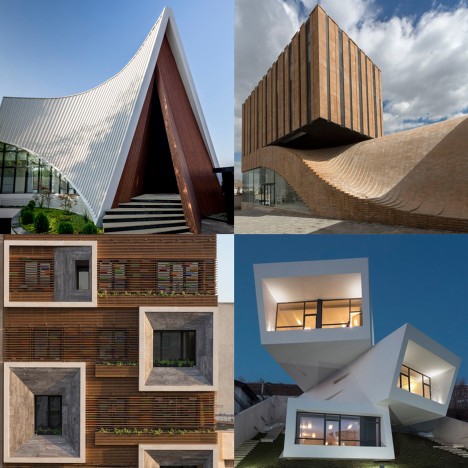
11 of the best new buildings from Iran’s architectural awakening

iran-architecture-projects-composite-sq

Iran‘s contemporary architecture scene is on the brink of a boom after the lifting of economic sanctions. We’ve collected together 11 of the best examples from the country’s new crop of buildings and bridges. (more…)

http://ift.tt/29oheDK

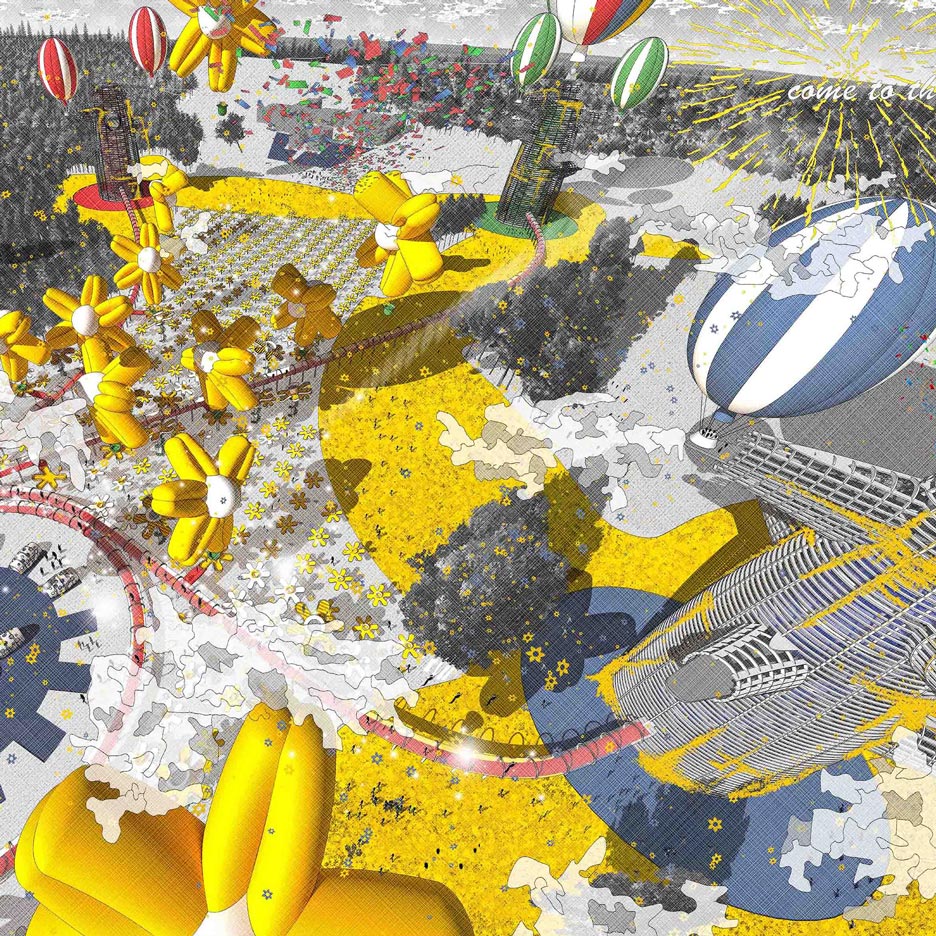
Marco Maycotte designs pleasure garden to become “the Las Vegas of Scandinavia”


Graduate shows 2016: the town of Vejle in Denmark is transformed into a pleasure garden in the spirit of Peter Pan’s Neverland in this design by Aarhus School of Architecture graduate Marco Maycotte (+ slideshow). (more…)

http://ift.tt/29m3qrx

Beach at Dyrhólaey by pchgorman http://flic.kr/p/5BXZM3

Beach at Dyrhólaey by pchgorman http://flic.kr/p/5BXZM3

http://ift.tt/29oarK1

Winners of the European Prize for Urban Public Space 2016 Announced


From a list of 25 finalists released in May, the Centre de Cultura Contemporània de Barcelona (CCCB) has announced the winners of the 2016 European Prize for Urban Public Space. Awarded since 2000 to recognize “transformations and improvements in the public spaces of Europe,” this year’s prize names two joint winners along with four special mentions. All 25 finalists will have their work featured in an exhibition that will tour Europe over the next two years, and also will be published in an online archive that features past finalists.

Continue after the break for images and descriptions of the winning projects.

Joint Winner: Recovery of the Irrigation System of the Spa Allotments, Caldes de Montbui, Spain / Cíclica + Cavaa Arquitectes


© Adria Goula

© Adria Goula

During the twentieth century uncontrolled urban development of the periphery of Caldes de Montbui seriously damaged the Hortes de Baix (Lower Orchards), more than three hectares ancient agricultural land which, for centuries, had been irrigated by the town’s surplus thermal waters. Bad smells and health risks resulting from the contamination of the irrigation system by sewage, together with partial covering of the main canal, inaccessibility of the orchards and bad management of wastewater from private spas ended up causing a rupture among the community of farmers using the irrigated land and the eventual collapse of the agricultural system.

However, after 2012, the town council introduced a participative process which brought together more than seventy horticulturalists. With their agreement, the sewage was properly channelled, the old irrigated land was supplied with clean water and a new network of accessible paths connected the orchards with the old centre of town. The land is now once again a productive space, keeping the horticultural tradition of Caldes de Montbui alive, contributing towards its food sovereignty and raising awareness among the town’s inhabitants concerning the importance of democratic management of the public good of water resources.


© Adria Goula


© Adria Goula


© Adria Goula


© Adria Goula

Joint Winner: Przełomy Centre for Dialogue in Solidarność Square, Szczecin, Poland / KWK Promes


© Robert Konieczny

© Robert Konieczny

Solidarność (Solidarity) Square was a physical expression of the historic fracture in Szczecin after the Second World War. Named in memory of sixteen workers who were killed in 1970 when they demonstrated against the Soviet regime, the square had little relevance beyond this purely commemorative function. Its urban surrounds, anonymous and featureless, had not recovered from the massive destruction of allied bombing attacks at the end of the Second World War, after which the city went from German to Polish control, whereupon its entire population was replaced, with all the tragic effects of such a change. The square, which recently recovered its lost centrality with the construction of the new Szczecin Philharmonic Hall, has been completely refurbished. It is now the site of the underground “Przełomy” Centre for Dialogue, a branch of the National Museum, which aims to heal the wounds of collective memory. Meanwhile the sloping contours of its roof offer the city a public space for intensive, vibrant use in its everyday life.


© Robert Konieczny


© Robert Konieczny


© Robert Konieczny


© Robert Konieczny

Special Mention: Ring of Remembrance: International Memorial of Notre-Dame-de-Lorette, Ablain-Saint-Nazaire, France / Atelier d’Architecture Philippe Prost


© Howard Kingsnorth

© Howard Kingsnorth

Special Mention: New Multiuser Porch, Molenbeek-Saint-Jean, Belgium / Baukunst


© Maxime Delvaux

© Maxime Delvaux

Special Mention: Garden of the Heavenly Hundred, Kiev, Ukraine / Yevheniia Kuleba + NGO “Misto-Sad”


© Alena Saponova

© Alena Saponova

Special Mention: Barkingside Town Centre Improvements, London, UK / DK-CM


© DK-CM

© DK-CM

http://ift.tt/29kuokL

“Driverless cars will always pose a risk”

Model SD by Tesla

Comments update: readers have been hotly contesting the safety of autonomous vehicles this week after the first death caused by a self-driving car was reported. (more…)

http://ift.tt/29w7yGs

Improving Workplace Communication-5 Steps

Good communication in your small business is important for your employees’ morale and productivity. Here are five steps to improving employee communication.

http://ift.tt/29nwKhX