Hou de Sousa Completes Construction on Raise/Raze and Sticks


Courtesy of Hou de Sousa

Courtesy of Hou de Sousa

Hou de Sousa (Nancy Hou and Josh de Sousa) has completed construction on Raise/Raze and Sticks, two competition winners for temporary installations in Washington, DC and New York, respectively.

Through Raise/Raze, the firm reused plastic balls from Snarkitecture’s “The Beach” at the National Building Museum to create an installation in DC’s Dupont Underground, a contemporary arts and culture space repurposed from an abandoned trolley station. Raise/Raze opened on April 30, and closed on June 1.

Located at the Socrates Sculpture Park in Queens, New York, Sticks is a multi-purpose pavilion space made of standard dimension lumber and accented with scrap wood found on-site. The pavilion opened on July 9, and will close December 31.


Courtesy of Hou de Sousa


Courtesy of Hou de Sousa


Courtesy of Hou de Sousa


Courtesy of Hou de Sousa

Raise/Raze, Dupont Underground, April 30 – June 1, 2016


Courtesy of Hou de Sousa

Courtesy of Hou de Sousa

Courtesy of Hou de Sousa

Courtesy of Hou de Sousa

Courtesy of Hou de Sousa

Courtesy of Hou de Sousa

From the architect. The site is a long and narrow curved hallway. Expanding upon this particular site condition, the proposal divides the space into a series of zones that present visitors with unique situations and scenarios, while also reconfiguring how one circulates through the site. When accessing Dupont Underground from the main entrance at New Hampshire Ave, visitors are surrounded by the most compressed zone, a crystalline cave, which forks into two windy paths. The Southward path leads to a forest-like colonnade of twisted trunks and stumps for resting on. Beyond this grove lies a series of large spherical shells that define a meandering path while simultaneously enclosing small pockets of space. As one passes through this valley of domes, a group of scaled down buildings begins to appear; the White House, the Capitol Building, and the Supreme Court Building. Conversely, if at the cave’s foyer one forks towards the North, then the visitor encounters and passes through a space of massive letters and walls of text.

Sticks, Socrates Sculpture Park, July 9 – December 31, 2016


Courtesy of Hou de Sousa

Courtesy of Hou de Sousa

Courtesy of Hou de Sousa

Courtesy of Hou de Sousa

Courtesy of Hou de Sousa

Courtesy of Hou de Sousa

From the architect. Sticks is a straight-forward assembly of standard dimensional lumber interconnected to form a structural space-frame. The system has been molded to fit the existing conditions of the site, but these contextual adaptations extend beyond the realm of the purely functional, and although quite minimal, ornamentally illustrate the strategies being deployed. In addition to providing a sheltered space, Sticks also serves as a storage and display system. The webbing that binds the lumber together protrudes outwards at the facade so as to support an assortment of linear materials. By doing so, scrap material becomes a dynamic decorative element while also shingling away precipitation along the outer wall and diffusing light when placed within the roof trusses. The 18 inch thickness of the structural exoskeleton essentially acts as shelving and is capable of storing sculptural works in progress or serving as a display case for curated events.

News via Hou de Sousa.

http://ift.tt/2a1U4Ey

What Dog Breed Are You?

Dogs are known to be man faithful friends. But just like us, humans, they have different personalities. You won’t find two alike. If you ever had one, you know that.

Let’s look at this the other way around; maybe we have some dog personality traits. Some of us are fiercely loyal to our family, others are here just for fun… Can you see the similarities? Let’s have some fun and see what we will get!

dogTake just now this quick, fun and easy quiz to find out what dog breed are you!

What Dog Breed Are You?
//cdn.playbuzz.com/widget/feed.js

Leave a comment below to tell us what you’ve got!

The post What Dog Breed Are You? appeared first on Change your thoughts.

http://ift.tt/2aMvwfW

annajewelsphotography:  Anacortes – Washington – USA (by…

annajewelsphotography:

 Anacortes – Washington – USA (by annajewelsphotography

Instagram: annajewels

vincentcroce: Down the alley http://ift.tt/1TfXWBx

vincentcroce:

Down the alley http://ift.tt/1TfXWBx

http://ift.tt/2ayjniE

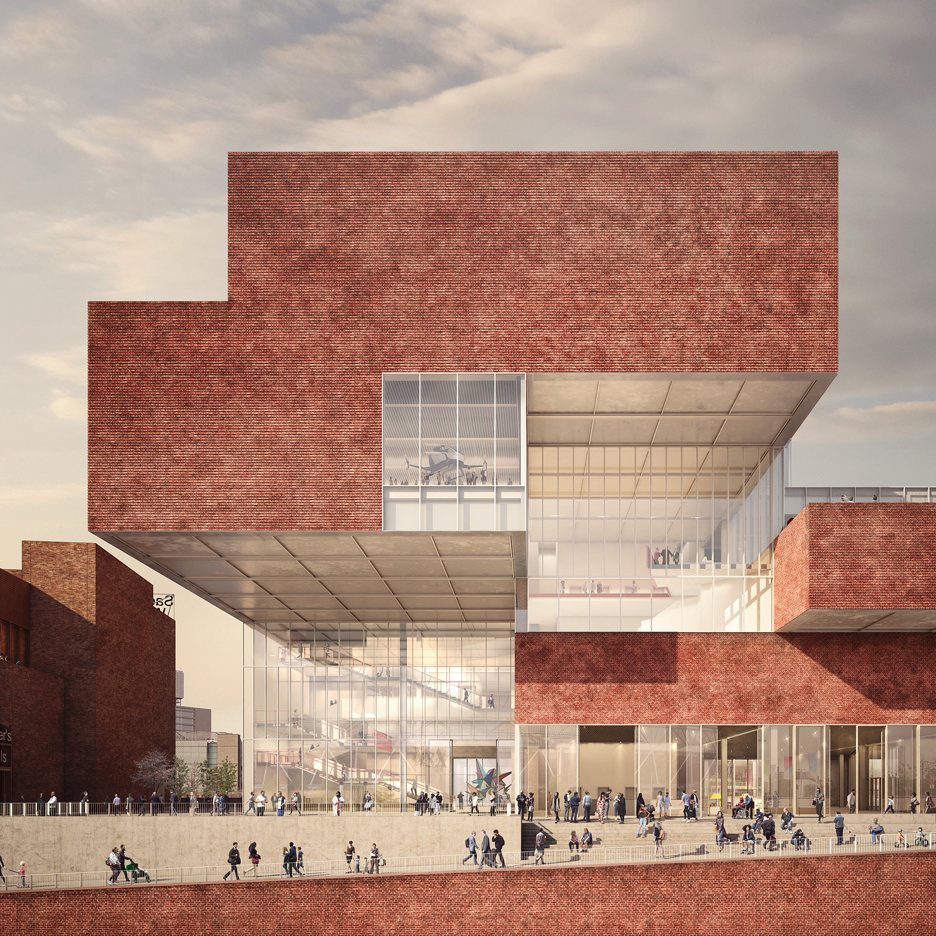
New images reveal Olympicopolis vision by Allies and Morrison and O’Donnell + Tuomey


Designs have been unveiled for the new £1.3 billion cultural quarter at London’s Queen Elizabeth Olympic Park, featuring buildings by architecture firms Allies and Morrison and O’Donnell + Tuomey. (more…)

http://ift.tt/2ajI2Cv

Competition: win a Staeckler trainer display system by PostlerFerguson


Competition: Dezeen has teamed up with London design studio PostlerFerguson to offer readers the change to win four Staeckler trainer display and storage systems (+ slideshow). (more…)

http://ift.tt/2a1LFkp

33 Expressive Ways to Overcome Self-Doubt & Anxiety like Madonna

Did you come here to read all about overcoming self-doubt?

I have good news and bad news.

Bad news is we are all here to learn lessons…sigh.

Good news is that we are meant to learn lessons and by addressing them, we can transform them into strengths.  Yaaayyy!

So why not transform self-doubt and anxiety into performance gold?

Just look to Madonna for inspiration.  This sassy, bold chameleon doubts herself saying, “I too have my moments of doubt and weakness.  My moments where I react before thinking things through.  My moments where I take the easy road.  My moments where I gossip and am envious.  My moments of deep insecurity.”  (Madonna admits Self-Doubt, 2001)

We aren’t all gifted with her talents, but why not dance through and past all the ‘what ifs’ using self-expression?

Inspired by the lyrics from Madonna’s, “Express Yourself”, here are 33 expressive methods to live fully through acceptance, failing, looking outward, simplifying, value, presence, spirituality, imperfection, honesty, creativity, and purpose.

Hit it Madonna! (Since I cannot use the lyrics direction, instead let us look to my interpretation of the song.)

1.    Act on your sizzle.

Before a nerve-wracking performance, journal about something you love.  Act on what you love with all your heart!

2.    Make panic your friend.

panic

The more you pretend panic doesn’t exist, the more it tells you it does.  Like Jeff Goldblum’s line in Jurassic Park: “…life will not be contained.  Life breaks free, it expands to new territories and crashes through barriers, painfully, maybe even dangerously….life, uh…finds a way.”

Your panic is trying to live and keep you alive, so give it air and use it as performance fuel.

3.    Reduce alcohol and don’t be cold.

Don’t play it cool. Feel fully and limit alcohol, sugar, and caffeine which fuel anxiety and mask feelings.

She has something to say about it

You need to find your own voice and speak out about your feelings.  Transform your fear by taking accountability for your words, situation, and actions.  Stand out on purpose.

4.    Step out of garbage and breathe.

Step out of the life-sucking garbage of apathy and fear and make yourself a priority.

Build in the life-affirming habits of breathing and living intentionally. Breathe in for a count of 4, hold it in for 7, and exhale for 11 seconds to reset.

5.    Stop expecting to be misunderstood.

Don’t expect people to read your mind.  Find the words and meet people halfway to say what you think, feel, and need.

6.    Rock the boat and don’t ‘fit in’.

Don’t people-please or ‘fit in’. Build up integrity and act intuitively.  Your life is a series of choices. Make them and accept consequences.

Go for the best and don’t be afraid to test it.

It feels safer in your predictable circumstances but what is that costing you? Don’t settle for less or for anything less than the best. Don’t be afraid of things falling apart. Be willing to test things and let them fall apart and fail repeatedly until you succeed.

It takes courage to test your comfort zone and act on your feelings.

7.    Don’t judge.

Liberate from labeling.  Aren’t you tired of judging others and judging yourself? By stopping the cycle you will realize it takes up unecessary and unhelpful space.

8.    Fail fast and fail often.

Embrace quick, repeated failure allowing for the meant-to-learn lessons and opportunity.

9.    Compare real and imagined anxieties.

Test reality by comparing your actual with your anticipated anxiety.  Use that imagination for good and create something instead.

Get your man to express his feelings to know it is real

Be vulnerable to bring out the best in everyone and start the help cycle by asking for and offering help.  Get others to open up by opening up yourself.  Express honestly to bring out the best in yourself and others.

10.  Be a feeling sponge.  

After hearing ‘you’re too sensitive’, have you diluted your emotions? Tune into and channel this delicate, acute awareness positively.  The opposite is apathy, numbness, insensitivity, and unconsciousness.  So feel and contribute.

11.  Leave your island and ask for help.

Schedule a weekly social hour to spend less time isolated. Call a friend or plan a meetup or volunteer event.  Spark new and genuine connections.

12.  Help me help you and be a lantern.

Self-doubt is selfish; when you’re thinking, ‘What am I going to say when they’re done talking?’ 

Lighten your load and get out of your head by helping others with a smile and really listen.

You don’t need fancy expensive things that don’t last

Cut through superficiality; no longer under or over estimating your contribution and problems. You don’t need riches or superficial illusions or distractions.  Discover grounded, focused, light-hearted, and authentic expression.

13.  Ground yourself, start small and build.

I procrastinated through school with unrealistic expectations and break downs.  Grand ideas serve a purpose but make things happen with swift and assertive action.

See Also: How to Overcome Self-Doubt and Follow Through with Your Goals

14.  Be narrow-minded.

Your anticipatory mind is too open to possibilities! That’s fabulous and it’s overwhelming. Use a simplified focus to get clear.

15.  Why so serious?

learn to laugh

Stop taking yourself so seriously, learn to laugh and move on.  Do your best.

You need a strong hand to lift you up

Build your future on a rock solid foundation.

16.  Let go of the reigns and get wild!

Anxiety is about control so hand it over and step out of your comfort zone.  Spend time in nature where you can draw upon perfection outside the computer.

17.  Practice Gratitude.

Recall a success.  Get clear and descriptive, using all your senses, to recall it when needed.

18.  Think and be still.

Fill your spiritual well and clear your thoughts by focusing on your breath, 10 minutes daily, for powerful, lasting, and building benefits.

Feel like royalty and never come down

Find the perfection in imperfection and start to feel entitled to a full and rewarding life.  True happiness comes from being, not doing.  Find this space and live fully in the present. You deserve it.

19.  Be like man’s best friend.

Animals are geniuses at life so try to tune into nature with no agenda.  Your pet companion will also calm anxieties and never judges.  My cat’s day consists of sleep, sun, petting, food, and cuteness.

20.  Practice outside in success.

Imagine you are successful through “what if’s”.  Success comes from practice; it’s muscle memory.  Read Amy Cuddy’s book Presence and practice positive body language so that your mind will follow suit.

21.  To the death!

Don’t let anything, especially perfectionism, get in the way of finishing.  Consistent commitment and follow-through automates success, confidence, and a final product of your own.

Don’t be fooled with roses

There has to be trust built upon truth

Keep your head straight with a solid, honest foundation.  Consider the rationality of ‘what if’ outcomes.  Recognize when your thoughts are irrational and refocus.

See Also: 3 Ways to Develop Rock Solid Self-Confidence

22.  Tear down walls.

Feel and express your feelings, even anger.  Honesty will crumble down the walls separating you from others and lead to purpose and happiness.

23.  No more manipulation.

No more sighing, criticizing, complaining, and whining. Don’t pretend things are good.  Live in truth and act assertively as a fruitful place to build upon.

24.   Be yourself and grow.

Live your truth and keep growing.  Commit to something like yoga on Thursdays as a positive way to connect.

madonna yoga

You deserve the best so keep walking if it is not the right time

Find your standards, balance, and discipline starting with building positivity and structure in your day.

25.  Build with compassion and friendship.

Instead of destructive “I can’t” language, build and speak from your heart positively.  Master the art of caring without being a doormat.

26.  Balance it out.

Prioritize balance for calm, healthy, centered living.  Don’t underestimate the value of a good night’s sleep, an organized home, a healthy routine, breaks, and a friend over ‘more important work’.

27.  Kick some butt.

Consider a workout routine.  Find yourself in the discipline and connect with your breathing, body, accomplishments, commitment, and follow through.

Express Yourself

Channel repressed thoughts into expressiveness, making decisions that open doors and improve your life’s richness.

28.  Art and Music.

art and music

Find your artistic side through painting, sculpting, or drawing, or music.

29.  Rearrange/decorate.

This can be as simple as rearranging your room or organizing your closet. It’s positive, expressive action.  I recommend also the life changing magic of tidying up.

30.  Perform.

Take an acting or public speaking class.  Practice alone, on camera, online, or in front of a group.

When your man leaves you, he might be regretting it and thinking about you and try to win you back

Be mindful, don’t regret the past, and immerse yourself in the present. Make the most out of the present and have no regrets.

31.  Find a cause.

Nothing like getting present, than finding a cause you’re passionate about; it may lead you to your purpose.

Madonna also recommends giving to communities and schools saying, “When you feel down or trapped, get outside of yourself and do something nice for someone.  This is a great cure for sadness, anxiety and self-obsession.” (Madonna admits Self-Doubt, 2001)

32.  Focus on a goal.

focus on a goal

Instead of being caught up with what people are thinking of you, consider what you want to get across and consider learning something new.  Ask why on both of these until you get to the core reasons.

33.  Have a positive, action-oriented to do list!

Embrace what you can do today with no regrets.  Commit to completing one item per day that will get you closer to your goal.  “I will write the first sentence of my book today!”

Don’t wither or shy away from your next speech or social event, allowing self-doubt to rob you.  Expand, bloom, and boldly shine as you are with balance, passion, and color to move from self-doubt into honest self-expression.


The post 33 Expressive Ways to Overcome Self-Doubt & Anxiety like Madonna appeared first on Dumb Little Man.

http://ift.tt/2azeSEf

AD Classics: Grundtvig’s Church / Peder Wilhelm Jensen-Klint


Courtesy of Flickr user Flemming Ibsen

Courtesy of Flickr user Flemming Ibsen

Six million yellow bricks on a hilltop just outside Copenhagen form one of the world’s foremost, if not perhaps comparatively unknown, Expressionist monuments. Grundtvigs Kirke (“Grundtvig’s Church”), designed by architect Peder Vilhelm Jensen Klint, was built between 1921 and 1940 as a memorial to N.F.S. Grundtvig – a famed Danish pastor, philosopher, historian, hymnist, and politician of the 19th century.[1] Jensen Klint, inspired by Grundtvig’s humanist interpretation of Christianity, merged the scale and stylings of a Gothic cathedral with the aesthetics of a Danish country church to create a landmark worthy of its namesake.[2]

It was decided in 1912 that Grundtvig, who had passed away in 1873, had been so significant to Danish history and culture that he merited a national monument. Two competitions were held in 1912 and 1913, bringing in numerous design submissions for statues, decorative columns, and architectural memorials.[3]


Courtesy of Flickr user Flemming Ibsen


Courtesy of Flickr user Rune Brimer


Courtesy of Flickr user noona11


Courtesy of Flickr user Flemming Ibsen


Courtesy of Flickr user seier+seier

Courtesy of Flickr user seier+seier

It was purportedly while fuming over only taking second prize in a church design competition in Aarhus that Jensen Klint designed and submitted his own proposal for Grundtvig’s monument. He worked under the belief that, whether or not his entry was chosen, he should still produce a church he felt Grundtvig deserved – a modus operandi which may explain how the construction cost for Jensen Klint’s proposal ballooned to twenty times that of the other submissions. Nonetheless, the judges felt confident that donations from the Danish people, doubled by the government, would be sufficient to sponsor the project and announced Jensen Klint as the winner in 1913.[4]


via grundtvigskirke.dk

via grundtvigskirke.dk

In his design, Jensen Klint referenced a particular brand of nationalist romanticism for which Grundtvig had been known. Grundtvig had played a large part in the proliferation of folkehojskol, or folk high schools, that welcomed young Danes from every social class to come and study their country’s language and history. These schools embodied Grundtvig’s rejection of classical academies, which he criticized for favoring the elite and eschewing Danish in favor of Latin.[5]


via grundtvigskirke.dk

via grundtvigskirke.dk

In many ways, Jensen Klint’s creation is surprisingly traditional. Spatially, Grundtvig’s Church is laid out as a typical cruciform cathedral, with columns separating the nave from two flanking aisles. Like Gothic cathedrals, the church uses soaring pointed arches and windows to define the sacred space with light.[6] Jensen Klint was also prone to designing elements in triads: most notable are the three towers, as well as the three entries on each side of the church – a religious metaphor for the Trinity common throughout Christian churches around the world. This latter design gesture creates a total of twelve portals – a reference to the twelve entryways to the New Jerusalem as depicted in the Biblical book of Revelations and a nod to the apostolic disciples.[7]


Courtesy of Flickr user Flemming Ibsen

Courtesy of Flickr user Flemming Ibsen

Just as Grundtvig had touted the importance of maintaining Danish cultural tradition, so too did Jensen Klint strive to represent his homeland’s vernacular architecture in his design. The crow-stepped gables of the exterior call back to the façades of traditional Danish country houses and churches, albeit on a far grander scale. Deference to Denmark’s own building canon also influenced the choice of building material: handmade yellow brick. Other than the baptismal font and the roof, the entire church is composed of these bricks.[8] Though crafted and assembled by several different masons, all the bricks came from Zealand (the island on which Copenhagen is situated), as did the roofing tiles. Vast numbers of bricks were required for the job; a single pillar contains roughly 30,000.[9]


Courtesy of Flickr user Flemming Ibsen

Courtesy of Flickr user Flemming Ibsen

While Jensen Klint synthesized two medieval styles for his design, he did so with striking restraint. The cavernous interiors of the church are almost entirely devoid of ornament; the massive columns rise to pointed arches and ribbed vaults with little to no visual interruption.[10] The dramatic simplicity of the design is highlighted by the church’s gaping windows, which allow the sunlight to stream in and reflect off the polished bricks within. Taking his cue from medieval master builders, Jensen Klint based the proportions of the interior on traditional aesthetic ratios intended to give it a pleasing appearance without the need for additional ornamentation.[11]


Courtesy of Flickr user Flemming Ibsen

Courtesy of Flickr user Flemming Ibsen

Exactly where to build Grundtvig’s Church was a matter of significant debate between the competition’s end in 1913 and the beginning of construction in 1921. After a number of sites were considered, it was decided that the memorial would form the centerpiece of a new hilltop community at Bispebjerg, a suburb of Copenhagen. Though some complained that the location was too remote and empty, others rebutted that the church would find useful service once the new neighborhood was built around it.[12]


via kk.dk

via kk.dk

The design of the new housing development ultimately fell to Jensen Klint too, who adapted the Classical layout proposed by Copenhagen’s city planners into a less rigid medieval plan. He also inverted the initial decision to have building heights rise from the boundaries to the church; instead, he flanked the church with low-lying houses, allowing it to loom more dramatically over its surroundings. Stylistically, the development is clearly linked to the church at its core, with similar crow-step gables and yellow brick walls. Ever mindful of keeping the houses affordable, Jensen Klint greatly limited the complexity of their structure and decoration; the most elaborate architectural gestures were the articulated doorways unique to each group of homes.[13]


via kk.dk

via kk.dk

Construction of Grundtvig’s Church lasted 19 years, during which time the building was erected in two phases under supervision by three different architects. Initially, the money raised only covered construction of the western bell tower, which opened in 1927 as a temporary church with seating for a congregation of 200. Once work commenced on the rest of the building, the flooring material changed from brick to tile, a difference that is reflected in the floor of the completed church to this day. When P.V. Jensen Klint died in 1930, supervision of the work was taken on by his son, Kaare Klint. Kaare’s son Esben also worked on the project, meaning the construction of the church was overseen by three generations of the same family.[14]


Courtesy of Flickr user seier+seier

Courtesy of Flickr user seier+seier

Grundtvig’s Church was consecrated by the King of Denmark on September 8, 1940 – 19 years to the day after construction began, and on N.F.S. Grundtvig’s birthday. The building was fully packed for the ceremony, as it was the day after and for many Sundays following its opening. What was once a field of rye before 1921 is now the site of one of Denmark’s largest and most memorable churches, a monument not only to Grundvig, but to Danish culture, Expressionism, and the architect who combined them all into a stunning orchestration of hand-crafted brick.[15]


Courtesy of Flickr user seier+seier

Courtesy of Flickr user seier+seier

References

[1] “Grundtvig’s Church, Bispebjerg, Copenhagen, Denmark.” Manchester History. Accessed July 12, 2016. http://ift.tt/2adWW2E.
[2] The History of Grundtvigs Church – Short Introduction. PDF. Copenhagen: Grundtvigs Kirke.
[3] The History of Grundtvigs Church.
[4] Remar, Dorte. “Folkets Kirke På Bjerget.” Torsdag, July 22, 2011. [access].
[5] Encyclopædia Britannica Online, s. v. “N.F.S. Grundtvig”, accessed July 14, 2016, [access].
[6] The History of Grundtvigs Church.
[7] Remar.
[8] Glancey, Jonathan. Eyewitness Companions: Architecture. London: DK, 2006. p422.
[9] The History of Grundtvigs Church.
[10] Hughes, Dana Tomić. “Majestic Simplicity of Grundtvig’s Church in Copenhagen.” Yellowtrace. November 2, 2015. [access].
[11] The History of Grundtvigs Church.
[12] Remar.
[13] “Grundtvig’s Church, Bispebjerg, Copenhagen, Denmark.”
[14] Remar.
[15] Remar.

  • Architects: Peder Wilhelm Jensen-Klint
  • Location: På Bjerget 14B, 2400 København NV, Denmark
  • Architect In Charge: Peder Vilhelm Jensen Klint
  • Project Year: 1940
  • Photographs: Courtesy of Flickr user Flemming Ibsen, Courtesy of Flickr user Rune Brimer, Courtesy of Flickr user noona11, Courtesy of Flickr user seier+seier, Courtesy of Flickr user Emily, via grundtvigskirke.dk, via kk.dk

http://ift.tt/2asCpUW

SIROTOVARCHITECTS Create a Private Residence in Kiev, Ukraine

TA.R.I Architects Wins Second Prize for a Women’s Complex Competition in Seoul


Courtesy of TA.R.I Architects

Courtesy of TA.R.I Architects

TA.R.I Architects has won second place in the competition for a Women’s and Family Facility Complex in Seoul, South Korea, with its proposal, Space Salim. Based on the idea of welcoming the community and fixing its problems, the proposal centers on a diffuse system to represent the complexity of society.


Courtesy of TA.R.I Architects


Courtesy of TA.R.I Architects


Courtesy of TA.R.I Architects


Courtesy of TA.R.I Architects


Courtesy of TA.R.I Architects

Courtesy of TA.R.I Architects

The design results from a careful analysis of Seoul fabric settlement, and of the ongoing dialogue between the area and the urban context. It would become a piece of the city, not a single stand building, where socialization would be possible in the public spaces, enhancing relational network, and welcoming the vulnerable minor social groups said the architect in a press release. 


Courtesy of TA.R.I Architects

Courtesy of TA.R.I Architects

Courtesy of TA.R.I Architects

Courtesy of TA.R.I Architects

Courtesy of TA.R.I Architects

Courtesy of TA.R.I Architects

The design seeks to be seen as “the starting point of a new urban and social consciousness,” and a way to fill the community with passion, emotion, and creativity.


Courtesy of TA.R.I Architects

Courtesy of TA.R.I Architects
  • Architects: TA.R.I Architects
  • Location: Seoul, South Korea
  • Project Team: Marco Tanzilli, Claudia Ricciardi
  • Area: 20900.0 sqm
  • Project Year: 2016
  • Photographs: Courtesy of TA.R.I Architects

News via TA.R.I Architects

http://ift.tt/2azXsVa