Secondary School, Sport Hall and Cultural Center / Chartier Dalix Architectes


© Takuji Shimmura

© Takuji Shimmura


© Takuji Shimmura


© Takuji Shimmura


© Takuji Shimmura


© Takuji Shimmura

  • Architects Associate: AvantPropos architects
  • Design: Studio Joran Briand
  • Structure: HDM ingéniérie
  • Hqe: ACT environnement
  • Eco: Becquart
  • Acoustic: Flandres analices
  • Collaborator: KVDS

© Takuji Shimmura

© Takuji Shimmura

The Moulin Junior High School is located in the southern area of Lille, in a neighborhood that has undergone major transformations in recent decades. Mainly occupied by a population of workers, this neighborhood possesses an urban fabric that is still largely one of brick buildings, factories and buildings related to freight whose renovation has spurred a renewal of the entire neighborhood (as illustrated in reconversion of the Saint- Sauveur train station for example).


© Takuji Shimmura

© Takuji Shimmura

The site of the junior high school, which is also equipped with multiple programs, stands on a lot next to which the elevated train passes. Located at the gateway to the neighborhood, it must also meet the requirements of several very different urban situations: a broad boulevard, a narrow street and an elevated train.


Diagram

Diagram

On the main boulevard d’Alsace, the facility presents a highly transparent ground floor; which offers students a large open view to the outside and a view with great depth of field into the heart of the lot for the passerby on foot. This glass façade guides the neighbor, runs along the orchestra hall, which is in an angle overlooking the boulevard, then past the table tennis room with its hollowed out depth of 5 meters and its two all glass façades. Complete transparency here offers an environment for recess/recreation area, providing a visual link between the public space and the inner world of the junior high school.


© Takuji Shimmura

© Takuji Shimmura

© Takuji Shimmura

© Takuji Shimmura

As seen from the elevated metro, the upper floors of the complex are treated like a landscape, playing with the topography of its masses. Les elements of the program become clearly identifiable:  the junior high school, the fitness room of the boarding school, the orchestra hall. This geographic situation is bound together with a flexible skin, in pre-patinated zinc, which follows the forms of each volume while creating an emblematic urban signal, for both the facility and the neighborhood.


© Takuji Shimmura

© Takuji Shimmura

© Takuji Shimmura

© Takuji Shimmura

A ring of vegetation crowns the entire roof with a meadow and ensures great visual comfort for users as well as neighbors. This rooftop landscape guides and underscores the movements of the roof, which extends in three directions. Here, zinc is used for its multipurpose function and its texture: cladding walls, roofs and awnings, it is adjusted to all the spaces and marks off the volumes with folds that underscore diagonals, thereby linking one program with the next. The irregular rhythm of standing seams in an effect of graphic contrasts underscores all the softness of the reflections from the zinc to the warm brown tones, and reveals the delightful quality of this material.


© Takuji Shimmura

© Takuji Shimmura

Equipped with this sensitive skin, the building is organized in the form of a continuous ribbon, arranged around the central courtyard. All the programs are connected to this area on the ground floor. The upper floors enjoy a direct view onto the planted terraces, and especially the rooms in the R+1 class, which are directly connected. The “skyline” offered by the irregularity of the roof lines is quite variable and offers several views opening onto neighboring buildings and onto the public space. Thus, wherever one is standing in this establishment, it is easy to find one’s bearings, inside the junior high school but also outside in its specific relationship with the neighborhood.


Diagram

Diagram

The theme of the line present on all the façades through the seamed zinc roof extends outward to from a sunbreak in front of vertical circulations and the orchestra hall. This graphic quality, like a hatch mark, turns inward toward the facility and serves as a line unifying the different programs.


© Takuji Shimmura

© Takuji Shimmura

A motif printed on the glazed concrete surfaces of the corridors of the college plays the role of “epigram-graffiti.” This motif is also found on the walls separating the cafeteria area. Its welded black metal screens visually delimit the space and maintain the full depth of field of the entire volume. The orchestra hall, arranged in movable seating stands, is equipped with overhead light fixtures composed of thermo-lacquered black metal strips whose lines project their motifs throughout the concert hall. Facing the street, like a scratch, the glass façade is marked with yellow adhesive strips, which are echoed by the metal graphic quality of the entrance to the junior high school.


© Takuji Shimmura

© Takuji Shimmura

http://ift.tt/2ae06jU

Pierre-Emmanuel Vandeputte designs desk divider that provides an opportunity to “have a break”

Belgian designer Pierre-Emmanuel Vandeputte has created a portable desk divider that allows the user to actively isolate themselves from the noise around them (+ slideshow). (more…)

http://ift.tt/2aldIeB

Labour leadership: Millions of Labour supporters prefer May to Corbyn, poll suggests – Politics live

Rolling coverage of all the day’s political developments as they happen, including Owen Smith’s Labour leadership speech

9.32am BST

YouGov has now posted its poll findings on its website.

Here is an extract from the commentary from YouGov’s Matthew Smith.

The Conservative lead is now larger than at any time since the 2015 general election, and represents a remarkable turnaround for the party which was 3% behind Labour in late April. It is still unclear whether the results are sustainable or are just down to a new-PM bounce and the continued division in the Labour party.

Voters also expressed their support for new Prime Minister Theresa May, with 52% of them saying that she would be a better Prime Minister than Jeremy Corbyn, who was supported by just 18%. May’s efforts to reach out to Labour voters may be bearing some fruit, with 29% of 2015 Labour voters preferring her premiership to Jeremy Corbyn’s – every little will help when the Conservatives have such a slim majority. May is also overwhelmingly preferred to Corbyn among 2015 Lib Dem voters (66% vs 8%) and 2015 UKIP voters (75% vs 4%).

9.21am BST

Many people don’t trust pollsters anymore. If Labour party members, and the 180,000 registered supporters who signed up to take part in the leadership contest, are in this category, then Jeremy Corbyn has nothing to worry about.

But if voters in the contest are swayed by polling, then it’s a difficult morning for the Labour leader. Yesterday an ICM poll gave the Tories a 16-point lead. This morning new figures are out from YouGov. They put the Tory lead at a mere 12 points, but the Times has splashed on the figures, highlighting the finding that almost a third of those who voted Labour in 2015 prefer Theresa May as prime minister to Jeremy Corbyn. Here is the Times’ story (paywall) and here’s an extract.

When those who voted Labour in last year’s election were asked to choose between Mrs May and Mr Corbyn as prime minister, 29 per cent opted for the Tory leader. This equates to 2.7 million Labour voters out of 9.3 million. Among voters generally, only 19 per cent believe that the Labour leader would make a better prime minister. The poll also suggests that the EU referendum is leaving a lasting mark on Westminster politics. Thirteen per cent of people who voted to leave now back the Labour Party, against 51 per cent who support the Tories.

Mrs May’s Conservative government leads Labour by 12 points, the largest gap since her party returned to Downing Street six years ago, a YouGov survey forThe Times found. It is a bigger lead than Gordon Brown achieved during his bounce after succeeding Tony Blair. Labour dropped to its lowest share of the vote since the eve of the election in 2010.

The poll also found that Mrs May has started to attract some Ukip voters. It put the Tories on 40 per cent and Labour on 28 per cent, its lowest result under Mr Corbyn. Ukip was on 13 per cent and the Lib Dems on 8 per cent.

Tomorrow’s front page: Millions of Labour voters place May above Corbyn #Tomorrowspaperstoday http://pic.twitter.com/Q4WjtZoMkF

Today’s Yorkshire Post front page #yplive http://pic.twitter.com/n2Yk9dCTbS

Continue reading…

Politics blog | The Guardian http://ift.tt/2aptL9A

phantastrophe: Taroko National Park, Taiwan……

phantastrophe:

Taroko National Park, Taiwan… http://ift.tt/1YdtDdZ

http://ift.tt/2aptseT

6 Powerful Ways To Be Assertive Without Hurting People’s Feelings

Before we dive into this, it’s important to understand the difference between being assertive and being aggressive. There is a huge difference. Being assertive means to be able to make your point, effectively, in a diplomatic manner where everyone can understand it and maintain respect for you.  Being aggressive is getting your point across in a harsh and abrasive manner often hurting people’s feelings or quite possibly making enemies along the way. Clearly these aren’t Webster’s definitions but it’s easier to understand in layman’s terms.

We all know aggressive people and do our best to not be like them but can you consider yourself to be an assertive person? Do you struggle to be assertive and find that sometimes you come off as borderline aggressive? Here are a few powerful but proven ways to be assertive without hurting anyone’s feelings.

assertive21. Style is everything.

The style in which you communicate is the difference between aggression and assertion. Body language plays a huge role in this as well. Be mindful of it. Stay calm, relaxed, in control, maintain a light smile and open arms when getting your point across. Remember people are more receptive to a gentler but firm discussion rather than a bold and loud one.

2. You are not being mean.

Don’t forget what being assertive means. You want to get your point across in a diplomatic and trusting way. You aren’t being a bully. You are simply standing up to what you believe in and respect is given for that. There isn’t anything wrong with that. You are just being you and people will appreciate that even more.

3. Talk in first person.

I did this, or I feel this, rather than you said this and you never did that. We aren’t looking to point fingers and lay blame all over the place. That’s aggression. You want to make your point in a sincere manner and a somewhat compassionate one so that people will feel your sincerity and understand your position better.

4. Stay consistent and focused.

Get your point across and don’t get upset if people don’t understand and begin to challenge you. This may happen regardless of you present yourself so stay focused, calm and consistent in your tone, your message and your body language. If you start to get annoyed or irritated by their criticism, you run the risk of losing your cool. Stay calm.

5. Believe in yourself.

When you strongly believe in your topic it is easy to be very passionate and knowledgeable about it, thus having confidence in yourself in being able to discuss it and possibly get others to have faith and believe in you as well. Sincerity will come naturally and you won’t come across as being too pushy or aggressive. People will admire your passion and you.

6. Know your limits.

Lay down boundary lines and don’t let people cross them. If we let people walk all over us, they will continue to do that forever. Let them know that under no circumstances is it acceptable that they do this. Make sure they know your boundary lines and if they cross it, firmly make them aware and let them know you won’t tolerate it if it happens again.

Too many people get taken advantage of and they continue to let it happen because they don’t want to upset anyone or rock the boat. All this does is show people how to treat you. If you want people to treat you properly and with respect, assertively show them how. You have to remember that even if you are being assertive and someone’s feelings have got hurt in that somehow, it’s not your problem, it’s theirs. There are times where no matter what you say or how you say it, some people will just take it all wrong anyway. There is little you can do about that. Stay true to you an d your values in a very assertive way, and people will respect and admire you for years to come.

The post 6 Powerful Ways To Be Assertive Without Hurting People’s Feelings appeared first on Change your thoughts.

http://ift.tt/2a3X5Qj

Bart Lootsma Dissects, Unpicks and Evaluates the 2016 Venice Biennale


One installation of the Central Pavilion, curated by Alejandro Aravena. Image © Laurian Ghinitoiu

One installation of the Central Pavilion, curated by Alejandro Aravena. Image © Laurian Ghinitoiu

In two lectures delivered by Bart Lootsma, Professor and Head of Institute for Architectural Theory and History at the University of Innsbruck, the 2016 Venice Biennale—Reporting From the Front—is dissected, unpicked and evaluated through the national participations (pavilions) and Alejandro Aravena’s central exhibitions. Lootsma, who has broadcast the lectures as publicly available resources on architecturaltheory.eu, is the co-curator of the 2016 Pavilion of Montenegro.


Bart Lootsma

Bart Lootsma

In Reporting from the Front #1 (~1:30), Lootsma gives an overview of the Biennale by introducing the director and Pritzker Prize-laureate Alejandro Aravena. In the second part of this episode he tours the international pavilions of the Giardini and clarifies some of the most important installations represented there.

In Reporting from the Front #2 (~1:50), Lootsma reports from Aravena’s exhibition in the Arsenale and discusses some of the national pavilions therein, ending with Project Solana Ulcinj – the Montenegrin Pavilion he curated with Katharina Weinberger.

http://ift.tt/2apryLo

A Pair of Villas Adapted to the Landscape of Mani, Greece

Architect's Villas Mani by hhharchitects (12)

Architect’s Villas Mani is a residential project completed by hhharchitects. Finished in 2015, it is located in Mani, Greece. Architect’s Villas Mani by hhharchitects: “The project is built in Mani. The complex consists of two houses split into six stone volumes connected together by metal structures and courtyards. The basic idea of the project is the adaptation of the complex to the topography and the integration of the construction in..

More…

Spiral Staircase Abandoned House by Freaktography An abandoned…

via Statues in Focus http://ift.tt/2aJrVzo

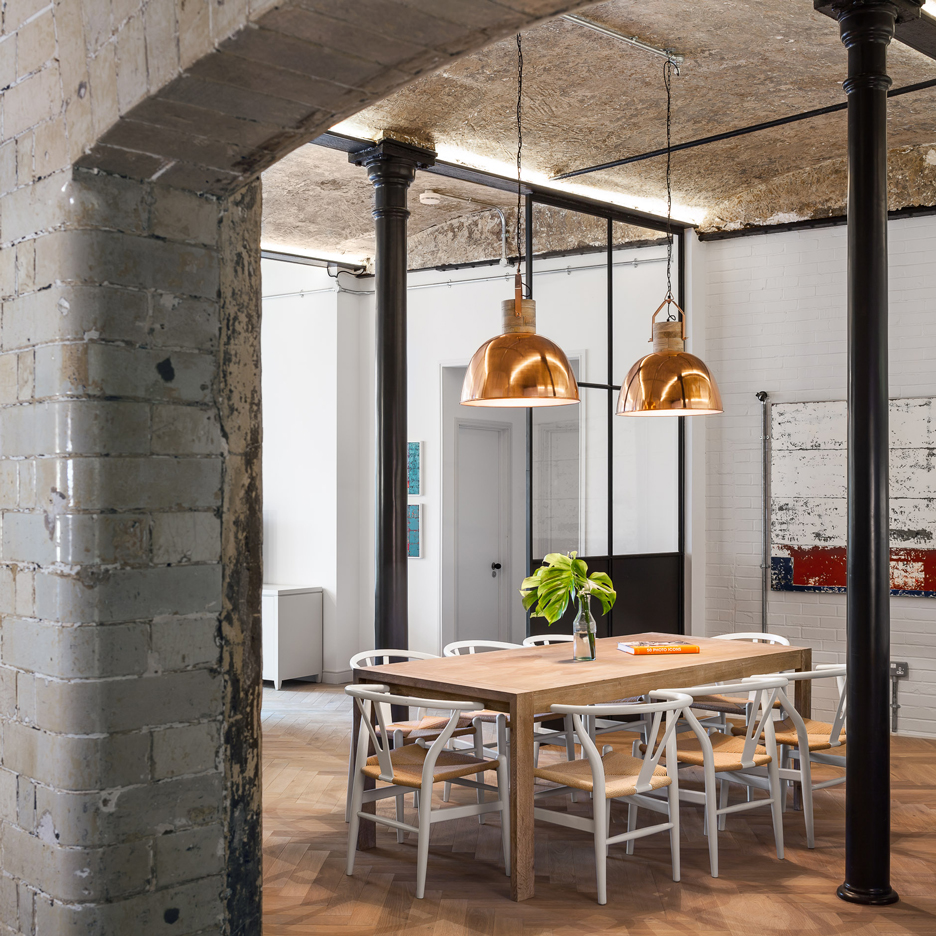
Jo Cowen Architects transforms Victorian bakery in London into 12 factory-inspired homes


Jo Cowen Architects has converted a 19th-century bakery complex in south London into housing, featuring glazed brickwork, cast-iron columns and industrial-style glazing (+ slideshow). (more…)

http://ift.tt/2awjA2q

Vigário House / AND-RÉ


© Fernando Guerra | FG+SG

© Fernando Guerra | FG+SG


© Fernando Guerra | FG+SG


© Fernando Guerra | FG+SG


© Fernando Guerra | FG+SG


© Fernando Guerra | FG+SG

  • Architects: AND-RÉ
  • Location: 4580 Paredes, Portugal
  • Design Team: Bruno André, Francisco Salgado Ré + Alice Babini, Catarina Fernandes, Rui Israel
  • Area: 450.0 sqm
  • Project Year: 2015
  • Photographs: Fernando Guerra | FG+SG, Courtesy of AND-RÉ
  • Consultants: Strongaxis

© Fernando Guerra | FG+SG

© Fernando Guerra | FG+SG

Vigário House is a particular and sensitive project, dating back to 2008 and completed early 2015.


Diagram / Elevations / Sections

Diagram / Elevations / Sections

The project is the outcome of the privileged context. The existing ruins were the triggers that set the conditions for the unfolding of the new architecture narrative. 


© Fernando Guerra | FG+SG

© Fernando Guerra | FG+SG

© Fernando Guerra | FG+SG

© Fernando Guerra | FG+SG

The new organism adapts itself to the old stone walls, filling the existing interstitial spaces, unifying the mass and providing a contrast backdrop against the rough stone surfaces – the main characters in the narrative – in a close dialog between the old and the new.


© Fernando Guerra | FG+SG

© Fernando Guerra | FG+SG

The stone ruins are the main element in the plot, and new architectural body is a silent ally and a neutral stage. Also, the new body translates a gesture that respects the nostalgia and history of the past, thus avoiding its loss and its fall into oblivion.At the same time, the new intervention uses the past for its own benefit, taking advantage of the geometry, textures and visual properties.


© Fernando Guerra | FG+SG

© Fernando Guerra | FG+SG

© Fernando Guerra | FG+SG

© Fernando Guerra | FG+SG

The construction went on for almost eight years, and witnessed several stops and standbys. This was a slow architecture exercise, all to do with the passage of time.


Plan

Plan

The first phase, regarding the reconstruction, cleaning and consolidation of deteriorated parts of the ruins, took alone the first full year. The work was done according old traditional, and almost lost, stone setting methods, respecting the original stone construction. Each phase was a challenge, successfully achieved by a close and dedicated on-site overview, resulting in many cases in site-specific solutions, due to the specificity nature of the building, were each wall or corner needed a particular and personal attention.


© Fernando Guerra | FG+SG

© Fernando Guerra | FG+SG

http://ift.tt/2a7wBye