**NOTE: This article is being submitted on behalf of Zina Kumok of Retirement Online NOT Tarelle Tolson of Stone Temple**
The sphere of finance and economics is largely male-dominated. From the most powerful positions to the highest salaries, the world of wealth has been a boys’ club since the first drachma was minted in ancient Greece.
While that disparity isn’t disappearing anytime soon, advocates for gender equality can look to one area of finance as a sign of the changing tide: retirement saving.
According to a recent study by investment management behemoth Vanguard, women are out-saving men for retirement, and it’s not even a close race. Read on to learn more.
The Study
A 2016 survey from financial firm Vanguard found that despite the wage and wealth gap, women are outsaving men for retirement. In fact, women are almost 15 percent more likely to save, and when they do, they save 7-16 percent more than men.
Even women who are earning less than $50,000 are still saving for retirement at a rate of 45 percent compared to 28 percent in men. These women prove that a low salary doesn’t have to dissuade you from saving for retirement.
The study also observed that women are more likely using pre-packaged options like target-date funds, which choose a basket of funds based on when you hope to retire. Target-date funds are a good choice for someone who wants to invest in the market, but doesn’t know which securities to choose.
Unfortunately, the study also revealed that both sexes are not saving enough for retirement. Women set aside 7 percent of their salary for retirement—nowhere close to what they need. Most experts recommend saving between 10-15 percent of their salary for a comfortable nest egg in retirement years.
The women involved in the survey earned $68,895 on average, while the men earned $85,983, making their savings rates all the more impressive. The study also dispelled the myth that women are less likely to invest in the stock market, stating in the abstract that “on average men and women take very similar risk levels and hold similar types of portfolios.”
How Men Can Catch Up
While gender experts may be able to extrapolate some deeper reasons behind this gap, there’s nothing inherently gendered about the actions women are taking to save more. Any man is capable of bridging that divide with thoughtful and consistent financial decision-making. Here are a few important steps to take.
● Take advantage of employer-sponsored plans. The easiest way to get started saving for retirement is to sign up for a plan through your employer. Nowadays many companies offer 401ks and other options for their workers, often with a company match. Not only could you be eligible for free money, but you’ll have access to someone designed to walk you through the intricacies of starting and funding your retirement.
● Start early. Men earning less than $50,000 should start saving for retirement now, even if their instincts are to wait until they’re earning more. Time and compound interest can take small, regular contributions and turn them into large sums later on. Even if you can only save $25 a paycheck, it’s better than nothing.
● Take advantage of catch-up contributions. If you’re an older man who’s been slacking on retirement saving, it’s not too late. Those 50 and older can take advantage of catch-up provisions for IRAs and 401ks, which allow you to set aside more money. You can put an extra $1,000 toward your IRA and an extra $5,000 to your 401k per year.
● Take advantage of higher salaries. Not only are men likely to earn more than women, but they’re also more likely to have jobs making more than $100,000 a year. They should use those high salaries and put more money into their employer-sponsored retirement plans (or IRAs if those aren’t an option).
● Ask for help. If you’re having trouble starting to save for retirement and aren’t sure what to do, consulting a financial planner may be the best option. An advisor can tell you how much you need to save and what kinds of investments to choose. They can make custom recommendations based on your goals and where you are in life. And if all else fails, you can turn to the real experts: the women in your life.
Zina Kumok is a 20-something writer for TraditionalIRA.com and RothIRA.com specializing in personal finance. She started covering personal finance while blogging about paying off $28,000 worth of student loans in three years. A former reporter, she has covered murder trials, the Final Four and everything in between. She has been featured in Lifehacker, Daily Worth and Time magazines.
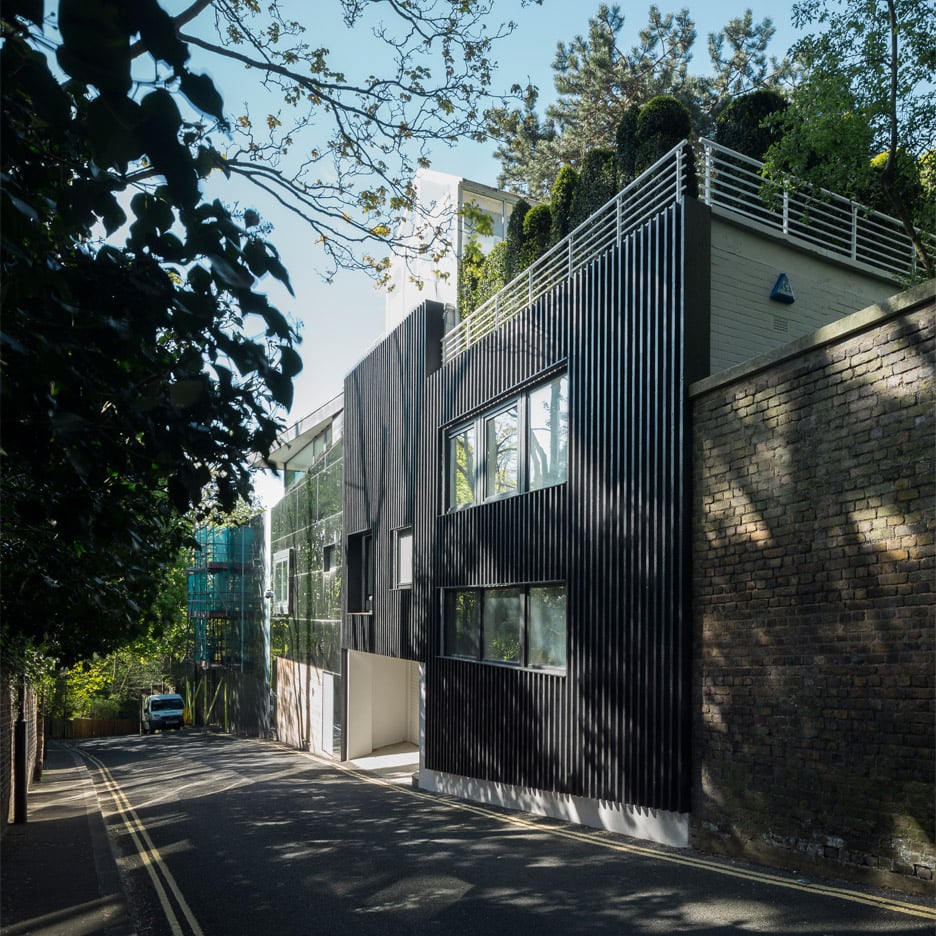
Charred larch slats now cover the exterior of this Modernist house in north London, thanks to a “macabre” upgrade intended by architecture studio Denizen Works to reference the nearby Highgate Cemetery (+ slideshow) (more…)
Addition to a Private Residence is a project designed by George Moustroufis and his team of Moustroufis Architects. The stunning three-storey house was remodeled in 2016. Addition to a Private Residence by Moustroufis Architects: “The owners desired an extension to their house that could adapt to the needs of their family and in accordance with their social life, which involves frequent entertaining of guests. George Moustroufis’s design proposed the creation..
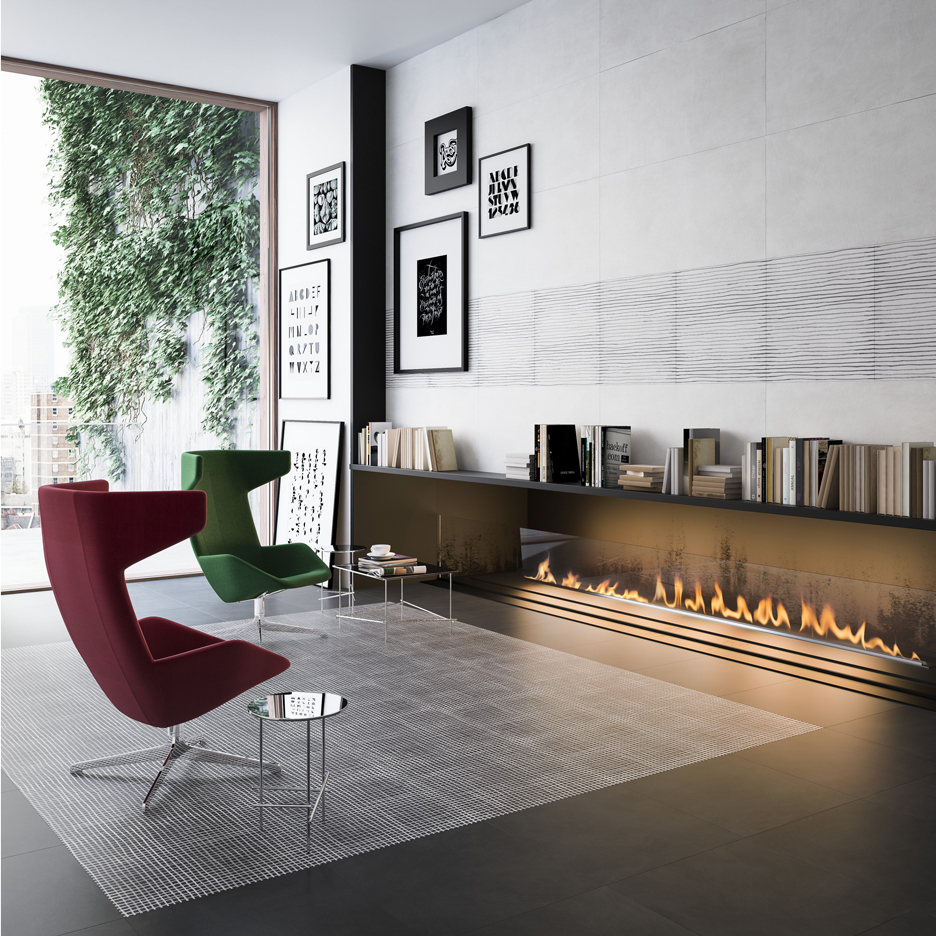
Dezeen promotion: Italian brand Ceramiche Refin has created a new collection of slate-like porcelain tiles, including versions featuring patterns of lines and grids that look as if they were hand-drawn in chalk (+ slideshow). (more…)
A proposal from AM3 Architetti Associati uses the flow of the natural landscape to create a theater cut into a cliffside in Cefalù, Italy. Situated at the base of the Rocca di Cefalù, the new theater had to respect the importance of both the historical, man-made structures and the greatness of the cliffs and rocky outcrops. The first prize winning design plays with the existing naturally occurring amphitheater, “S. Calogero cavea”, adding a series of lightweight interventions to create a new cultural attraction.
Courtesy of AM3 Architetti Associati
The limestone present throughout the site is referenced by the large circular clearing, which resembles a quarry cut into the jagged landscape. The sparse, untamed vegetation that litters the rock face remains the only flora present, ensuring that the new additions don’t look overly manicured. Within the circular clearing, a semi-circular ‘cavea’ – the seated area of an amphitheater – rises at a low gradient, with it’s highest point closest to the sea.
Courtesy of AM3 Architetti Associati
The internal amphitheater that this arc creates between the rising cavea and the rock face gives a sense of semi-enclosure, as all focus is directed internally. At the focal point on the clearing, before the cliffs begin is a circular plate which acts as the theater’s singular stage. The timber pad has the cliffs as it’s backdrop, and can house theatrical, musical, or other cultural performances. The stage can be used recreationally or professionally, and is serviced by the dressing rooms located below the cavea.
Courtesy of AM3 Architetti Associati
The amphitheater is capped on its uppermost ledge by a path which circumscribes the new theater. Accessible by stairs next to the entrance, the path provides users with a panoramic “mirador” which faces the shore and sea. At the end of the arc, the path extends beyond the clearing and onto a neighboring peak in the cliff face. Another three flights of stairs snake upwards on the cliff face opposite the timber amphitheater, giving access to the original rocky cavea.
Courtesy of AM3 Architetti Associati
The use of oak gives the entire scheme a sense of weightlessness, as the thin layers of wood are laid with gaps between to allow light to pass through. The lightness is reiterated in the reuse of the excavated limestone, which creates a subtle blanket of gray stone across the clearing. The incision of the design into the existing landscape is made seamless by the color, geometry, and transparency of the chosen materials, as well as the sweeping form of the cavea which circumscribes the natural plateau.
From the architect. Italian studio Pedevilla Architects designed a minimal rose-tinted structure that serves as a fire station for the town of Vierschach in South Tyrol.
Built in the remote Pusteria Valley, close to the border of Austria, an obviously simple shaped building is situated alongside the main road. Altough the design prioritizes simplicity and the rediction of detail, the building is in fact an experiment within itself. Realized in light-weight concrete, with a product named LiaPor, the outer shell challenges constructive and static parameters, but deals also with insulation requirements.
While one side is facing the village and contains the spaces for all the fire engines and trucks, the upper and only single-storey elevated front follows the heavily frequented traffic road. The latter carries the main public function of the building and is therefore conducted as a spacious hall, fully panelled in hand-planed pine wood. An external stair case is connecting both floors to each other and gives access to the control room and vehicle hangar below.
The red colour emphasises the originality of the new fire station. All surfaces have been realized with pigmented concrete to remark the building’s monolithic character. Dimensions of the construction remain thereby recognizable from the outside, in fact it even amplifies the structures massive appearance.
The project’s main feature is surely the level of pre-fabrication of its outer shell, which minimized necessary finishing works of the construction and the buildings fitout. Irregularities or divergences in the concrete only adds charm to the material and the character of the building.
Alongside to the mentioned technical functions, the pigmented lightweight construction was accomplished as exposed concrete with high density and is therefore water and frost proof. As to the buildings economic efficiency, particular attention was paid to the attainment of a robust and simple construction, the usage of only a few materials and to reduction of work stages to a minimum. Furthermore the sensible choice of materials ensures a high durability and reduced maintenance costs.
The Blanche Chalet is a private home located in La Malbaie, Quebec, Canada. It was designed by ACDF Architecture. The Blanche Chalet by ACDF Architecture: “The “Blanche” Chalet, whose name evokes the spirit of the vernacular houses of the region, is situated in La Malbaie’s area of the “Terrasses Cap à l’Aigle”. Its simple and pure architecture gently complements the landscape of Charlevoix in a modern fashion. The raw concrete..
Perspective view of the Zamoskvorechye district of Moscow. Image Courtesy of Strelka Magazine
In this interview Nadya Nilina, a Russian architect, urban planner and educator specialising in large-scale masterplanning and historical preservation, traces the formation of Russian discourse on urbanism and discusses what goals might be set for the future of urbanisation in the country.
Alongside Prof. Dr. Ronald Wall, Nilina is curating the Urbanisation of Developing Countries course as part of the new Advanced Urban Design programme at Moscow’s Strelka Institute, which will provide a detailed critical overview of Russian urban development over the last three hundred years. Urbanisation of Developing Countries is considered one of the key topics in urbanism today and represents a large and complex part of this discussion.
Past Continuous: Historical Roots of Russian Urban Thinking
The Network
If geopolitics did not play into it, settlement decisions would be based solely on the availability of essential resources for survival: natural materials for shelter, water and food. Albeit primitive, this is a potent explanation. Yet the further civilization is from the primitive, the more interconnected and interdependent the settlements become and the less we are able to explain individual settlement decisions independently from a larger network. That is to say, the location of Russian settlements is as much dependent on the survival advantages of a particular place as it is on the position within a larger network of settlements, a network that trespasses national boundaries. Static settlement is but a small part of a dynamic system.
If we cannot talk of a settlement in isolation, we certainly should not be talking about its shape or architecture is a purely local product. By definition, the shape would be influenced by the nature of the network – its directionality and relative security, the kind and volume of vehicles that use it, the role of the location as a node, centre or a transitory space.
Thus, when we talk about Russian cities, I think we should consider them within the global network – the network that is a conduit for ideas, as much as it is for technologies, the know-how, and the actual goods. Despite the relative historical remoteness of Russia and the recent attempts to further isolate the country, the roots of Russian urban ideas lie at the crossroads of many different cultures. The use of wood is connected with the Scandinavian traditions; the regular grid with the Enlightenment ideas borrowed from the West and propagated by the tsars; the 19th century red-brick industrial estates with the exchange of knowledge with England, etc.
Influences
The relationship with other cultures was articulated differently at different times, but in the general discourse on urbanism, the intellectual leitmotif was the ubiquitous reference to “the other.” When we talk about the provinces of the 18th century, the building types, such as municipal buildings, hospitals and residences are often a modest version of these types in the capitals. And the models in the capitals allude to their counterparts in other countries. The building may be built using local materials and techniques, and in that respect it is vernacular, but it often references some greater, and somehow better model.
Standardisation, the dissemination of appropriate models arranged in a hierarchical fashion was a way to give identity not only to individual towns, but to the larger network of towns and entire regions. This use of models was a good way to uphold quality across the board, making sure safety regulations are adhered to and allegiance to the central power, including an aesthetic allegiance, is established.
Clearly, the more physical networks are established, the more movement they are able to transmit – movement of people, materials and ideas, the more sophisticated the local production becomes. At some points in history, we see foreign architects shaping the environment in the most direct way.
Moskovskoe motorway, residential block. E. Levinson, I. Fomin, 1939-1940. Image Courtesy of Strelka Magazine
Spreading the Soviet
Discourse of the “other” emerges in the twentieth century with the establishment of the republics and the importation of the Soviet model of urbanism into the new territories. Here the vernacular traditions were perceived as “the other” – akin to the way Edward Said uses “oriental.” And in the eyes of the coloniser, the “other” was threatening and had to be if not obliterated, then overwhelmed, overshadowed by something recognisable. Thus, we have the ubiquitous microrayon model implemented across the vast territory of the Soviet Union.
The use of standards, as you can see, is not new here. Peter the Great and Catherine the Great attempted to establish the new, modern identity of their empire through the use of building regulations and standards. The Soviets succeeded in the unification of the country by way of urban design to a much larger extent.
The peculiar situation with Russian cities is this. It is the survival of the family or a clan that was at stake in the primitive settlement, we see it in the maps of Siberian settlements. Imperial ambitions, and the wish to create and preserve the image of the empire have been a much more important factor in the creation of Russian cities of the modern age. In fact, strategic decisions and ambitions have often been at odds with the ability of Russian cities to sustain a healthy life.
Another peculiar situation is the creation of the GULAG system and the concurrent emergence of cities, serviced by what amounts to the slave labour. I have worked in places like that. A locational decision for both the city and the GULAG was based on the availability of natural resources and thus urbanisation ensued. Not exactly a way to create a vibrant city, is it?
Then still another category of cities – the defensive outpost, built to symbolise and protect the borders. And finally, the mono-towns, which are a popular subject of discussions today. Cities created to service one kind of industry.
That is the Russian urban heritage: the older ones, often referred to as “organic” settlements, most of which are dying off as far as I know; cities built on advantageous positions with historic cores, Soviet additions and a somewhat diversified, or at least evolving economy, such as, for example, Tver and Kaluga; GULAG-dependent resource extraction towns; mono-towns built around a single industry; and the capitals – manifestations of power and imperial ambitions of different iterations.
Urbanisation in Russia is associated with the colonisation of space in order to realise individual ambitions, on the one hand; with colonisation of space as a way to milk the earth and extract the resources, on the other; and with the way the administration of the country, the political context has been shaped by hostility to the “other” and the need to protect the borders and keep “the others” away and the “locals” at bay. Terror has been an important factor in shaping the cities.
"We have a metro!" – Soviet propaganda poster for Moscow, 1930s. Image Courtesy of Strelka Magazine
Urbanisation: in absentia
For the most part, historically, cities were viewed as instruments that service other industrial instruments and machines. Therefore, the ideas about urbanisation, at least those that have been articulated, are either borrowed from other places, or developed locally with one sole purpose to create the environment to house the workers and deliver them to their places of production in the most expedient manner. This is a form of urbanisation that should probably be called “industrial urbanisation”, or a penitentiary urbanisation. A different way of thinking about cities has been geared towards social engineering and propaganda. The creation of an individual who accepts his own individual right to existence as a part of the greater collective effort to build something – an empire or communism or a united country of the working class. You name it.
But there is very little thinking about the quality of life beyond the basic needs for recreation—rest, so one can work again, and procreation—so the country replenishes its proletariat. There is very little in the way of other urban theory in Russia.
The Russian architectural avant-garde and the period that coincided with the early CIAM and the Bauhaus, was an interesting time for the Russian cities. Original building types, such as the NEP residential cooperatives and communal living apartments – “doma kommuni,” not to be confused with the way apartments were densified after the revolution so poignantly described by the late Svetlana Boym, are of great interest. Albeit, designed with the same idea of providing space for recuperation after hard labor, constructivist projects envisioned a more diversified society. They offered more than the bare essentials. And although one can argue that Constructivists were not 100% original, the exchange between Russia and the West at the time went well beyond borrowing. It could, for a short time, be called a dialogue.
Perhaps the tragic fate of that period and its brightest stars is what makes it so appealing to scholars. The post-war period, especially the first eight years before the death of Stalin was nothing but an attempt to reinstate imperial ambitions. It is an incredibly retrograde, utterly derivative, typically colonial way to reconstruct the country. The style of Stalinist architecture with its classical allusions is the most banal way of reasserting one’s entitlement. A meager attempt to align oneself with the respectful classical heritage is nothing but an insecurity driven scramble for legitimacy.
Personally, I prefer the Khrushchev period, in which the city had a much more real, habitable dimension, and the objects populating it were designed to house people in rather egalitarian fashion. This was progressive, forward-looking city planning with a great attention to landscape and an understanding of the key principles of hygiene and ergonomics.
I am saying this especially, because if you analyse the 1935 Stalin plan for the reconstruction of Moscow, you would notice that it was designed for military parades and giant spectacles. Check out the scale of the streets and blocks. This is not a plan that wants to provide amenity, but one that should inspire a submissive awe amidst severe discomfort. In addition, the endless references and direct borrowings from American models, albeit distorted and repurposed as objects in space. Such are the seven sisters – impressive buildings, positioned somewhat poorly on the ground.
Petrov's plan of St. Petersburg (1738). Image Courtesy of Strelka Magazine
Present Continuous: Urban Planning and Urban Design in Post-Soviet Russia
Womanly Urbanism
As far as fashion for urbanism, I think part of the story, and it is if not a global, at least a Western phenomenon, this surge of interest in all things urban is due to the influx of women into the workforce. Architecture, despite its incredible inroads into democracy, is still a rather misogynist profession. Yes, there are many more women in the profession, and yes, there are many more female principles in firms, etc. But the inequality is still there. And starting with Jane Jacobs, the talk about urban liveability has been a female-driven discourse.
Women are much more attuned to the environment, simply because they have more responsibility for the rearing of children. And the rearing of children requires a certain level of comforts that are provided by urban designers. I know this is a terribly unpopular thought, and I am shooting myself in the foot by saying that, but there are still less opportunities for women in architecture, and more opportunities for women in urbanism, and urbanism is about making the world a better, safer, better lit, and more comfortable place, and somehow that is a more female domain. Especially in some places. So may be that is why urbanism has become so popular. Of course, I say this half-jokingly.
I think the answer is simple. Deindustrialisation and the transformation of the economy towards service economy are to blame. People learned to expect more comfort from their environment. Living in cities is also advantageous from the point of view of human evolution.
There are more options for procreation in cities. And as more young people are flocking to city in search of partners, cool spaces become part of foreplay. In turn, institutions try to keep up with what is interesting to the young people. Institutions need students, etc. It’s all business.
In Russia, the environment was not addressed in earnest for a very long time. Developers made money by building projects and rapid auto-mobilisation created tons of problems. The old fabric was deteriorating, the rich were moving to the suburbs. Then it was time to address the streets and public spaces. And when Russia faced that problem it turned out there were very few specialists. So, the institutions emerged to fill that gap.
A Lot of Work Ahead
Post-Soviet Russia has not really developed any new model of urbanisation. With the exception of a higher level of hostility, now not only directed at “the others” abroad, but at “the other” next door, or still worse, at ‘the other” in the street, what has changed the shape of space is the ubiquitous fences and gated communities. Of course, that has entailed suburbanisation.
I am not sure how much has been done in revitalisation. I think some relatively small efforts by the elite have been laudable. The likes of Strelka, the Red Rose, and the Danilovskaya Manufactura and the New Holland have definitely benefitted the capitals. But, these are tiny efforts when compared with the millions of square meters of neglected, if not totally destroyed heritage. Just think of the extent of real industrial heritage out there. Whole cities, dedicated to the production that has ceased.
I think today the imperial ambitions are back in full swing, while the government is at a total loss as to what to do about the declining, shrinking and dying cities. The capitals are doing ok, and just need a facelift. While the real problem is the time bomb of the ageing infrastructure and deteriorating housing that has no economic model to supports its revival. There is so much work to do and it should be done by intelligent, well-educated, open-minded designers. We need a whole army of those!
Plan of Magnitogorsk. Image via New Town Institute





 Sig Nordal