The 80-20 Rule: The Key to Producing Better Work in Less Time


© Max Griboedov via Shutterstock

© Max Griboedov via Shutterstock

This article was originally published on ArchSmarter as “How to Work Smarter with the 80-20 Rule.”

“OK, let me see your list.” I was fresh out of architecture school and working on my first project as a designer. It was one week before our design Development Deadline. The project manager asked me to draw up a list of remaining design issues.

“Here are the ten things I have left,” I said as I handed over the list. “It was hard to prioritize them. They’re all really important.” I was fortunate to be working with an experienced project manager who, in addition to being extremely patient with me, saw it as her responsibility to mold and shape green architecture graduates into fully functioning architects. Not an easy task…

“So you’re telling me that designing custom coat hooks is as important as fine-tuning the proportions of the massing?” she asked with a raised eyebrow.

“Well… I mean… no. Not when you put it that way…” I stammered.

“And,” she continued, “do you really think the restroom tile pattern will bring as much to the project as finishing the design of the entrance lobby?”

“No, but…”

She held up her hand to save me any further embarrassment. “We have one week left. I want you to pick out the two issues from the list that will bring the most impact to the project. And then work on ONLY those two issues.  Nothing else matters.”

“So no custom coat hooks?” I asked incredulously.

Instead of a sharp rebuke, she chuckled and said “A big part of your job as designer is to identify the parts of the project that are most important to the design. The parts that will make or break the project. And then you need to focus on those areas relentlessly. Everything else is just a distraction. Like your coat hooks.”

“OK, I understand… only the two most important things” I replied and headed back to my desk.

So I quickly got over my wounded pride, rolled up my sleeves and got to work. The project didn’t win any design awards but the client was extremely happy with the results and hired us to do another project soon after.

Though I didn’t know it at the time, this was my first introduction to the 80/20 rule.


© Perfect Gui via shutterstock

© Perfect Gui via shutterstock

Work Smarter with the 80/20 Rule

In 1896, an Italian economist named Vilfredo Pareto published a paper that showed 80% of the land in Italy was owned by 20% of the people. Pareto looked at other countries and found that this 80/20 distribution of wealth was extremely consistent.

Fast forward to 1941. A management consultant by the name of Joseph Juran discovered Pareto’s research and applied it to quality issues. Much like Pareto, Juran found that the 80/20 distribution held true. In Juran’s case, he discovered that 80% of quality problems were caused by 20% of the issues. Juran called this phenomenon “the vital few and the trivial many.” It is also known as the Pareto Principle or the 80/20 rule.

The 80/20 rule states that 80% of your results in any activity will come from just 20% of your effort. Essentially, there are certain actions you do (your 20%) that account for most of your success and happiness (your 80%). While the numbers aren’t always exactly 80/20, what’s important to understand is the lopsided ratio of effort to results.

So how do we apply this to architecture and design?

Take a look at your own work and see if you can identify an 80/20 distribution of results to effort. For example, in a given day, 80% of your work is probably completed in just 20% of the time. Or 80% of your design time is spent on just 20% of the building.

Here are some other suggestions for applying the 80/20 rule:

  • If 80% of your firm’s work comes from 20% of your clients then cultivate those relationships.
  • If 80% of RFIs come from 20% of the building then focus your documentation on those areas.
  • If 80% of your marketing photographs are taken in 20% of the building then apply more design effort to these areas.

The trick with the 80/20 rule is identifying the 20% that really matters and focusing on those areas because they are the ones that drive your results. In my case, it was my project manager who helped me identify the 2 design issues out of the 10 on my list that would bring the most impact to the project.

It’s easy to get caught up in the minutia of our various tasks and lose sight of what really matters. Likewise, it’s easy to treat all the tasks on your list as having equal importance. Don’t fall for the hard work paradox. Instead, take a critical look at what you’re doing and focus relentlessly on those few things that really matter. Do this and you’ll super-charge your productivity.

All images via Shutterstock.com

http://ift.tt/2a5LC8t

La Roca House / Mathias Klotz


© Roland Halbe

© Roland Halbe


© Roland Halbe


© Roland Halbe


© Roland Halbe


© Roland Halbe

  • Architect: Mathias Klotz
  • Location: Punta del Este, Maldonado, Uruguay
  • Area: 800 m2
  • Project Year: 2006
  • Photography: Roland Halbe
  • Engineers: Patricio Stagno
  • Colaborators: Baltasar Sánchez, Carolina Pedroni, Miguel Rossi
  • Landscape: Rosa Acosta
  • Construction Date: 2005
  • Built Surface: 300m2

© Roland Halbe

© Roland Halbe

From the architect. La Roca house is a refuge located in Jose Ignacio Point, a fishing village 80 km north of Punta del Este on the Atlantic.


Plan 0

Plan 0

Plan 1

Plan 1

Plan 2

Plan 2

The site presents a double slope along its length and width, terminating in rocks and the ruins of the foundation of a pre-existing building which now forms a natural garden of succulents. 


© Roland Halbe

© Roland Halbe

The program considers a principal volume for social spaces, and another for the residences that results in two boxes of the same height which generate two patios in the voids that the boxes leave between and under themselves. The master bedroom is located in the residential volume with panoramic views of the surroundings.


Elevation

Elevation

Sketch

Sketch

Elevation

Elevation

La Roca House is defined through a sequence of spaces, almost square in plan, in which run entering from the most public to the most intimate, crossing terraces, patios, exterior, intermediate and interior spaces and arriving finally to the master bedroom. 


© Roland Halbe

© Roland Halbe

In winter the gallery space captures heat, but in the summer, the master bedroom acts as a chimney for the convection of rising warm air creating ventilation that eliminates the need for air conditioning. 


Section

Section

The roofs of the boxes are succulent gardens that work to improve the thermal quality while at the same time integrating the architecture with the landscape. 


Model

Model

Gray water from the house is recycled for the irrigation of these gardens. The materiality consists of Ipe and exposed concrete with the idea that from the rocks emerges two volumes, lifted up on feet, integrated into the site as elements as radical as the landscape itself.

http://ift.tt/2a7EZMK

Bee Breeders Announce Winners of Cannabis Bank Competition


First Prize Winning Proposal "U-CAN" by I-Ting Chuang, Jing-Yao Lin, Takanori Kodama, Yu Han Wu. Image Courtesy of Bee Breeders

First Prize Winning Proposal "U-CAN" by I-Ting Chuang, Jing-Yao Lin, Takanori Kodama, Yu Han Wu. Image Courtesy of Bee Breeders

Through their international architecture competitions, Bee Breeders give young architects and designers the platform to question the social and political role of architecture. Their latest competition, a Cannabis Bank without a specified site, was an open-ended question into the role and relevance of the increasingly normalised substance. The judges selected three winners and six honorable mentions, all of which presented ideas that open up the discourse around cannabis and its integration into the built environment.

As the architecture of cannabis still remains undefined territory, it has historically been associated with refits of other building types such as tea houses, cafes, public houses or pharmacies. This ambiguity left the field open for entrants to be as fantastic and progressive as they desired, with respect to the impact of the program on their social context. The judges commented that the most successful projects presented a, “consideration of individual experience — medicinal, psychological, and spiritual; sensitive accommodation in space and circulation for both the intimate and social; clearly defined context and locale; and innovation of an undefined spatial, tectonic, and architectural typology.”

FIRST PRIZE WINNER – U-CAN


First Prize Winning Proposal "U-CAN" by I-Ting Chuang, Jing-Yao Lin, Takanori Kodama, Yu Han Wu. Image Courtesy of Bee Breeders

First Prize Winning Proposal "U-CAN" by I-Ting Chuang, Jing-Yao Lin, Takanori Kodama, Yu Han Wu. Image Courtesy of Bee Breeders


First Prize Winning Proposal "U-CAN" by I-Ting Chuang, Jing-Yao Lin, Takanori Kodama, Yu Han Wu. Image Courtesy of Bee Breeders


First Prize Winning Proposal "U-CAN" by I-Ting Chuang, Jing-Yao Lin, Takanori Kodama, Yu Han Wu. Image Courtesy of Bee Breeders


First Prize Winning Proposal "U-CAN" by I-Ting Chuang, Jing-Yao Lin, Takanori Kodama, Yu Han Wu. Image Courtesy of Bee Breeders


First Prize Winning Proposal "U-CAN" by I-Ting Chuang, Jing-Yao Lin, Takanori Kodama, Yu Han Wu. Image Courtesy of Bee Breeders

I-Ting Chuang, Jing-Yao Lin, Takanori Kodama, Yu Han Wu | Taiwan

U-CAN distributes cannabis dispensaries across rooftops in Taiwan, in the ad hoc additions which are typically constructed by residents without permission from their local government. This draws a parallel between the illegality but social acceptance of these structures and the growing acceptance of cannabis, suggesting a sense of collectivity and cohesion that is above the law. The scheme sees private consultation rooms littered across the rooftops, marked by illuminated chimneys to reaffirm the peaceful presence of cannabis in the city. The scheme “plays the social and political ambiguities against each other” and comments on the prevalence of marginalised activities that take place far above ground level. 

Read the full interview with the first prize winning team here. 

SECOND PRIZE WINNER – CANNALEONIC BANK


Second Prize Winning Proposal "CANNALEONIC BANK" by Albert Pla, Joan Pau Albertí and Héctor Durán. Image Courtesy of Bee Breeders

Second Prize Winning Proposal "CANNALEONIC BANK" by Albert Pla, Joan Pau Albertí and Héctor Durán. Image Courtesy of Bee Breeders


Second Prize Winning Proposal "CANNALEONIC BANK" by Albert Pla, Joan Pau Albertí and Héctor Durán. Image Courtesy of Bee Breeders


Second Prize Winning Proposal "CANNALEONIC BANK" by Albert Pla, Joan Pau Albertí and Héctor Durán. Image Courtesy of Bee Breeders


Third Prize Winning Proposal "CANNABIS RIVER CRUISE" by Sheehan Wachter and Cruz Crawford. Image Courtesy of Bee Breeders


Second Prize Winning Proposal "CANNALEONIC BANK" by Albert Pla, Joan Pau Albertí and Héctor Durán. Image Courtesy of Bee Breeders

Albert Pla, Joan Pau Albertí and Héctor Durán | Spain

The second place proposal is situated in the medical research park of Barcelona, Spain, and was praised by the judges for its contextual relevance and political commentary. The sites adjacency to the beach presents a playful dichotomy of the medical and recreational aspects of cannabis. The external skin is covered in informational pamphlets, presenting a literal wall of information buffering the external from the protected interior. The interior houses a series of loosely organized rectilinear volumes, which open up to a central courtyard which functions as the key social gathering space. The recognizable silhouette of the curvilinear floating roof and regular base form an iconic building that can be readily identified and attributed to its cause.

Read an interview with the second prize winners here.

THIRD PRIZE WINNER – CANNABIS RIVER CRUISE


Third Prize Winning Proposal "CANNABIS RIVER CRUISE" by Sheehan Wachter and Cruz Crawford. Image Courtesy of Bee Breeders

Third Prize Winning Proposal "CANNABIS RIVER CRUISE" by Sheehan Wachter and Cruz Crawford. Image Courtesy of Bee Breeders


Third Prize Winning Proposal "CANNABIS RIVER CRUISE" by Sheehan Wachter and Cruz Crawford. Image Courtesy of Bee Breeders


Third Prize Winning Proposal "CANNABIS RIVER CRUISE" by Sheehan Wachter and Cruz Crawford. Image Courtesy of Bee Breeders


Third Prize Winning Proposal "CANNABIS RIVER CRUISE" by Sheehan Wachter and Cruz Crawford. Image Courtesy of Bee Breeders


Third Prize Winning Proposal "CANNABIS RIVER CRUISE" by Sheehan Wachter and Cruz Crawford. Image Courtesy of Bee Breeders

Sheehan Wachter and Cruz Crawford | United States

The third place proposal takes the unassigned typology of cannabis architecture and marries it to the architecture of river boats. Acknowledging the historical importance of steamboats in the advancement of society, the boat brings with it new ideas and substances from outside of the known and accepted realm. Just as passenger boats evolved to places of great social extravagance, with their ball rooms and luxurious dining rooms, this project suggests that cannabis too can transgress from mere cargo to something of worth and prestige. The design sees the traditional program of the passenger boat subverted, with the great hall becoming “an intimate and other worldly meditative space for the use of medicinal Cannabis.” 

Read an interview with the third prize winners here.

HONORABLE MENTIONS

Pierre Shi Thach, Kevin Ting-Yu Huang and Daniel Xu Fetcho

Liliana Szulakowska

Elżbieta Komendacka

Teruaki Hara, Sai Hu and Marija Sassine

Charles Jones, Robert Mosby, Matt Decotiis and Jill Thompson

Miroslav Stafi, Julia Azamatova and Nikita Petrov

For more information on each of the winners and honorable mentions, check out the competition website.

News via Bee Breeders

http://ift.tt/2a7xnKu

How Many Times Have You Been Reincarnated?

It is said that our soul keep returning to earth many, many times, until his mission is accomplished. Reincarnation is a very interesting perspective to judge the meaning of life. It is also a source of great comfort for those who seek spiritual growth based on inner resources. Reincarnation is used to explain the differences between people; they are lucky or not, rich or not, based on their actions from previous lives.

The concept was born in India around the 9th century BC, but now it is believed by many, including groups from the monotheistic religions.

reincarnationTake just now this quiz to find out how many times you have been reincarnated.

How Many Times Have You Been Reincarnated?

//cdn.playbuzz.com/widget/feed.js

Leave a comment below to tell us what you’ve got!

The post How Many Times Have You Been Reincarnated? appeared first on Change your thoughts.

http://ift.tt/2a0gCBV

Philadelphia – Pennsylvania – USA (by Peter Miller) 

Philadelphia – Pennsylvania – USA (by Peter Miller

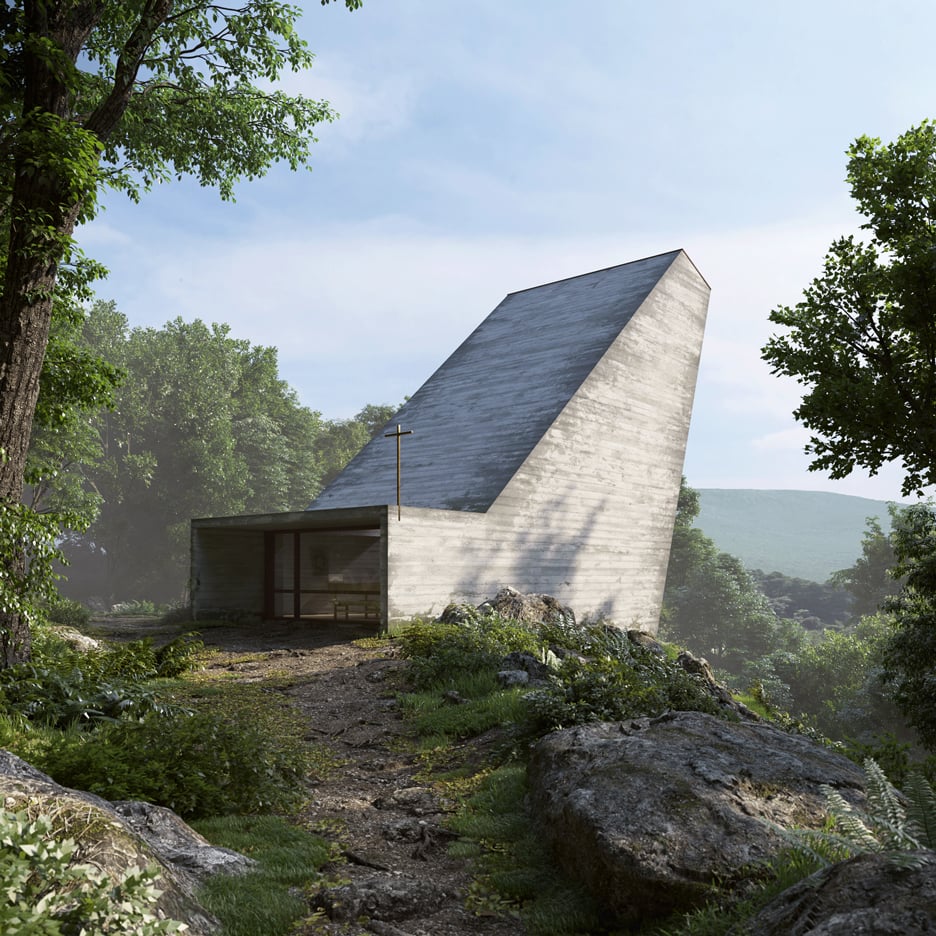
Alpine chapel designed by Joaquim Portela Arquitetos as a giant light funnel


This proposal for a concrete chapel by Joaquim Portela Arquitetos is designed to reach up towards the sky from its site in the Swiss Alps (+ slideshow). (more…)

http://ift.tt/2a8qU53

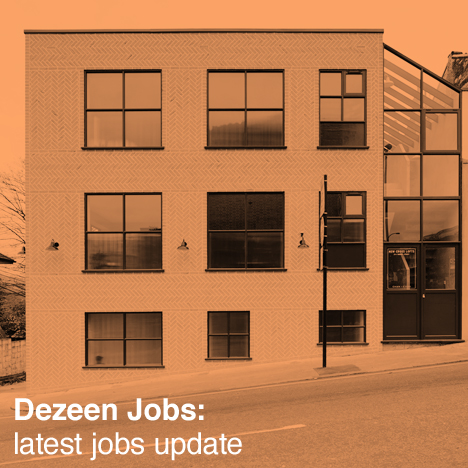
Dezeen Jobs: latest jobs update

Dezeen latest jobs update

See the latest from our new and improved recruitment site Dezeen Jobs, including positions with Adjaye Associates, Merge Architects and specialist estate agent The Modern House, whose properties include this herringbone-clad apartment and studio block in London (pictured). This is also the last chance to apply for roles with David Chipperfield Architects, the V&A Museum, MAD and more… (more…)

http://ift.tt/2arp0yE

tulipnight: Thrift by Kev Fidler http://ift.tt/1LGf2FY

tulipnight:

Thrift by Kev Fidler http://ift.tt/1LGf2FY

http://ift.tt/2a5yDna

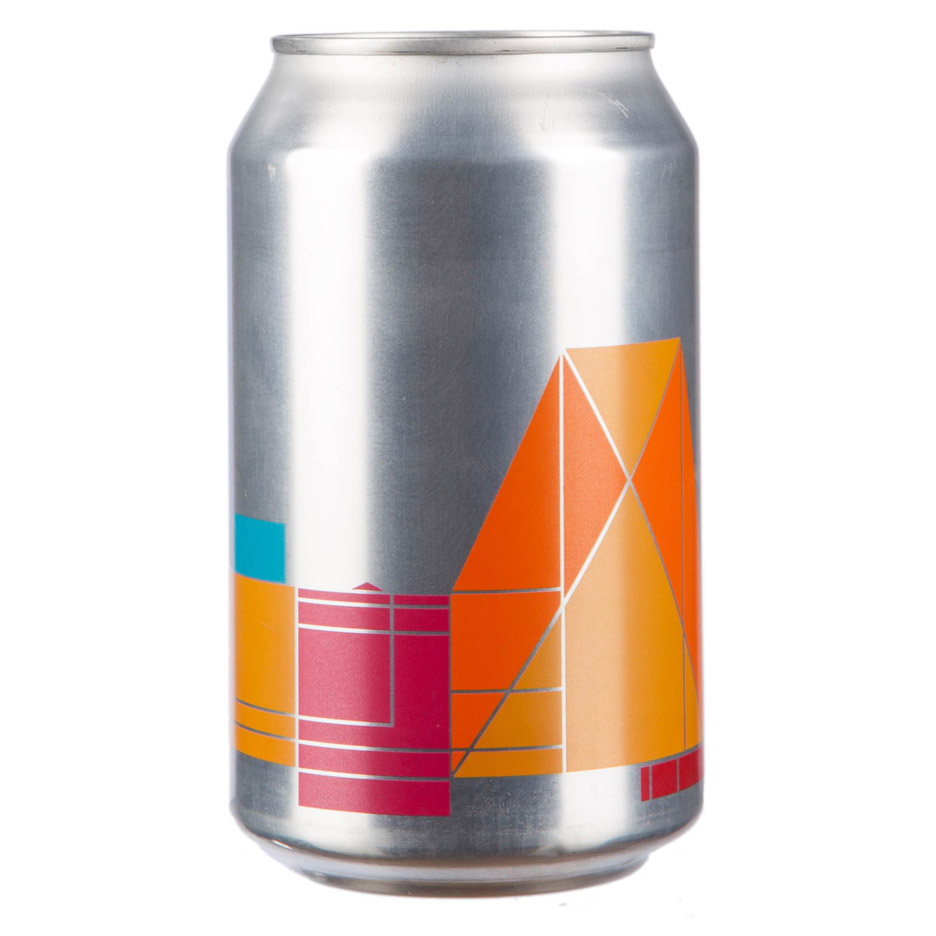
Peter Saville designs packaging for Tate Modern pale ale


British design legend Peter Saville has adapted his graphic identity for the Tate Modern into a new Switch House beer can. (more…)

http://ift.tt/2aFfWCM

Saota Design a Family Holiday Home in Plettenberg Bay, South Africa

Beachyhead by Saota (13)

Beachyhead is a residential project designed by Saota in 2014. It is located in Plettenberg Bay, South Africa. Beachyhead by Saota: “The clients approached SAOTA to design a family holiday home that responded to the site, especially the views. They wanted a relaxing, yet elegant home that would be comfortable when entertaining many guests whilst also feeling intimate and cosy when it’s only one or two of them in the..

More…