Did you know that for every distraction, you will have to wait for at least 25 minutes before things return to normal? Yeah, I didn’t know that either. That’s why increasing your focus is vital.
The truth is, distractions are now a part of everyday life. Notifications, email, the Internet, social media, colleagues… these are but a few of the many obstacles we face today. And if you have ever struggled with any of these, you aren’t alone.
For example, Facebook and email bombarded me during my last summer break. I knew I had to work, but the temptation to check each of them was constantly on my mind. Also, I found that during conversations, no matter how engaged I am, whenever my phone would vibrate my focus immediately dropped to zero.
Over the course of a month, I have adopted 5 techniques to help me get rid of – or at least minimize – distractions. And I’ve found that these methods give significant results in a short amount of time.
1. Get Simple
One of the main reasons I got distracted from working was the fact that I used Word for writing. Though I have nothing against Microsoft, Word simply sucks when you want to focus on writing. There are just so many options at the top of my screen that it’s hard to focus on doing the task at hand. That’s why I switched to plain text writing – it’s simple and helps me focus.
I urge you to do the same. Simplicity breeds focus. Once you have nothing to do other than work, you will work.
If you’ve found that technology is your biggest time waster, then fight it – with the right software. A popular one is StayFocusd for Chrome. This app helps in increasing your focus by blocking distracting webpages from the Internet. And if you ever visit these pages? You get this:
Now, what if something came to your mind while working? Something like: “What was the name of the character who *place name of actor here* acted in *place name of film here*?” Good question! Read the next point.
3. Create a Distraction List
Sometimes you will get distracted by a thought that disrupts your focus. When this happens, the last thing you want to do is tell it to go away, as this usually doesn’t work.
So what does? A distraction list. To make this, just create a new text file. Not in Evernote. Not a Word document. A text file.
Now, rename it to “Distraction list”. After doing so, place it in your desktop. Whenever you have a thought, you can just open the file and type the thought down. These are usually things you won’t come back to again, but writing them down usually helps to clear your mind.
4. Go offline
Most distractions you get come from the Internet. While using the right software can help a lot, it still helps to go offline for at least an hour each day.
If you ever decide to do this, do it in the morning. Unless you’ve just napped, your energy levels in the afternoon are not as high as when you’ve just woken up. Therefore, in the morning just after you wake up, go offline for an hour and get on with doing whatever you are supposed to be doing.
Even if you go offline, there is still another thing you should worry about: notifications. How do you stop them? Well, you simply turn them off!
Both Android and iOS let you do this. Check out this tutorial on how to go about it. And while notifications can still exist on the Mac and PC, they aren’t as bad as what you get from a mobile phone.
So there you go! Five techniques in increasing your focus that you could adopt in the next 5 minutes. Make sure to adopt one tonight to get rid of distractions and do what is actually important.
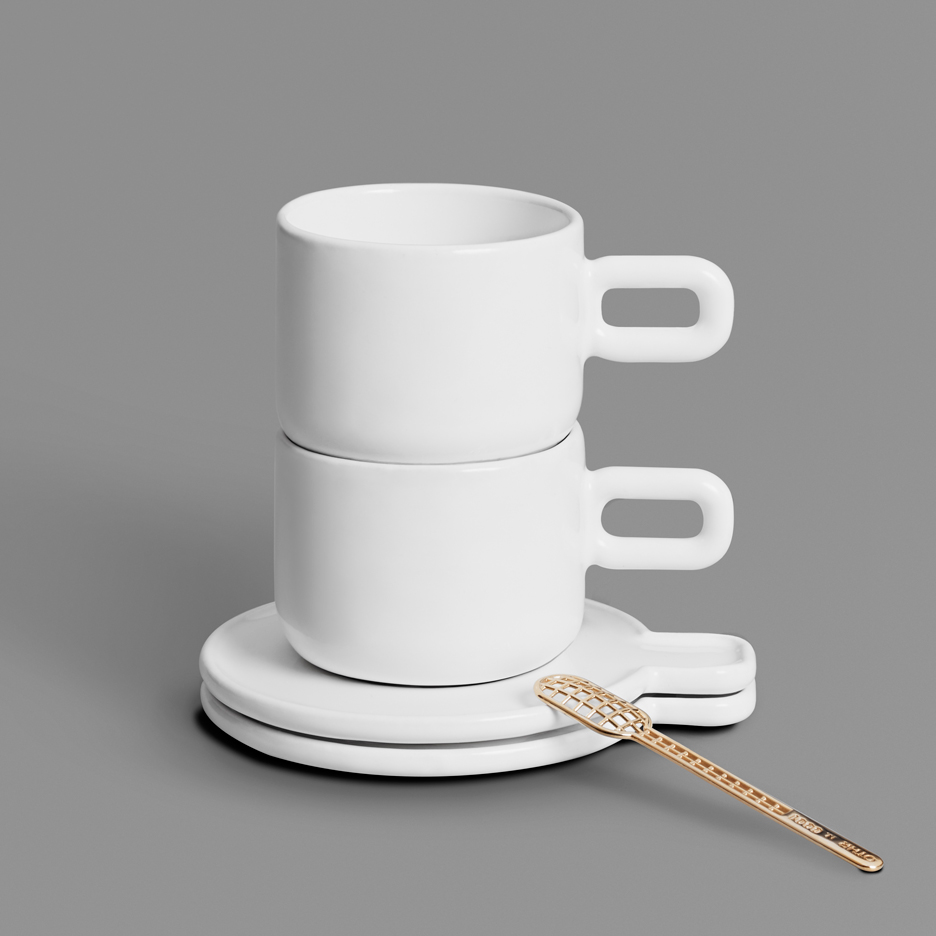
New York designer Alissia Melka-Teichroew has added a tea set featuring a perforated sugar spoon to the collection of 3D-printed homeware brand Othr (+ slideshow). (more…)
From the architect. Last 16th April, Chaplin’s World, a museum dedicated to Charlie Chaplin, was inaugurated after more than 2 years of construction. Conceived by the IttenBrechbühl SA of ce and realised by the general contractor HRS Real Estate SA, the project integrates a new large-scale building that is both sober and modern as well as the restoration and transformation of the Manoir de Ban and its outbuildings in a preserved rural environment.
The universe in which Charles Chaplin lived during his exile in Switzerland was composed of a mansion (The Manoir de Ban), the outbuildings and agricultural buildings. With the new Musée Chaplin, an additional complex, the Studio, is now being added. It is subtly integrated into its unique environment and revalues the existing elements.
Set up as a continuation of the garage, this new half-buried two-storey building houses the cinematographic universe of the artist, actor and director over more than 1350 m2. Five volumes interlock to form a streamlined and sober building. Realised
in pre-cast concrete slabs, the mineral facades play the part of a background in the landscape. The shadows of the surrounding cherry trees are projected onto the facades of this simple volume, as if it were a cinema screen. By its simplicity, the building pays homage to the site and to the existing buildings.
Inside the volume, a multimedia scenography makes it possible for visitors to nd out about the cinematographic heritage of Chaplin from different perspectives. The entrance is located on an open, bright and airy overhang. It opens out onto a cinema theatre which transposes visitors into the secret universe of Chaplin’s work. The screen then rises to reveal an emblematic street with a Hollywood air which invites visitors to wander through spaces producing the films of Chaplin. At the end of this path on both floors of the building, the visitor comes up from the basement into a light, glass space opening out onto the restaurant.
Ground Plan
The Manoir de Ban or Chaplin’s house
Registered with the Swiss Inventory of Cultural Property of National Significance, the Manoir de Ban, of neo-classical style, was built in 1840 by the Vevey architect Philippe Franel, author, among other things, of the Château de l’Aile and the hôtel des Trois Couronnes in Vevey.
In collaboration with the Monument and Site service of the Canton of Vaud, it has been completely restored and renovated by the IttenBrechbühl Of ce architects and HRS company.Many artisans have contributed towards the restoration of the slate roof, the replacement of the molasse door and window frames, the enhancement and preservation of the vaulted cellars and the restoration of the building’s original colours. Environmental and security upgrades were necessary to make the building accessible to the general public. Today, the ground floor and the first floor house the areas devoted to the private life of Chaplin including the reconstruction of the artist’s and his family’s private rooms. The attic has been transformed into one single large reception area.
In this same spirit of conservation, the facades of the farm and the garage have been entirely renovated and restored, but the interior spaces have been completely remodelled. The old farm accommodates the of ces in the “housing” part and the restaurant in the “working part”. An adjoining terrace makes it possible to accommodate more than 200 people. The ticket of ce and shop are situated in the constructed area of the old garage.
The facades of these two buildings have been repainted according to the romantic trend at the time they were built. In order to obtain a clean and noble aspect, the materials have been completely reproduced in trompe-l’oeil on a roughcast or paint base. This technique has the advantage of concealing all the defects which the original materials could show.
The maintenance of the park is also continued in the spirit of Chaplin. He liked flowers and planted rare species in the garden. The garden therefore always invites a walk which, because of the splendid view of the mountains, constitutes an unparalleled experience. The transformation of the site into a museum also entailed important access infrastructure work in order to harmoniously integrate the new institution into the local urban fabric: redevelopment of highway access, new pedestrian precinct, cycle path, drop off area and parking for motor bikes, bicycles and coaches, and access to some 230 car parking spaces on the site.
After being banned from staying in the USA in 1952, Chaplin settles in Switzerland with his family. He moves into the Manoir de Ban in Corsier-sur-Vevey, above Lake Geneva. He will spend the rest of his life there until his death on Christmas Day 1977.
In the nineties, after the death of their mother Oona, the children bequeath all the property of the Manoir de Ban to the musée Chaplin Foundation so that a museum will be built in tribute to their father. Following 16 long years of study and work, a building permit was granted in 2009 and finally after 2 years of construction, the museum opened its doors to the public on 17th April, 2016.
Belgian interior designer Maxime Jacquet designed the interiors of this French Contemporary property. The 10,000-square-foot home is located in Beverly Hills, Los Angeles, California, USA. French Contemporary in Beverly Hills by Maxime Jacquet: “Settled on nearly four acres, minutes from the heart of Beverly Hills, this exquisite French Contemporary, designed by renowned architect Richard Landry and designed By Celebrity interior designer Maxime Jacquet from Premier Stagers. has just completed an..
Dream of Venice Architecture, the second in a series by Bella Figura Publications, has brought together a collection of contemporary architects and architectural writers to share their personal experiences of La Serenissima: the great Italian city of Venice. “Water runs through her veins,” Editor JoAnn Locktov writes. “Bridges, palaces, churches – every structure is a testament to the resiliency of imagination.”
What can we learn from a city that is over 1,500 years old? How does her immutable reality challenge our own sense of urban living? Venice was built where no land ever existed.
“Riccardo De Cal took a photograph for each essay,” Locktov continues. “He has illustrated the words with an evocative Venice; one that basks in blue winter light, sleeps quietly and becomes an apparition when shrouded in fog. This is the Venice that greets you when you turn a corner and enter an empty campo. This is the Venice that is a contemplative paradox of stone and air. If we can understand what Venice offers us, we will respect her fragility. We will continue to learn her lessons, and cherish her existence.”
In 1992, I designed an open-plan wooden pavilion for the Universal Exposition of Seville in Spain. This project brought me the opportunity to work in Venice. I was commissioned to design an art school for Benetton Group, asked by Mr. Luciano Benetton—who visited and appreciated the Expo’ 92 pavilion—to renovate a 17th-century villa in Treviso, a suburb of Venice.
An important aspect of working overseas is the enticement of each city when there are pieces of architecture and townscapes I personally wish to see. Venice, of course, appeases these anticipations. In this beautiful city, there are dense layers of history such as Piazza San Marco and works of Andrea Palladio and Carlo Scarpa. This fact had already attracted me to want to work in the city before any opportunities had come my way.
After these initial undertakings in Venice, I became involved in two important revitalization projects—the Palazzo Grassi and the Punta della Dogana, commissioned by Mr. Francois Pinault. These projects included restoration and conservation of historical buildings while simultaneously requiring the establishment of new spaces within the old structures. Though we struggled with many difficulties throughout the projects, we were supported by the Venetians’ strong dedication to architecture. We organized a team with local engineers and historians, and united our objectives in order to tackle these comprehensive undertakings. More than anything, what deeply impressed me is the fact that they truly love architecture.
Though the Japanese culture has developed the habit of repeating “scrap and build” philosophies based upon economic rationality, I believe that architecture should be essentially rooted in society and be immersed in a lapse of time. This is exactly what I learned in Venice. Genuine affection for architecture and the city is spontaneously shared among the Venetian people. The projects in Venice brought me chances to contemplate what architecture should be, which became a precious experience for me.
The first time I saw Venice my hair was long and my skirt short—the hair long enough, and blonde enough, to attract two Italian soldiers on holiday as I was strolling along the sun-splashed lagoon; the skirt far too “mini” for the decency standards one had to meet to enter the gilded realm of St. Mark’s Basilica. That night the soldiers somehow tracked my brunette friend and me to our student hotel in Mestre and noisily tried to break into our room. The next morning, sleep-deprived and wearing a borrowed modest raincoat, I returned to St. Mark’s and the quiet of its sanctum.
For twenty-one years, those were my vivid memories of Venice. Not the exotic Moorish architecture, not the deep darkness of the calli at night, not the canals awash with motion. Then I made the second of what is now many visits. Too warmly dressed in a white tuxedo shirt and a pair of black velvet leggings, I sweated through the September parties for the fifth Venice Architecture Biennale, but as I waited for the vaporetto at the Giardini stop, the sound of every wave slapping against the fondamenta was like a soothing mantra. Though water can be cruel, that day it cast a spell.
Venice may be too hot, too cold, too humid, too crowded or too easy to get lost in, but “her streets, through which the fish swim, while the black gondola glides spectrally over the green water”—as Hans Christian Andersen eloquently stated—release us to imagine alternatives to the general standard of urban living. Venice is not on the sea but of the sea, eclipsing the tale of Atlantis with a modern mythology both repeated and rewritten with every tide.
More than any other city, Venice embodies a defined urban form, compact fabric and unitary body composed by successive historical transformations. Composing an extraordinary stratification of these ages and disparate cultures, Venice today presents itself as a privileged place, rich in history and memory. But the city also has a dynamic reality that the architect Le Corbusier reinterpreted in its modernity beyond its fantastic aspects. His carnets contain sketches, travel notes, perspective views and comments that represent his ability to grasp the more essential aspects of the urban structure. The articulation of the buildings, the plant of the monuments and the urban spaces are juxtaposed against the blueprints of the city. Through this discovery and analysis of articulations, joints between monumental elements and a compact fabric encompassing the surrounding area, the lattice of its assembly presents a rich conformation.
Le Corbusier came to explicate this heritage of knowledge, interest and attention through an unrealized hospital project. My relationship with Venice was strongly influenced by the Maestro’s critical reading and by my encounter with Bepi Mazzariol, who made me physically know the city. By way of large paths, and walks along its typical fondamente and calli, he taught me to love it, to criticize it; to confront the contradictions of my work and encounters with modernity—always supported by this heritage in which he saw, to quote Louis Kahn, the past as a friend.
Because my training as an architect was completed in Venice between 1964 and 1969, I participated in a fantastic season, coming into contact with a close-knit group of intellectuals and artists who were, above all, humanists: Mazzariol, of course, but also Carlo Scarpa and the painter Emilio Vedova. Two extraordinary opportunities merit mentioning: my role as trait d’union between the hospital administration and Le Corbusier’s Paris studio, and in assisting Louis Kahn in drafting the Palazzo dei Congressi.
I owe Venice a debt of gratitude for these—a feeling that resurfaces every time I return—as well as for my involvement in the restoration of Palazzo Querini Stampalia where Carlo Scarpa masterfully intervened. These bring a heartfelt tribute that awakens in me, a sort of repossession of these “friendly” spaces that nurtured my hopes during my studies as I awaited the challenges of the profession.
When I hear the voice of Venice, my mind wanders into that nebulous space where time momentarily stops and I am quietly propelled into an intimate dialogue with my own free floating thoughts. The voice of Venice thankfully reminds me that there is an arena in which fantasy and reality can collide, coexist, and comfortably accommodate contradictions. Venice, for me, is a metaphor for unexpected creative possibilities. This notion never fails to captivate me.
Spatially, Venice amplifies the joy of unanticipated, variegated pleasures inherent in experiencing architecture. What a delight it is to feel the opening and closing of space as you amble down a narrow, noisy cobblestone street at the canal’s edge, which miraculously transforms into the enormous expansiveness of Piazza San Marco. This, of course, is always in the context of savoring a series of sensuous changes in scale–from the tiniest mosaic tile to the vastness of the surrounding sea.
Temporally, Venice embodies similar aesthetic contradictions. While it is the living history of handcrafted costumes and masked balls hiding surreptitiously behind thick, textural stone walls, it is simultaneously the contemporary global exchange of cutting edge artistic critical thought emanating from the continuous cycle of Art and Architecture Biennales.
Whether frivolous or substantial, Venice is a place where, at any moment, something mysteriously intriguing may happen. It is the native soil of an open-ended spirit of creative opportunity. Knowing that this free space exists, situates me in the expansive realm of inventive ideas that is the essence of my artistic process. For this, as an architect, I am most thankful.
Both mistress and servant of its lagoon, Venice is a city of ships, boats, ferries, gondolas and vaporetti. The very forms of successive waves of its enticing architecture owe much to the sea. And yet, the vast majority of those who visit the city arrive today not by water, but from the air, squeezed into winged buses proffering the smallest possible views through tiny windows. On landing, the majority of visitors are then packed into coaches for the drive to Piazzale Roma, one of the least prepossessing gateways to any of the world’s great cities.
And yet—but only if you are lucky enough to own or charter a light aircraft or willing to spend on a brief helicopter flight from the mainland—there is an alternative. What once was Venice San Nicolo and is now Giovanni Nicelli airport on the northern tip of the Lido is one of the world’s most delightful points of arrival. It is both a few miles and a whole era away from the city’s Marco Polo International airport opened in 1960.
Flying to and from the Lido has always been glamorous, an experience dating back to 1911 when Umberto Cagno took to the air in a Farman II from in front of the Hotel Excelsior. The airstrip at San Nicolo itself was laid out in 1915 when French Air Force fighters and Royal Italian Navy seaplanes took on their Austro-Hungarian enemy. Rebuilt in 1935 by architects led by Antonio Nori in a singularly handsome “Italian Rationalist” style, with a hint of Art Deco, the airport brought Hollywood stars to the new Venice Film Festival; Spitfire pilots to the rescue against Nazi Germany in 1945; and, since its recent restoration, new-found glamour to the Lido. While the perfect way of arriving in Venice has to be from the sea, from the wings, the Nicelli airport plays an enticing second fiddle.
Venice always strikes at me from afar, from D.H. Lawrence, Mann, and Voltaire. From Calvino’s Invisible Cities, of course. I kept a battered, used copy (which doubled as a convenient and inexpensive notebook for my own scribblings) next to my equally battered and equally used laptop when I was an architecture graduate student back in the nineteenth century. And from the more obvious Architecture Biennale, where Rem seemed to say nothing about Venice but everything about everywhere else.
I am not ashamed to say I have never been there. I have been to many places and have not been to many places. Venice is one of the “have not been to” places… until I go. But I have no plans at the moment to go—unless someone foolishly sends me there to write something about it. Yet, somehow, I am always asked to write about this place I have never been to. I can never escape Venice.
I think, if I ever go, it would corrupt me and I would suddenly be unable to write about it. What is the saying? Visit for a week and write a book. Stay for a year and you can’t write anything. What if I never go? I could write about Venice forever—even after the sea swallows it. The new habitable datum will be the second floor. All stairs will lead to water. This is now a line drawn horizontally across the city. I think it should be drawn for real, on buildings and monuments, before the water comes. I should write a grant proposal to do this. Maybe then I would have to go.
My friendship with Aldo Rossi began with the Competition for reconstruction of La Fenice Theatre after it was devastated by fire in 1996. Meeting him in person, having studied his works, gave me the privilege of his unique point of view—a multifaceted perspective, thrown together like a mosaic of deep and highly creative emotions.
It was a strange coincidence: I had accidentally filmed the fire since we lived nearby. Then I studied the evolution and causes of that fire as a technical consultant to the official inquiry and lived inside the ruins of the theatre for an entire summer as part of the team analyzing surviving stonework.
Rossi was enlightening. We were creating something that I had lived knowing only as a place of destruction. Memories of the theatre in my youth came back to me. It was time to make it live again for what it was, and through the ideas of Aldo I discovered that his way of creating something new was in perfect communication with what it had been before. The Sala Rossi, inspired by Palladio, is an example.
He used the same approach as for the Carlo Felice in Genoa, winning the Competition with “the wise use of what exists.” Aldo was immediately kind, likeable and down-to-earth. He was a breath of fresh air from which spontaneous ideas and passion for thorough research were far more important than material things.
His design method was unique. His ideas arrived at the table together with a glass of wine, or came from an image drawn from a book or a film along with the atmosphere that enveloped them. His continual exploration, his motor, which rotated 360 degrees, was fascinating.
Tadao Ando is a self-taught architect from Japan. In Venice, he has designed the restorations for Palazzo Grassi and Punta della Dogana. He is renown for his elegant use of concrete and spatial volumes. He has won numerous international awards, including the Pritzker Architecture Prize in 1995.
Cynthia Davidson, co-curator of the United States Pavilion for the 2016 Venice Architecture Biennale, is a writer and the editor of the international architecture journal ‘Log’ and the Writing Architecture Series books, based in New York.
Mario Botta was born in Mendrisio (1943) where he still lives and works. From the first single-family houses in Ticino, his practice has encompassed all building typologies: schools, banks, administrative buildings, libraries, museums and sacred buildings. In 1996 he was a prime mover of the Academy of Architecture in Mendrisio.
Louise Braverman is an award-winning architect who established her New York-based firm in 1991. A graduate of the Yale School of Architecture and a Fellow of the American Institute of Architects, she presented her work at the Venice Architectural Biennales in 2012 and 2014 and was invited to exhibit again in 2016.
Jonathan Glancey is a critic, journalist, author, and broadcaster. He currently writes for the Daily Telegraph, L’Architecture d’Aujourd’hui,Architectural Review, and BBC World. His books include New British Architecture; C20th Architecture; LostBuildings; London: Bread and Circuses; Dymaxion Car: Buckminster Fuller (with Norman Foster), and The Story of Architecture.
Guy Horton is a Los Angeles-based writer and contributing editor for Metropolis magazine. He has also written for Architectural Record,ArchDaily, Archinect, and The Atlantic’s CityLab.
Francesco da Mosto is a Venetian architect, author, filmmaker and television presenter. He has presented four BBC 2 television series on Italy, Venice, the Mediterranean and Shakespeare and written four best selling books. His family arrived in Venice in the ninth century.
Riccardo De Cal (photographer) was born and lives in Asolo, Italy. After receiving his degree in Architecture at IUAV in Venice he has developed a career as an award winning documentary filmmaker and photographer. His research is focused on the themes of suspension of time and abstraction of spaces.
A healer, an empath, a light worker, an energy healer. You must have at one time or another heard these declarations. Someone was telling someone they are an energy worker or healer. What makes someone a healer or light worker anyway? How do you know you are one? What are the signs that indicate we are gifted and special and can feel, see, touch and heal?
Let’s first bust the myth that you have to be a tree hugging hippy from the 70’s to fall into any of these categories. You don’t. You can be the girl behind the counter at the coffee shop or the young man at the auto repair shop. Healers are everywhere and can be anyone. So are you one? If you have any of these signs you just might be.
1. You feel that you are here for a bigger purpose.
If you feel that, you are probably right. What’s your purpose? Have you discovered it? What causes are you drawn to? Do you feel a longing and a yearning to save babies, lions, villages? If the desire is burning inside of you deeply, you are a healer and should start looking into living your purpose.
2. Many don’t understand you.
Your friends and family don’t understand when you try to explain your feelings and they may even look at you like you just fell off the planet Mars. Only healers understand other healers. We understand the bigger picture and know what we are here to do. Others won’t get it.
3. You may be introverts.
Because you feel misunderstood by so many, you may have a tendency to be more introverted. It’s easier to stay home and enjoy your own company then to be with others who don’t understand you or feel weirded out by your energy. Finding like minded people can be difficult so you stick to yourself .
4. You are super sensitive.
To so many things. People arguing, loud noises, babies crying, bullying, thunderstorms, nature, the full moon. You name it, it stirs something inside of you. Some good, some not so good. It can sometimes be a struggle or a battle to not be so sensitive because it can actually hurt a lot.
5. You feel people’s energies strongly.
You easily pick up on other’s energy, whether happy or sad, good or bad. You are extremely sensitive to angry or negative energy. Not only do you feel energies but you wish you could heal the wounded as well. We sometimes forget we can’t help those who don’t want help.
6. People are drawn to you.
They naturally gravitate to you and feel comforted by your presence. They may even ask for advice or for some energy healing work. Your glow or aura is radiant and not so easy to mask or hide even if you wanted to. People just want to be with you. They love you and don’t quite understand why but they do.
7. Black sheep of the family.
Some healers are the black sheep of the family whereas others may come from a family of healers. You were always different. There was always something special about you and no one could figure it out. Even you knew you were different and didn’t quite belong with this family (and that’s a real feeling too).
8. You get emotionally drained quickly after a long day.
If you are around too much toxicity you will emotionally collapse by the end of the day and need some of your own healing. Because you pick up so much of everyone else’s energy and carry it with you, it is mandatory for you to clear your own energy field and until you get to do that, you’re emotionally zapped.
9. You experience a lot of headaches, neck and shoulder pain.
You feel like you carry the weight of the world and indirectly, you sort of do. You can get many headaches throughout the week depending on what your interactions were like. It is mandatory for you to drink lots of water and take time to clear all energies you are carrying or feeling.
10. People want advice.
You get a lot of people asking for advice on romance, work, family and other issues they may be dealing with. Sometimes even strangers are pouring out their soul to you because they simply feel that connection with you and no one has any qualms about telling you their life story. They just trust you.
Being a healer is truly a beautiful thing. You are gifted more than you know if you are one. Love it, embrace it, cherish it and be with it. The world needs more healers.
Rolling coverage of all the day’s political developments as they happen
9.11am BST
Good morning. After four weeks of intense turmoil after the Brexit vote, British politics is getting back to – well, normal probably isn’t quite the right word, but “non-frantic” is correct. The Commons is in recess, and sensible people are planning their holidays. And political correspondents are left with just three leadership contests to cover (Ukip, the Greens, and of course Labour).
I was pleased for my staff to hear John apologise and I think that was important, but I have found his reaction to my concerns extraordinary in trying to shift away from the seriousness of what happened … This is about the safety and security of MPs’ offices, about parliamentary privilege, which means people’s confidence that an MP’s office, where constituency and parliamentary business is carried out, is secure. It’s extremely sad that a team that is working incredibly hard were feeling intimated, so intimated by somebody from the leader’s office, that they didn’t want to leave anyone alone in the office because they weren’t sure who would come in, what would be said.
The creation of a public equipments complex within the warehouse Macdonald allows to realize the link between existing architecture and architecture to come, revealing the needs and developments of a changing society. It is also the pretext of the connexion between traditional processes and contemporary needs.Existing warehouse’s architect, Marcel Forest, described it as a base, convenient to the reception of future extensions.This one will be realized by a light metallic structure, a support of a big linear roof sheltering an ensemble of public services.
This big roof put on the existing base, participates in the development of an architectural heritage by adapting it to contemporary functional needs.By its dimensions, its situation and its size, the existing building and its extension is to be looked as and considered on a territorial scale, offering a horizon, proposing an infrastructure. The territory becomes therefore support of the new project; the existing offers the base whereas the roof serves as an unifying element, sheltering a succession of spaces and functions.
The project is located in a strategic position, at the start of the 600m long existing warehouse, between the viaduct of railroad networks and the boulevards Maréchaux, in the center of a zone in full urban restructuration connected to the city and its surrounding by new tramway lines. The insertion of the project answers three imperatives:
– The urban reglementation
– The will to create a strong and contemporary architectural image
– The will to join the context in a just balance, responding to the obligation of preservation of the North facade
The architectural intervention is made of a game of horizontal which strengthens the expression of the existing building. The unity and the homogeneity of the place are looked for to avoid the expression of the programmatic accumulation. The rhythm of the facade, sequenced, is given by a succession of metallic vertical elements. The continuity of the architectural vocabulary of the various equipments confers to give to the building a unity which joins on the scale of the whole masterplan designed by OMA.
It shelters all the programs and puts in relation the inside and the outside. The overhang generates an interstitial space and defines a profile while marking the continuous statutory line of 65.26 NGP. The ascending edge of the roof from east to west also gives to the silhouette the expression of the start of the general complex.
Structure
Thanks to a folded plans vocabulary, public places are connected to the private spaces, as well as the outside square and the inner courtyards. On the outside, its materiality is reinforced by the use of a parisian traditional material (zinc) whereas on the inside, it become lighter and perforated through an alternation of glass elements and zinc panels, allowing the best enlightening for the courtyards.
The composition and materiality of the façade respond to the general design given by OMA masterplan. Each has to be composed through a superposition of horizontal stratas, materialized with crystal and mineral elements. The structure grid is the starting point for the general composition of the façade. Density of the louvers allows to express the privacy of the functions beyond.
Detail
Façade
The relation between inside and outside is handled through the use of filter. It composes, defines and distinguishes facades and is therefore decline through 2 different types: on the outside dark grey metallic louvers that dialogue with the context marked by its industrial past , on the inside a double glass skin, made of an alternation of glass panels and of a metallic membrane which spreads the light. The depth of the filter is investigated in its multiple dimensions. Space and light are therefore amplified.
The succession of the courtyards organized in terrace on different levels allows the needed separation between the junior schoolyard and the high school courtyard. The sequence of the outside spaces is materialized by the implementation of vegetable strips: these are also similar in a way to a filter and bound the space without creating real borders.



 Sig Nordal