
McMahons Point is a private home located in North Shore, Sydney, Australia. It was designed by Carterwilliamson Architects in 2015. McMahons Point by Carterwilliamson Architects: “Moving from a nearby apartment, our clients wanted a modest home they could settle into and begin a family. Natural lighting introduced to a dense and constrained site through strategically placed linear skylight, provides ample natural lighting and a playful shadow that shifts with the..
7 Warning Signs You May Be In A Codependent Relationship
(In this article, the dependent person could be either you or your partner)
At one time, years ago, co dependency referred to an addiction or dependency on alcohol or drugs. A need to be completed intoxicated or high to be able to either deal with the world or block it out. It’s not that cut and dry anymore. Co dependency now often refers to people. To be dependent on someone means to give up all control and to no longer have self sufficiency. It is giving up who we are and what we are to someone else giving them complete control over our lives, quite often without them even being aware this is happening.
Many people who are co dependent are this way simply because having to deal with life and make decisions is just too stressful and they lack trust and confidence in them selves to do this, so they offer up all control to others. It’s extremely unhealthy but they know no other way. Are you in a codependent relationship? Do you or your partner have any of these warning signs?
 1. Cancel plans.
If you did make plans to do something, you are quick to cancel them to accommodate your partners, without question. You are positive that what ever plans your partner made are much more important than yours. You never want to upset the apple cart so you go along with everything, all the time.
2. You agree to everything.
You never talk back or argue. Whatever they say they want or want to do, you immediately just say yes and don’t ever think once about saying no. No is not even an option. This doesn’t necessarily make you completely ecstatic and you long for a different life but for now, it’s their way.
3. Good mood bad mood.
Whatever mood your partner is in, so are you. If they are happy so are you, if they are angry, so are you but also if they are angry you try to do what you can to make them happy often, offering up your self respect in order to achieve this. Th e mood of the room is dictated by your partner and respect is commanded. This is how it’s going to be for the day.
4. You are desperately sad all the time.
You smile on the outside but cry on the inside all day everyday. You know what you are doing is wrong but you feel helpless and hopeless. You don’t tell anyone how you feel and never get it dealt with. You know you are living your life, or dependent on what your life is going to be life, according to them. It’s not your life anymore and you feel beaten down and defeated.
5. You want to leave but can’t.
You know it’s the best thing to do but you don’t have the strength or courage to do it and you don’t want to upset your partner. Not only that, you don’t trust yourself enough to make that decision and be confident in your decision. Where would you go where would you stay but above all else, how will you live without them? You need them, after all.
6. You are in a constant state of anxiety.
This feeling stems from the fact that you have no control over anything ever and you never know what’s going to happen at any given moment of the day. You don’t know what your partner’s mood of the day is going to be hence you are unsure what your mood is going to be. Your whole existence depends on them which is a very scary place to be.
7. You’ve become a bit of a loner.
You rarely see your friends or even your family anymore. When you guys go out it’s with their friends and to see their family, not yours, because you are doing what they want to do, not what you want. Because of this, the life you once knew is non-existent. You don’t even call any of your friends or family anymore because you can’t bare their questions about your life anymore.
Being in a relationship like this can be very exhausting emotionally and mentally and sometimes even physically as stress affects us this way. It may not be easy to get out of a relationship like this but it’s not impossible either.
The post 7 Warning Signs You May Be In A Codependent Relationship appeared first on Change your thoughts.
Abandoned Factory, Knoxville Tn by Ryan Thomas Mamiya C3,…

AD Classics: New Museum / SANAA

© Laurian Ghinitoiu
The New Museum is the product of a daring vision to establish a radical, politicized center for contemporary art in New York City. With the aim of distinguishing itself from the city’s existing art institutions through a focus on emerging artists, the museum’s name embodies its pioneering spirit. Over the two decades following its foundation in 1977, it gained a strong reputation for its bold artistic program, and eventually outgrew its inconspicuous home in a SoHo loft. Keen to establish a visual presence and to reach a wider audience, in 2003 the Japanese architectural firm SANAA was commissioned to design a dedicated home for the museum. The resulting structure, a stack of rectilinear boxes which tower over the Bowery, would be the first and, thus far, the only purpose-built contemporary art museum in New York City.[1]
© Laurian Ghinitoiu
Based in Tokyo, SANAA (Sejima and Nishizawa and Associates) was established by Kazuyo Sejima and Ryue Nishizawa in 1995. These two architects work collaboratively on SANAA projects while concurrently running their own well-established individual practices, all housed within the same building. Staff members overlap across the firms, sharing communal spaces in the largely open-plan office; a borderless working environment which acts as a metaphor for their characteristically transparent architectural style. This style is, in part, a reaction against the opaque buildings found on the streets of Tokyo, and has led to comparisons being drawn with the skeletal structures of Mies van der Rohe.[2]
© Laurian Ghinitoiu
At the time of being awarded the New Museum commission, SANAA had two other gallery projects underway: the 21st Century Museum of Contemporary Art in Kanazawa, Japan, and the Glass Pavilion at the Toledo Museum of Art in Toledo, Ohio. The latter was the firm’s first project in America, and their relative international obscurity was in keeping with New Museum’s mission to promote undiscovered artists.[3] Having received global critical acclaim for these projects and for later works, SANAA would go on to win the Pritzker Prize in 2010.
© Laurian Ghinitoiu
SANAA’s design for the New Museum comprises seven boxes of varying proportions, vertically stacked around a central core. The architects avoided using the maximum square footage permitted by the zoning envelope, affording themselves the space to shift these boxes off-center and create a dynamic interplay between the volumes.[4] The unique plan of the building was intended to create a distinct architectural identity that would reflect the experimental philosophy of the clients.[5]
The programmatic elements of the museum are spread across its ten stories; housed within the boxes are galleries, offices, events spaces, a café, a theater, an education center, and two mechanical floors. SANAA’s architecture typically generates a dialogue with the program, as Nishizawa summarized: “We use the function to create the building, but also the building creates the function.”[6] This reciprocity is evident at the New Museum, where an unused space in the air shaft between the third and fourth floors was converted into a micro-gallery measuring just five feet by eight feet but with a ceiling height of thirty-five feet.
© Laurian Ghinitoiu
One of SANAA’s primary goals for the project was to create an approachable and inviting museum.[7] In order to achieve this, they installed a glass wall at street level to physically instill a sense of openness and transparency. The boundary between the street and the museum is dissolved by this membrane, encouraging passers-by to enter. The continuation of the concrete sidewalk to the concrete floor of the museum further adds to this effect. The glass panels of the wall are sunk into the floor and extend into the ceiling, thereby masking their frames and avoiding any sense of division which might be created by these borders.
© Laurian Ghinitoiu
The art loading bay is exposed by the glass wall, revealing the back-of-house activity of the museum and implying transparency on the part of the institution itself. The interior also features glass walls, such as that which separates the gallery at the back of the first floor from the lobby and café at the front. Thus, the reach of the museum extends beyond the building, with the art on display visible even to those on the street.
The use of glass walls was facilitated by the structure of the building, which relies on steel trusses to bear the load of the boxes. The trusses also allow the galleries to exist column-free, providing an unobstructed and highly adaptable exhibition space. In certain places, the trusses are exposed to become decorative features, with diagonal struts bisecting the windows. Elsewhere, the trusses are carefully positioned to avoid obscuring the skylights.
© Laurian Ghinitoiu
Since the gallery walls are not load-bearing, the architects were able to create a recess between the walls and the floor which avoids the typically imperfect meeting of the two. This architectural detail had been previously employed by SANAA in their gallery at Kanazawa.[8] At the New Museum, these floating walls echo the weightlessness suggested by the overall structure, which seemingly levitates over its glass storefront.
Maximizing exhibition space was a key consideration in the new design, particularly given the cramped confines of the New Museum’s previous home. Circulation space was reduced to increase the size of the galleries; the staircase which runs between the third and fourth floors is just three feet wide, the minimum allowed by the city’s building regulations. Here, the narrow width of the staircase and the extreme height of the ceiling combine to create a dramatic spatial experience.
© Laurian Ghinitoiu
The galleries are almost devoid of windows; wall space was prioritized over fenestration. The shifting of the building’s component boxes was a solution devised to allow natural light into the galleries through skylights in the resulting protrusions. At night, the artificial light produced inside the galleries spills out through the skylights, diffused by the scrim coverings and softly up-lighting the building. The ceiling structure of the galleries was left exposed to allow art to be hung from above, again providing greater and more flexible exhibition space.
© Laurian Ghinitoiu
SANAA’s architectural projects consistently strive to foster a relationship between the building and its surroundings, and the New Museum is no exception. In the original designs, the building was broader and shorter than it stands now. After spending time in New York, however, the architects refined the composition of the building to become slimmer and taller in response to the architectural landscape of the city.[9] Indeed, the steps formed by the shifted structural boxes are reminiscent of the setback skyscrapers which typify the New York skyline. The cityscape is brought into the museum through panoramic windows on the upper floors, which interrupt the visitor experience to knit the city and the museum together.
© Laurian Ghinitoiu
The building also reflects its immediate built context through the use of industrial materials, mirroring what the architects described as the “roughness” of the Bowery.[10] The exterior is clad in two layers of industrial aluminum mesh, creating a shimmering, textured façade. Though steel mesh is more commonly used in construction, aluminum was chosen as a brighter and more translucent material which would lend a sense of lightness. The mesh softens the edges of the building, allowing it to melt into its surroundings and adding to its transparency.
© Laurian Ghinitoiu
When the New Museum opened its doors at the end of 2007, it was praised by the architectural press for the striking minimalism of its design. The new building was certainly successful in raising the profile of the New Museum, which welcomed 100,000 visitors through its doors within the first two months of opening. The architects did not completely escape criticism, however, with several commentators noting the negligible amount of natural light provided by the skylights, which is in any case overpowered by the fluorescent strip lighting.[11]
© Laurian Ghinitoiu
The decision to construct the New Museum on the Bowery was an unconventional one, given the history of the neighborhood. It had been an infamous hotspot for drug use throughout the seventies and was still run-down thirty years later. In recent years, however, the Bowery has enjoyed a period of regeneration for which the museum can take a great deal of credit. The street now boasts a boutique hotel, an organic supermarket, and a diverse collection of galleries and art spaces.[12] The New Museum, both in terms of the building and the institution it houses, stands as a symbol of the transformative power that both art and architecture can have upon society.
© Laurian Ghinitoiu
References
[1] “New Museum: About”. Accessed 20 June, 2016. [access]
[2] Guzmán, Kristine. “Reinterpreting traditional aesthetic values.” In Houses: Kazuyo Sejima + Ryue Nishizawa, SANAA, ed. Agustín Pérez Rubio. León: MUSAC, 2007. p167.
[3] Phillips, Lisa. “Past Present Future.” In Shift: SANAA and the New Museum, eds. Joseph Grima and Karen Wong. Baden: Lars Müller, 2008. p7.
[4] Ibid. p9.
[5] Grima, Joseph. “Interview with Kazuyo Sejima and Ryue Nishizawa.” In Shift: SANAA and the New Museum, eds. Joseph Grima and Karen Wong. Baden: Lars Müller, 2008. p26.
[6] Rubio, Augustín Perez. “Feeling at home with SANAA”. Houses: Kazuyo Sejima + Ryue Nishizawa, SANAA, ed. Agustín Pérez Rubio. León: MUSAC, 2007. p15.
[7] Ibid. Grima. p36.
[8] Elding, Jonas et al. “Backstage.” In Shift: SANAA and the New Museum, eds. Joseph Grima and Karen Wong. Baden: Lars Müller, 2008. p77.
[9] Ibid. Grima. p26.
[10] Ibid. p28.
[11] Filler, Martin. “Miracle on the Bowery.” New York Times, 17 January, 2008. Accessed 20 June, 2016. [access]
[12] Ibid. Phillips. p11.
- Architects: SANAA
- Location: 235 Bowery, New York, NY 10002, United States
- Architects In Charge: Kazuyo Sejima, Ryue Nishizawa (SANAA)
- Architect Of Record: Gensler Architects
- Area: 58700.0 ft2
- Project Year: 2007
- Photographs: Laurian Ghinitoiu
New Art Museum / SANAA
//cdn.embedly.com/widgets/platform.js
Terunobu Fujimori works with Kingston University students to create charred timber pavilion
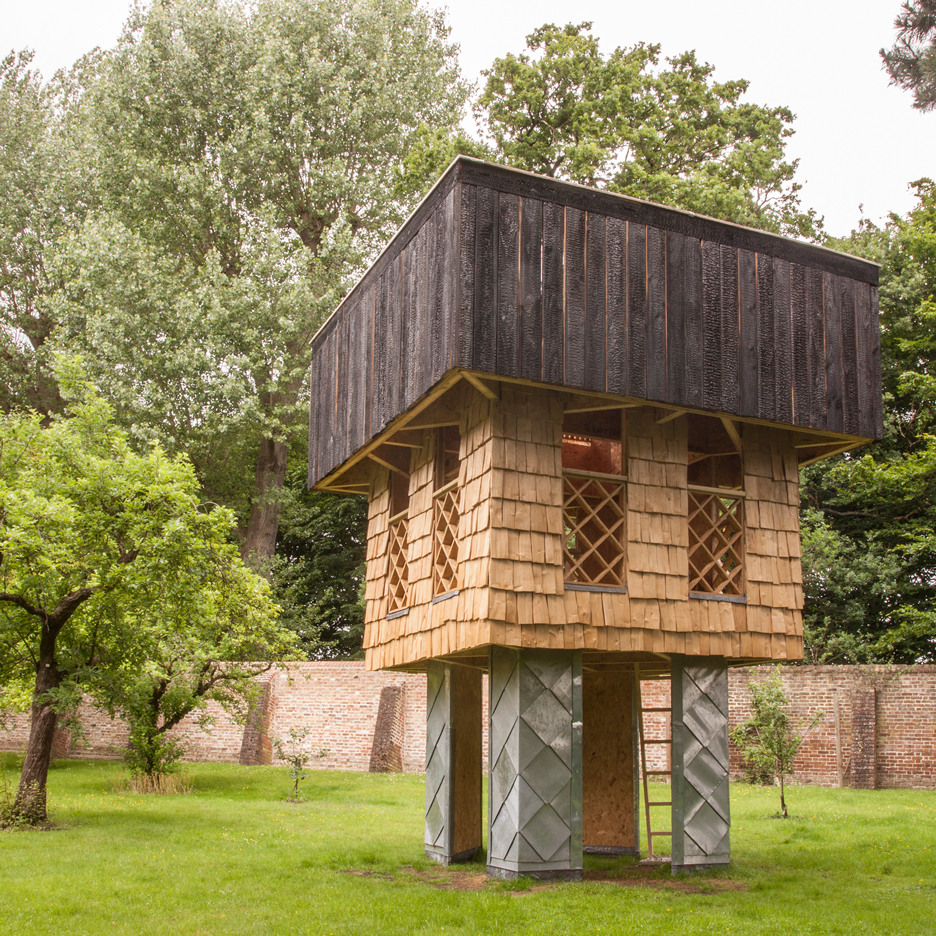
Graduate shows 2016: Japanese architect Terunobu Fujimori worked with students from Kingston University to create this tiered pavilion, which is clad in pieces of charred timber, zinc and chestnut wood (+ slideshow). (more…)
Siemens Headquarters / Henning Larsen Architects

© Hufton + Crow
- Architects: Henning Larsen Architects
- Location: Munich, Germany
- Area: 45000.0 sqm
- Project Year: 2016
- Photographs: Hufton + Crow
- Sustainability: DGNB Platinum and LEED Platinum Renovation of Ludwig Ferdinand
- Palais: Henning Larsen Architects
- Client: Siemens
© Hufton + Crow
From the architect. In the summer of 2010, Siemens decided to rebuild its corporate headquarters at Wittelsbacherplatz in Munich. Henning Larsen Architects won the international architectural competition with a design that unites tradition with the future.
© Hufton + Crow
Siemens’ new global headquarters in the heart of Munich opens up the city. The ground floor – which includes green inner courtyards, a café, a restaurant and a fountain – is publicly accessible. This passage provides the citizens of Munich and visitors to the Bavarian capital with a new footpath between downtown Munich and the city’s museum district.
© Hufton + Crow
The building is composed of a volume where four rectangular, rounded courtyards are cutout. Inside the building, a central vertical structure – the ‘spine’ – connects the entire complex. The heart of the building, a roofed courtyard, is situated in the middle of the building and accessible from all sides.
© Hufton + Crow
Towards Wittelsbacherplatz, the building rests modestly behind the restored Ludwig Ferdinand Palais and by integrating on the backside still offers updated conference and meeting facilities to the new building. From the plaza you can stroll through the building to the Oskar-von-Miller-Ring – you move from a historic context to a contemporary.
Section
Section
Towards the Ring, the Siemens building has a distinctive and prominent facade that marks that Siemens – one of Munich’s globally renowned companies – is rooted in Munich and closely connected to the city.
© Hufton + Crow
Modern workspaces
One of the main architectural ambitions has been to promote knowledge-sharing and social interaction across the organization. In the new building, transparency is important and the 1,200 employees have visual contact with their colleagues across the courtyards.
© Hufton + Crow
The office levels are connected by foot bridges, creating a continuous floor stretching through the entire complex. The central interaction zone connects the various office spaces and represents the key concept behind the organization of the building.
Level 0 Floor Plan
Level 1 Floor Plan
All workspaces are arranged along the floor-to-ceiling windows in order to maximize the use of sunlight. The employees can adjust the heating, ventilation and air conditioning technology in their areas as needed. Ample spaces offer open areas for sharing information and for collaborating across departmental boundaries as well as quiet zones for performing work that requires greater focus.
© Hufton + Crow
One of Europe’s most sustainable buildings
Siemens’ new headquarters combines an ambitious architectural design with high-efficiency technologies. The building meets the highest standards for sustainability and resource conservation and provides a modern, inspiring work environment for some 1,200 employees.
© Hufton + Crow
The new headquarters will consume 90 percent less electricity and 75 percent less water than its predecessor.
All the facades facing the building’s inner courtyards are slightly tilted and completely covered by triple glazing. The tilted facade increases the amount of natural light that penetrates the building’s interior spaces and reduces the need for artificial lighting.
Due to its sustainability, Siemens’ new headquarters building has received the highest certification possible (platinum) at the national level from the German Sustainable Building Council (DGNB) and at the international level from the U.S. LEED (Leadership in Energy and Environmental Design) system.
© Hufton + Crow
The exterior employs building materials from the surrounding region. The more than 23,000 natural stone tiles that have been used for the front facade and the flooring comes from the Altmühltal nature reserve, less than 100 kilometers (62 miles) north of Munich.
Siemens smart building technologies control the building and collects data from 30,000 data points to control the entire heating, ventilation and air conditioning. The people who work in the building can adjust the lighting and room climate to meet individual needs. The ventilation system in the meeting rooms uses CO2 sensors to measure air quality, and it optimizes the intake of fresh air.
© Hufton + Crow
70 kilometers (44 miles) of water pipes run through the building’s foundation plate. To ensure that the building’s climate is comfortable all year round, up to 100,000 liters (26,400 gallons) of water are pumped through these pipes via a high- efficiency ceiling heating and cooling system. In the bivalent heating system, heat pumps double as cooling devices, while ambient air and ground water are integrated as regenerative energy sources.
A Home in Paris for a Young Franco-Swiss Couple with Two Children

Lauriston is a residential project designed by Camille Hermand Architectures in 2016. It is located in Paris, France. Lauriston by Camille Hermand Architectures: “A young Franco-Swiss couple with two children called upon French architect and interior designer, Camille Hermand, to convert their typical 2-bedroom Haussamanian apartment in central Paris, into a functional weekend city pad. Keeping the apartment’s traditional charm, Camille Hermand’s response is contemporary and versatile, with a retro..
Underground Parking Katwijk aan Zee / Royal HaskoningDHV

© Luuk Kramer
- Architects: Royal HaskoningDHV
- Location: 5433 Katwijk, Netherlands
- Area: 15000.0 sqm
- Project Year: 2016
- Photographs: Luuk Kramer , Onsite Photography
- Landscape Architect: OKRA Landscape architects
- Contract Management: WB de Ruimte
- Dyke Consultant: Arcadis
- Contractor: Bouwcombinatie Ballast Nedam
- Structural Design: Adviesbureau Snijders
- Mep: De Bosman Bedrijven
- Lift Installation: Liften‐ en Machinefabriek Lakeman
- Façade Engineering And Realization: Metadecor
- Integral Design: Ballast Nedam Engineering in cooperation with ZJA
© Luuk Kramer
The new underground parking garage in Katwijk aan Zee is the result of a multifaceted commission granted to Royal HaskoningDHV by the Municipality of Katwijk. Royal HaskoningDHV is responsible for the architectural design of the underground parking and translated this design into a Building Quality Plan. Based on this Building Quality Plan, Ballast Nedam, in cooperation with ZJA, engineered the integral design (architectural, functional, structural and installation) for the realization of the parking garage.
© Luuk Kramer
3D
© Luuk Kramer
The Building Quality Plan includes detailed information, definitions, drawings and visualizations of the architectural design, the layout of the garage, the public entrances, the entrance‐ and exit ways for vehicles, the emergency exits, as well as the architectural design and guidelines of the signage (routing, orientation and identification).
© Luuk Kramer
The architectural design of the parking garage builds forth on the Design of Katwijk’s Public Space, developed by OKRA Landscape Architects, and respects and adheres to its conditions.
© Onsite Photography
The parking garage is part of Kustwerk Katwijk, a project which seeks to protect the coastline of Katwijk aan Zee in the Netherlands. The design team of this coast protection project took an integrated and multi‐disciplinary approach to this project, taking into considerations the need for defensive coastal protection, functional parking requirements as well as the desire for a landscape design which is related to its coastal environment.
© Onsite Photography
Location
The underground parking garage holds 663 spots, covered by rolling sand dunes along the coastline of a small coastal town called Katwijk aan Zee, a beach town west of Leiden and north of The Hague. The location of the parking garage, in between the dike and the boulevard of Katwijk, makes this project quite unique in the Netherlands.
© Luuk Kramer
While rebuilding the town’s dike and reshaping its dunes, the design team recognized an opportunity to genuinely improve public space by hiding the parking garage inside the dunes, which strengthened the relationship between the village and the beach. The long and small elongated shape of the parking garage (500 meter) needed great attention to the functionality. The design team respected the fact that users need to quickly orientate themselves when inside the garage, and quickly find their way out to either the town or the beach.
© Luuk Kramer
Naturally embedded in the landscape
The architectural design of the parking garage builds forth on the design of the public space, developed by OKRA landscape architects, and respects and adheres to its conditions. The result is that the underground parking is carefully embedded into its natural dune environment. These carefully shaped dunes, which rise up organically to create subtle entrances and exits, not only ensures that the character of the dunes stays intact, it also let natural daylight flowing into the underground parking garage, benefitting the orientation within the long, elongated parking garage.
© Luuk Kramer
Section
© Luuk Kramer
The design also ensures that the colors and materials used, fuse seamlessly into the urban fabric of Katwijk aan Zee and its characteristic dune landscape. At night, the emergency exits nestled under the gently rolling dunes light up to become beacons along the shoreline.
© Luuk Kramer
Contemporary Korean craft to be showcased in London’s Make Your Movement exhibition
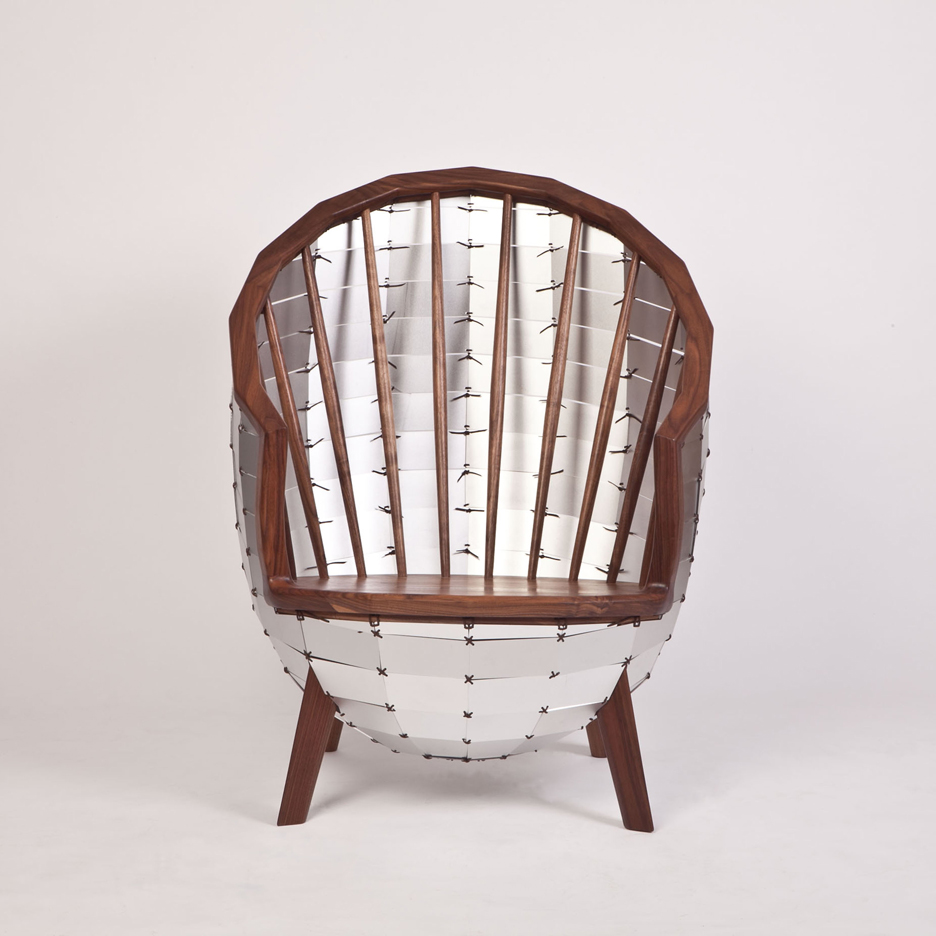
An exhibition in London dedicated to Korean craft will present pieces by 18 designers exploring the concept of movement (+ slideshow). (more…)
Venice, Italyphoto via barry

 Sig Nordal