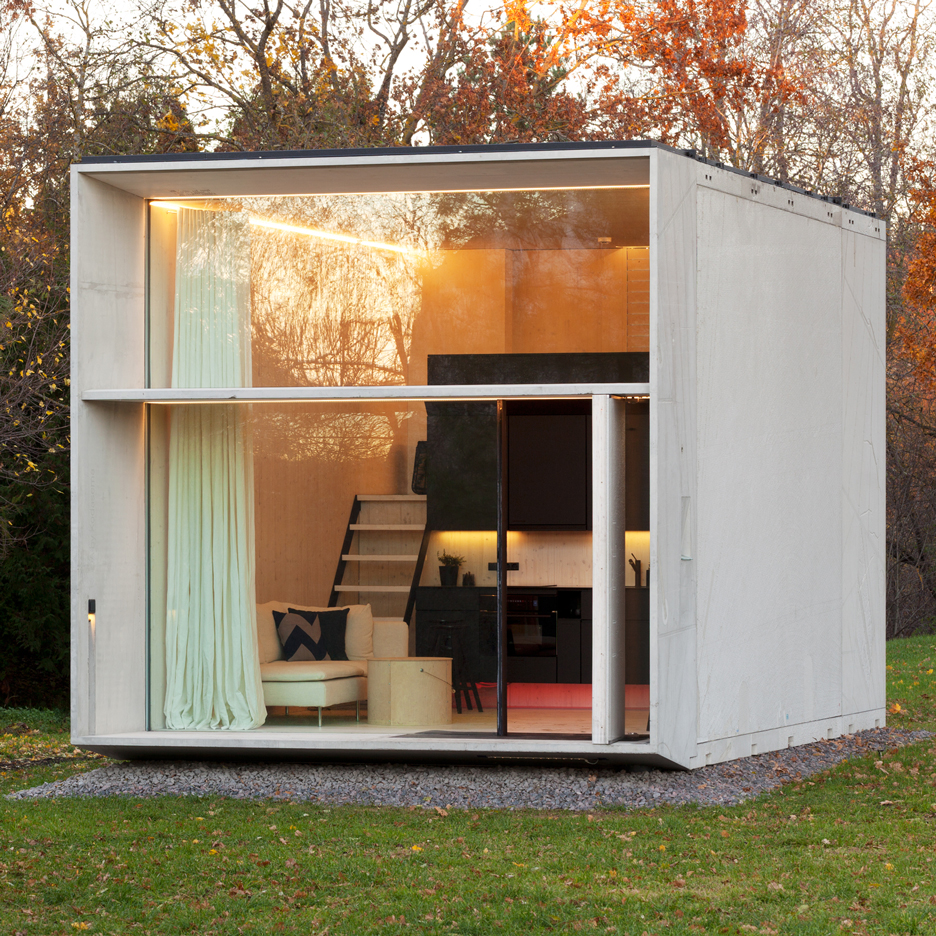
This tiny prefabricated dwelling by Estonian design collective Kodasema is designed to allow its residents to up sticks and move to a new location in less than a day (+ slideshow). (more…)
This tiny prefabricated dwelling by Estonian design collective Kodasema is designed to allow its residents to up sticks and move to a new location in less than a day (+ slideshow). (more…)

The house is located in the suburbs of Matsuyama, a northwestern city of Shikoku, a region famous for ohenro, or the Shikoku pilgrimage. The structure is very long and narrow, extending north to south.
It is the home of a gregarious and energetic elderly mother and her daughter who values the practice of cooking meals slowly and intentionally, along with two cautious cats.
As a space in which the mother may fully enjoy her hobby of shigin (performing Japanese or Chinese poems) with her friends, a Japanese style room, complete with a bench, was placed on the side that faces the road. Its ceiling and walls are finished with a Japanese style sakan plastering that uses diatomite, and common reed is used to cover the ochi-tenjō (part of a ceiling that is built lower than the rest, under which the host would sit to show humility). The result is a modern look.
Within the building is a doma* salon that can be used for socializing with friends and neighbors. It is an open space with an exposed roof truss. The floor is covered with teppei-seki (pyroxene andesite) stones, the in-between spaces of which are filled with river gravel having exposed texture.
A small, diagonally added room is a space for the daughter to engage in her hobby of Japanese calligraphy. It is a cozy room with a ceiling that is only 1.8 meters high and a view of the yard—an ideal place for quietly immersing oneself to the art of calligraphy.
The family space, on the other hand, is compactly organized on the northern half of the house. Much thought was put into ensuring privacy for each human and cat, while keeping the traffic required for daily activities as short as possible.
Here, mutually caring family members can coexist in their own respective spaces without being too close or too separate. The inner courtyard placed at the center of the building connects the adjourning rooms while going through constant changes of appearance, time, and light. With the seasons’ changes, breezes that come through, and the sound of running water, it brings enrichment to the everyday.
Every aspect of the house was designed to create an effortless and graceful space.
*Doma salon: Doma (literal meaning: “mud room”) is an area of a Japanese home that has a floor that was traditionally covered with packed earth.

As London enjoys a mini heatwave, we’re celebrating the belated arrival of summer by dipping into some of the best rooftop swimming pools from our archive, including an infinity pool with views of the Tel Aviv skyline and a bathing spot in the Brazilian jungle (+ slideshow). (more…)


From the architect. The land available for the new building is located in the foothills of the Mt. Dongmang in a small village called Gabaeri in Geoje, Gyeongsangnam-do. This place is quiet and its scenery is really beautiful and, moreover, possesses a charm of its own since it has a sea view. The building owners are a couple who currently live in Tongyeong but operate a fish farm here. They were planning to build a house to live with elderly mother and their daughter and met an architect on the recommendation of their daughter to start to build a little special house.
When I first visited the site, the construction has been preceded by a local civil engineering contractor while piling up boulder stone randomly and dividing the land as well. It leaves much to be desired since the land was formed uniformly and it ignores the flow of landform and difference of elevation, too. As the land is ripe with potential in the relationship with nature, so I decided to take advantage of it.
For the client, the sea means home, ground for living and life. So above all, the greatest focus was set on their relationship with the sea. ‘Younghaeawon(迎海雅院)’ which represent a house greeting sea was made into structure open to the sea in order to be a shelter to keep in tune with the sea. As a one-storied house, reed field in the rear of house and Mt. Dongmang beyon were used as a background.
Since the satisfaction of users is most important in a house where people live every day, they So I focused on organizing space composition which is satiable for their lifestyle. In addition, I also considered new proposal that can enrich the spatial experience. By placing a entrance between a living room and a kitchen, I made the transition area. And by installing a large door pockets, and so it can be used as a living room as a large room. In the middle of the corridor, I proposed a family room as a buffer space of the indoor and outdoor. As limestone is used as a finishing material of the outer wall toward the inner wall, it was differentiated from the living room.
In the case of exposed concrete, it is far unused material in this fishing village. However, I used combination of familiar materials e.g. stone and wood in order to look familiar. It requires much efforts for me to pay attention in detail to express each property of matter. Through many discussions and cooperation with contractors, it was realized one by one gradually.
Recently, a variety of construction-related information can be obtained easily. Thus, there’s an increase demand for a house: house in which resident can enjoy modern edge and new experience, and residential house suitable for individuality of resident and stable and clean house. In addition, client’s level has increased to distinguish a fine house. Although ‘Younghaeawon(迎海雅院)’ is a house located in a small fishing village, it proves that the house made with new material and format that architect tried with the full understanding and support of building owner and also, it looks very beautiful and goes well with nature. Moreover, it increase the satisfaction of users in order that they can feel that fine building makes their life happier.

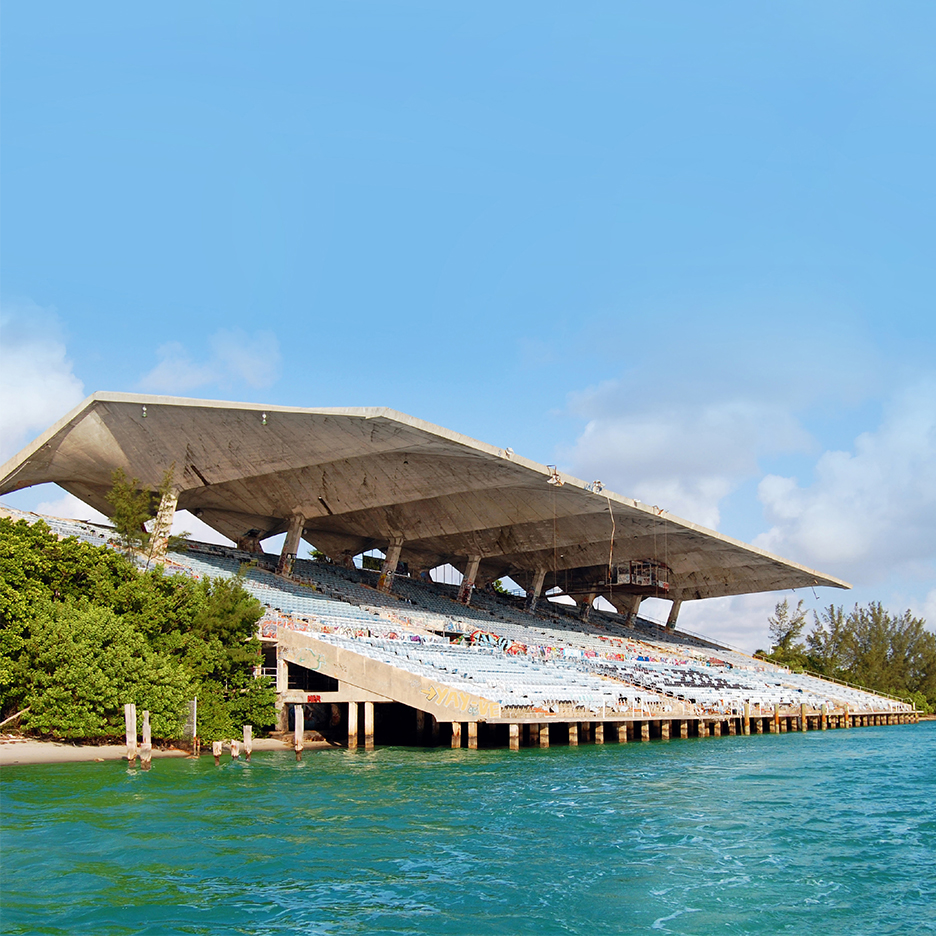
Heineken and the National Trust for Historic Preservation are hosting a crowdfunding campaign to raise money for the resurrection of a 1960s Miami stadium designed by Cuban architect Hilario Candela. (more…)

Los Angeles – California – USA (by Anh Dinh)

 Sig Nordal