Festivals, business expos, health fairs, and other community events are all good opportunities to promote your business locally. These tips will help you make the most of your booth or table.
Month: July 2016
The Best Ways to Use Promotional Products to Market Your Business
Promotional products are a great way to keep your name in front of past and potential customers. Learn how to use promotional items for marketing your business.
6 Simple Tips to Work Less and Get More Done
Not enough hours in the day? Here are six things you can do to get through your to-do list with time to spare.
21st Century Nolli: How Pokemon GO and Augmented Reality Could Shape Our Cities

//platform.instagram.com/en_US/embeds.js
Augmented reality is not a new piece of technology. The term has existed in some form since the early 90s, and it has had practical effects for architects since at least 2008, when ArchDaily posted its first AR article about a plugin for Sketchup that allowed users to rotate a digital model around on their desk using just their bare hands. But these past few weeks, society was given its first glimpse of augmented reality’s potential to affect the way we interact with the places we occupy.
That glimpse, of course, has been provided by Pokemon GO, the location-based augmented reality mobile game that allows players to capture virtual creatures throughout the real world. With more many active daily users as Twitter and a higher daily usage time than social media apps like Snapchat, Instagram and Whatsapp, it cannot be denied that the game has captured our attention unlike anything that has come before it.
//platform.instagram.com/en_US/embeds.js
The result of that attention is that people have been driven out onto the streets on the hunt for Pokemon. And while it has been fun spotting our favorite characters in front of places we know and love on our phone screens, the true urban innovation has come thanks to the game’s user-generated map.
Primary to the function of the game is the designation of real-world landmarks as “Pokestops,” where players can obtain in-game items, and as gyms, where trainers can send out their Pokemon to battle against each other. These landmarks were selected through crowd-sourcing efforts by players of Ingress, an earlier AR location-based game whose platform was adapted for Pokemon GO. Using a human-powered mapping system has meant that important in-game locations aren’t limited to obvious buildings and monuments, but also show up at local favorites named things like “Famous Ray’s Pizza” or “The Face Above the Door” (A relief sculpture carved into the keystone of a doorway), and even a stop called “Flying Cat!” that appears to be a small piece of graffiti high up on the side of an apartment building (in fact, perhaps to the horror of Modernists, the largest number of non-building stops appear to be tied to ornate building details).
The consequence of this is that going out for a Poke-catching stroll has truly become a great way to discover the architectural and cultural intricacies that make a town, city or neighborhood unique. Even more obvious landmarks have seen an uptick in visitors. So many Pokemon players have flocked to the National Mall in Washington, DC that the National Park Service has encouraged Rangers to help people find Pokemon, and learn a thing or two about historical monuments while they’re at it. What the game has generated is a modern-day version of the Nolli plan, the famous 18th century drawing of Rome in which public spaces, both indoor and outdoor, stand out by being drawn as one continuous plane, with private spaces rendered in a dark poché. The Pokemon GO map, too, affords extra significance to public spaces by calling them out with a pokeball symbol.
© Scott R. Maurer
But what effect will all this increased awareness end up having on our public spaces?
Unlike other real world functions, Pokemon GO uses very little in the way of resources (except for that precious server space). Pokemon GO requires no special equipment. There is no mess left behind as a result of the game, and nothing new is required of a destination to participate. All a Pokemon Go capable space requires is a wireless data connection. Because of this, aside from the occasional slow-moving individual with her face buried in her phone screen, the game places very little burden on the places where people are playing.
What we’re seeing is that the art museums, parks and department stores that have become Pokemon hotspots are much more capable of accommodating multiple uses than might have been expected. At art museums, for example, it appears that it’s actually perfectly possible to have art appreciation and Pokemon happening side-by-side – as long as the activity doesn’t actively encourage something which is antithetical to that place’s regular function.
© Jesper Mühlback Hansen
But not all Pokestops are created equal. While some of the more unique locations contain their own sort of novelty value, only the most accommodating stops will attract large groups of people to gather and play. And it turns out that what makes a Pokemon space successful is nothing new. It must be a nice open environment, have comfortable places to sit, and be easily accessible – nearly all of the same qualities of what makes any public space successful. But unlike traditional plazas, whose development is often dictated by historical or economic motives, the success of a Pokemon space is entirely democratic. They are the best spaces for gathering near where people actually live. What the technology provides us is a way of mapping how many people are using public places and for how long. In this respect, it is not unreasonable to believe that Pokemon Go will allow people to interrogate the design of public space in real life.
Town planning has actually always been an essential element of Pokemon games. In most of the fictional towns created for the core Pokemon games over the past 20 years, the Gym was the most important building, then the Pokecenter and Pokemart, then places like houses that often weren’t essential to the game but provided the fleshed-out characters and side stories that made the universe feel familiar and believable. This hierarchy of buildings was often reflected in the size of the buildings and the layout of the town. Now, this hierarchy has been overlaid onto real life public space, allowing us to question whether the way our neighborhoods are organized reflects the hierarchy they are intended to have.
//platform.instagram.com/en_US/embeds.js
But this is just the beginning. If the trailer of the game is to be believed, future gameplay additions may feature the ability to battle locally or to team up to accomplish tasks. The game already has the ability to recognize the difference between a public and private building; who’s to say it won’t evolve to attribute new functions to different types of spaces? Your local hospital could soon become a Pokecenter, your corner store a Pokemart. With each additional function embedded in the game, the more grounded it will be in its environment. If the game, as well as future apps inspired by it, continues to use crowd-sourcing methods to develop its map, people will be given the opportunity to increasingly influence the places the occupy, without having to spend a dime.
Pokemon GO is simply the first of what will surely be many augmented reality applications that will impact how real-world space functions. And because of its user-generated map, public space is being treated with a reverence perhaps not seen since 16th century Rome. Technology has created new ways of bringing people together. Now, it may allow groups new ways of influencing the spaces they occupy as well.
Have You Found Any Pokémon Near Famous Landmarks in Pokémon GO? Show Us!
//cdn.embedly.com/widgets/platform.js
From under, the water falls! by Hrímnir A revisit to the…

From under, the water falls! by Hrímnir A revisit to the wonderful cave under Fardagafoss! http://flic.kr/p/dar7ry
Hou de Sousa builds reconfigurable Raise/Raze installation from plastic balls
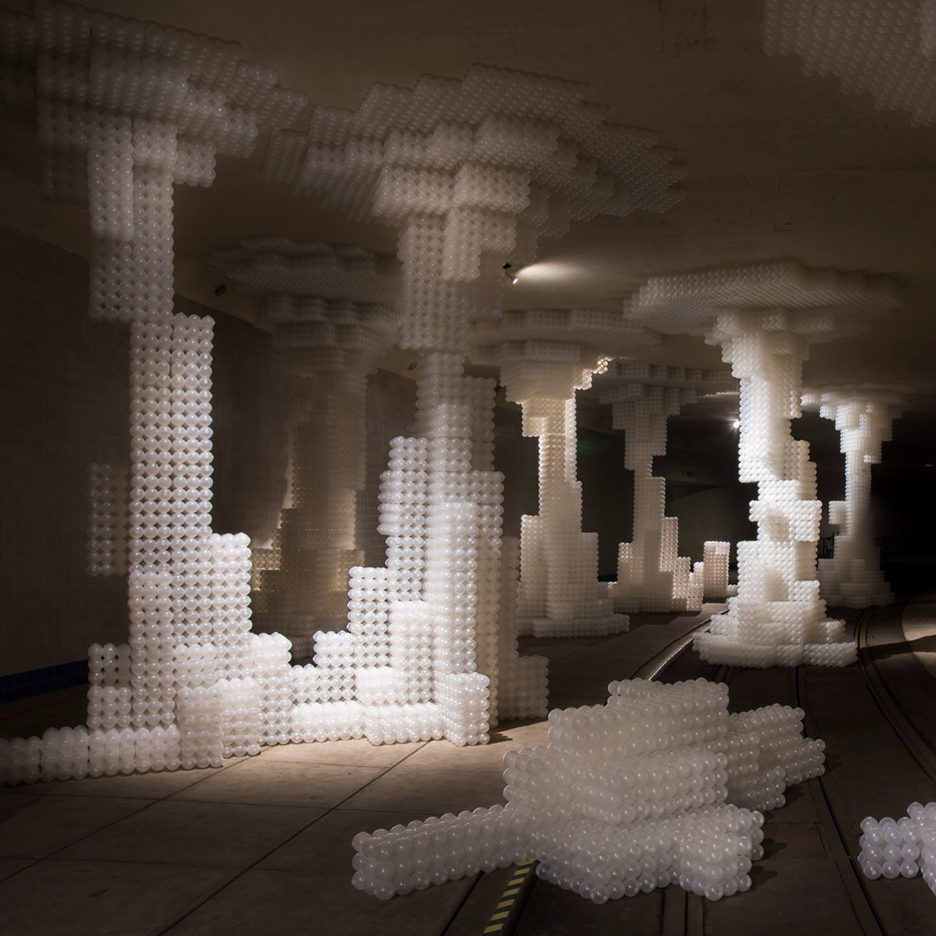
New York firm Hou de Sousa has created an interactive installation in a Washington DC subway station, using over half a million plastic spheres glued together to form building blocks (+ slideshow). (more…)
Budapest, Hungaryphoto via steam

House 19 / Jestico + Whiles

© Grant Smith
- Architects: Jestico + Whiles
- Location: United Kingdom, Old Amersham Rd, Denham, Gerrards Cross, Buckinghamshire SL9 7BE, UK
- Architect In Charge: Heinz Richardson, Jestico + Whiles
- Project Year: 2016
- Photographs: Grant Smith
© Grant Smith
From the architect. Located at the end of a lane that runs north from the High Street in the conservation area of Old Amersham, House 19 fuses traditional forms and local materials in an elegant and modern way to make full use of the natural aspect and orientation of the site.
© Grant Smith
House 19 is an exemplar of harmonious and sustainable contemporary design in the context of an ancient historic town.
© Grant Smith
The development of a simple plan and section delivered a house of exceptional quality whilst at the same time bringing together the most comprehensive range of passive and active energy-saving features in a well-considered, thoughtful assembly of light-filled spaces, suited to 21st century living.
Ground Floor Plan
The house captures stunning and long-ranging views over the surrounding Chiltern Hills from all the upper rooms and circulation spaces and modulates daylight and sunlight in the internal areas to dramatic effect.
© Grant Smith
Windows are carefully positioned to frame views to the Old Town and provide more expansive views to the south. The result is a tranquil and calm internal atmosphere that changes throughout the day and the seasons of the year.
In terms of materials the house is firmly rooted in the history of the area through the use of delicately dark stained vertical board cedar cladding, snapped-and-knapped luminescent flint (used for cladding and to create external walls), dark zinc roofing and accents of carefully placed corten steel.
Section
As a result, the building adopts a commanding yet respectful presence in the context of the lane and also makes a contribution to the wider community with the inclusion of a clock on the rendered chimney, to the benefit of both players and public using the adjoining cricket ground and open
© Grant Smith
The architect’s expertise in, and passion for sustainable design is evident in a combination of practical, robust, simple and deliverable design features that form the bedrock of the design approach.
Elevation
Elevation
These begin with passive measures and a building form that orientates the long axis of the house in an east-west direction, thereby enabling both beneficial heat gain in winter and the exclusion of solar radiation in summer, through the judicious use of a cantilevered roof overhang above the ground floor, south-facing glass facade.
© Grant Smith
A dramatic double-height space at the heart of the plan, coupled with opening vents in the long upper level dormer window, provides opportunity for passive stack natural cooling in summer months. Furthermore, PV panels contribute to energy generation and the whole house is heated through a ground source heat pump, which provides underfloor heating and hot water.
© Grant Smith
Other environmental features include air-tight thermally heavyweight construction and triple- glazed windows (in excess of current building regulation u-values) and an earth tube ventilation system that ensures running costs are minimised and internal conditions are as comfortable as can be.
© Grant Smith
Rainwater is harvested for toilet flushing, clothes washing and garden watering and appliances have been selected for the highest rated energy-efficiency available. A wild meadow garden and living roof to the single storey garden room enhance the strong ecological value of the site.
1st Floor Plan
House 19 is a fusion of architectural moves, contemporary vernacular and pragmatic sustainability features and represents a benchmark for new houses in historic locations.
© Grant Smith
“How does one interact with cities when you are continuously looking into your phone?”
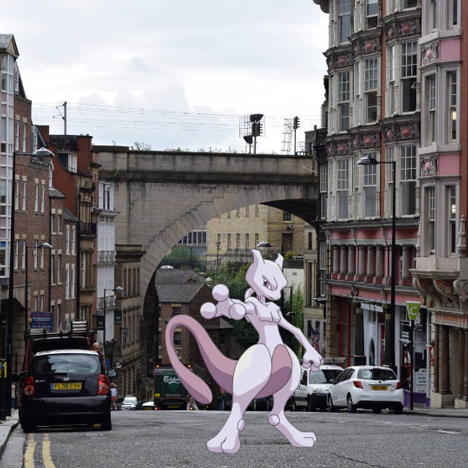
Comments update: readers are debating the merits of Nintendo’s Pokémon GO smartphone video game, with some questioning its implications on the way people experience the built environment. (more…)
Woods Bagot Designs Butterfly-Inspired Biological Sciences Building at the University of New South Wales

Courtesy of Woods Bagot
Woods Bagot has revealed designs for the new Biological Sciences building at the University of New South Wales (UNSW Australia). Currently under construction, the 21,000 square meter (226,000 square foot) building will provide world-class facilities for UNSW biomedical and environmental researchers and create a new northern gateway for the university’s upper campus.
In the design process, Woods Bagot explored a series of iterative responses aimed at dividing the eight-story structure into three distinct elements: the laboratory box, the workplace box, and the atrium. The building skin takes inspiration from natural elements, such as the movements of a butterfly and the colors of Australian rock landscapes, to produce a distinct aesthetic for the Biomedical Precinct, as well as reference the terra cotta heritage on the university grounds.
Courtesy of Woods Bagot
“The building’s external, predominantly solid facade provides a protective layer akin to an animal’s skin, linking to the building’s purpose as a research space for the natural environment,” said Woods Bagot Director and Global Health and Science sector leader Georgia Singleton.
While the building’s sweeping form draws from the macro view of the butterfly’s flight path, the micro view of its wings can been seen in the subtle gradation of color from light to dark.
Adds Singleton, “Deliberate patterning along the façade imitates the Monarch butterfly flapping its wings as it travels across the surface, leaving behind a trail of bright terracotta blades.”
Inside, flexibility and adaptability were set as the key design goals to allow for multiple configurations within the space and to allow laboratories to evolve over the life of the building. With a capacity of 550 staff and PhD students and 360 undergraduate biomedical students, the building was also designed to promote collaboration through shared services and the idea of ‘science on display.’
“The design integrates current trends of transparency, featuring open and collaborative work spaces adjacent to specialist support zones including dedicated write-up space,” said Woods Bagot Director of Laboratory Design Leslie Ashor.
The project is expected to be completed mid-2017.
- Architects: Woods Bagot
- Location: Kensington NSW 2052, Australia
- Design Team: Georgia Singleton, Leslie Ashor, John Norman, Chris Savva, Stephen Taskin, Anthony Chow, Lisa Fathalla, Alexandra Smith, Bradhly Le, Phoebe Hogan, Adam Waugh, Kristian OBrien, Terri Alvarez, Maurizio Lamanna
- Project Manager: Capital Insight
- Town Planner: JBA
- Landscape Architect: Black Beetle
- Structural Engineer: Robert Bird Group
- Building Services Engineer: Norman Disney & Young
- Civil: Robert Bird Group
- Quantity Surveyor: Brookfield Multiplex
- Geotech: Robert Bird Group
- Area: 21000.0 sqm
- Project Year: 2017
- Photographs: Courtesy of Woods Bagot
 Sig Nordal