From parking fines to airline fares, society’s financialisation is seeing the collective cake shrink as the rich claim an ever larger slice
It is the dog end of August and the sun is shining in many places. A cue for all sorts of predatory people in the thriving British holiday trades to rip off customers who don’t always have a choice and feel ambushed.
In a remote and empty Lake District car park the other day my sister fell foul of an unclear car parking regime. It led to a fine being levied for outstaying the time she had paid for by a few minutes. It happens to us all. In crowded Notting Hill last week, a man told me his car had once been given a penalty notice while he was away at the ticket machine paying his £1.60 for 30 minutes.
It’s rare for an architect to have the opportunity to design a building in which symbolism and form are as important as function, if not more so. But this was the task given to David Adjaye when he won the commission to design the National Museum of African American History and Culture (NMAAHC), which, when it opens in September, will be the final Smithsonian institution to take its place on the National Mall in Washington, D.C. Adjaye, whose work is marked for its extreme sensitivity to context, found himself challenged in ways he had never been before. On the occasion of the completion of Adjaye’s Eugene McDermott Award residency at MIT, Metropolis editor Vanessa Quirk spoke with the architect about the new institution, its symbolic significance, and the blurry boundary between monument and museum.
Vanessa Quirk: At what point does a museum become a monument?
David Adjaye: I’m not sure museums really are monuments or should be monuments, as a first principle. Museums should be palaces of edification—in a way, they’re palaces that democratize visual and cultural patrimony. That’s really their primary job. Let’s look at the National Museum of African American History and Culture. The Mall is really about palaces of culture—and then, you have the rambling monument grounds, the anchor of which is the Washington Monument.
What [Washington, D.C., planner Pierre-Charles] L’Enfant didn’t describe was what happens when you get to the threshold between the two [the palace and the monument]. That threshold— wherever it is—becomes an interesting point of discussion. This building was neither a monument nor a palace, but somewhere between. There’s a way in which it’s referring to the urban grid and the placement of the palaces [the other museums that surround the Mall]. But because it’s a building that’s seen in the round, the objectlike quality of the form became important. It wasn’t just composition. It became something that had a strong silhouette but also had a relationship, in a way, to the most dominant monument around—Washington’s obelisk. We actually were deferential to it by making the angles of our splayed skin system the same angle as the [obelisk’s] pyramid.
That’s the kind of moment when there’s a contextual, or urbanistic, condition that’s important. I think when a museum starts off just wanting to be a monument, there’s a lot of problems [laughs].
VQ: Was the opportunity to make a sculptural building freeing for you, since you usually are so concerned about context?
DA: It was, actually, really difficult [laughs]. Because there were none of the usual references that I am used to in an urban context, the kind of relationships that I make and I talk about in my work. So, I had to look for a whole new strategy.
In the end, it forced a debate about the representation of the museum in the wider context of the community and the nation. That is a really profound question to be involved in as an architect. It’s one of those questions you don’t even think about. So, suddenly, when that question is part of the discussion, you realize it’s more than just your architectural style—and that’s great. It’s about creating meaning and associations and joining of stories. You find yourself becoming the final ingredient of a meal. It really stretched a whole side of me that I hadn’t exercised before, and I continue to draw from that very much.
VQ: Was it a priority for you that the museum also be a memorial?
DA: Implicit in the notion of a national museum of African-American history and culture there is this dialectic. It is both a celebration and a memorial, while still being a museum. It’s actually a triptych. But the ideal of a monument is also in there implicitly because, one, it is the last museum on the Washington Mall and, two, it’s also the museum that has struggled the most to justify its existence.
So, it’s a kind of monumental achievement, in an extraordinary way. Two hundred years of asking. That’s not a joke.
VQ: How does that memorializing aspect manifest itself physically in the museum?
DA: For me, it was important that that did not take any singular aspect of the narrative. Because when you’re doing that, you have this very “hot potato” moment—what do you privilege as the thing that people should remember [most about the museum]? In the interview [for the commission], that was a very, very powerful discussion with the committee. I talked about the notion of a building that should speak to the entire journey. But also to acknowledge that this journey is a kind of celebration, of rising against adverse conditions and becoming part of a great nation.
A lot of people fall afoul of taking a cliché position about slavery as a defining moment of the African-American community’s achievements. And actually, it is a traumatic moment, but alongside the many traumatic moments are also many triumphs. I just refer back to a classical tradition that memorializes stories.
Winning the competition to design the National Museum of African American History and Culture has consolidated the practice’s US portfolio with arguably the nation’s most prestigious new building. Located on Constitution Avenue, adjacent to the National Museum of American History and the Washington Monument, the museum will house exhibit galleries, administrative spaces, theatre space and collections storage space for the NMAAHC. As lead designer for the Freelon Adjaye Bond/SmithGroup (FAB) team, David Adjaye’s approach has been to establish both a meaningful relationship to this unique site as well as a strong conceptual resonance with America’s deep and longstanding African heritage. The design rests on three cornerstones: the “corona” shape and form of the building; the extension of the building out into the landscape – the porch; and the bronze filigree envelope.
Situated on the Washington Monument grounds the museum maintains a subtle profile in the landscape – more than half is below ground – with five storeys above. The corona is based on elements of the Washington Monument, closely matching the 17-degree angle of the capstone and the panel size and pattern has been developed using the Monument stones as a reference. The entire building is wrapped in an ornamental bronze lattice that is a historical reference to African American craftsmanship. The density of the pattern can be modulated to control the amount of sunlight and transparency into the interior. The south entry is composed of the Porch and a central water feature. An extension of the building out into the landscape, the porch creates an outdoor room that bridges the gap between the interior and exterior.
At 50m (49’-2”) deep, the setback is similar to other buildings on the north side of the Mall. The underside of the porch roof is tilted upward allowing reflection of the moving water below. This covered area creates a microclimate where breezes combine with the cooling waters to generate a place of refuge from the hot summer sun. There is also an outdoor patio on the porch rooftop that is accessed from a mezzanine level within the building.
Inside the building, visitors will be guided on a historical and emotional journey, characterised by vast, column free spaces, a dramatic infusion of natural light and a diverse material palette comprising pre-cast concrete, timber and a glazed skin that sits within the bronze lattice. Below ground, the ambience is contemplative and monumental, achieved by the triple height history gallery and symbolised by the memorial space – the “oculus” – that brings light diffused by a cascade of water into the contemplative space from the Monument grounds. Moving upwards, the views become pivotal, as one circulates along the corona with unrivalled panoramas of the Mall, Federal Triangle buildings and Monument Grounds.
What you see is what you get. The devil is in the detail. There are many expressions tied to the way we see our world. The way you pay attention to details can tell a lot about your personality. You see the bigger picture or all the little details? Are you a realist or a perfectionist?
No matter your result, you should know that there is no right or wrong way to see the world.
Take now this quick and fun quiz and find out what kind of person you are.
This Eye Test Will Determine What Kind Of Person You Are
With recent streamlining and increased flexibility of architectural licensing programs, the time it takes to earn a license has decreased for the seventh year in a row, and the average age of licensure has concurrently dropped. On average, it takes just over 13 years to become an architect, from the time a student enrolls in school to the date they receive a license.
Courtesy of The National Council of Architectural Registration Boards (NCARB)
From 2014 to 2015, there was a two percent increase in the number of architects in the United States, which reached 110,168. The number of professionals working towards licensure also increased and reached 41,500 in 2015—an all-time high.
Nearly 4,900 of these licensure candidates completed the experience requirement in 2015, a 27 percent increase from 2014. Furthermore, 62 percent of candidates overlapped their experience and exams, the largest percentage to date.
Courtesy of The National Council of Architectural Registration Boards (NCARB)
By overlapping experience, education, and examination, graduates of accredited programs were able to shave two years off the average time to licensure.
Additionally, the pool of professionals working towards licensure is more diverse than ever before, with women representing one in three newly licensed architects.
Courtesy of The National Council of Architectural Registration Boards (NCARB)
Read the full report, including interactive data charts and program updates, here.
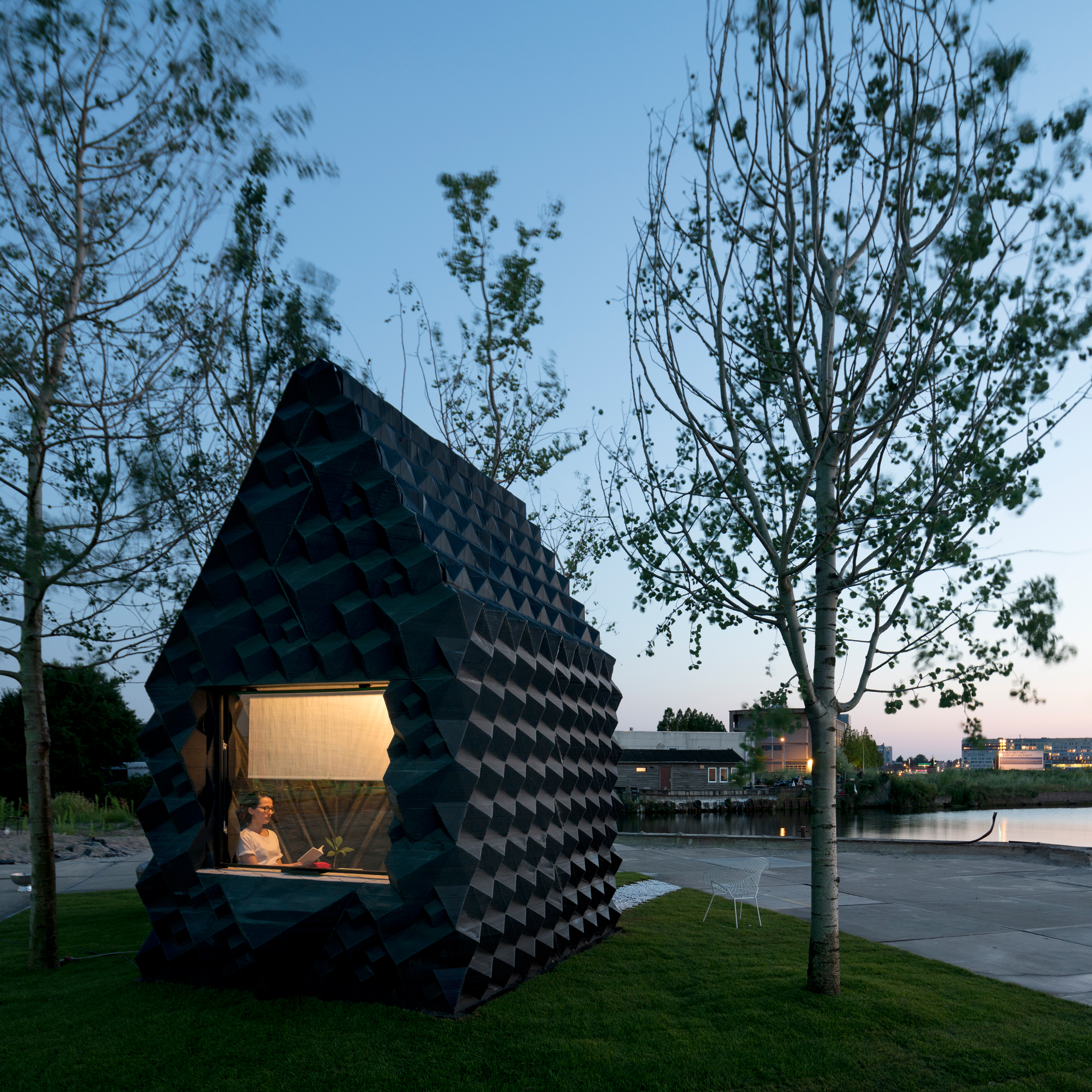
Dutch studio DUS Architects has 3D printed an eight-square-metre cabin and accompanying bathtub in Amsterdam, and is now inviting guests to stay overnight (+ slideshow). (more…)
Competition:Dezeen has teamed up with Case Furniture to give one reader the chance to win an updated version of the 675 Chair, originally created by British designer Robin Day in 1952 (+ slideshow). (more…)
Architecture, like music, inspires us daily. Our sister site ArchDaily Brasil, in partnership with Spotify, created an architecture- and urbanism-themed playlist, with shout-outs to cities, buildings and even architects themselves. In the list you’ll find everything from David Bowie singing about Philip Johnson and Richard Rogers, to Laurie Anderson citing Buckminster Fuller and the Beatles fretting over a visit to an apartment.
Listen to the playlist after the break and add songs with architecture shout-outs in the comments.
American artist Laurie Anderson portrays the revolutionary architectural and urban vision of Buckminster Fuller.
When Buckminster Fuller came to Canada, he kept asking the same question: “Have you ever really considered how much your buildings actually weigh?” The Canadians took this very seriously. (Hey, we never thought of that!) He showed them pictures of domed cities, cities with no basements, no foundations. Cities that could be moved in a minute. Portable cities. Portable towns.
David Byrne is perhaps most aware of the key roles of architecture and art that “affects the way we see ourselves in the city and how we relate to each other.”
It’s over there, it’s over there My building has every convenience It’s gonna make life easy for me It’s gonna be easy to get things done I will relax alone with my loved ones
dEUS – The Architect
dEUS depicts the ego and all the power of architects in this extremely sincere song. It is likely that most architects can identify with at least a portion of these lyrics.
What is the architect doing He is by the riverside What is he thinking out there He is committing egocide
David Bowie – Thru These Architect’s Eyes
Bowie needs no introduction and when he sings of great masters such as Philip Johnson and Richard Rogers we like him even more.
Stomping along on this big Philip Johnson Is delay just wasting my time Looking across at Richard Rogers Scheming dreams to blow both their minds
Imagem cortesia de Royal Academy of Arts. Divulgação da Exposição “Richard Rogers RA: Inside Out”
The Beatles – Norwegian Wood
One of the Beatles probably visited the home of a fan of minimalist architecture. Apparently, it was not a very comfortable experience.
I once had a girl, or should I say, she once had me She showed me her room, isn’t it good, Norwegian wood? She asked me to stay and she told me to sit anywhere So I looked around and I noticed there wasn’t a chair
The Decemberists – Here I Dreamt I was an Architect
If you are reading this, you too have probably dreamt at some point of being an architect (if you aren’t one already). Here’s The Decemberists version of this dream.
And I am nothing of a builder But here I dreamt I was an architect And I built this balustrade To keep you home, to keep you safe From the outside world But the angles and the corners Even though my work is unparalleled They never seemed to meet This structure fell about our feet And we were free to go
Pavement – The Hexx
The practice of architecture is, at times, one filled with frustration.
Architecture Students are like virgins with an itch they cannot scratch Never build a building until you’re fifty what kind of life is that?
The White Stripes – Little Room
The White Stripes explore some scale problems in this 50-second song.
Well you’re in your little room and you’re working on something good but if it’s really good you’re gonna need a bigger room and when you’re in the bigger room you might not know what to do you might have to think of how you got started sitting in your little room
Kamau e Instituto – Poesia de concreto
Brazilians Kamau e Instituto portray the hidden worlds of a city by highlighting the inequalities that exist within.
Algum teto de concreto da cidade, abriga o restante da liberdade semelhante a que escorreu pela sargeta da calçada se escondeu entre as paredes ou partiu pra outra morreu de fome de frio de sede pois sem abrigo não há, pra onde voltar pra poder descansar e pensar na estratégia pra continuar lutando pra manter a liberdade que se tem
Seagram Building / Mies van der Rohe. Imagem cortesia de 375parkavenue.com
Gnarls Barkley – Feng Shui
What do you say about Gnarls Barkley song that quotes Mies van der Rohe?
In this house the decor is obvious obscure. It’s clearly the theory of Less is More.
Underworld – Mmm skyscraper I love you
Here is Underworld’s ode to high-rise buildings.
Mmm skyscraper I love you. mmm skyscraper I love you. Thirty thousand feet above the earth. its a beautiful thing.
Elvis Costello – Hoover Factory
The great composer Elvis Costello covers heritage and gentrification issues when he sings about the possible hipster destination, Hoover Factory.
Green for go, green for action From Park Royal to North Acton Past scrolls and inscriptions like those of the Egyptian age And one of these days the Hoover factory Is gonna be all the rage in those fashionable pages
Caetano Veloso – Sampa
Speaking of gentrification, São Paulo comes to mind. Here Caetano has beautifully portrayed all of the feelings that a city can inspire in people.
Alguma coisa acontece no meu coração Que só quando cruza a Ipiranga e a avenida São João É que quando eu cheguei por aqui eu nada entendi Da dura poesia concreta de tuas esquinas Da deselegância discreta de tuas meninas
Something happens in my heart Only when it crosses Ipiranga and São João Avenue When I got here I didn’t understand anything Not the concrete poetry of your street corners Not the discreet inelegance of your girls
Tom Zé – A Briga do Edifício Itália e do Hilton Hotel
Speaking of São Paulo, we could not overlook the wonderful fight described by Tom Zé between two of the biggest icons of Paulista architecture. The words are masterful, indulging in the history and beauty of the two buildings.
O Edifício Itália era o rei da Avenida Ipiranga: alto, majestoso e belo, ninguém chegava perto da sua grandeza. Mas apareceu agora o prédio do Hilton Hotel gracioso, moderno e charmoso roubando as atenções pra sua beleza.
The Itália building was the king of Ipiranga Avenue: Tall, majestic and handsome, noone came close to its greatness. But now the Hilton Hotel building showed up elegant, modern and charming, stealing attention with its beauty
Chico Science & Nação Zumbi – A Cidade
Continuing with more Brazilian songs, the atomic maracatu Chico Science and Zombie Nation could not be left out. “The City” is certainly a nice summary of what conforms an urban environment.
E a cidade se apresenta Centro das ambições Para mendigos ou ricos E outras armações Coletivos, automóveis, Motos e metrôs Trabalhadores, patrões, Policiais, camelôs
The city presents itself as the center of ambition To the bums or rich people, and other types of scammers. Buses, Cars, Motorcycles and Metros, Workers, bosses, policemen and street vendors
China – Arquitetura da Vertigem
This song by China portrays real estate speculation in Recife, but it could easily fit in many other urban centers.
Verticalização por metro quadrado De muros altos, olhos tensos pra guardar o medo Que mora ao lado
Vertilicalization per square meter High walls, strained eyes to keep fear Who lives next door
Criolo – Fermento pra Massa
Criolo depicts simple urban mobility problems that interfere with breakfast.
Hoje eu vou comer pão murcho Padeiro não foi trabalhar A cidade tá toda travada É greve de busão, tô de papo pro ar
Bob Marley – Concrete Jungle
Life in the city is chaotic and fraught with tension, nourishing, at times, not-so-positive situations and feelings.
I said that life must be somewhere to be found Oh, instead: concrete jungle Confusion. Eh!
In an homage to a great architect, Simon & Garfunkel reveal how much they miss the great Frank Lloyd Wright.
Architects may come and Architects may go and Never change your point of view. When I run dry I stop awhile and think of you.
The Cinematic Orchestra – To Build a Home
Wright left an invaluable built legacy, and of one of his most iconic houses, Fallingwater, inspired The Cinematic Orchestra.
There is a house built out of stone Wooden floors, walls and window sills Tables and chairs worn by all of the dust This is a place where I don’t feel alone This is a place where I feel at home
Crosby, Stills, Nash & Young – Our House
Such a cozy room, The windows are illuminated by the evening sunshine through them, Fiery gems for you, only for you. Our house is a very, very, very fine house with two cats in the yard
Tom Jobim – Arquitetura de Morar
This song is present on the soundtrack of a documentary about the houses designed by Brazilian architect José Zanine Caldas. It is instrumental, but since it’s by one of the masters of Brazilian music, it is on the list.
Of course religious architecture has been honored in song.
A white house with a folly A tower attached on the side A hand painted saint (Lovingly painted) Peeps over a high wall Which surrounds the white house
Black Sabbath – Spiral Architect
When Ozzy Osbourne sings about architecture, we turn the music up.
Watching eyes of celluloid Tell you how to live Metaphoric motor-replay Give, give, give! Laughter kissing love Is showing me the way Spiral city architect I build, you pay
Guster – Architects & Engineers
We could not forget this essential shout-out to the great works of architects and engineers. However Guster warns us, sometimes a building can be a trap.
So the architects and the engineers Build their monuments, make their souvenirs We are occupants It’s a trap, this town We are burning up We are fading out We are shooting stars
Owl City – Designer Skyline
The delightful pop of Owl City harnesses an architectural metaphor to describe falling for someone.
Affection, the gifted architect Is making a draft and beautiful design The options and possibilities Are endless when we connect and re-align Collections of books and documents Arise and parade around my cluttered desk Re-working the math and measurements Until I’m convinced these plans are picturesque Like mountains in the Midwest
Vinícius de Moraes – A Casa
As a special bonus, we could not miss “The House” by Vinicius de Moraes. After all, a classic is a classic.
Era uma casa Muito engraçada Não tinha teto Não tinha nada Ninguém podia Entrar nela, não Porque na casa Não tinha chão
It was a very funny house There was no roof, there was nothing Nobody could get into it, no Because in the house there was no floor
_________________________________ Think there’s a song missing from the list? Feel free to suggest them in comments! And follow ArchDaily Brasil on Spotify.




 Sig Nordal