Bliss@Kovan Condominium / LOOK Architects


© Daniel Swee – LOOK Architects

© Daniel Swee – LOOK Architects


© Daniel Swee – LOOK Architects


© Daniel Swee – LOOK Architects


© Daniel Swee – LOOK Architects


© Daniel Swee – LOOK Architects

  • Client: BBR KOVAN Pte Ltd
  • Civil And Structural Engineer: FONG Consult Pte Ltd
  • Mechanical & Electrical Engineer: Mott MacDonald Singapore Pte Ltd
  • Quantity Surveyor: QS Consultants Pte Ltd

  • Landscape Consultant: DLQ Design Pte Ltd
  • Esd Consultant: GreenBuilders Pte Ltd
  • Main Contractor: Singapore Piling & Civil Engineering Pte Ltd

© Daniel Swee – LOOK Architects

© Daniel Swee – LOOK Architects

© Daniel Swee – LOOK Architects

© Daniel Swee – LOOK Architects

From the architect. Condominium development comprising six 5-storey residential blocks (total 140 dwelling units), one 3-storey communal facilities block, communal swimming / spa pools and basement carpark. Total gross floor area of 12,754 square meters.


Plan

Plan

Homeowners are increasingly looking beyond the layout of the unit they are purchasing to the collective identity of the development, finding an emotional connection between the place of residence and the lifestyle choices they subscribe to. This is an aspect impacting residential design worthy of deeper contemplation.


© Daniel Swee – LOOK Architects

© Daniel Swee – LOOK Architects

Strategically nestled amidst a mature landed housing neighbourhood abound with laid-back charm, the site location enabled us to formulate a clear image of the development – a private eco- lifestyle sanctuary indulging urbanites’ longing to momentarily detach from the city bustle – and provided an answer to the client’s search for a branding niche, reaching out to a target demographic sensitive to ecological consciousness.


© Daniel Swee – LOOK Architects

© Daniel Swee – LOOK Architects

Designing for the high density of condominium developments is a challenge that constantly calls for refreshing solutions. Residential blocks are laid out in a staggered configuration that maximizes porosity within the site, fostering an ambience of airiness amidst the surrounding tightly woven urban fabric. ‘Ventilation breezeways’ between individual blocks serve to channel the prevailing north-eastern wind through the site.


© Daniel Swee – LOOK Architects

© Daniel Swee – LOOK Architects

Looking to expand the spatial nomenclature of condominium living, penthouse units are furnished with their own roof terrace space instead of enclosed attic rooms. For residents to enjoy outdoor dining and a dip in the private pool or jacuzzi, the high-level trellis roof creates a comfortable, thermally buffered space at the roof terrace, which exudes the debonair allure of tropical living. Deeply cantilevered balconies on second to fifth floors serve as functional extensions of units’ living space, being effectively shielded from the weather and adding a touch of spatial splendour. Believing in “doing more with less” as a sustainable design approach, architectural elements each has a manifold role, both aesthetically and as eco-friendly features. The high-level trellis roof – comprising folded perforated aluminium panels inclined at a gradual pitch – not only reduces thermal gain through the roof slab, but also serves to channel breezes toward the habitable roof terrace. The roof terrace serves as catchment area for an integrated rainwater harvesting system, which provides irrigation for the extensive communal landscaped deck.


© Daniel Swee – LOOK Architects

© Daniel Swee – LOOK Architects

“Wind scoops” affixed to cantilevered facade frames are vertical elements directing air movement through the main living spaces of units, while acting as diaphanous sun-shading screens. These lightweight wind scoops echo the expression of the balcony parapet screen, forming a sophisticated design language of delicate translucency and lightness. As part of a holistic design approach, we look beyond the utilitarian value of building components and discover in them the potential to inject creativity into the living environment. For instance, the surface drainage system blends into the lush landscaping, being designed as a vegetated bio- swale that helps filter surface run-off. Screening off views of the basement carpark (partially open on one side to capitalize on existing site topography) from neighbouring lots, BRC mesh panels double up as a urban farming wall that allows residents to grow their own vegetables within shared communal space. Counteracting the closed-community perception of private condominiums, the main development entrance is designed to be open-concept, where the drop- off area is lushly landscaped and incorporates a welcoming forecourt with cascading water wall feature. The security guardhouse is consciously set back from the site boundary, effectively creating a more pedestrian-friendly interface on the street level.


© Daniel Swee – LOOK Architects

© Daniel Swee – LOOK Architects
http://ift.tt/2avyA3f

Tongling New Library / yue-design


Courtesy of yue-design

Courtesy of yue-design


Courtesy of yue-design


Courtesy of yue-design


Courtesy of yue-design


Courtesy of yue-design

  • Architects: yue-design
  • Location: Tongling, Anhui, China
  • Design Team: Liu Jin, Yu Yiqing, Tao Zimin, Zhou Jing, Sibelle Hu, Tan Shuang
  • Area: 11000.0 sqm
  • Project Year: 2015
  • Photographs: Courtesy of yue-design

Courtesy of yue-design

Courtesy of yue-design

From the architect. The library is built together in the school library on the basis of the original design plan, the formation of Tongling City Library, three Hall Xinhua Bookstore and Tongling Polytechnic Library one new model. Library area of ​​about 11,000㎡, designed to seat 1500, a total amount of 700 000 books, after the completion of the use of the bookstore element Diversfied rich library services capabilities, provide the public with greater levels of reading experience.


Mezzanine Floor Plan

Mezzanine Floor Plan

First floor: two separate foyer hall, with a capacity of 400 people lecture hall, young children borrow area, book distribution center, children’s lending section, visually impaired reading area and art galleries;


Courtesy of yue-design

Courtesy of yue-design

Layer / II mezzanine: Xinhua Bookstore, there are business selling books, cultural and creative stationery, gourmet food, education and training, and self-employed foreword postscript coffee tea etc;


Second Floor Plan

Second Floor Plan

Three layers: a sky garden-sitting reading hall, to create three-dimensional multi-level reading and interactive experience center. Small potted plants and echoed across the green table, remind the reader, here is the Tongling citizen “eco large study.” And offers a free creative painting room.

Four layers: a comprehensive collection of books and reading area, HIFI room, listening room and listening room.


Courtesy of yue-design

Courtesy of yue-design

Fifth floor: reading area and set up a comprehensive self-study area, document library, electronic reading room, library and other special collections, including the electronic reading room interspersed with geometric forms of space is the way to bring readers and concepts of modern life.


Courtesy of yue-design

Courtesy of yue-design

http://ift.tt/2aHxq1S

Victory Christian Church / DKO


© Think Photography

© Think Photography


© Think Photography


© Think Photography


© Think Photography


© Think Photography

  • Architects: DKO
  • Location: Auckland, New Zealand
  • Collaborators: Jasmax
  • Area: 16000.0 sqm
  • Project Year: 2012
  • Photographs: Think Photography

© Think Photography

© Think Photography

3rd Floor Plan

3rd Floor Plan

From the architect. The Victory Christian Church’s Beaumont Centre is a flourishing centre for worship in Auckland. DKO’s addition to the existing auditorium allowed Victory to reconnect with its congregation and the City of Auckland and is now a successful venue for community events in this vibrant New Zealand city.


© Think Photography

© Think Photography

© Think Photography

© Think Photography

DKO designed a new administration building, terrace areas and a 3 level carpark as well as a reinvigorated multi-purpose rooms and related amenities areas in the existing auditorium. Our design response provided a building and program that opened up the Church to its immediate community and urban landscape.


© Think Photography

© Think Photography

http://ift.tt/2b9qTAS

Henning Larsen’s Danish Pavilion Opens at Rio 2016


© Pedro Kok

© Pedro Kok

The Henning Larsen Architects-designed Danish Pavilion has opened to the public on Ipanema Beach to celebrate Denmark’s participation in the Rio 2016 Olympic Games. The pavilion is the only national pavilion at the games, and contains displays featuring Danish companies and products. The design takes inspiration from the nation’s seafaring and yachting traditions, while programmable LED lights allow the pavilion to resemble a number of different flags from bird’s eye view. 


© Pedro Kok


© Pedro Kok


© Pedro Kok


© Pedro Kok

Entitled “Heart of Denmark,” the pavilion will serve as a gathering point for Danish athletes, representatives and visitors, and will host a number of exhibitions and activities dedicated to Danish design, innovation, art and culture. Located in a high-traffic area for both tourists and locals, the pavilion will offer views to the Atlantic Ocean and of the iconic statue of Christ the Redeemer on Corcovado Mountain.


© Pedro Kok

© Pedro Kok

The pavilion contains 3250 square feet (300 square meters) of covered space, including a bar, a press room and exhibition area, sheltered below a lightweight structure technique consisting of aluminum masts, sailing canvas and clear acrylic. An amphitheater will allow visitors to enjoy the views or watch the Olympics on a big screen.


© Pedro Kok

© Pedro Kok

© Pedro Kok

© Pedro Kok

The pavilion will be open to the public from August 3rd to the 21st from 11am to 10pm. For more information on the design, check out the drawings and renderings here. For further information about the pavilion program and activities, visit the official website here.


© Pedro Kok

© Pedro Kok

Henning Larsen Designs Sail-Inspired Denmark Pavilion for the 2016 Summer Olympics
//cdn.embedly.com/widgets/platform.js

http://ift.tt/2b9qpuw

Engineering and Technology University – UTEC / Grafton Architects + Shell Arquitectos


© Shell Arquitectos

© Shell Arquitectos
  • Architects: Grafton Architects, Shell Arquitectos
  • Location: Barranco, Peru
  • Grafton Architects: Yvonne Farrell, Shelley McNamara, Ger Carty, Simona Castelli, Joanne Lyons, Ivan Conell
  • Local Architects: Shell Arquitectos
  • Shell Arquitectos: Alejandro Shell, Rafael Mispireta, Carlos Yagui, Vladimir Condor, Pamela Higa, Margaux Eyssette, Luis Tomassini, Franco Elias, Diego de la Vega
  • Project Area: 33945.5 m2
  • Project Year: 2015
  • Photographs: Shell Arquitectos, Iwan Baan


© Shell Arquitectos


© Shell Arquitectos


© Shell Arquitectos


© Shell Arquitectos

  • Client: Universidad de IngenierO y Tecnolog – UTEC
  • Utec Project Manager: Alvaro Mena Mori
  • Constructor: Graa y Montero
  • Structures: GCAQ ingenieros civiles
  • Electrical: AT consultores
  • Plumbing: Equipo G
  • Mechanical: GC ingenieros
  • Security: Engineering Services
  • Acoustics: Jimenez & Moreno
  • Landscape: Paisaje Vivo, Arve
  • Leed Certification: Sumaq
  • Project Management: GCAQ
  • 3 D Images: 3045

© Iwan Baan

© Iwan Baan

From the architect. The project for the new University of Engineering and Technology (UTEC) building is located in a lot in the district of Barranco facing Malecón Armendariz on the oceanfront, Almirante Grau Avenue, Medrano Silva Street and Enrique Barrón Street. The project consists of reinforced concrete structural plates perpendicular to Malecón Armendáriz, among which the different project environments such as classrooms, laboratories, offices, gardens, etc. are developed. The geometry of the structural plates with an “A” section and the composition of the volumes responds to the search of Grafton Architects to create a “man-made cliff”, a topography that is integrated with the surrounding environment. The project includes green areas for student use on various levels and creates attractive interior circulations for the user.

The whole building has 10 floors with a large garden area at level 06 and the roof at level 09. The plates with an “A” section lean toward Malecon Armendariz, while the project is staggered towards Barranco to join the scale of the surrounding buildings.


© Shell Arquitectos

© Shell Arquitectos
  • Interaction with the city of Lima;

The unique condition of Lima is the point of origin for the design. The dramatic relationship between Lima and the sea, huge cliffs that define the boundary between the city and the sea, the green valleys turned inland from the sea to the city, all these features were the starting points for the project. The UTEC site is part of one of these green “fingers” that connect the sea with the city. Given this location, the project for the new UTEC campus is conceived as a “man-made cliff,” a continuation of the cliffs at the edge of the sea, clearly defined on its new location.


© Shell Arquitectos

© Shell Arquitectos

To the north, the site faces a system of high traffic routes but also faces a further extension of the city. The project involves the facade to the north as one of the main facades of the proposal, visible from the surrounding city and the traffic flow, and from this point we seek to consolidate the image of the university in the public mind.


© Shell Arquitectos

© Shell Arquitectos

Staggered gardens;

While the north facade acts as a “cliff” to a fast moving city, the south facade is staggered over a series of gardens that seek to integrate with the lower urban scale of this part of the district of Barranco. From the first level to the “loggia” on the highest point, the landscape is woven throughout the building. The landscape faces the south predominantly, but it is integrated with and visible from the north facade “cliff”. The project represents the obvious juxtaposition between what is created by man and what is organic. The entry of natural light is spun through the sections. The landscape of the campus is carefully defined in relation to the humidity of the environment, with taller trees on natural terrain; smaller trees on classrooms and a desert of stones is proposed for the “loggia” level. The landscape is integrated into the design of the south facade for this facade towards Barranco to have the appearance of a vertical garden.


Section 2

Section 2

Privacy in an educational framework;

UTEC, the University of Engineering and Technology, is a new campus which integrates a graduate school and a cultural center. The project has an auditorium, research laboratories, classrooms, research offices, a library, meeting rooms and social areas which include a theater open to the general public, a movie theater, exhibition spaces, a café and a restaurant. Located in an area which faces on one side the rapid transit Armendariz Avenue, while on the other a residential scale, the project proposes a structure of scale to face the avenue, with a contrasting series of terraced gardens towards the smaller scale urban area. The public circulation of the building occupies the volumes and spaces towards the street with a dramatic relationship with the city and the sea. In contrast, the teaching environments are oriented towards the gardens and terraces overlooking Barranco.


© Shell Arquitectos

© Shell Arquitectos

Social and spatial interaction;

Educationally, this layered vertical strategy connects the site with the sky. We have placed the public cultural environments of the university, theater and cinema, on the base of the “cliff”, marking the perimeter to the avenue. These are accessed from the main public space at level 1 and these environments along with the cafeteria seek to encourage cultural social interaction with a wide audience.


Plan Level 01

Plan Level 01

The student information center and centralized staircase further animate the main entrance space. A large dining room faces this entrance and to the west, to the terraces and the sea. Special laboratories are not hidden, buried, rather they are exposed as exhibition spaces, positioned in the heart of the project, involved with the daily movement of the campus, central to the spirit of education.


© Shell Arquitectos

© Shell Arquitectos

Larger scale volumes are located close to the ground, with the teaching, administration and offices for teachers areas staggered at higher levels. In the upper levels near the roof is the library, with panoramic views of the city and the sea. Level +6, along with the first level and roof are also considered as areas of great social importance. This level enjoys large free areas, large laboratories with cafeterias overlooking social spaces and landscape on the terraces.


Section 3

Section 3

As one ascends at various levels, the relationship with the city continues. The entire sequence of movements provides framed images outside the boundaries of the sit to wider horizons. The “nose” or “bow” of the campus is oriented towards the sea.


© Shell Arquitectos

© Shell Arquitectos

Climate response;

The main circulation hall facing the avenue and the city benefits from the orientation toward the sun and at the same time protects the educational environments from the noise pollution from the avenue. The wall towards the avenue becomes stronger with the presence of environments as “beams”, occupied by spaces overlooking the circulation area.


© Shell Arquitectos

© Shell Arquitectos

The terraced teaching areas and vegetation create a microclimate, allowing pleasant environments for meeting and rest on the terraces and sheltered areas of circulation. The stepped section provides shade in the summer to public spaces and teaching areas and allows natural light to penetrate into the building during the winter. We have worked with lighting studies to ensure the proper level of natural light on cloudy days.


Section 1

Section 1

All laboratories, classrooms and teaching environments have cross ventilation. The exposed structural thermal mass will be used to cool and to delay heat transfer during the hottest days. The location and use of the building constitute the project as an urban landmark.


© Shell Arquitectos

© Shell Arquitectos

http://ift.tt/2aHwIS6

MAPA builds two prefabricated houses in Brazilian mountain landscape


Architecture studio MAPA has revealed the latest project from its prefabricated building company Minimod, a pair of factory-made houses at an estate surrounded by mountains in Brazil (+ slideshow). (more…)

http://ift.tt/2aHvhDn

My http://ift.tt/1XZ918K Where are we going today?

from Instagram: http://ift.tt/2aHkugg

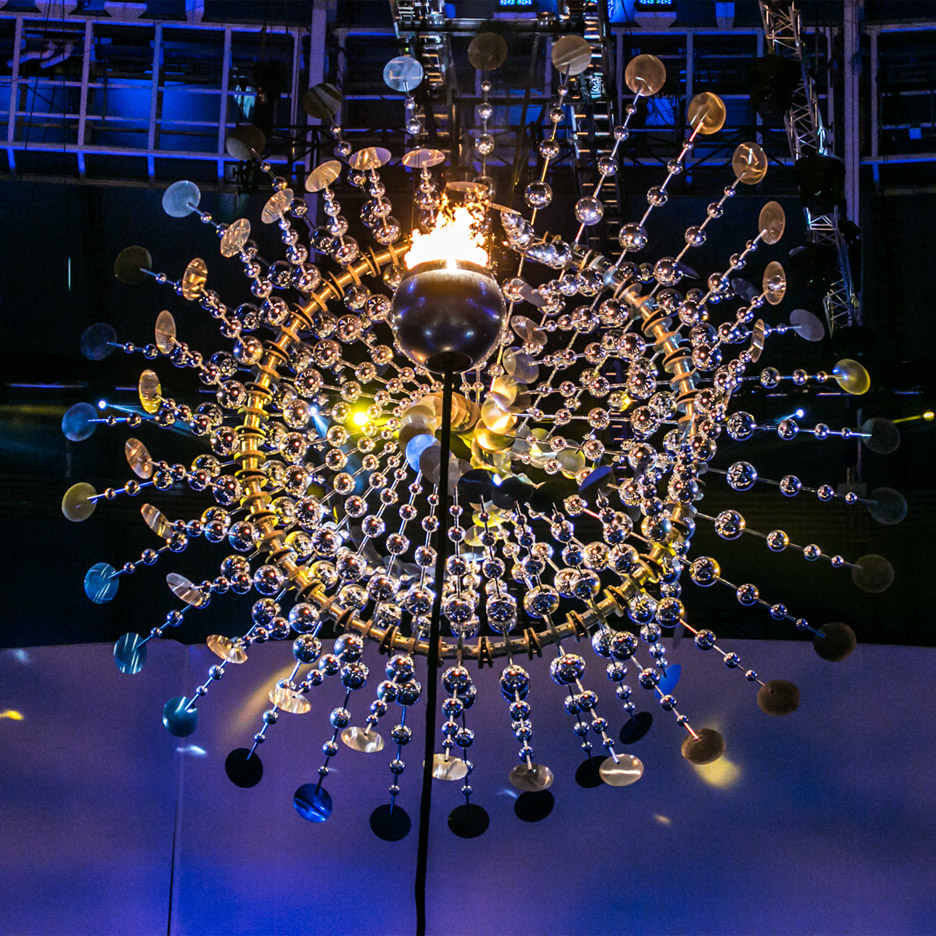
Diminutive Rio 2016 cauldron complemented by massive kinetic sculpture


Rio 2016: American artist Anthony Howe has designed a large kinetic sculpture to heighten the impact of the modest-sized cauldron during the opening ceremony of the 2016 Olympic games (+ movie). (more…)

http://ift.tt/2aVnGSB

My http://ift.tt/1XZ918K Fishing boats … Early morning by jayanta basu on 500px

from Instagram: http://ift.tt/2aHtMF4