Playful “Thailine” Provides Bangkok with Invaluable Green Space


Courtesy of Jon Sealy of Marques and Jordy

Courtesy of Jon Sealy of Marques and Jordy

Overpopulation, pollution, congestion and inflated land prices are putting an increasing amount of pressure on the urban functionality of Bangkok, Thailand. Renowned for its cultural vibrancy and constant activity, the city is struggling to keep up with the rapid pace of its sprawl. In order to ease the pressure and reinsert the public realm back into the metropolis, a new proposal transforms the spaces below major highways in the city into a public network dubbed “The Thailine.” 

Jon Sealy, the Global Design Director of London’s Marques and Jordy (M&J) spent three years interrogating the ways in which existing space in the metropolis could be repurposed to provide inhabitants with vital public space and amenity. Initially appearing as a playful intervention, the colorful project addresses a myriad of social, economic and ecological concerns. Envisioned as a pedestrian and cycle path which interlaces ecologically sustainable initiatives with lively public space, the project would see green areas within Bangkok increased by over 200%.


Courtesy of Jon Sealy of Marques and Jordy


Courtesy of Jon Sealy of Marques and Jordy


Courtesy of Jon Sealy of Marques and Jordy


Courtesy of Jon Sealy of Marques and Jordy

The design is driven by a constant consideration of ecological impact and the reduction of carbon footprint. The main issues identified by Jon Sealy include air quality, water usage, health and energy usage, and in response to each of these, sustainable elements are intertwined within the program of the Thailine. Waste treatment centers, health centers, private and residential zones are embedded within the design, and sustainable measures such as solar trees and gray water storage are integrated throughout.


Courtesy of Jon Sealy of Marques and Jordy

Courtesy of Jon Sealy of Marques and Jordy

Movement and circulation are addressed in a number of ways, with the main modes of transport along the Thailine being pedestrian, bicycle, and a new hybrid infrastructure of electric tuk-tuks. The water becomes a functional space when the existing “klongs” (canals) are cleaned and can once again become industrial networks. With the water acting as a stage for floating marketplaces and recreational activities, Bangkok can be reestablished as the “Venice of the East.” 


Courtesy of Jon Sealy of Marques and Jordy

Courtesy of Jon Sealy of Marques and Jordy

The Thailine was developed with Thai sensibilities in mind, taking a multifaceted approach to designing for the people of Bangkok. Cultural references are integrated throughout the project, both through the program and the formal outcomes. Temples find their place along the network, along with community centers, cafes, and local businesses. In accordance with the local method of working and designing, the project champions local craftsmanship and many elements require a specialist Thai approach. 


Courtesy of Jon Sealy of Marques and Jordy

Courtesy of Jon Sealy of Marques and Jordy

Jon explained in a press release, “It’s important that Thai values are enriched and embedded into the scheme. It’s really a development about Thai people and their communities. There is nearly a million square meters of space in these areas. We can develop this space for people.”


Courtesy of Jon Sealy of Marques and Jordy

Courtesy of Jon Sealy of Marques and Jordy

The proposal actively regenerates economic activity in areas which are currently unoccupied and in disrepair. The provision of clean and open public realm will not only allow users new places to socialize and undertake recreational activity, but also increase the value of the adjacent land. Moreover, the green space will provide local people with entire zones activated by small local businesses or market stall holders. 

News via Marques and Jordy.

http://ift.tt/2aEPO9m

House C / HHF


© Tom Bisig


© Tom Bisig


© Tom Bisig


© Tom Bisig

  • Architects: HHF
  • Location: Ziefen, Switzerland
  • Area: 668.0 sqm
  • Project Year: 2014
  • Photographs: Tom Bisig
  • Team: HERLACH HARTMANN FROMMENWILER with Markus Leixner
  • Client: Private
  • General Contractor: GGS AG Holzbau
  • Gross Floor Area: 205 m2
  • Site Area: 525 m2
  • Building Volume: 668 m3

© Tom Bisig

© Tom Bisig

From the architect. House C is a two-story low budget single-family house for a family of 5 in Ziefen, a village near Basel, Switzerland.

The cube and wooden construction can be described as a contemporary variation of a half-timbered farmhouse with a simple distributed standard sized wooden structure. The compact volume is based on a square, insulated partly with an attached layer of unheated spaces on two of its sides. These unheated spaces offer a large porch, a loggia, a wardrobe, boiler room and storage.


© Tom Bisig

© Tom Bisig

The simple plan is organized by a centrally located, load-bearing concrete staircase. The staircase divides the space into a more public and a more private area. The rough use of materials like wood and concrete and the consistent use of industrial materials adjusted to the project’s needs, enabled the reduction of construction costs so that the family could afford a custom made home instead of buying a prefab house out of a catalogue.


© Tom Bisig

© Tom Bisig

On the ground floor the simple floor plan is providing a large entrance and wardrobe in the non-insulated wrapping of the building. The core building provides an office space, the master bedroom with bathroom and a spacious bright living room including the kitchen area. The living and kitchen area is fully glazed with an openable glass front towards the large porch alongside the garden. The upper floor provides three smaller sized bedrooms for the children, a bathroom, larger open spaces on both sides of the staircase with open use, as well as a laundry. The large decked loggia is located in the attached layer oriented in westerly direction.


© Tom Bisig

© Tom Bisig

For economic reasons the house has only a foundation and no basement, something rather unusual for Swiss standards. The clients demand for favorable operating costs and high ecological standards is achieved with photovoltaic panels integrated in the roof and a geothermal exchanger. The small budget was met by a high use of prefabricated elements, and a contractor specialized in prefab houses.


© Tom Bisig

© Tom Bisig

http://ift.tt/2aUv1Ah

landerscape: Instant Karma by Bryan Swan on 500px.com…

landerscape:

Instant Karma by Bryan Swan on 500px.com http://ift.tt/1oWGGnQ

http://ift.tt/2ayG9Sg

A Contemporary Home Made From Regional Materials in Tigre, Buenos Aires

Frame by Vanguarda Architects (18)

Frame is a private home located in Tigre, Buenos Aires,Argentina. It was designed by Vanguarda Architects. Frame by Vanguarda Architects: “Projected as a permanent residence, this work has been placed on a rectangular lot with the backyard towards the inner lake of the gated neighborhood. It has been designed from the overlapping of volumes made of different regional materials which are emptied by forming the use and living spaces in..

More…

10 Ways To Handle A Betrayal

No matter which way you look at it, being betrayed is shitty. Plain and simple. Whether it be from a spouse, friend, colleague or even a family member, it hurts and we have a heck of a time getting over it or even understanding why it happened. We ask ourselves the million-dollar question what did I do to deserve this? Probably nothing. So how do we handle a betrayal?

Our first reaction, anger, is natural. All things you do after that, are your choices. We want to stay mad though. We don’t want this person to ever forget how much they hurt us. Sounds like a grudge to me. Do we really want to hold onto that?  That’s one way to handle a betrayal but probably not the most effective. Here are 10 other ways that may be easier on your heart.

Young couple sulking after conversation sitting on sofa

Young couple sulking after conversation sitting on sofa

1. Understand where it came from.

Is this the first time this person has done that? Are they going through something that perhaps no one understands and this is the only way they know how to deal with it? Consider the source. It may put things into perspective for you.

2. Did you deserve it?

Chances are, probably not, but could this be a payback for something you may have done to them in the past? Karma maybe? If this is the case, take it on the chin, own up to your wrongdoing from who knows how many years ago and move on.

3. Get mad.

Of course. Why wouldn’t you? Let out some steam. Don’t get in the car and drive while you are this mad or take it out on your friends or family either but maybe go in the forest and scream. Perhaps writing a truth letter and getting it all out. Let it all out.

4. Let’s talk about this.

Go right to the source and discuss it. They already know what they did was wrong and they surely know how you feel, or do they? Maybe your anger or hurt is bigger than they thought it would be. Sometimes people simply have no clue how others feel. Tell them.

5. Cry all you want.

Don’t hold your tears in. Crying is a wonderful way to detox the soul, clean out the toxins if you will. Get all those tears out and when you think you can’t cry anymore, cry some more.

6. Dump them.

If this has become a pattern for this person, this betrayal, then it could be time to get rid of them. Obviously if it’s your partner you want to hang on to the relationship but at what cost? Being continuously betrayed is not healthy for anyone.

7. Call a friend.

Some of us can’t deal with these things on our own. If that’s you, call your friend, or whoever you trust to talk to about it. Get someone else’s viewpoint on it or maybe you just need a shoulder to cry on.

8. Prevent it from happening again.

That goes part in parcel with #6 but if it’s not so easy to dump this person, take measures to ensure it doesn’t happen again. If they borrowed money and haven’t paid it back, don’t lend them money again. Small example but you get the point.

9. Thinking clearly.

When we are angry our minds are clouded with hate and evil thoughts. Don’t act immediately. Take a day or a week if you have to before you respond or react to this act of betrayal. Take time to think it through clearly before you lash out. Some things can be prevented with a clear mind.

10. Accept it for what it is.

And move on. I know, easier said than done but sometimes things happen that we have absolutely no control over. If this is a recurring habit from this person, know that you can’t change or fix it and move on. There’s little to nothing you can do. Remember, hurt people hurt people.

The post 10 Ways To Handle A Betrayal appeared first on Change your thoughts.

http://ift.tt/2aUj11y

Abandoned Route 66 by AlanMarlowe Petrified Forest National…

via Statues in Focus http://ift.tt/2aO2bkD

Google’s King Kross HQ / AHMM


© Timothy Soar

© Timothy Soar


© Timothy Soar


© Timothy Soar


© Timothy Soar


© Timothy Soar

  • Architects: AHMM
  • Location: 6 Pancras Square, 6 King’s Blvd, Kings Cross, London N1C 4AG, United Kingdom
  • Area: 371000.0 ft2
  • Project Year: 2016
  • Photographs: Timothy Soar

© Timothy Soar

© Timothy Soar

Google has started the first phase of its move to 6 Pancras Square, King’s Cross which will be home to its ever-growing engineering teams.


© Timothy Soar

© Timothy Soar

The office, with interiors designed by AHMM, will see more than 1000 staff helping build and run some of Google’s core products including Android, Google Play, Search and Advertising. Since the opening of Google’s first international engineering office in London more than 10 years ago, Google has continued to invest in developing and hiring engineering talent in the UK.


© Timothy Soar

© Timothy Soar

Around 800 engineers will move in during the first phase (164,000 square feet) and there will be a total capacity of 2,500 after the second phase is complete later this year (occupying a total of 371,000 square feet). 


© Timothy Soar

© Timothy Soar

Google’s new office has been built with sustainability and healthy materials in mind. The project engaged a carbon consultant to drive down the carbon footprint, resulting in an overall saving of 2,100 tonnes of CO2 emissions, enough carbon to power 900 return flights from London to Hong Kong.


© Timothy Soar

© Timothy Soar

© Timothy Soar

© Timothy Soar

http://ift.tt/2bds6mx

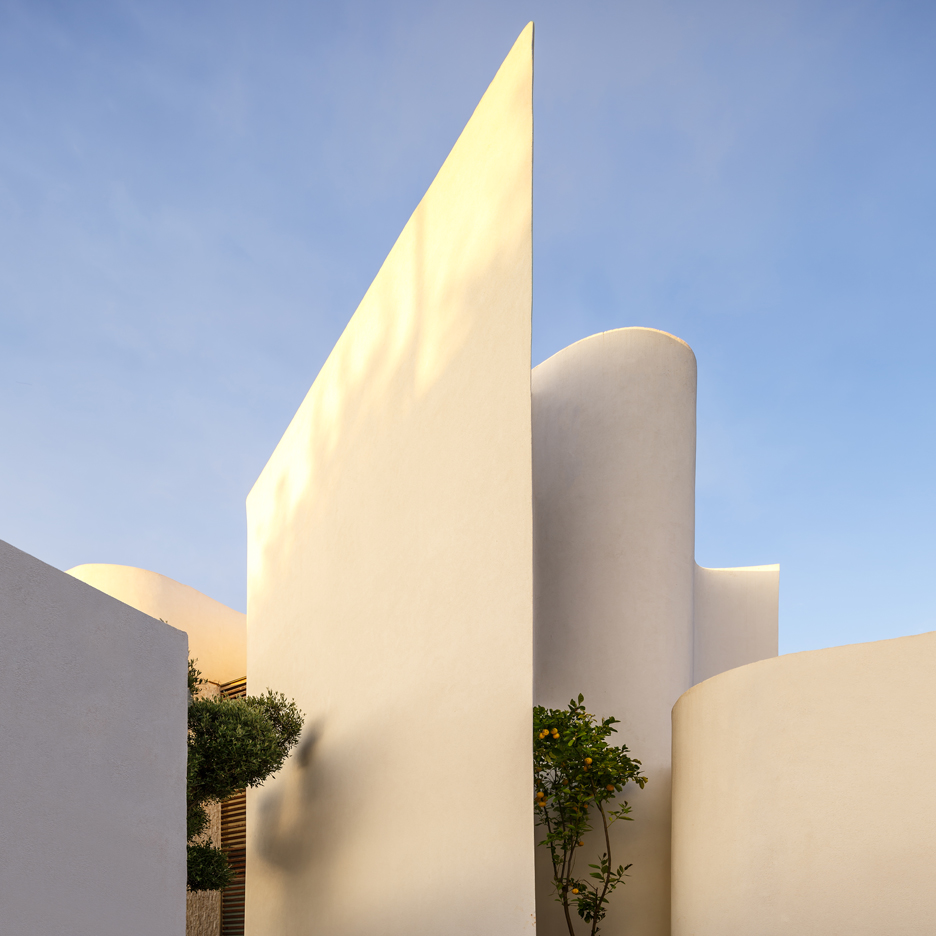
Mohamed Amine Siana combines flat planes and wavy walls at Villa Z in Casablanca


Architect Mohamed Amine Siana has completed a house in Casablanca, featuring a sculptural exterior intended as a contemporary update of the Modernist architecture found across the Moroccan city (+ slideshow). (more…)

http://ift.tt/2aNNRbA

Diego Guayasamin Arquitectos Design a Stunning Contemporary Home in Cumbayá

Cottage Restoration / Studio Contini


Courtesy of Studio Contini

Courtesy of Studio Contini


Courtesy of Studio Contini


Courtesy of Studio Contini


Courtesy of Studio Contini


Courtesy of Studio Contini

  • Architects: Studio Contini
  • Location: Località Agna, 43021 Agna PR, Italy
  • Architect In Charge: Marco Contini
  • Collaborators: Sara Chiari, Matteo Zaccarelli
  • Area: 68.0 sqm
  • Project Year: 2015
  • Photographs: Courtesy of Studio Contini
  • Structure: Ing. Simone Leoni
  • Photovoltaic System: Aleo
  • Mechanical Systems: CD Studio
  • Contracting Companies: Impresa edile Barbieri Danilo; Aleo solar

Courtesy of Studio Contini

Courtesy of Studio Contini

This construction is located in Tufi d’Agna, a small settlement in the mountain town of Corniglio, inside of the Tuscan-Emilian Appenine recently recognized by the UNESCO as a MAB (Man and the Biosphere Programme) reserve.


Courtesy of Studio Contini

Courtesy of Studio Contini

The small building, a farm building once used to shelter the shepherds and animals, was recovered as a refuge where the residential use, considering the remote location and the difficulties to achieve it, is sporadic and linked to the summer period. 


Plan

Plan

Plan

Plan

This condition, together with the availability of spring water and undergrowth wood, led to choices that sustainability goals are achieved while maintaining and restoring the original character of the building before the work was in a state of severe degradation especially for the wooden parts of the cover subject to leaching and the precarious conditions of the mantle, and using recovery techniques traditional integrated with the sun and the necessary technological components, in order to maintain appearance of simple construction rural placed on the lawn. In this view of maintaining the historical witness, the perimeter walls of stone have been recovered and consolidated without using isolations.


Courtesy of Studio Contini

Courtesy of Studio Contini

Courtesy of Studio Contini

Courtesy of Studio Contini

The building is completely made independent in terms of energy through the placement of a photovoltaic system consisting of 12 panels of 290W placed on the cover of the wooden portico and connected to 8 gel storage batteries of 3kW each one.

The produced electricity is used for lighting, induction plates, water heating and operation of electric radiators for heating, supplemented by a wood stove with a power of 6.5 kW.


Section

Section

Section

Section

The water supply for the health needs is secured by a pool of storage fed by a spring located in proximity of the building. The waste disposal system of sewage takes place through a phytopurification system.


Courtesy of Studio Contini

Courtesy of Studio Contini

http://ift.tt/2b6hBW8