faded glory by silent witnesses abandoned/vergane glorie…

via Abandonedforgotten http://ift.tt/2cmUc3r

Interlaced Folding / HG-Architecture + UIA architectural firm


© Kyungsub Shin

© Kyungsub Shin


© Kyungsub Shin


© Kyungsub Shin


© Kyungsub Shin


© Kyungsub Shin

  • Construction : Jinso Construction
  • Structure Engineering : Thekujo
  • Mechanical/Electric Engineering : YouSung Engineering
  • Site Area : 990 sqm
  • Client : Jeonggil Choi

© Kyungsub Shin

© Kyungsub Shin

From the architect. The site of Hotel Doban is located in the middle of the village, Byeonsan-ri, deeply in Baekbyonbong Mountain looking down the South Han River and the downtown of Yangpyeong. All sides around the terraced landscape, which are surrounded by the ridge led from Baekbyonbong, enclose a quiet retreat like a folding screen. The end of the ridge and the earth of the terraced slope open far toward the South Han River and Yangpyeong city, such as standing on the mountain observatory, to provide a resting place overlooking the complicated everyday lives.


Diagram

Diagram

Terraced Landscape

The earth around the site is a terraced landform by the height of 5~6m as a newly developing area. In order to strengthen the sense of overlooking platform and minimize the loss of natural terrain using the existing landform, the terraced landscape was planned. The terraced floor inside the building, following from the flow of surrounding landscape, differentiates functional space through different heights and depths in a single independent space without walls. 


© Kyungsub Shin

© Kyungsub Shin

Unfolded Spaces

The group of units is unfolded geometrically sliding down the slope. As a result, it provides guests with a totally individual space which has a different view and space independently for each unit. The individual unit functions as a view frame for independent activities open to the outside, and have a private external Jacuzzi space open to the sky in between units. The assemblage of units was delicately designed to create a separate axis without any focal points while mixed into one building.


© Kyungsub Shin

© Kyungsub Shin

Floor Plan

Floor Plan

© Kyungsub Shin

© Kyungsub Shin

Continuous Roofscape

The roofscape, like a ridge around the site, is surrounding units with successive lines. The continuous roof surfaces maximize the effects of continuity through repetition, by interlacing the flow of roof enclosing the individual units. The individual units compose the whole together, which creates a unique appearance inspiring the rocky mountain behind the site. The building form can be seen easily at a distance from the entrance of Byeongsan-ri valley, which was intended to be a landmark of this area.


© Kyungsub Shin

© Kyungsub Shin

http://ift.tt/2c3xbhv

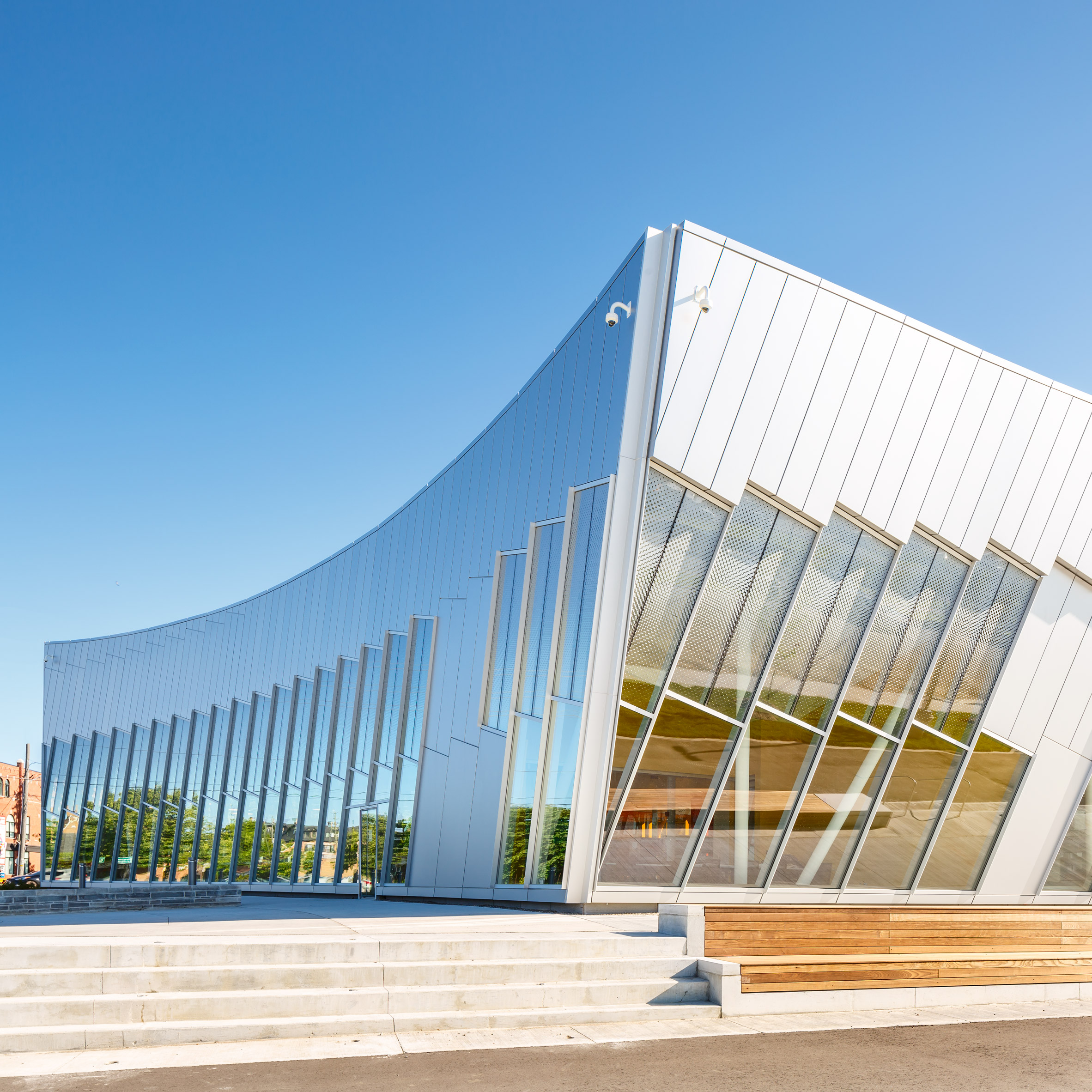
ZAS creates Toronto library with curved walls and slanted windows


Canadian firm ZAS has completed a glass and aluminium-clad public library in suburban Toronto, which has sculptural form influenced by a local rollercoaster (+ slideshow). (more…)

http://ift.tt/2bVpn3V

Washington Statephoto via lacey

Washington State

photo via lacey

Zaha Hadid’s 2007 Serpentine Pavilion Re-Erected at Chatsworth House


Lilas, Zaha Hadid Architects’ design for the 2007 Serpentine Gallery pavilion, has be reinstalled at a new location on the south lawn of Chatsworth House, the Derbyshire home of the Duke and Duchess of Devonshire. The mushroom-like pavilion has been put on display as part of Sotheby’s annual Beyond Limits sculpture exhibition, and is for sale through the international auction house.

Already having designed the inaugural Serpentine Gallery Pavilion in 2003, for the 2007 edition, Zaha Hadid Architects designed Lilas after rising steel prices delayed the construction of the proposed design from Olafur Eliasson and Kjetil Thorsen.

A photo posted by Owen Nuttall (@owencn_95) on Aug 27, 2016 at 7:20am PDT

//platform.instagram.com/en_US/embeds.js

Former Serpentine director Julia Peyton-Jones, the mastermind behind the Serpentine Pavilion program, remembered feeling relief after Hadid offered to step in.

“It was one of those little miracles,” she said. “It was uncomfortable to be in the position of not having a pavilion on time that year – [but] stuff happens and it is how you deal with it that is the major issue. As a result we had this gorgeous project that was unexpected and it was an absolute little gem… so typical in its simplicity and so relevant to her work.”

A photo posted by 岳晴 써니 (@qinggegeks) on Aug 26, 2016 at 3:01pm PDT

//platform.instagram.com/en_US/embeds.js

Now re-erected at Chatsworth House, the pavilion can be appreciated in a new light through the contrast with its traditional surroundings, a juxtaposition of styles Sotheby’s curator Simon Stock says “complement in a way the pyramid does at the Louvre.”

A photo posted by Calvin Po (@calvinpo) on Aug 29, 2016 at 11:24am PDT

//platform.instagram.com/en_US/embeds.js

A cost for the structure has not been released, but it is expected to fetch upwards of £500,000, the amount reportedly exchanged for Sou Fujimoto’s 2013 pavilion.

News via The Guardian.

A photo posted by Faaria (@faariagram) on Aug 25, 2016 at 3:42am PDT

//platform.instagram.com/en_US/embeds.js

Round-Up: The Serpentine Pavilion Through the Years
//cdn.embedly.com/widgets/platform.js

http://ift.tt/2bzko54

The Nix

Nix Cover Crop

Did the thing, person, or idea you most believed in let you down? Has virtual reality begun to seem more meaningful to you than the life you are leading? If so, have you thought about trying to sort out those issues — perhaps after you’ve reached the next level in World of Warcraft and swiped through one more round of Candy Crush? Or are you too distracted by the presidential election and your woeful personal finances to hold a thought, much less make a plan? Welcome to the human condition, in the United States of America, circa now.

Not since the 1996 and 1997 double-header of John Updike’s In the Beauty of the Lilies and Philip Roth’s American Pastoral has a novel emerged that presents a more comprehensive and perceptive portrait of the personal and political American psyche than Nathan Hill’s wise, rueful, and scathingly funny début, The Nix. The book is set largely in 2011, as a demoralized midwestern college professor named Samuel Anderson — who wastes upward of forty hours a week slaying dragons and orcs on the MMORGP (massively multiplayer online role-playing game) World of Elfquest — must confront three real-world crises at once. A vacuous slacker student wants to get him fired; his editor has told him that if he doesn’t deliver the novel he was paid to write a decade ago he will be sued (“Declare bankruptcy, move to Jakarta” the editor coldly advises); and, most unsettling of all, Samuel’s mother, Faye, who vanished from his life two decades prior, has reappeared at the eye of a media hurricane, branded a homegrown terrorist.

A month before Faye quit the family in 1988, she had warned Samuel about an ominous sprite she had learned of from her dour Norwegian father. That sprite, the Nix, is an alluring creature that “usually appears as a person” and bewitches young people, whom it carries off to their doom. The moral of the Nix myth, according to Faye, is: “The things you love the most will one day hurt you the worst.” Thanks, Mom. Twenty years on, Samuel has no idea of the history his mother carried with her before he was born. But, in the manner of another grim Norse myth Faye shared with him, the “drowning stone,” a fragment of his mother’s past had weighed her down until she succumbed to its force and disappeared. Slowly, her buried history emerges, as the novel dips back into the 1980s, to Samuel’s bereft middle school years, when he became friends with a tough, charismatic kid named Bishop and fell in love with Bishop’s beautiful violin prodigy sister, Bethany; and from there, back to the 1960s. Like a long-exposure photograph, The Nix slowly brings out psychic landmarks that have remained on the national landscape for half a century, asserting their uneroded presence through the blur of change.

The skyscraper among these landmarks — which include the civil rights and women’s liberation movements, the Vietnam war, the rise of electronic media, and the precariousness of the middle class — is the turbulent 1968 Democratic National Convention in Chicago. At that convention, Walter Cronkite (who appears as a character in Hill’s novel) was so incensed by the violence against citizen protestors that he said on national news, “The Democratic convention is about to begin in a police state.” Seeing a security officer slug his colleague Dan Rather on the convention floor, Cronkite indignantly exclaimed that the Chicago police were “a bunch of thugs.”

To mollify irate viewers and his bosses, Cronkite had to atone for those remarks by giving a softball interview with “cream-puff questions” to Mayor Richard J. Daley, who supported the cops and abhorred the radicals — as did much of the American public. Cronkite (with an assist from Hill’s imagination) reflects, “It turns out that for every poor kid shown getting his head drubbed by a nightstick, CBS gets ten phone calls in support of whoever held the stick.” The protest is a drop of water in a bucket, the protest movement is that bucket; “Drop that bucket into Lake Michigan: that’s Reality,” he thinks. Samuel’s “quiet and guarded” mother turns out to have been one molecule within that drop, one of the thousands of young people who were attacked in Chicago by cops with billy clubs and tear gas, as the whole world watched. Her parents and relatives were among the watchers who applauded the attackers.

But Hill does not lead with the events of 1968; he begins long after its smolder might be thought to have winkled out, in 2011, with a tiny eruption of the radical protest spirit. A white-haired Chicago schoolteacher in her sixties has been caught on camera flinging a handful of gravel toward a pro-gun, anti-abortion, anti-immigrant Republican governor (and putative presidential candidate) named Sheldon Packer, as he strolled through Grant Park with his entourage on a “glad-handing, baby-kissing” campaign appearance. Sensationalist copywriters instantly flood media screens with the alarming flag: “TERROR IN CHICAGO” and produce the headline “RADICAL HIPPIE PROSTITUTE TEACHER BLINDS GOV. PACKER IN VICIOUS ATTACK!” During a tense meeting with his editor, Samuel catches this clip on an airport TV, endlessly replaying. Looking up at the screen at the “Packer Attacker,” he recognizes his vanished mother. Soon, a photo from the August 1968 Chicago riots will emerge, his mother front and center. Was his mother a radical hippie? A prostitute?

With the help of an “epic” fellow World of Elfquest player known as Pwnage — a morbidly addicted gamer who subsists off frozen meals from 7-Eleven and prefers Elfquest’s digital snowy mountains to the “real places in his life” — Samuel begins to put together the pieces of mother’s past. If he can reconstruct the puzzle of who she was, Samuel might finally get the closure he needs to forge an authentic life outside of Elfquest (and see what his childhood crush, Bethany, is up to). In the meantime, how can he keep his mother out of prison, now that the media’s 24/7 real-life MMORPG has cast her as an arch-villain more fearsome than any orc? Hill pulls all of these players, these decades, these personalities into an organically unfolding saga that, in its unpretentious, empathetic narration, recalls the voice of John Irving — as in The World According to Garp or The Cider House Rules.

There could be no better moment for a politically concerned American to read The Nix than during this election year. To achieve peak irony, actually, the novel ought to have appeared in time for the recent presidential conventions, since the sustained firepower at its core comes from that other convention, twelve elections ago, where the clash between police and citizenry, and between conservative and progressive Americans, erupted with more fury than it had since the Civil War. Still, as Hill shows in this book, time is more fluid now than ever before, as cameras, screens, digital manipulation, and the Internet have erased the stamp of time, removing the primacy of the “now.”

When he was young, Samuel lost himself in the pages of the Choose Your Own Adventure stories. The Nix liberates him by pushing him to a more exhilarating and arduous task: claiming, and choosing, his actual reality.

The Barnes & Noble Review http://ift.tt/2bMKV4c

Forest Lodge / PAD studio


© Nigel Rigden

© Nigel Rigden


© Nigel Rigden


© Nigel Rigden


© Nigel Rigden


© Nigel Rigden

  • Other Participants: Eco Modular Living

© Nigel Rigden

© Nigel Rigden

Forest Lodge is a new home with a difference. This is a mobile dwelling built to comply with the Caravan Act 1968 which restricted both the construction and size of the dwelling.


© Nigel Rigden

© Nigel Rigden

The clients, who had been living in a static caravan for 15 years on their stunning five acre property in the New Forest National Park, approached local Award Winning practice PAD studio in 2009. A key requirement of their brief was to create a new, very low energy dwelling, flooded with light and with a strong connection to the surrounding landscape: Importantly, the new dwelling should not resemble or feel like a mobile home. PAD studio spent considerable time researching the mobile home market and familiarising themselves with the nuances of constraining legal requirements.


© Nigel Rigden

© Nigel Rigden

Plan 1

Plan 1

© Nigel Rigden

© Nigel Rigden

PAD studio’s approach to design is deeply rooted in place and they spend time visiting the site at different times of the day to experience the light, views and surroundings. This particular site, located at the edge of a clearing in the heart of the New Forest is accessed from a long gravel track that slowly revealed views of the existing property. This journey through the landscape became a generating idea for the new home which continues the route, inviting nature into the home through carefully placed window openings. These large apertures focus and frame the stunning views, displaying them internally as if paintings on large canvases.


© Nigel Rigden

© Nigel Rigden

Approaching from the East, the house is glimpsed and slowly revealed through mature trees. The trees verticality and the texture of their bark are echoed in a variety of timber treatments used on the homes cladding. Vertical panels of dark stained sweet chestnut provide a rhythm to counterpoint unstained horizontal chestnut cladding that wraps and unifies the whole. By utilizing a gradual level change across the site, the architects have allowed the northern end of the home to float above the landscape, resting and projecting dynamically over a limestone plinth. The western wall of the property is almost completely glazed affording a feeling of light and spaciousness and opens onto a large terrace and lawn beyond.


© Nigel Rigden

© Nigel Rigden

Internally, the material pallet is restrained and natural with oak, limestone and white panelled walls. This deliberately muted array of materials provides a backdrop which is painted by the forest’s changing light and rendered by the colour of the landscape beyond the building. Architect designed locally crafted bespoke joinery, thoughtful details and connection with the landscape give this home a feeling of solidity, serenity and permanence; far removed from the client’s previous home.


© Nigel Rigden

© Nigel Rigden

PAD studio has exceeded the client’s aspiration for a low energy house by designing this building to meet the rigorous Passivhaus standard. The home is essentially a self-sufficient dwelling with a 3.8kW Photovoltaic array on the roof to generate electricity and air source heat pump to provide hot water for an under floor heating system. A sewage treatment plant manages waste and rainwater is collected in an underground storage tank and used to water new landscaping surrounding the house that was also designed by PAD studio. It is difficult to imagine that this ‘mobile home’ was prefabricated, built away from site and craned into position in two separate pieces. Forest Lodge is an excellent example of what can be achieved through imagination, innovation and careful consideration.


© Nigel Rigden

© Nigel Rigden

http://ift.tt/2bMDPZ1

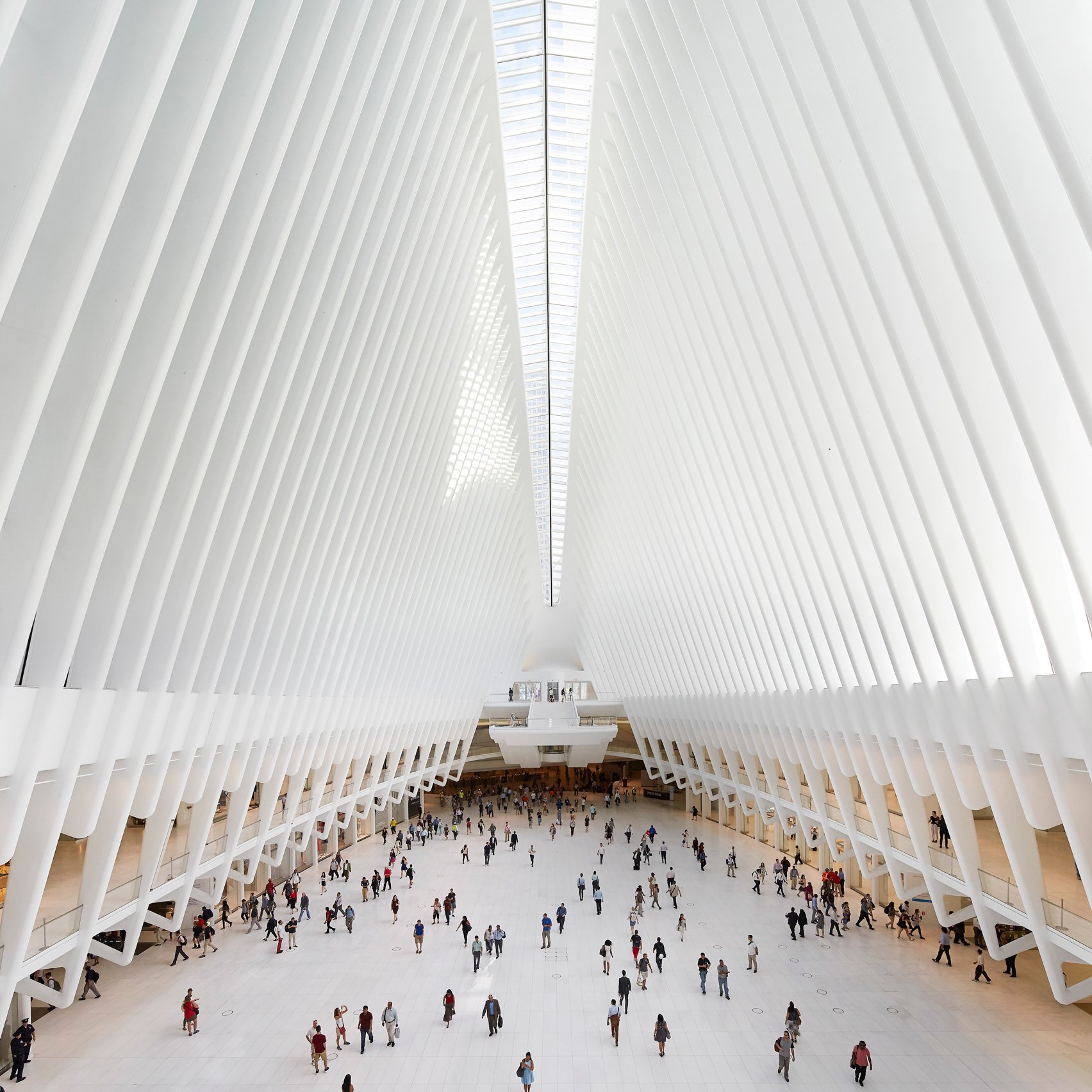
Calatrava’s Oculus at the World Trade Center photographed by Hufton + Crow


Spanish architect Santiago Calatrava‘s vast ribbed structure that soars over the World Trade Center Transportation Hub in New York is captured in these images by British photography duo Hufton + Crow (+ slideshow). (more…)

http://ift.tt/2bV6DSr

Thailand’s Tallest Building, Designed by Büro Ole Scheeren, Opens with Light Show


Thailand’s new tallest building, MahaNakhon, has opened to the public with a spectacular light show highlighting the pixelated-design of the 314 meter tall building. Designed by Büro Ole Scheeren, the 77-story mixed-use skyscraper contains space for a hotel, retail, bars, restaurants and an observation deck, as well as 200 condominium units managed by Ritz-Carlton Residences with unparalleled views out onto the Bangkok skyline and beyond. The building’s distinct appearance is created through carving a pixelated spiral up the building, creating “an architecture that encloses and protects its inhabitants while revealing the inner life of their city.”

Continue for more images of the completed building.


© Flickr user drburtoni. Licensed under CC BY-NC-ND 2.0.

© Flickr user drburtoni. Licensed under CC BY-NC-ND 2.0.

//platform.instagram.com/en_US/embeds.js

//platform.instagram.com/en_US/embeds.js

//platform.instagram.com/en_US/embeds.js

//platform.instagram.com/en_US/embeds.js

A photo posted by Prapong Sooksawat (@prapongs) on Aug 29, 2016 at 9:21am PDT

//platform.instagram.com/en_US/embeds.js

A photo posted by OAKXIE 💋 (@oakxie_jc) on Aug 29, 2016 at 9:11am PDT

//platform.instagram.com/en_US/embeds.js

A photo posted by AtommotA (@motaatom) on Aug 29, 2016 at 8:49am PDT

//platform.instagram.com/en_US/embeds.js

A photo posted by Lookmoo (@littlenotover) on Aug 29, 2016 at 8:45am PDT

//platform.instagram.com/en_US/embeds.js

Now Thailand’s tallest tower, MahaNakhon’s reign may not last long, as a much taller structure, the 615 meter tall Super Tower, is planned to feature on Bangkok’s skyline in 2019.

//platform.twitter.com/widgets.js

Renderings and more information on the design can be found here.

News via Bangkok Post.

http://ift.tt/2bv3zhw

Skógafoss (1) by Matrok L’impressionnante chute d’eau de…

Skógafoss (1) by Matrok L’impressionnante chute d’eau de Skógafoss, près de Skógar, au sud de l’Islande. http://flic.kr/p/asvgaF

http://ift.tt/2bwWzja