Clark Nexsen Wins Activate Urban Housing Design Competition With a Food-centered Vision


Courtesy of Clark Nexsen

Courtesy of Clark Nexsen

Clark Nexsen has won the international Activate Urban Housing Design Competition with its proposal for an urban dwelling on South Mint Street in downtown Charlotte, North Carolina. The design, entitled Mint, focuses on connectivity and neighborhood and includes residential, retail, and open green spaces. 

Conceived as a catalyst for a culinary district, Mint aims to create a new urban living and working space, in which the connectivity of food-centered entrepreneurial enterprises fosters a sense of community.


Courtesy of Clark Nexsen

Courtesy of Clark Nexsen

Courtesy of Clark Nexsen

Courtesy of Clark Nexsen

Conceptually, we found a culinary incubator an interesting way to tie the residential with the retail and on a macro scale tie the development in with the bigger picture in Charlotte,” said Clark Nexsen architect, Albert McDonald. “We started to make connections between Johnson & Wales, a culinary school in Charlotte, tapping into new restaurants, bars, and breweries popping up in the local area. We started making connections to downtown Charlotte and the Carolina Panthers Stadium and started to think this could be a really good place for people to hang out before going downtown for games, as one example.


Courtesy of Clark Nexsen

Courtesy of Clark Nexsen

Courtesy of Clark Nexsen

Courtesy of Clark Nexsen

The site design additionally focuses on green space, incorporating a co-op garden for residents in partnership with test kitchens and on-site restaurants, as well as green pedestrian paths between residential and shared spaces.


Courtesy of Clark Nexsen

Courtesy of Clark Nexsen

Courtesy of Clark Nexsen

Courtesy of Clark Nexsen

Furthermore, a plaza will accommodate live entertainment and market or food trucks on Saturdays.


Courtesy of Clark Nexsen

Courtesy of Clark Nexsen

Courtesy of Clark Nexsen

Courtesy of Clark Nexsen

Learn more about the project here.

News via Clark Nexsen

http://ift.tt/2bUFk7W

Mountainside platform by Code Arkitektur creates three vertiginous viewpoints


This triangular viewing platform perched on the edge of a mountain was created by Norwegian studio Code Arkitektur as a rest stop for one of the country’s picturesque tourist trails (+ slideshow). (more…)

http://ift.tt/2bkT0YM

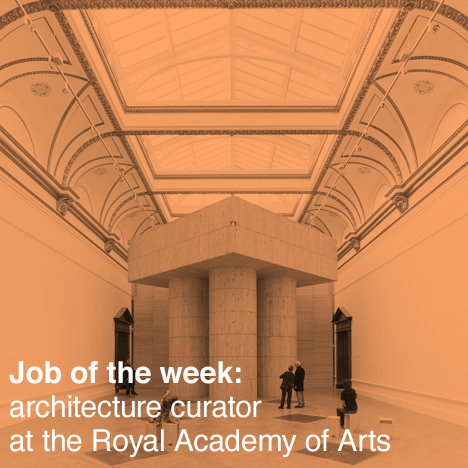
Job of the week: architecture curator at the Royal Academy of Arts

💙 Golden Reflections on 500px by Oliver Simic,…

💙 Golden Reflections on 500px by Oliver Simic, Vetlanda☀  PENTAX… http://ift.tt/1S5FIjg

http://ift.tt/2ce5yXD

6 Ways How Twentysomethings Can Start to Save

//pagead2.googlesyndication.com/pagead/js/adsbygoogle.js

(adsbygoogle = window.adsbygoogle || []).push({});

Most retirement advice for young people boils down to this: Start saving, and do it right now.

Unfortunately, the urgency of that message gets lost on far too many youths, too caught up in the prime of their lives to worry about the future.

But with Social Security vanishing and automation primed to replace many jobs, retiring is going to get increasingly difficult for each generation. If millennials and the generations that follow want to live comfortably in their golden years, they need to embrace the importance of an early start.

It’s not just a matter of stashing cash. Follow these simple tips for a rundown on everything you need to know on how to start saving for retirement.

//pagead2.googlesyndication.com/pagead/js/adsbygoogle.js

(adsbygoogle = window.adsbygoogle || []).push({});

Why Start in Your 20s?

retirement plan

//c.amazon-adsystem.com/aax2/getads.js

//<![CDATA[
aax_getad_mpb({
"slot_uuid":"16dcbcd0-2124-4a85-9abe-c263dd9084e5"
});
//]]>

Even though people in their 20s are likely earning less right now, they’re still in the best possible position to start saving for retirement. Creating a solid nest egg is less about how much you can save; it’s when you start to save.

The power of time and compound interest is what gives twenty-somethings the advantage when it comes to saving for retirement. This is when interest is added onto a principal sum and then that new amount builds interest, leading to more significant growth over time.

For example, $50 put away every month for 45 years at age 20 at 7 percent interest compounded annually will yield $172,499.71. Even though you only physically saved $27,000 over those 45 years, you earned $145,500 in compound interest.

//pagead2.googlesyndication.com/pagead/js/adsbygoogle.js

(adsbygoogle = window.adsbygoogle || []).push({});

See Also: How to Make Saving as Exciting as Spending

If you wait 10 years to start saving for retirement, you’ll have to contribute $103.50 monthly to receive the same sum at age 65. That’s more than double of what you had to save if you started earlier. You can do the math on compound interest using this calculator available from the U.S. Securities and Exchange Commission.

//pagead2.googlesyndication.com/pagead/js/adsbygoogle.js

(adsbygoogle = window.adsbygoogle || []).push({});

How Twenty-somethings Can Start Saving

retirement planning

Make it automatic. Make your contributions automatic, whether you choose to save for retirement through an employer-based program (like a 401k or 403b) or your own IRA. Set up automatic transfers from your paycheck or checking account into your retirement account to remove any temptation to spend that money.

Contribute enough to get an employer’s match. Many companies that offer workplace-related retirement programs also offer a matching program. For every dollar that you contribute to your retirement, they will put in a certain percentage. For example, if you put in 6 percent of your salary, they may add in 50 percent of that 6 percent for a total of 9 percent of your income going toward retirement.

Put all raises toward retirement. One way to increase how much you save is to put all salary raises into your retirement account. Every time you get a raise or promotion, you should increase how much you put toward retirement and not upgrade your lifestyle. This approach can also be used for windfalls, like tax returns and inheritance.

Aim to save 10-15 percent of your salary. Most experts recommend saving between 10-15 percent of your salary toward retirement in order to have a comparable lifestyle in your golden years. You may be willing to downsize in retirement, but starting in this range will give you a head start in case you hit an unexpected financial speed bump.

Start slow. It’s OK if you can only afford to save $50 a month right now. Remember, the power of compound interest will turn that $50 into a much greater figure later on. Don’t be so discouraged about your inability to put 10 percent of your salary away that you don’t save anything at all—a trap that far too many young people fall into.

//pagead2.googlesyndication.com/pagead/js/adsbygoogle.js

(adsbygoogle = window.adsbygoogle || []).push({});

Open a Roth IRA or 401k. There are two types of retirement accounts you can open: Roth or traditional. If you open a traditional IRA or 401k, you’ll be able to claim contributions on your taxes, but will have to pay taxes when you take out the money later on. Those opening retirement accounts in their 20s are better off using Roth accounts. You won’t receive any tax benefits now, but you’ll be able to withdraw that money tax-free when you need it.

See Also: Are Men Or Women More Successful At Saving For Retirement?

Delay Social Security. It’s important to delay receiving Social Security benefits until age 70. You’ll receive an extra 8 percent in yearly benefits for every year beyond the full retirement age you wait to get Social Security. That’s free money you get just for waiting.


//pagead2.googlesyndication.com/pagead/js/adsbygoogle.js

(adsbygoogle = window.adsbygoogle || []).push({});

(function(d) {
var params =
{
id: “cb4f919c-04fa-460c-b2ff-2c7f9ecf4472”,
d: “ZHVtYmxpdHRsZW1hbi5jb20=”,
wid: “165294”,
cb: (new Date()).getTime()
};

var qs=[];
for(var key in params) qs.push(key+’=’+encodeURIComponent(params[key]));
var s = d.createElement(‘script’);s.type=’text/javascript’;s.async=true;
var p = ‘https:’ == document.location.protocol ? ‘https’ : ‘http’;
s.src = p + “://api.content.ad/Scripts/widget2.aspx?” + qs.join(‘&’);
d.getElementById(“contentad165294”).appendChild(s);
})(document);

The post 6 Ways How Twentysomethings Can Start to Save appeared first on Dumb Little Man.

http://ift.tt/2bLsdZe


Catalina Patiño & Viviana Peña Work Together to Create a Home in the Valley of San Nicolas

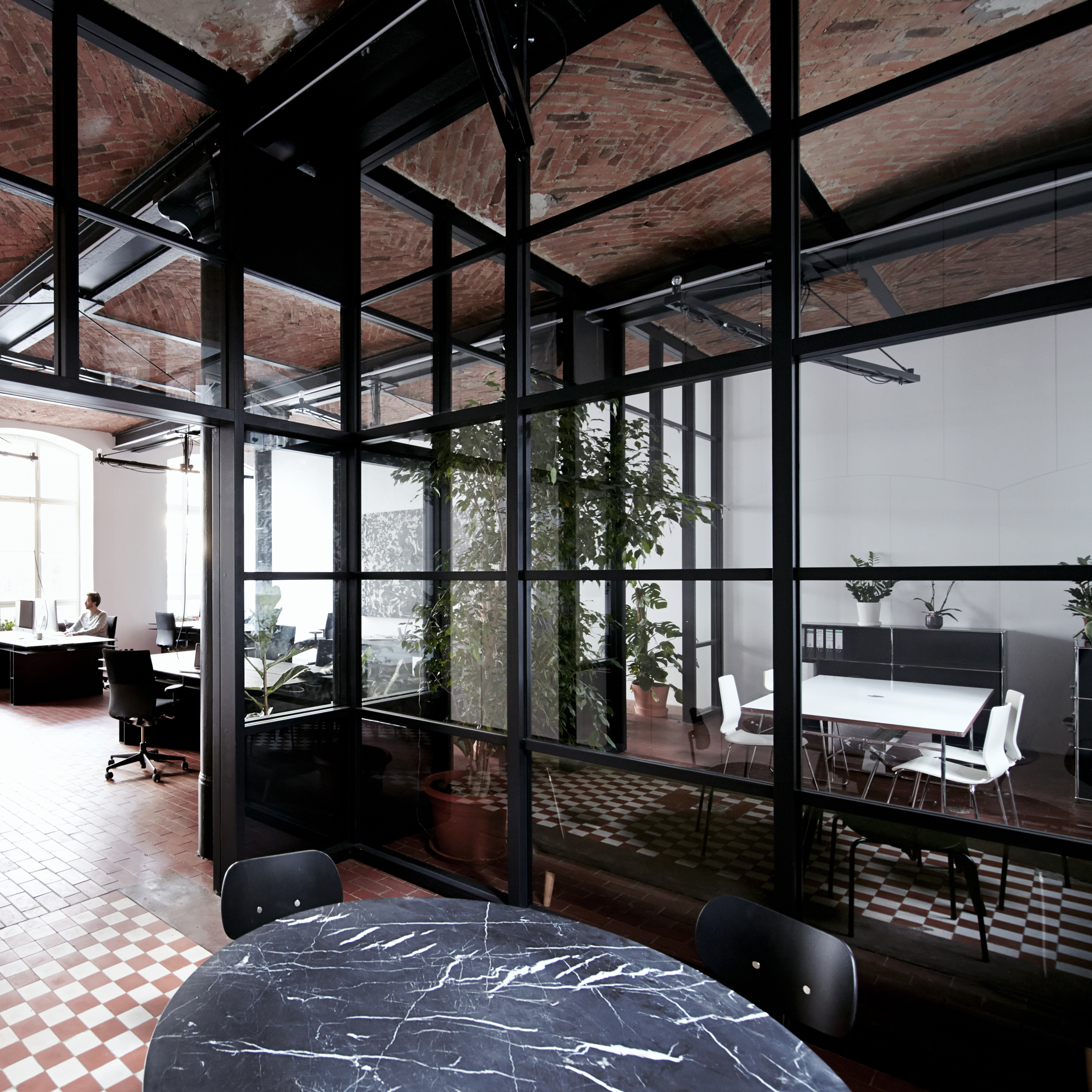
IFUB transforms former chocolate factory into office with secret storage


Munich architecture firm IFUB has converted the ground floor of a Berlin factory into an open-plan office with a wall of hidden cupboards and rooms (+ slideshow). (more…)

http://ift.tt/2bnHoIP

Norell/Rohde Propose a Lively and Colorful Volumetric Composition for the Skellefteå Kulturhus


Courtesy of Norell/Rodhe

Courtesy of Norell/Rodhe

The Skellefteå Kulturhus competition provided a critical opportunity to shape the cultural landscape of Skellefteå in northern Sweden, and the brief elicited a range of exciting responses. Stockholm-based architecture studio Norell/Rodhe have now unveiled their entry, titled “Supergroup.” 


Courtesy of Norell/Rodhe


Courtesy of Norell/Rodhe


Courtesy of Norell/Rodhe


Courtesy of Norell/Rodhe


Courtesy of Norell/Rodhe

Courtesy of Norell/Rodhe

Their proposal features a colorful composition of interlocking building volumes which reference the traditional use of luminous, colored plaster facades in the local area. The masses retain their own function and qualities but form a lively community when grouped together.


Courtesy of Norell/Rodhe

Courtesy of Norell/Rodhe

Norell/Rodhe’s entry gathers several cultural institutions – a theater, two art galleries, a library, a conference center and a hotel – as a set of individual buildings grouped on top of a low podium. This way, each institution retains some of its independent identity, while simultaneously allowing for productive adjacencies with neighboring institutions. On the exterior, each building mass acquires its own character based on color, proportions, and planar rotation. 


Courtesy of Norell/Rodhe

Courtesy of Norell/Rodhe

Alongside the colorful links to Skellefteå’s building stock, the project also links back to the town through a specialist glulam timber structure. The industrial processing of timber and associated local expertise is here utilized to create a contextually relevant and structurally expressive building. The glulam timber features prominently in the interior, where a short-span structure and densely arrayed columns help to emphasize the direction of each building.

Shared and communal spaces are created in the podium as well as in intersections between building volumes. In this way, the interior becomes a dense urban condition with junctions, piazzas and landmarks – a city without streets consisting solely of tightly packed architecture – said Norell/Rohde in their press release.

The scheme was developed in response to an open, anonymous competition run by Skellefteå Municipality, which was won by White Arkitekter. The second place winning entry was from a team of young Danish architects. For more information, the competition brief can be viewed in full at Sveriges Arkitekter.

  • Architects: Norell/Rodhe
  • Location: Skellefteå, Sweden
  • Design Team: Daniel Norell, Einar Rodhe, Aron Fidjeland
  • Structural Engineer : Raphael Le Gall and John Möller, Sweco
  • Project Year: 2016
  • Photographs: Courtesy of Norell/Rodhe

News via Norell/Rodhe.

http://ift.tt/2bkBovY

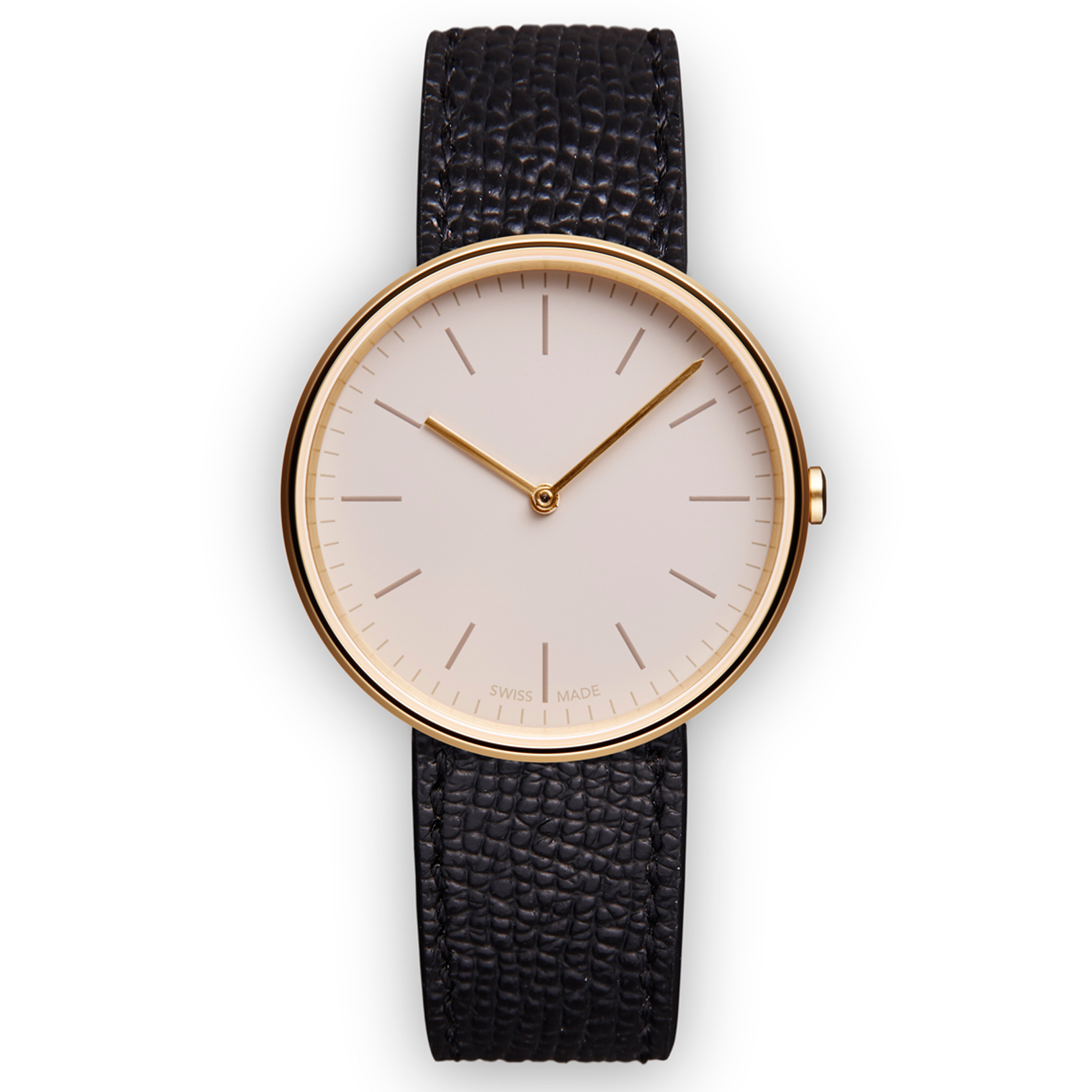
Uniform Wares’ new collection for “urbane” women arrives at Dezeen Watch Store


Dezeen Watch Store: Uniform Wares has become the latest watch brand to design a range specifically aimed at women.  (more…)

http://ift.tt/2btIwIf

Schaufelschlucht Bridge / Marte.Marte Architects


Courtesy of Marte Marte Architects

Courtesy of Marte Marte Architects


Courtesy of Marte Marte Architects


Courtesy of Marte Marte Architects


Courtesy of Marte Marte Architects


Courtesy of Marte Marte Architects

  • Architects: Marte.Marte Architects
  • Location: Ebnit, 6850 Dornbirn, Austria
  • Architect In Charge: Arch.DI Bernhard Marte, Arch.DI Stefan Marte
  • Photographs: Courtesy of Marte Marte Architects
  • Client: Stadt Dornbirn
  • Supporting Width: 16,50m
  • Total Width: 5,00m bis 6,50m
  • Clear Width Of Carriageway: mind. 4,20m
  • Ferroconcrete Bow: Mindeststärke 50cm

Courtesy of Marte Marte Architects

Courtesy of Marte Marte Architects

From the architect. With the second arch bridge on the spectacular alpine road to Ebnit, a sub-district of Dornbirn, the master plan for three infrastructure projects is one step closer to completion. The Schaufelschlucht Bridge has been integrated into the tremendous natural surroundings just as naturally and impressively as the Schanerloch Bridge before it.


Courtesy of Marte Marte Architects

Courtesy of Marte Marte Architects

Plan

Plan

Courtesy of Marte Marte Architects

Courtesy of Marte Marte Architects

Both were built following the same principle: a visible display of internal and external forces, cast in concrete. The twisting and tapering of the bridge on the valley side gives a clear idea of the structural capabilities of the arch shape, while its counterpart on the Ebnit side withstands the dynamic force of the water, which has carved a deep gorge in the rock face over the course of thousands of years.


Courtesy of Marte Marte Architects

Courtesy of Marte Marte Architects

The dark, narrow tunnels, formed by the forces of nature, and the forbidding sheer rock walls along the road act as the backdrop for a dramatic spectacle no one passing by could hardly miss. The bridge’s concrete parapets escort motorists and give them a sense of safety as they cross the roaring, rain-swollen waters, and the solidity and equilibrium of the homogeneous structure make it seem invincible and built for eternity. Sustainability in its truest, while timeless, form.
[Marina Hämmerle]


Courtesy of Marte Marte Architects

Courtesy of Marte Marte Architects

http://ift.tt/2bloz7k