House in Kai / MAMM DESIGN


© Daici Ano

© Daici Ano


© Daici Ano


© Daici Ano


© Daici Ano


© Daici Ano

  • Architects: MAMM DESIGN
  • Location: Yamanashi Prefecture, Japan
  • Area: 265.48 sqm
  • Project Year: 2014
  • Photographs: Daici Ano
  • Structure Engineer: Ohno JAPAN
  • Lighting Designer: LIGHTDESIGN

© Daici Ano

© Daici Ano

The only strong request from client was that all rooms should be oriented to the south. Kai-city, where they have harsh winter, is in Kofu basin, which is located in central part of Japan.


© Daici Ano

© Daici Ano

We realized that people who lives in the area has incomparably more longing than we have in Tokyo. According to site regulations, it is possible to stack all rooms simply vertically and build a 3-story house. But we think it is not a good solution, since it will weaken relations among family who occupies each floor, though the family has two small children. And it must be a coercive volume compared with surrounding two-story houses.


Plan

Plan

Thus, we designed the volume as a terraced shape in which all rooms face south though the floors still keep horizontally connections. The volume consists of, from lower level, a living room connecting with front yard, a gallery / refreshing space, and bedrooms. The higher is the more private space. Spaces under the terraced volume are used for back-of-house such as bathroom, toilet and storages.


© Daici Ano

© Daici Ano

Our attempt here is not to separate the house into only living room and bedrooms but also to create intermediate spaces where each member of the family enjoy his/her own time and, at the same time, also feel other members’ atmosphere. We think it enables for the young family’s life to be diverse and rich.


© Daici Ano

© Daici Ano

Such space in this house is gallery/refreshing space. We, very consciously, designed the space wider than ordinary corridor to be used for the intermediate space. To emphasize the intent, we designed shelves in zigzag shape to make small dens for children, and steps to be a bench etc.


© Daici Ano

© Daici Ano

The gallery, also connecting with hobby room and terrace, plays a role as a street where all activities in the house/of the family flow in.


© Daici Ano

© Daici Ano

Structurally, we stuck to keeping dimension of columns in 100x100mm, though the house has some wide spans. The dimension is almost equal to traditional wooden timber columns which we are very familiar with, in single house. To achieve it, we use solid 100x100mm steel columns where it is required.


© Daici Ano

© Daici Ano

http://ift.tt/2bhsPCf

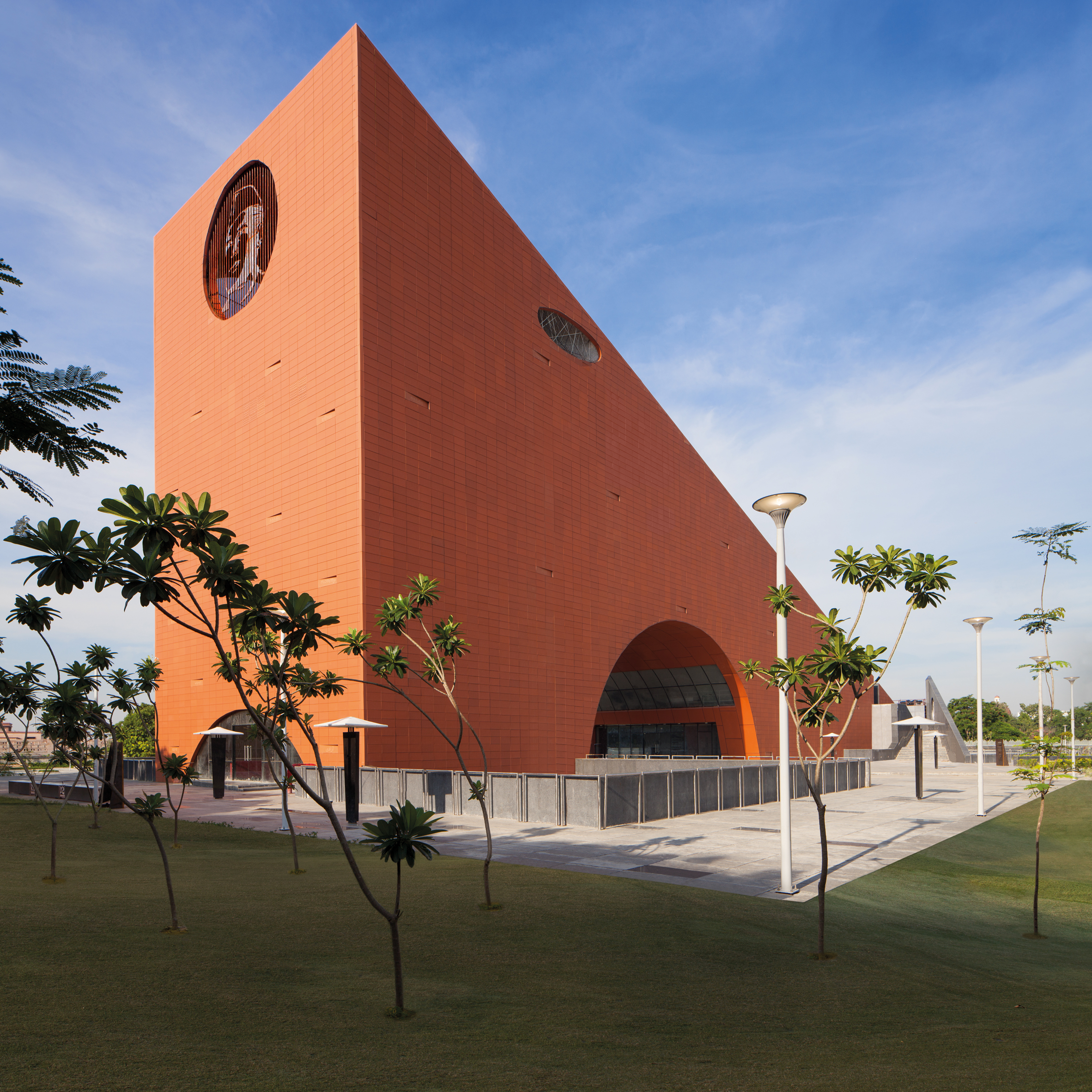
Archohm completes wedge-shaped socialism museum in northern India


Architecture firm Archohm has completed a wedge-shaped museum in Lucknow dedicated to the late Indian independence activist Jayaprakash Narayan (+ slideshow). (more…)

http://ift.tt/2bP09l7

MaiN Hall FiRst RiGhT :: by andre govia. abandoned T On a…

via Abandonedforgotten http://ift.tt/2bomnLb

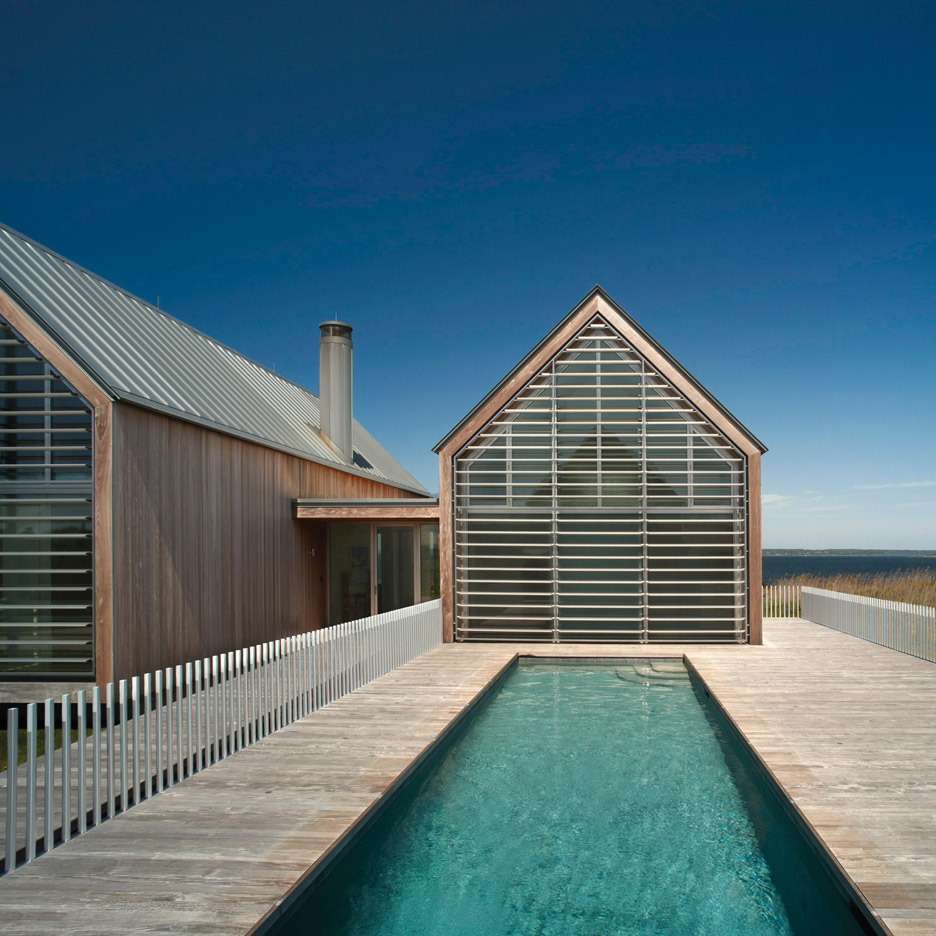
Rhode Island coastal retreat by Roger Ferris comprises multiple gabled forms


This holiday home in Rhode Island by US studio Roger Ferris + Partners consists of a cluster of gable-roofed volumes, influenced by vernacular architecture in rural New England (+ slideshow). (more…)

http://ift.tt/2bCsI97

Surry Hills Apartment / Josephine Hurley Architecture


© Tom Ferguson

© Tom Ferguson


© Tom Ferguson


© Tom Ferguson


© Tom Ferguson


© Tom Ferguson

  • Builder: 2M Projects

  • Structural Engineer: ISTRUCT Consulting Engineers
  • Acoustic Consultant: Wood & Grieve Engineers
  • Fire Consultant: Eagle Fire + Safety

© Tom Ferguson

© Tom Ferguson

This warehouse conversion is in one of Sydney’s most recognised heritage buildings, the distinctive Edwards & Co. building. The building is wedged into a narrow street in the fast regenerating inner-city suburb of Surry Hills.  Formerly a tea factory in the 1920s and more recently an advertising agency, the brief was to breathe new life into the 300-square-metre space as a private residence that spans two levels.  Level 6 with the iconic arched windows was completely gutted and the former caretaker’s office was demolished and replaced with a guest retreat on the roof, located behind the emblazoned parapet.

The client brief focused heavily on the notions of comfort, practicality and respect for the building.  The client, an architect-turned-talented-musician wanted the architecture to be a backdrop that would facilitate everyday living and transform depending who was there. The concept employs a collection of restrained and understated installations that uncovered, retained and celebrated the existing heritage fabric of the building.  


© Tom Ferguson

© Tom Ferguson

Section

Section

© Tom Ferguson

© Tom Ferguson

The site had very difficult access with the rear lane too narrow for a crane and the heritage significance meant that craning over the front facade was out of the question.  The builder designed a custom pulley system and all building materials were slowly pulled up to the roof deck.


© Tom Ferguson

© Tom Ferguson

The building is culturally significant and the project facilitated the upgrade of building services and modernisation of facilities so that the building can continue to contribute to the city’s building fabric for generations to come.


© Tom Ferguson

© Tom Ferguson

The existing column and beam system allowed for a degree of flexibility in planning, however the warehouse had very few service risers.  In order to retain the existing concrete slab and beam ceiling system the floor surface was stepped and manipulated so that services could be installed.  An elaborate acoustic system was employed in the flooring design so that the client could pursue her love for music without disturbing the other occupants of the building.


© Tom Ferguson

© Tom Ferguson

Spatially the plan works hard.  Spaces double-up on functions, such as the lift-well wall supports bikes, the entry channel of marmoleum defines the circulation and is also an art area.  Lines between functions are blurred with baths entering bedrooms.  There are no residual areas, however great care was taken to not over-design the interiors.


Plan 1

Plan 1

Plan 2

Plan 2

A refined and highly-considered minimal material palette of warm grey, timber and smooth white integrated surfaces was chosen for its cost-effectiveness, but also for durability and practicality.  


© Tom Ferguson

© Tom Ferguson

The project is not only sustainable, it’s recycled and it’s full of charm and character.  The warehouse is embraced and the conversion lets the layers of history enrich the interiors. The finished apartment is calm, livable and welcoming.  


© Tom Ferguson

© Tom Ferguson

http://ift.tt/2bhe8Sx

LYCS Architecture Design School Inspired by A Child’s Drawing


Courtesy of LYCS Architecture

Courtesy of LYCS Architecture

LYCS Architecture has released designs for Yuhang NO.2 School, a kindergarten, primary and secondary school complex in Hangzhou, Zhejiang, China. Encompassing 44,900 square meters, the design takes inspiration from a child’s drawing of his ideal school – a small town filled with child-scaled spaces and “happy” streets. The complex is broken up into 15 gabled volumes, which gradually increase in size and scale to accommodate the range of student ages.


Courtesy of LYCS Architecture


Courtesy of LYCS Architecture


Courtesy of LYCS Architecture


Courtesy of LYCS Architecture


Courtesy of LYCS Architecture

Courtesy of LYCS Architecture

“Traditional primary and secondary school planning in modern Chinese cities usually provides students and children with an adult-scale campus environment at an excessively early stage. Such environment gives no help to them in coping with high educational and social pressure. Facing these phenomenon, it is the architects’ responsibility to subversively break these conventions in school planning and offer children with space of their own scale and age in which they will enjoy living and studying,” explains LYCS.

Dynamically shaped staircases and corridors are designed to provide both circulation and activity space, while gabled volumes contain common areas for a variety of gatherings and social activities. Envisioned as a “mini-society,” the school will enable students to “build their own social consciousness with daily experience.”


Courtesy of LYCS Architecture

Courtesy of LYCS Architecture

Courtesy of LYCS Architecture

Courtesy of LYCS Architecture

Program consists of 12 kindergarten classrooms and 27 primary and secondary school classrooms, organized into three U-shaped blocks distributed from south to north along a “main street.” The varying height of the rooflines create a dynamic skyline, while interstitial spaces between buildings offer playspace and courtyards of different paving and landscape surfaces. Building facades vary in color, material and openings to signify their use, helping children to easily identify their location and form a cognitive map of the campus.

The kindergarten building, an independent 4-story structure, is located near the main road of the city, and responds to its context with providing a “unified facade that coordinates with the overall urban interface.”


Courtesy of LYCS Architecture

Courtesy of LYCS Architecture

Courtesy of LYCS Architecture

Courtesy of LYCS Architecture

Rooftop activity space maximize the structure’s capabilities, and feature space for activities such as gardening, theatre and runway, as well as reading rooms and relaxation areas. Additionally, elevated corridors and public spaces have been intentionally enlarged to connect the 2nd floors of each of the buildings, creating an another plane for public activity.

According to LYCS, the variety and exuberance of the design will help children to bond and grow emotionally:

“Adhering to a special variation in scale, the design of this entire campus closely follows the growth and emotion of its users.The design notion of ‘the story of a small town’ will allow students and children to enjoy their own fairy tale like campus.”


Courtesy of LYCS Architecture

Courtesy of LYCS Architecture
  • Architects: LYCS Architecture
  • Architecture Design: LYCS Architecture
  • Project Team: RUAN Hao, CHEN Wenbin, YIN Yong, WU Shiyang, XIA Wei
  • Architect Of Record: Zhejiang Province Institute of Architecture Design and Research
  • Area: 44900.0 sqm
  • Project Year: 2017
  • Photographs: Courtesy of LYCS Architecture

http://ift.tt/2bOxRHk

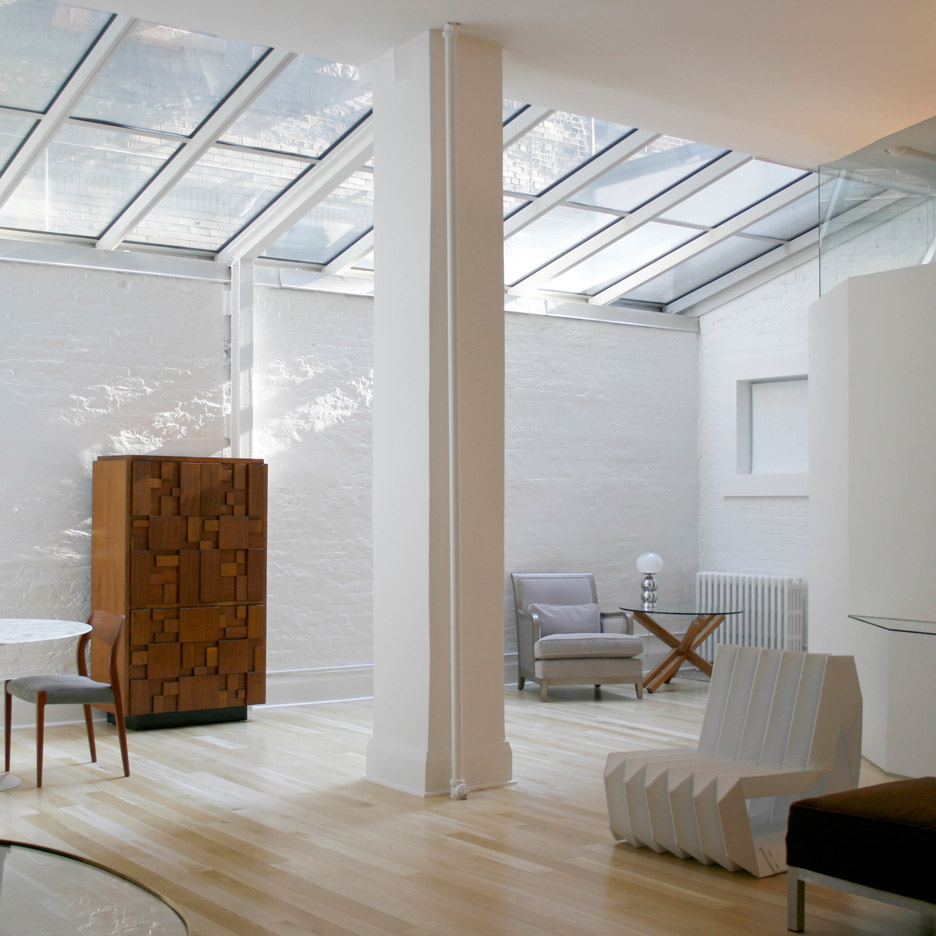
Yoshihara McKee maximises natural light at Photographer’s Loft in New York


Architecture firm Yoshihara McKee has removed all of the full-height partitions at this apartment in New York’s Chelsea neighbourhood to make the most of a large skylight (+ slideshow). (more…)

http://ift.tt/2bPPFDh

Have We Reached the End of the McMansion Era?


© Flickr user dbasulto. Licensed under CC BY-SA 2.0

© Flickr user dbasulto. Licensed under CC BY-SA 2.0

The architectural world’s most hated structures may finally be meeting their demise. McMansions, the cheaply-built, faux-opulent mega-houses that litter many of the world’s suburban communities, were born in the 1980s and quickly became the most desirable living accommodation for middle and upper-middle class families. After a slight blip caused by the financial recession of 2008, McMansion popularity returned, with the median size of homes reaching a peak of 2,488 square feet just last year. But as seen in a new study conducted with data from real estate website Trulia, the economic benefit of purchasing one of these houses may now finally be falling.

Tracking data for homes built from 2001 to 2007 between 3,000 to 5,000 square feet (a typical McMansion size), the study found that the premium homeowners were willing to part with to purchase one of these houses has dropped in 85 of the largest 100 U.S. metropolitan areas from 2012 to 2016, including drops of over 80 percent in cities like Fort Lauderdale and Miami. Instead, smaller, older homes have seen a recent appreciation in value.

While the architecture community’s frustration with McMansions has been longstanding, the Trulia study and the increasing popularity of blogs like McMansion Hell, which breaks down the specific and plentiful architectural atrocities committed by the oversized houses, seem to indicate that the general public may now be catching on.

Read the full report on the decreasing value of McMansions at Bloomberg News, and check out McMansion Hell for all the reasons McMansions are bad design.

McMansions: The Ultimate Symbol of American Inequality
//cdn.embedly.com/widgets/platform.js

http://ift.tt/2c7CeBO