Month: August 2016
Owen Smith may not beat Jeremy Corbyn, but he passed the Today test
As he tussled with John Humphrys on Radio 4, the Labour leadership challenger sounded confident, articulate and human
Listening to the radio this morning I had an experience I realised I’d almost forgotten. It was the sound of a Labour politician being combatively quizzed on Radio 4 by Today’s John Humphrys in the key 8.10 spot and giving confident, articulate answers in return. When did I last hear that, I wondered?
What follows here isn’t a party political broadcast for Owen Smith. For the first time since Labour’s glittering leadership contest to succeed Harold Wilson in 1976 – Callaghan versus, Healey, Foot, Crosland, Jenkins and Benn – he’s a leadership contender whom OAP Mike doesn’t really know.
Politics blog | The Guardian http://ift.tt/2bFARbU
💙 Misty forest on 500px by Modestas Kaluževičius,…

💙 Misty forest on 500px by Modestas Kaluževičius, Kaunas,… http://ift.tt/1TIEFID
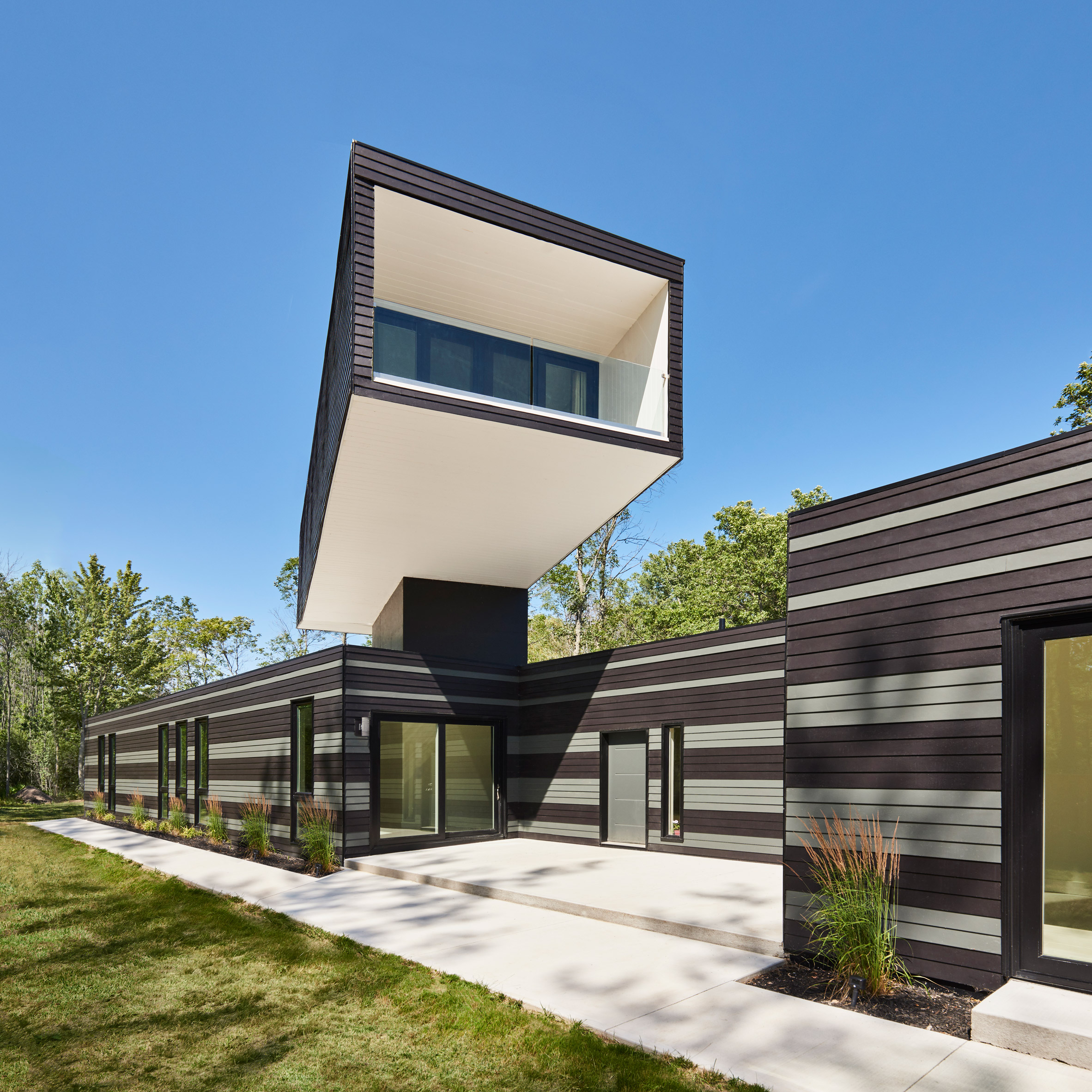
Kariouk Associates sneaks around planning laws to gain lake vistas for A Bower House
9 Reasons to Become an Architect

© Leandro Fuenzalida
Making the decision to pursue architecture is not easy. Often, young students think that they have to be particularly talented at drawing, or have high marks in math just to even apply for architecture programs. Once they get there, many students are overwhelmed by the mountainous tasks ahead.
While the path to becoming an architect varies from country to country, the average time it takes to receive a Masters in Architecture is between 5 and 7 years, and following that is often the additional burden of licensure which realistically takes another couple of years to undertake. Knowing these numbers, it’s not particularly encouraging to find out that the average architect does not make as much as doctors and lawyers, or that 1 in 4 architecture students in the UK are seeking treatment for mental health issues. These are aspects which architecture needs to work on as an industry. However, beyond these problems, there are still many fulfilling reasons to fall in love with the industry and become an architect. Here are just some of them.
Architects are able to unleash their creativity. Image © Leandro Fuenzalida
1. Architects are able to unleash their creativity.
The most beautiful aspect of architecture as a profession is how the industry embraces the individuality of each person. Of course, designing buildings is in itself a fulfilling creative pursuit; but even beyond that you are allowed, and in fact encouraged, to have a style which can manifest beyond your work. The idea of wanting to live an “authentic life” has been a trending buzzword lately, and being an architect can certainly serve as conduit to a desire to live creatively: to wear what you want, to don unconventional eyewear, and to just express you through your lifestyle. This Oscar-nominated short film shows just how humorous and fun that could be.
2. Architects get to (very clearly) see the fruits of their labor.
Perhaps the greatest advantage of being an architect is having a lifetime’s work that remains after you’re gone to remind people of your efforts. You can ultimately live a life much larger and longer than your own mortality allows because the buildings that you design will represent you. Due to the literal “material nature” of the work, it’s difficult to second-guess your contribution to society and the value of your work when it’s 10 stories high and staring right at you. In some places, architects are even encouraged to “sign” their buildings like artists with a plaque or inscription; most recently, a new policy by the Ontario Association of Architects requires new buildings over 1,000 square meters to include a prominent credit to the architect near the main entrance or on the main facade.
Architects do not get bored in university. Image © Leandro Fuenzalida
3. Architects do not get bored in university.
Architecture school is difficult, but it is also a very fun and exciting time because of the dynamism in your experience. Knowledge and theories from other fields are openly welcomed within architecture, and these sources could be as varied as social work, philosophy and economics. Due to architecture’s wide-ranging knowledge set, many architecture programs advocate interdisciplinary learning for their students, meaning that you will either have a wide range of topics embedded within your architecture classes, or you will get the opportunity to take varied classes ranging from environmental studies, to computer science. If there is a particular topic you are interested in, you can incorporate it within your architectural work.
Additionally, there is a lot of improvisation in architectural education and this is where it gets fun. Unlike science students who have to adhere to strict formatting with lab reports, and humanities students who go through copious amounts of textual analysis, architecture students are encouraged to embrace innovation. Who says you can’t include a well-informed research component with your studio project, and when you write essays for architecture class, custom-made visuals often allow you to explain your ideas more clearly and result in very good marks. You are free to do what you think is best in communicating your ideas.
Architects are often specialists at everything. Image © Leandro Fuenzalida
4. Architects are often specialists at everything.
As mentioned, what makes Architecture an exciting subject of study is the wide array of learning and research that you have to conduct on a regular basis—and this extends far into one’s working career. There is no such thing as having too much knowledge as an architect. Each new project is a window for inquiry into new technology, theories of organization, or methods of construction. To articulate this information in your building designs, you need to very quickly understand expert knowledge on the specific technique that you wish to include in order to collaborate with corresponding professionals. As maestros of the orchestra that is the whole construction team, architects become specialists at everything.
5. Architects learn to be very good at defending their opinions.
For every individual, there will be a set of buildings that they simply find beautiful. Many students dive into the world of architecture because they were emotionally affected by a beautiful building, but in the classroom “beautiful” is not necessarily a qualifying trait that will convince colleagues and professors. The simple rule is that if you like a form, a motif, a detail or anything really, you must go beyond “beautiful” and make a case for its existence as a “profound aspect of the experiential articulation of the built world” (or whatever phrase your colleague might offer). This gives rise to lively and stimulating debate amongst architecture professionals which also extends to written discourse. Architectural literature contains very colorful vocabulary and a rhetorical style that is nothing short of poésie.
Architects can manage stress… and lots of it. Image © Leandro Fuenzalida
6. Architects can manage stress… and lots of it.
Mental health issues plague architecture schools for many reasons that cannot be determined very clearly. But causes of stress will always linger, in any situation, in any job, and in any discipline. While the health challenges faced by many students should not be trivialized, there are at least as many people who emerge into the workforce as healthier individuals who are incredibly resilient in the face of life’s slings and arrows. Going to architecture school takes you through a very in-depth journey of introspection, understanding your needs, and figuring out how you can be successful on your own terms.
7. Architects are able to do what they love for the rest of their life.
Assuming that what you love is Architecture, there seems to be no barrier to continuing to do what you love past the age of retirement. As the saying goes: “Choose a job you love and will never have to work a day in your life.” Many of today’s architectural masters are still heading their highly successful firms decades past the age of retirement and are honing their craft just as ardently as before—as if they’ve never worked a day in their life. Frank Gehry is actively pursuing building projects at 87, Norman Foster leads more than 140 partners in his firm at 81 years old, and Zaha Hadid won RIBA’s Royal Gold Medal at 65. Most spectacularly, Oscar Niemeyer still dabbled in the occasional project right up to his death ten days before his 105th birthday.
Architects are held in high esteem. Image © Leandro Fuenzalida
8. Architects are held in high esteem.
Thanks to its origin as the “mother of the arts” and its subsequent development as an influential profession, architecture has achieved near-universal recognition as a noble pursuit. In the workplace, architects largely interact with clients from the upper reaches of society. With the many general myths and legends that surround architecture outside of the actual profession there is a certain reverence attached to architects, and you may be able to take advantage of this to impress other people while still having the opportunity to do something that you are interested in.
9. Architects improve the lives of countless people.
Modern Architecture, as we know it today, emerged from a period of social upheaval in the 20th century. In the hope of creating a better world for everyone, the visionaries of modern architecture developed a heroic rhetoric that continues to inspire architects of today – even if we haven’t exactly figured out how to recapture that spirit. For a brief moment, we lost hope on that endeavor but emerging practices are today re-invigorating architecture’s social agenda.
Architecture always wants to help people and when it does it’s an incredibly satisfactory feeling. Unfortunately, architects are the biggest critics of architecture and there is often greater focus on when architecture doesn’t work, rather than when it does. We must not forget the little slivers of success: the elderly woman that is comfortable in her transitional flat; the son that is extremely grateful to the architects who redesigned his mother’s dilapidated home in a humble neighborhood, or the lowly office worker that finds entertainment in the interesting-looking skyscrapers that populate her daily commute. Architecture is significant and the ability to touch on an integral part of a person’s life is a reason to be an architect.
A Private Residence in the Suburbs of Bangkok, Thailand

PK79 is a private residence located in Bangkok, Thailand. It was designed by Ayutt and Associates Design. PK79 by Ayutt and Associates Design: “PK79 is located on Petchkasem 79 road, Bangkok, Thailand where is known as the suburban residential area. The site location is in the middle of wasteland zone, remotely from the city and low density of population effected directly to the safety issue. The neighborhoods of this area..
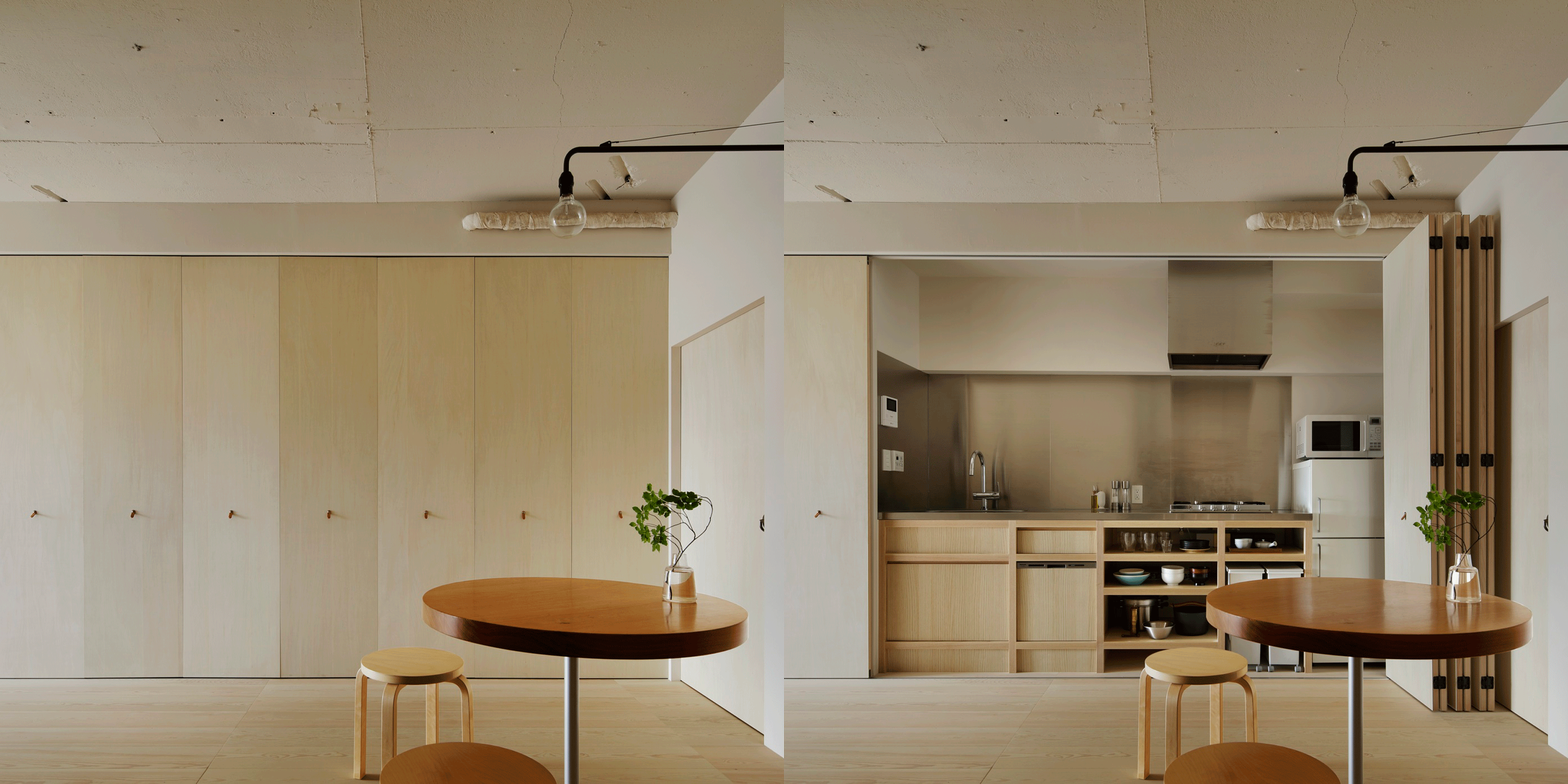
Tokyo apartment by Minorpoet features kitchen hidden behind folding doors
feld72 Wins Competition for Youth Housing in Vienna

Courtesy of feld72
feld72 has won the competition for the design of the Neu Leopoldau, a Youth Living residential complex in Leopoldau, a post-industrial area on the outskirts of Vienna. Based on the idea of creating community, the project utilizes overlaying, staggered, and connected spaces and communication areas to facilitate the feeling of a village.
Courtesy of feld72
Spaces throughout the building vary in use from a range of public to private and are flexible in their uses.
Courtesy of feld72
Courtesy of feld72
The monolithic structure with uniform window sized in a staggered arrangement [give the building] a simple and calm character. [Additionally, staggered] balconies included on each floor of the building give a more slender appearance – said the architects on a press release.
Courtesy of feld72
The ground floor of the building is essentially transparent, with outdoor trails leading into a large entrance, which opens up on the opposite side into community areas, including a kitchen.
Courtesy of feld72
Learn more about the project here.
News via feld72.
Speed Skating Arena Geisingen / SYRA_Schoyerer Architekten

Courtesy of SYRA_Schoyerer Architekten
- Architects: SYRA_Schoyerer Architekten
- Location: Geisingen, Germany
- Project Year: 2010
- Photographs: Courtesy of SYRA_Schoyerer Architekten
- Other Participants: Centraplan Architeken Planungsgesellschaft GmbH
Courtesy of SYRA_Schoyerer Architekten
Speed Skating Arena Geisingen The arena Geisingen is a private sponsorship project. Over a period of three years the Family Uhrig from Geisingen pursued the idea of building an Inline track in Geisingen. During the planning phase the concept developed from the original intention of building only ‘a track’, which was then developed as a concept into the to the arena Geisingen you see today which is unique not only in Germany but also Europe wide.
Courtesy of SYRA_Schoyerer Architekten
The arena Geisingen is, situated on a floodplane of the river Donauwhich which entailed complex remodelling of the existing landscape. In total 50,000 m³ of earth was modulated to form the arena tribunes, the oval racetrack with the banked corners and the infield area . Because of the close proximity to the Donau River the arena Geisingen is constructed in such a way that when the river floods there is no damage to the arena.
Plan
The arena Geisingen was designed (preliminary design and details design ) by the architectural firm SYRA_Schoyerer Architekten, from Mainz. Site supervision was taken over by the company Centraplan Architeken Planungsgesellschaft GmbH from Kirchzarten.
Courtesy of SYRA_Schoyerer Architekten
By night the arena Geisingen glows like a UFO against the Geisingen countryside. The translucent walls are almost weightless and surround the arena. The flat roof constructed with wood and the same weightless material as the sidewalls covers the entire arena. The designer Monika Heiss set the sensational orange tone for the track and the radiant Magenta for the training track. These brilliant colours and the lighting concept create an exciting motivational atmosphere. It does not matter if the weather is bad, if it is a foggy day, or night time, the atmosphere in the arena is always enjoyable. For the Bistro, Skateshop and the Service areas, the natural colour ochre was chosen.
Courtesy of SYRA_Schoyerer Architekten
Architekti Šercel Švec Design a Private Residence in Veľké Úľany

Under the Calvary is a private residence designed by Architekti Šercel Švec. It is located in Veľké Úľany, Slovakia. Under the Calvary by Architekti Šercel Švec: “The concept design is based on the genius loci of the site in Veľké Úľany. The site is specific for its proximity to the important monument (Calvary) and high vegetation. The family house is conceived to offer a view on Calvary and at the..
 Sig Nordal