Sydney Park Water Re-Use Project / Turf Design Studio, Environmental Partnership, Alluvium, Turpin+Crawford, Dragonfly and Partridge


© Ethan Rohloff Photography

© Ethan Rohloff Photography


© Simon Wood


© Adam Hunter


© Ethan Rohloff Photography


© Simon Wood


© Ethan Rohloff Photography

© Ethan Rohloff Photography

Much has been achieved over the past two decades to transform the Sydney Park site from its former post-industrial history and waste disposal, into 44 hectares of parkland and a vital asset for the growing communities of Sydney’s southern suburbs.


Plan

Plan

This project forms the City of Sydney’s largest environmental project to date, built in partnership with the Australian Government through the National Urban Water and Desalination Plan. It is an integral component of Sustainable Sydney 2030; targeting 10% of water demand to be met through local water capture and re-use in the park. The City also seized the once in a lifetime opportunity to use what was essentially an infrastructure project to breathe new life into the park – as a vibrant recreation and environmental asset for Sydney.


© Ethan Rohloff Photography

© Ethan Rohloff Photography

The City engaged a design team led by landscape architects Turf Design Studio & Environmental Partnership who orchestrated an intense and multi-disciplinary collaboration intersecting design, art, science and ecology – in a ‘roundtable’ of creatives shared between water experts Alluvium, artists Turpin + Crawford Studio, ecologists Dragonfly Environmental, engineers Partridge and the City’s own Landscape Architects.


Section

Section

Details

Details

Details

Details

The result is an interwoven series of community infrastructures and ‘made’ systems – water re-use, recreation, biodiversity and habitat all integrated within the physical fabric of Sydney Park.


© Simon Wood

© Simon Wood

Sydney Park now offers an enhanced recreational experience to the Sydney community, going beyond the picturesque; creating instead a revitalised, multi-faceted waterscape that celebrates the connection between people and place.


© Adam Hunter

© Adam Hunter

After an intensive process of ‘easing in’, the water re-use project is now fully operational and intrinsically linked with its park setting. The bioretention wetlands not only capture and clean the equivalent measure of 340 Olympic-sized swimming pools worth per annum, but successfully improve local water quality, habitat and reduces potable water consumption in the area. The park’s fauna and flora is thriving, with new habitats created and existing ones protected and enhanced throughout the park.


© Simon Wood

© Simon Wood

The function and processes of water harvesting and cleansing is enhanced through its visible ebbs and flows through the landscape. New pathways intersect the wetlands, allowing park users to explore and discover ‘moments’ in the landscape that can be at times playful, dramatic and peaceful, but at all times connected to the water narrative of capture, movement, and cleansing.


© Ethan Rohloff Photography

© Ethan Rohloff Photography

Highlighting these processes was an important part of the project, as they emphasise the intrinsic relationship between water, people, topography, flora and fauna. Public art is interwoven; Turpin + Crawford Studio’s ‘Water Falls’ celebrates clean water release while also working with TDEP’s cascades to aerate water in the last link in the bioremediation treatment train. Turpin + Crawford Studio also devised the water ‘exhaust fans’ that celebrate the transfer of water from bioremediation ‘paddies’ to the lagoons; playing on the spirit of water and its interactions with the landscape.


© Ethan Rohloff Photography

© Ethan Rohloff Photography

http://ift.tt/2bE1cHo

Filmmaker Lucas Bacle Layers Video on top of Architectural Drawings in new Short Film

Filmed at the Vertou Cultural Center, designed by Atelier Fernandez & Serres, this video by filmmaker Lucas Bacle challenges the traditional conventions of cinematography, employing architectural drawings to provide context for the actions of the film’s protagonist. The cultural center itself becomes a central character to the short film, as Bacle layers video on top of orthographics to provide the context of the main character’s actions.

Watch as the main character roams around the travertine façade and stark white interior surfaces of the building, winner of the 2016 Équerre D’Argent Prize for French Architecture. The film culminates with a twist ending that may just bring a smile to your face.

English subtitles can be found by clicking the “CC” button in the player window.

http://ift.tt/2bCcRFf

The 10 top installations and exhibitions at London Design Festival 2016


London Design Festival 2016: with this year’s London Design Festival less than a month away, Dezeen’s Alice Morby selects her pick of the best installations and exhibitions that will be taking place across the capital. (more…)

http://ift.tt/2bNbe7a

Oakland University Engineering Center / SmithGroupJJR


© Jason Robinson Photography

© Jason Robinson Photography


© Jason Robinson Photography


© Jason Robinson Photography


© Jason Robinson Photography


© Jason Robinson Photography

  • Architects: SmithGroupJJR
  • Location: Rochester, MI, United States
  • Design Principal: Paul Urbanek
  • Principal In Charge: Chris Purdy
  • Area: 134200.0 ft2
  • Project Year: 2014
  • Photographs: Jason Robinson Photography
  • Project Manager: John Sobetski
  • Project Architect: Andrew Arnesen
  • Design Team: Chris Vanneste, Laura Roberts, Michael Nowicki, Kevin Gurgel, George Karidis, Sarah Wickenheiser, Georgia Zochowski, Carlos Lopes, David Hoffman, Constantine Lekas, Bruce Comstock, Jon Romig, Ann Clark, Dan Nerida, Kim Morgan, Monica Pace, Alex Russeau, Lori James, Mark Goyette, Dan Mather, Hillary Hanzel, Luke Renwick, Rob Teifer, Justin Fiema, Amanda Gorning

© Jason Robinson Photography

© Jason Robinson Photography

Oakland University’s new facility for the School of Engineering and Computer Sciences (SECS) provides advanced technologies for academic engineering studies, while sustainable mechanical and electrical systems serve as a hands on learning tools for the students. 


© Jason Robinson Photography

© Jason Robinson Photography

This new facility features a trigeneration system that uses natural gas to generate a portion of the building’s electric power; the recovered heat from the electrical generation provides heating and cooling, as well as hot water and emergency power. This is uniquely combined with a chilled-beam system and heat pump to create a first-of-its-kind system, which is further enhanced by 21.6 kW of photovoltaics on the roof, to significantly reduce annual energy costs and the University’s carbon footprint.  


Section

Section

To enhance the building’s educational role, SECS faculty and students can conduct research through an energy dashboard. They have the ability to access data from the trigeneration and chilled beam systems, monitor energy usage and propose improvements to the operation sequence. The facility also boasts a high bay capstone lab, cleanroom, full service machine shop, and rooftop energy lab where students conduct experiments on solar and wind generation. The lobby acts as student demonstration space and corridor windows offer clear views into the project labs, putting science on display. 


© Jason Robinson Photography

© Jason Robinson Photography

Diagram

Diagram

© Jason Robinson Photography

© Jason Robinson Photography

The building was specifically designed with hands-on, team-based learning spaces to support a variety of interdisciplinary projects and an assortment of collaborative spaces that students can easily reconfigure to support group projects.  Students, faculty and staff have noted how the building feels like home with a great deal of activity, ideal places to study and vitality all hours of the day.         


© Jason Robinson Photography

© Jason Robinson Photography

http://ift.tt/2beptTq

Soho House and Michaelis Boyd turn derelict farm into luxury members’ hotel


Soho House & Co’s in-house design team and London architects Michaelis Boyd have overhauled a run-down farm in Oxfordshire to create Soho Farmhouse – a hotel that combines English countryside style with “upstate New York cabin culture” (+ slideshow). (more…)

http://ift.tt/2bKKH9n

Scotland’s Top 10 Buildings of the Century Revealed


The top 10 buildings in Scotland of the past 100 years have been named as part of the traveling Scotstyle exhibition. Voters selected the list from an exhibition of 100 Scottish buildings, currently on display at the Scottish Parliament during the Festival of Politics, and will now vote to determine which building will be bestowed the title of “Building of the Century.”

“This brilliant list testifies to the extraordinary quality of Scotland’s buildings. The fact that so many are relatively recent demonstrates that our national architecture is in very good health. We have much to celebrate,” said Neil Baxter, RIAS Secretary and co-editor of Scotstyle.

Continue reading for the complete list.

1930 – St Conan’s Kirk, Lochawe, Argyll


St Conan’s Kirk, Lochawe, Argyll. Image © Crown Copyright: Historic Environment Scotland. Licensor canmore.org.uk

St Conan’s Kirk, Lochawe, Argyll. Image © Crown Copyright: Historic Environment Scotland. Licensor canmore.org.uk

1930 – India Tyre and Rubber Factory, Inchinnan


India Tyre and Rubber Factory, Inchinnan. Image © Keith Hunter

India Tyre and Rubber Factory, Inchinnan. Image © Keith Hunter

1938 – Rothesay Pavilion, Rothesay, Isle of Bute


Rothesay Pavilion, Rothesay, Isle of Bute. Image © Crown Copyright: Historic Environment Scotland. Licensor canmore.org.uk

Rothesay Pavilion, Rothesay, Isle of Bute. Image © Crown Copyright: Historic Environment Scotland. Licensor canmore.org.uk

1950 – Hermit’s Castle, Achmelvich, Loch Inver, Sutherland


Hermit’s Castle, Achmelvich, Loch Inver, Sutherland. Image © Barnabas Calder

Hermit’s Castle, Achmelvich, Loch Inver, Sutherland. Image © Barnabas Calder

1982 – Dundee Repertory Theatre, Dundee


Dundee Repertory Theatre, Dundee. Image © Nicoll Russell Studios

Dundee Repertory Theatre, Dundee. Image © Nicoll Russell Studios

1987 – Princes Square, Glasgow


Princes Square, Glasgow. Image © Jean O’Reilly

Princes Square, Glasgow. Image © Jean O’Reilly

1998 – National Museum of Scotland, Edinburgh


National Museum of Scotland, Edinburgh. Image © Keith Hunter

National Museum of Scotland, Edinburgh. Image © Keith Hunter

1999 – Dundee Contemporary Arts, Dundee


Dundee Contemporary Arts, Dundee. Image © Keith Hunter

Dundee Contemporary Arts, Dundee. Image © Keith Hunter

2004 – The Scottish Parliament, Edinburgh / Enric Miralles


The Scottish Parliament, Edinburgh. Image © Keith Hunter

The Scottish Parliament, Edinburgh. Image © Keith Hunter

2007 – Pier Arts Centre, Stromness, Orkney / Reiach and Hall Architects


Pier Arts Centre, Stromness, Orkney. Image © Crown Copyright: Historic Environment Scotland. Licensor canmore.org.uk

Pier Arts Centre, Stromness, Orkney. Image © Crown Copyright: Historic Environment Scotland. Licensor canmore.org.uk

The Scotstyle exhibition tells the story of the 100 semifinalist buildings, and is currently traveling throughout the country. It will serve as a headline event at this year’s Festival of Architecture and a key part of the Year of Innovation, Architecture and Design.

The announcement was made in the Chamber of the Scottish Parliament by Deputy Presiding Officer Linda Fabiani MSP, with panellists Neil Baxter, Royal Incorporation of Architects in Scotland (RIAS); Ruaridh C. Moir architect, writer and lecturer; Fiona Sinclair, architect, author, historian; and Andrew Wright, past president of RIAS. Voting for “Building of the Century” will re-open August 21st.

News via RIAS.

http://ift.tt/2btlFya

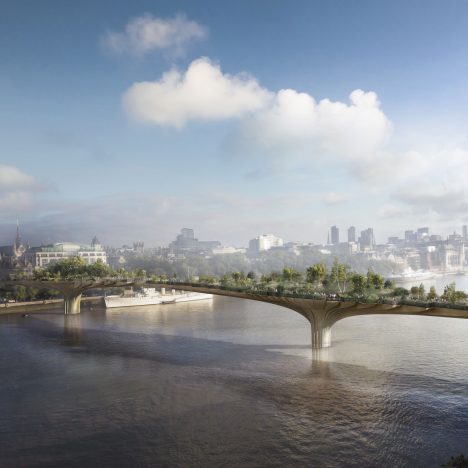
“Scrapping the Garden Bridge wouldn’t indicate that the UK has lost confidence”

Blue Lagoon by Romain Vernoux http://flic.kr/p/oXjBrE

Blue Lagoon by Romain Vernoux http://flic.kr/p/oXjBrE

http://ift.tt/2bSGKD7

Beaver Creek, Coloradophoto via portwood

Beaver Creek, Colorado

photo via portwood