
To make medals for Tokyo 2020, Olympic organisers are considering mining Japan’s vast repositories of e-waste for millions of discarded smartphones and computers. (more…)
To make medals for Tokyo 2020, Olympic organisers are considering mining Japan’s vast repositories of e-waste for millions of discarded smartphones and computers. (more…)

This article was originally published by Metropolis Magazine as “A Brutal Dismantling.”
As soon as photographer Harlan Erskine discovered the plans to demolish Paul Rudolph‘s iconic Orange County Government Center in New York, he knew he needed to bear witness to its demise. Beyond admiring the building’s dynamic form, the photographer recognized its continued impact on architecture today, particularly noting its influence on Herzog and de Meuron’s “Jenga tower.”
Visiting on four separate occasions throughout 2015 and 2016, Erskine captured the dismantling of this iconic Brutalist work with stunning severity. See the building’s final seasons below.

It’s a single family home located on a corner lot that occupies the interior of a small pre-existing warehouse, which previously accommodated a weaving workshop. The warehouse in its severity and introversion is utilized as protection from a very proximate urbanity.
At that time, we were interested in how William Kentdrige, on some of his choreographies, adapts his body to configure it into something else, a theme also very recurring in his engravings. Related to this premise and to produce an estrangement effect in the warehouse associated with other function, the house is constructed through the introduction of a foreign body that occupies it, shapes the interior and grows vertically until becoming visible over the rooftop as a strange object. The result from this, is a strong contrast between a severe exterior ruled by the re signified warehouse and a flowing interior which section is resolved as an autonomous and introverted world.
The ground floor destined to accommodate the common spaces –living room, dining room, kitchen- is left completely free and opens to an interior patio located at the back. This floor is characterized solely by a lonely inverted V shaped pillar and the landing of the staircase to the ground. The mid-level, which QUARTERS Lola’s bedroom and a studio, is organized as two arms supported on the previously mentioned pillar looking over the ground floor in a marked sequence of double height spaces. The upper level, which contains the parent’s bedroom, rests over the walls of the existent warehouse and opens to a rooftop terrace which serves as a garden. The three levels are linked by a continuous staircase made of wood that in its monumentality contrasts with the small scale of the house.
From the outside the rough plastered walls of the warehouse contrast with the black volume that protrudes over the roof.

(adsbygoogle = window.adsbygoogle || []).push({});
Do you have “phishing awareness”?
You may have heard about internet ‘phishing’ and wondered whether you should be worried. Or worse, you may have been unlucky enough to have been victimized in the past. Either way, it’s important to know how to protect yourself from this pernicious type of internet fraud.
Phishing is a fraudulent internet activity aimed at tricking you into divulging personal details which can then be used against you.
(adsbygoogle = window.adsbygoogle || []).push({});
Don’t make the mistake of thinking you won’t be fooled. Many highly cautious and tech savvy users have fallen victim to the scammers.
//<![CDATA[
aax_getad_mpb({
"slot_uuid":"16dcbcd0-2124-4a85-9abe-c263dd9084e5"
});
//]]>
These unscrupulous folk will go to great lengths to lull you into a false sense of security and gain your trust. Being phished could result in the theft of your personal details – account information, credit card numbers, PIN numbers, passwords and much more.
Phishing expeditions are typically carried out in the form of a spam email that appears to come from a perfectly legitimate source, usually a website or other source that you have regular online dealings with. It could be your bank or credit card or other finance company, an internet provider, an online retailer, your employer and even the government.
The email will ask you to confirm your personal information, often by asking you to click on what looks like a bona fide link to the company website so that you can update your details. When you click through, though, you are directed to a spoof site set up with the sole purpose of capturing your data. Chances are that you won’t suspect a thing and won’t notice the fact that the site is fraudulent.
(adsbygoogle = window.adsbygoogle || []).push({});
But how do they persuade you to click on the link?
This is where it gets even more devious. The email usually contains an urgent call to action – threatening you with account closure, warning of an overdue invoice or of unauthorised activity on your account, or simply asking for a security update or missing account information. What’s more, scam artists are very adept at using company names, URLs, branding, logos etc to make their emails look authentic.
(adsbygoogle = window.adsbygoogle || []).push({});
It all looks very plausible.
The Anti-Phishing Working Group (APWG) has been observing a truly shocking rise in the number of phishing attacks over the last few years, including a record breaking increase of 250% between October 2015 and March 2016. Latest figures show that about 123,000 phishing attacks took place in March of this year alone, the highest number ever.
In light of these worrying findings, it is more important than ever that internet users are fully equipped to guard against phishing.
Here are our 7 top tips to keep you safe online:
1. Make it a golden rule to never reply to emails that ask for confidential information.
(adsbygoogle = window.adsbygoogle || []).push({});
Banks, official organisations and reputable e-commerce companies will NEVER request sensitive personal data via email. Scam emails often contain urgent calls to action in the subject line (e.g. ‘Your account has been suspended’, ‘Unauthorised activity detected on your account’). Also, they generally are not addressed to you personally (e.g. Dear Customer, Dear Account Holder).
2. If you’re not sure whether or not the email may be legitimate, it’s safest to contact the company direct by phone or via their website to double check.
Type in their web address (rather than clicking on a link) and be cautious about any phone number given in the email. Phishers often use links within the email to take you to a spoofed site with a similar and very genuine looking address (e.g. mybank-online.co.uk instead of mybank.co.uk).
3. Never click on links, open attachments or download any files from unknown, unrecognised and untrusted senders.
Some phishing emails or other spam contains spyware – software that is used to record your internet activities – or Trojans that will allow hackers access to the data on your computer. Don’t trust pop-up screens, enter personal information or click on one, and don’t copy a web address from a pop-up into your web browser.
In fact, even opening a spam email is a bad idea – it gives the sender confirmation that they’ve reached a live address.
4. The right way to deal with any ‘phishy’ emails you receive is to report them straight away.
Many companies have a dedicated security email that you should forward the suspicious email to so that it can be investigated and dealt with appropriately. Examples include internetsecurity@barclays.co.uk, stop-spoofing@amazon.com, spool@paypal.com, phishing@hmrc.gsi.gov.uk.
Once you’ve reported the email and forwarded it, delete it from your inbox forthwith.
5. The best way to keep your computer secure is by installing antivirus and anti-spyware software that will scan for malicious software on your computer and, if detected, disable it.
There are also spam filters to help protect you from receiving phishing emails. Finally, make sure your firewall is enabled and up to date at all times to block communication from unwanted sources.
6. It goes without saying that everyone should observe basic security etiquette for any online activities they carry out:
• Set strong passwords that are difficult to crack
• Don’t use the same password for all your online accounts
• Never share your PIN numbers or passwords with anyone, and don’t write them down.
• Never email any personal or financial information, even if you know the recipient. You just don’t know who may gain access to your (or the recipient’s) email account and compromise the security of your data.
• Be vigilant – remember that you could be the target of a spam or phishing attack anywhere online, so don’t be tempted to throw caution overboard.
See Also: Don’t Get Your Identity Stolen – Here’s How
7. Finally, check your online accounts and bank statements on a regular basis to make sure that no unauthorised transactions have taken place.
Report any suspicious activity immediately.
(adsbygoogle = window.adsbygoogle || []).push({});
(function(d) {
var params =
{
id: “cb4f919c-04fa-460c-b2ff-2c7f9ecf4472”,
d: “ZHVtYmxpdHRsZW1hbi5jb20=”,
wid: “165294”,
cb: (new Date()).getTime()
};
var qs=[];
for(var key in params) qs.push(key+’=’+encodeURIComponent(params[key]));
var s = d.createElement(‘script’);s.type=’text/javascript’;s.async=true;
var p = ‘https:’ == document.location.protocol ? ‘https’ : ‘http’;
s.src = p + “://api.content.ad/Scripts/widget2.aspx?” + qs.join(‘&’);
d.getElementById(“contentad165294”).appendChild(s);
})(document);
The post 7 Top Tips to Avoid Being Caught in a Phishing Net appeared first on Dumb Little Man.
We’ve got to chose our friends but not our family. And like it or not we have to cope with our relatives and their idiosyncrasies. Depending of the dynamics in or family circle we all assume a certain role.
What’s yours? Are you the cook? Or maybe the jokester? Or even the scapegoat? If you never thought about that, maybe it’s the time to think about it.
Take now this quick and fun quiz to find out what role do you play in your family!
//cdn.playbuzz.com/widget/feed.js
The post What Role Do You Play in Your Family? appeared first on Change your thoughts.

You can now easily build integrated seating into your landscape project, thanks to a prefabricated grass armchair system called TERRA! The laser cut framework elements are quickly assembled, and all that’s left to do is cover the mound with soil and wait for the grass to envelope it. First released over 15 years ago and taken off the market shortly after, TERRA! is now back with a revitalized and simplified design.
TERRA! was developed by Andrea Sanna and Piergiorgio Robino of Studio Nucleo in 2000, at which time they won multiple industrial design awards and were exhibited internationally. The pair used to produce the product themselves but relied on bigger businesses for distribution. The TERRA! sold out all over the world, but in 2005 their method of production became unsustainable and the TERRA! was put on an indefinite hiatus.
Since 2005, the relationship between the producer and consumer has changed. Advancements in self-manufacture and distribution have played a major part in Studio Nucleo’s renewed production of TERRA! as it has removed the reliance on bigger companies.
The revived TERRA! system utilizes laser cutting for all components, ensuring precision and consistency. With a smaller frame and simpler assembly, it allows it to be transported with ease.
Part of Studio Nucleo’s ethos regarding the TERRA! system is that it works in opposition to the traditional produce, consume and dispose cycle – it allows the user to understand the process of making, and over time the TERRA! grows upon itself rather than disappearing. The TERRA! is something that needs to be cultivated, and the benefit is long-lasting.
Studio Nucleo state via their Kickstarter page, “There is no greater form of intimacy with an object than to be its creator. TERRA! is not a finished product, is an idea; we provide the cardboard frame, the main ingredient, the dirt can be found everywhere on our planet. The armchair will be born in your garden and becomes part of your landscape.
To support the project, head over to their Kickstarter page.
News via Studio Nucleo.

💙 Desert Light on 500px by Ahmed Altoqi, Oman☀ canon 5d mark… http://ift.tt/1qAUVjw

Designed jointly by Daniel Moreno Flores & Sebastian Calero, RDP House is a shipping container house made of eight containers. It is located in Pichincha, Ecuador. RDP House by Daniel Moreno Flores & Sebastian Calero: “The projects in which we get involved come as an answer to the understanding of all parties and to the singularities of each particular environment. Our intention is not to look for predetermined solutions, so..
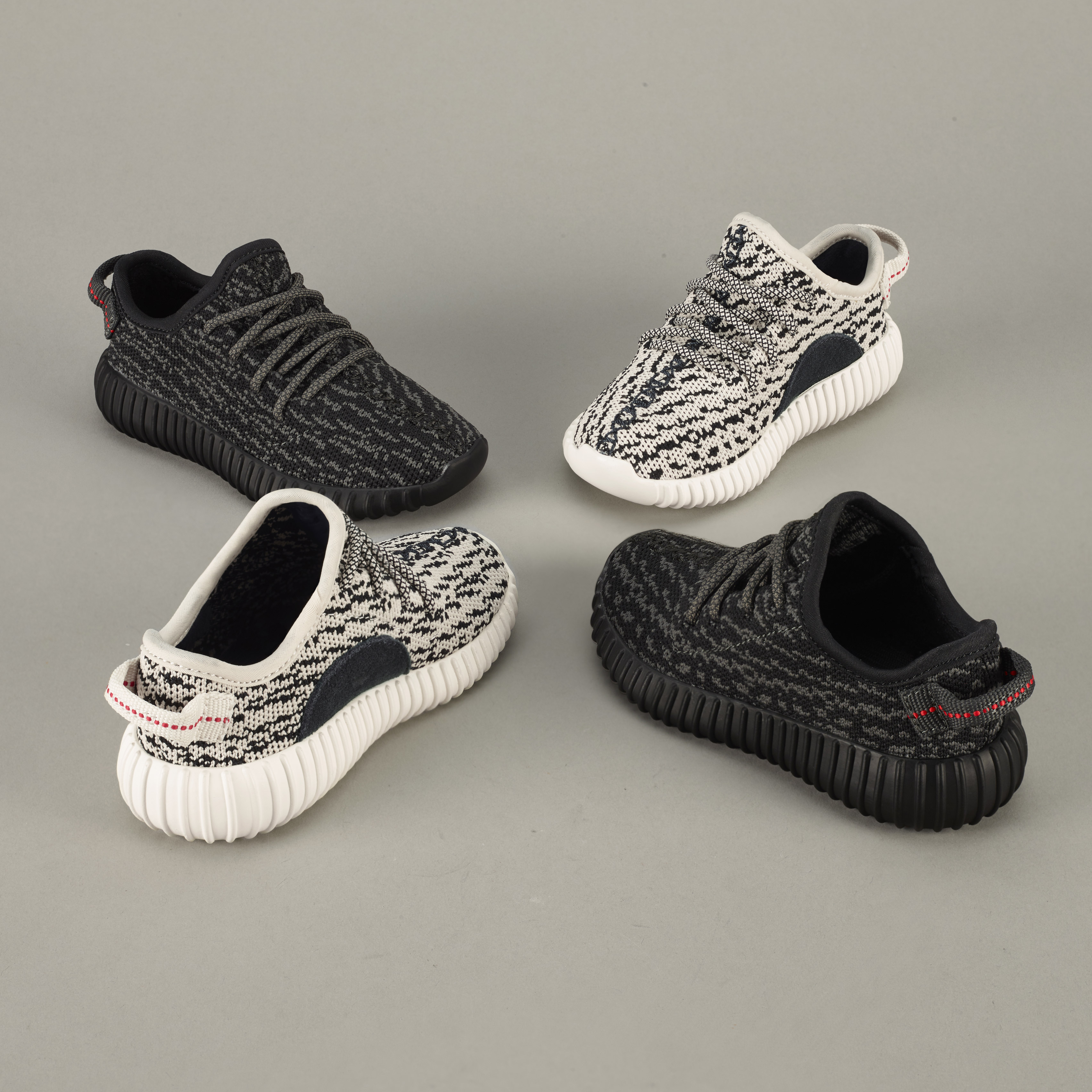
Sports brand Adidas is releasing child-size editions of the popular Yeezy Boost trainers designed by rapper Kanye West (+ slideshow). (more…)

 Sig Nordal