Marwa Al-Sabouni Explains How Syrian Architecture Laid the Foundations for War

http://ift.tt/2bxrATg

In 2014, Syrian architect Marwa al-Sabouni won the Syria category of the UN Habitat Mass Housing Competition for a housing scheme she developed for the city of Homs, her hometown. Now over two years later, Thames and Hudson has published her book Battle for Home: The Vision of a Young Architect in Syria. Throughout all of these events, al-Sabouni has remained in Syria. As the Guardian puts it: “As bombs fell around her, Syrian architect Marwa al-Sabouni stayed in Homs throughout the civil war, making plans to build hope from carnage.”

In this TEDSummit video, Al-Sabouni argues “that while architecture is not the axis around which all of human life rotates… it has the power to… direct human activity” She believes that the Old Islamic cities of Syria were once harmonious urban entities which advocated for co-habitation and tolerance through their intertwining. However, she posits that over the last century, beginning with French colonization, the Ancient towns were seen as un-modern and were gradually “improved” with elements of modernity: “brutal unfinished concrete blocks, aesthetic devastation and divisive communities that zoned communities by class, creed, or affluence.” This urban condition, she argues, is what created the conditions for the uprising-turned-civil war.  


The Destruction of Homs, Syria. Image © <a href='http://ift.tt/2bxqtCX Commons user Bo Yaser</a> licensed under <a href='http://ift.tt/2aA6y58 BY-SA 3.0</a>

The Destruction of Homs, Syria. Image © <a href='http://ift.tt/2bxqtCX Commons user Bo Yaser</a> licensed under <a href='http://ift.tt/2aA6y58 BY-SA 3.0</a>

As the Syrian government prepares for the rebuilding of cities following the December 2015 ceasefire, Al-Sabouni hopes to prevent past conflicts from happening again through a renewed urban fabric. This brings up the famous Corbusian rhetoric, “Architecture or Revolution,” but interestingly it seems to be a Corbusian vision of the city that Al-Sabouni is against.

Before the conflict, the city of Homs was the third-largest city in Syria. Home to almost a million people, it was an important industrial center that reflected Syria’s religious diversity composed of Sunni Muslims, Alawites, and Christians. Historically, the city of Homs has always been a diverse place with a number of historic mosques and churches throughout the city. But in the mid 20th century, after France took control of Syria as a result of the Sykes-Picot agreement, Homs was the subject of a Le Corbusier-influenced modernization process.


View of Homs in 2010. Image © <a href='http://ift.tt/2bGsKcB user zz77</a> licensed under <a href='http://ift.tt/2az4bMy BY-NC-ND 2.0</a>

View of Homs in 2010. Image © <a href='http://ift.tt/2bGsKcB user zz77</a> licensed under <a href='http://ift.tt/2az4bMy BY-NC-ND 2.0</a>

Dubbed the Syrian revolution’s “fallen capital,” much of Homs remains in rubble today following the retreat of rebel troops in the area and the ceasefire of 2015. During the hostilities, the government launched a major offensive on the district of Baba Amr, which was predominantly occupied by Sunni Muslims, to suppress rebel groups. Al-Sabouni cites the slum-like conditions in predominantly Sunni Muslim areas to be the root of sectarian conflict in Homs.

As the conflict halts, the sitting government in Syria is planning a rebuilding of Homs, and in particular the Baba Amr neighborhood. Their urban plan proposal consists of tall tower blocks, and wide open freeways—the kind of Middle Eastern urbanism that is best exemplified by rich cities such as Dubai, and which Al-Sabouni opposes.


Marwa Al-Sabouni's proposal for Baba Amr. Image Courtesy of Render (Marwa Al-Sabouni & Khaled Komee)

Marwa Al-Sabouni's proposal for Baba Amr. Image Courtesy of Render (Marwa Al-Sabouni & Khaled Komee)

In her effort to create an architecture that “gives back” to the public she, along with Team Render, formulated an urban design inspired by trees which is capable of growing and spreading organically, echoing the traditional bridge hanging over the old alleys, and incorporating apartments, private courtyards, shops, workshops, places for parking and playing and leisure, trees and shaded areas. While Al-Sabouni’s proposal gained international recognition, the sitting government in Homs has rejected her plan for Baba Amr.


Marwa Al-Sabouni's proposal for Baba Amr. Image Courtesy of Render (Marwa Al-Sabouni & Khaled Komee)

Marwa Al-Sabouni's proposal for Baba Amr. Image Courtesy of Render (Marwa Al-Sabouni & Khaled Komee)

Al-Sabouni recognizes that there are many ways to rebuild the city. As for her plan, she states: ”It’s far from perfect, obviously. I drew it during the few hours of electricity we get. And there are many possible ways to express belonging and community through architecture. But compare it with the freestanding, disconnected blocks proposed by the official project for rebuilding Baba Amr… We can learn from this. We can learn how to rebuild in another way, how to create an architecture that doesn’t contribute only to the practical and economic aspects of people’s lives, but also to their social, spiritual and psychological needs.”


Marwa Al-Sabouni's proposal for Baba Amr. Image Courtesy of Render (Marwa Al-Sabouni & Khaled Komee)

Marwa Al-Sabouni's proposal for Baba Amr. Image Courtesy of Render (Marwa Al-Sabouni & Khaled Komee)

http://ift.tt/2btg3Tr

General Services Building on Health Sciences Campus / Cruz y Ortiz Arquitectos


Courtesy of Cruz y Ortiz Arquitectos

Courtesy of Cruz y Ortiz Arquitectos


Courtesy of Cruz y Ortiz Arquitectos


Courtesy of Cruz y Ortiz Arquitectos


Courtesy of Cruz y Ortiz Arquitectos


Courtesy of Cruz y Ortiz Arquitectos

  • Architects: Cruz y Ortiz Arquitectos
  • Location: Granada, España
  • Area: 18223.0 sqm
  • Project Year: 2014
  • Photography: Courtesy of Cruz y Ortiz Arquitectos
  • Client: Universidad de Granada
  • Collaborators: Blanca Sánchez, Javier Monge, Oscar Minguez, Ramiro Ville- gas, Jeronimo Van Schendel, Esperanza Moreno, Alejandro Álvarez

  • Construction Manager: Cruz y Ortiz Arquitectos
  • Construction: Dragados S.A.
  • Lightning: Grupo JG Ingenieros Consultores

  • Structural Engineering: Tedeco Ingenieros
  • Infography: Cruz y Ortiz Arquitectos
  • Acoustics: Arau Acústica

  • Safety And Health: Cemosa, Ingeniería y Control

  • Model: Queipo Maquetas

  • Budget: 30.000.000 €

Courtesy of Cruz y Ortiz Arquitectos

Courtesy of Cruz y Ortiz Arquitectos

From the architect. Flowing with the natural inclination of the terrain, general movement on the campus finds access to the array of services that are offered in the General Services Building. There can be found the Auditorium, Library and Nursery, as well as restaurants and exhibition rooms. 


Courtesy of Cruz y Ortiz Arquitectos

Courtesy of Cruz y Ortiz Arquitectos

Plan

Plan

Courtesy of Cruz y Ortiz Arquitectos

Courtesy of Cruz y Ortiz Arquitectos

The expressive will that appears in the ways connecting the main courses on the campus with the General Services Building generates a facility that has a singular, organic shape in consonance with its uses. Such uses -library, museum, cafeteria, and so on- open to free open spaces that are at a lower level than the general height of the site and are delimited by elm plantations. 


Courtesy of Cruz y Ortiz Arquitectos

Courtesy of Cruz y Ortiz Arquitectos

Courtesy of Cruz y Ortiz Arquitectos

Courtesy of Cruz y Ortiz Arquitectos

The most significant volume in the building corresponds to the Auditorium. The Auditorium has a capacity of 1,000 people and is appropriately equipped to host any kind of event that the Universidad de Granada might programme (lectures, plays, auditions, etc.), thus having a multi-functional nature. 


Model

Model

Courtesy of Cruz y Ortiz Arquitectos

Courtesy of Cruz y Ortiz Arquitectos

http://ift.tt/2b7vtA1

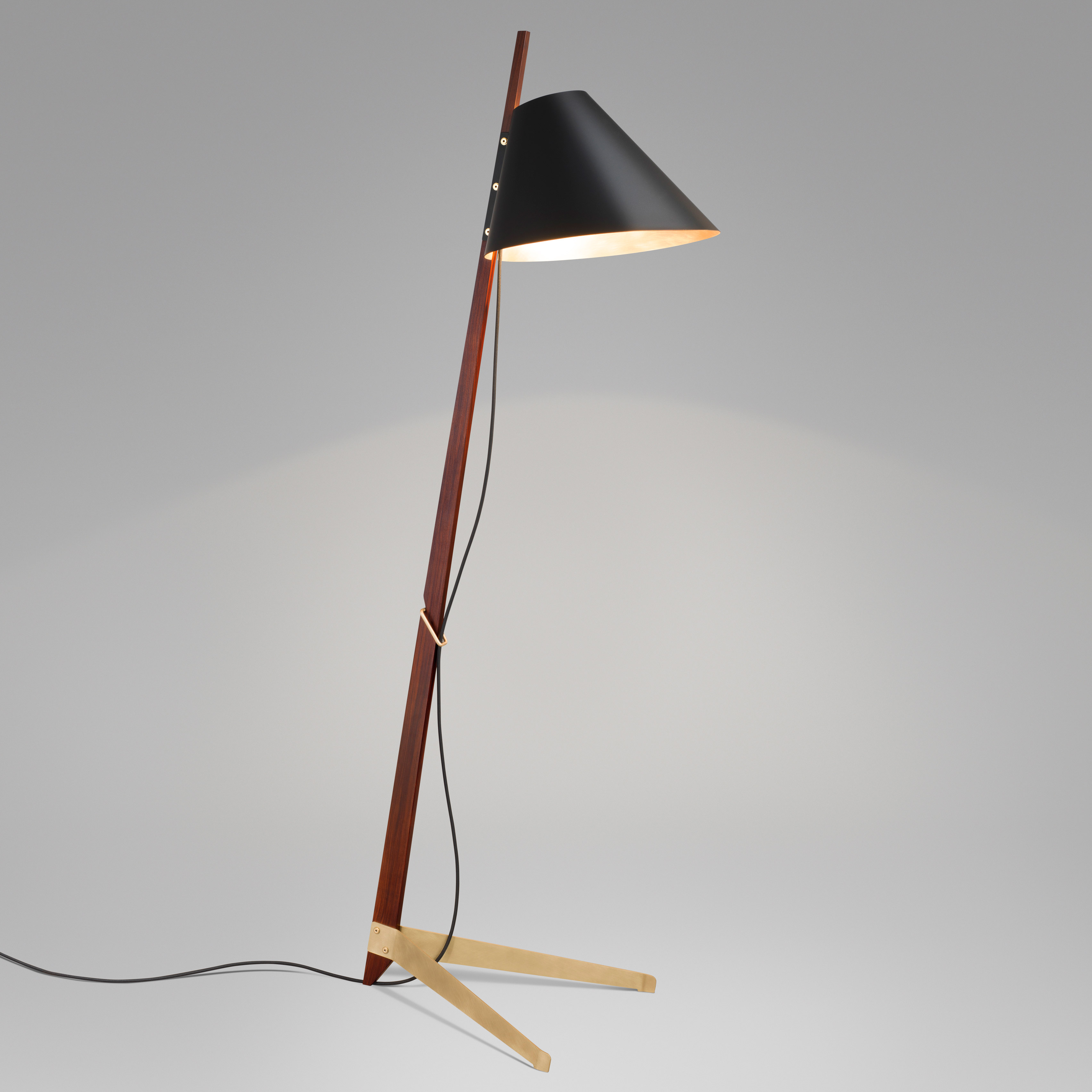
Ilse Crawford designs brass-footed floor lamp for Kalmar Werkstätten


Maison&Objet 2016: London designer Ilse Crawford has added to her Billy series of lighting with a floor lamp that rests on a pair of brass feet.   (more…)

http://ift.tt/2b9EZwH

What Kind of Witch Are You?

Witches are present in many cultures for as long as the humanity existed. Nobody can say for sure that witches are real, but believing in a bit of magic can’t hurt.

What kind of witch would you be if you were one? The Wicked Witch of the West or Glinda the Good Witch? Or maybe somewhere in between?

witchTake just now this quick, fun and easy quiz to find out what kind of witch you are!

What Kind of Witch Are You?
//cdn.playbuzz.com/widget/feed.js

Leave a comment below to tell us what you’ve got!

The post What Kind of Witch Are You? appeared first on Change your thoughts.

http://ift.tt/2bxiw0x

Carla Bechelli Arquitectos Unveils Villa Housing Project at 2016 Venice Biennale


Courtesy of Carla Bechelli Arquitectos

Courtesy of Carla Bechelli Arquitectos

Carla Bechelli Arquitectos has created an exhibition of its multiple-residence project, Las Piedras Villas & Houses, a 2015 recipient of an International Property Award, which is currently on display at the 2016 Venice Biennale, at Palazzo Bembo.

Located in the suburbs of Buenos Aires in Argentina, the project consists of a series of small-scale buildings around a central lake intended to create a dialogue with the single-family housing in the surrounding neighborhood. 


Courtesy of Carla Bechelli Arquitectos

Courtesy of Carla Bechelli Arquitectos

As the urban plan moves away from the lake, building heights and density increase, resembling rings rippling outwards.


Courtesy of Carla Bechelli Arquitectos

Courtesy of Carla Bechelli Arquitectos

Courtesy of Carla Bechelli Arquitectos

Courtesy of Carla Bechelli Arquitectos

The project further incorporates nature into its core through a central park area, to which all units, expansion areas, and terraces are provided views, through which the classical concept of an Italian villa—closed off and shielded from the outside—is reinforced.


Courtesy of Carla Bechelli Arquitectos

Courtesy of Carla Bechelli Arquitectos

Furthermore, the villas are terraced, “to widen the overall inner space of the project and give the units enhanced natural sunlight and 180-degree views for their top levels.”


Courtesy of Carla Bechelli Arquitectos

Courtesy of Carla Bechelli Arquitectos

The exhibition at the Venice Biennale is a large-scale, tridimensional installation, and utilizes layering to express changes in time, movement, and space, particularly through imagery of vegetation. “This 3D artwork subtly demands the viewer to walk past it, as architecture unveils through nature.”


Courtesy of Carla Bechelli Arquitectos

Courtesy of Carla Bechelli Arquitectos

Courtesy of Carla Bechelli Arquitectos

Courtesy of Carla Bechelli Arquitectos

Courtesy of Carla Bechelli Arquitectos

Courtesy of Carla Bechelli Arquitectos

Courtesy of Carla Bechelli Arquitectos

Courtesy of Carla Bechelli Arquitectos

Courtesy of Carla Bechelli Arquitectos

Courtesy of Carla Bechelli Arquitectos

News via Carla Bechelli Arquitectos.

http://ift.tt/2bxhFgs

💙 Fall Over Creek on 500px by Jingjing Li☀ ……

💙 Fall Over Creek on 500px by Jingjing Li☀  … http://ift.tt/1M12glL

http://ift.tt/2b7q249

Rafael Schmid updates his Zurich home with textured chipboard and smooth anhydrite surfaces


Swiss architect Rafael Schmid has overhauled his 1920s home in Zurich, pairing the property’s original herringbone parquet flooring with more contemporary chipboard and mineral-based surfaces (+ slideshow). (more…)

http://ift.tt/2b7oJSP

A Minimalist Contemporary Interior in Milan

Prisca Pellerin Architecture & Intérieur Renovates a 2-Bedroom Attic in Ivry-sur-Seine, France

Living Under the Roof by Prisca Pellerin Architecture (3)

Living Under the Roof is a project completed by Prisca Pellerin Architecture & Intérieur in 2013. The home is located in Ivry-sur-Seine, France. Living Under the Roof by Prisca Pellerin Architecture & Intérieur: “This project is a complete renovation of an apartment 2-room attic. To enhance the quality of light of that “cocoon” housing, the bias has been to open up the spaces (decompartmentalisation, amplified perspectives, transparency of Parisian artist..

More…

The White / NPS Tchoban Voss


© Werner Huthmacher

© Werner Huthmacher


© Werner Huthmacher


© Werner Huthmacher


© Werner Huthmacher


© Werner Huthmacher

  • Architects: NPS Tchoban Voss
  • Location: Stralauer Allee 5, 10245 Berlin, Germany
  • Architect In Charge: Sergei Tchoban, nps tchoban voss
  • Project Partner: Philipp Bauer
  • Project Leader: Karsten Waldschmidt (design), Philipp Bauer (planning)
  • Area: 8572.0 sqm
  • Project Year: 2016
  • Photographs: Werner Huthmacher
  • Team: Priska-Magdalena Schwalke, Anissa Landgraf
  • Client: Wulff Hanseatische Bauträger GmbH
  • Structural Engineering: Otto Wulff Bauunternehmung
  • Mep Engeneering: Ingenieurbüro Rainer Mai

© Werner Huthmacher

© Werner Huthmacher

This seven-storey residential building is integrated into a row of commercial and office buildings located at the former east port (Osthafen) in Berlin. Its grounded and at the same time graceful appearance makes the volume resemble a stranded ship, coloured in a luminous white. Every detail of the building relates to the form of an arc as the main theme, which is reflected in rounded outer and inner edges, in the ornamental lines of the façade as well as in the wave-like form of the balconies.


© Werner Huthmacher

© Werner Huthmacher

In addition to the almost continuous glazing the distinctive shapes of the balconies underline the horizontal structure of the façade with an integrated mineral thermal insulation system. Rounded angles combined with the interaction of the retracted and protruding parts give the building an extremely plastic appearance. Moreover, the form of the balconies in each apartment provides a panoramic view over the river. 


© Werner Huthmacher

© Werner Huthmacher

Plan

Plan

© Werner Huthmacher

© Werner Huthmacher

The trapezoid ground plan of this reinforced concrete cross-wall construction opens towards the street with a glazed atrium. The spacious entrance hall is wheel chair accessible. The arcades provide access to the apartments. The staircase and elevator are located next to the main entrance in Hafenstraße. Soft light shines through the multilayered transparent foil roof of the atrium. In the middle of the space an abstract steel sculpture of a ship propeller is fixed on fin cables.   


© Werner Huthmacher

© Werner Huthmacher

The sizes of the 68 two to four room apartment are varying from 48 till 125 square meters. Utility and storage rooms as well as 38 parking lots are located under the raised ground floor while the other 23 parking spaces are outside the building. The area between the building and the river is designed as a public green area with two children’s playground spaces, thus contributing to the housing quality for inhabitants as well as for pedestrians. 


© Werner Huthmacher

© Werner Huthmacher

http://ift.tt/2bUIbCl