Forensic Architecture Digitally Reconstruct Secret Syrian Torture Prison from the Memories of Survivors

Forensic Architecture, a research agency based at the University of London, in collaboration with Amnesty International, has created a 3D model of Saydnaya, a Syrian torture prison, using architectural and acoustic modeling. The project, which was commissioned in 2016, reconstructs the architecture of the secret detention center from the memory of several survivors, who are now refugees in Turkey.

Since the beginnings of the Syrian crisis in 2011, tens of thousands of Syrians have been taken into a secret network of prisons and detention centers run by the Assad government for a variety of alleged crimes opposing the regime. After passing through a series of interrogations and centers, many prisoners are taken to Saydnaya, a notoriously brutal “final destination,” where torture is used not to obtain information, but rather only to terrorize and often kill detainees.

Located about 25 kilometers north of Damascus, Saydnaya stands in a German-designed building dating from the 1970s. In recent years, no meaningful visits from independent journalists or monitoring groups have been permitted, so no recent photographs or other accounts exist of its interior space, except for the memories of Saydnaya survivors.


Courtesy of Forensic Architecture

Courtesy of Forensic Architecture

In order to reconstruct the interior of the space, architectural and sound modeling specialists worked with witnesses, who “described the cells and other areas of the prison, including stairwells, corridors, gates, doors, windows, bars, and hatches,” as well as objects such as blankets, bowls, and torture tools.

“As the model became increasingly detailed, the witnesses could be located virtually within it, experiencing spaces at eye level and zooming into elements in them. This model-building made the witnesses active participants in the process of reconstruction. Sometimes, as they measured the rooms, located windows and doors, placing objects in their virtual environment, flashes of recollection took place.”


Courtesy of Forensic Architecture

Courtesy of Forensic Architecture

While in Saydnaya, sound becomes a prisoner’s tool to understanding their environment due to the restricted natural lighting and constant blindfolding. Furthermore, speaking or making noise is prohibited, including inside the cells, as well as while being beaten. Consequently, prisoners become attuned to minute sounds, which can then be pieced together to form the architecture of the building.

Audio investigator Lawrence Abu Hamdan has utilized eco and reverberation modeling to help confirm the size of spaces such as cells, corridors, and stairwells, from sounds like water pipes dripping, and the sound of torture through air vents.

Because survivors have endured traumatic events, the project acknowledges that memories can be erroneous: “We cross-referenced the individual spatial and audio testimonies to construct an overall model of the building, Whenever we identified potential errors or contradictions between different accounts we tried to carefully resolve them, but we also made a note and modeled what we knew to be divergences. Errors, contradictions, and lacunae are enriched with information because they contain the subjective experience of a detainee and their mental condition. Such errors could themselves be considered as evidence in their own right.”

“What we’re trying to do with this effort is try to build the story of this prison and try to speak up for all these people who are still in there, because it’s not something that is finished,” explains Christina Varvia, project coordinator at Forensic Architecture.


Courtesy of Forensic Architecture

Courtesy of Forensic Architecture

Based out of Goldsmiths, University of London, Forensic Architecture is a research agency that “undertakes advanced architectural and media research on behalf of international prosecutors, human rights organisations, as well as political and environmental justice groups.” FA have played a crucial role in the establishment of architectural forensics as a field, as they have used technology to recreate places and situations that would otherwise be lost to time.

At the 2016 Venice Biennale, Forensic Architecture is presenting elements from four recent projects, including a micro-analysis of the effects on a ruin from a drone strike in Miranshah, Pakistan; an urban study into the war-torn city of Rafah in Gaza; a tracking of the paths of migrant boats lost in the Mediterranean Sea; and a map of environmental violence along the shifting climatic frontiers of desertification and deforestation.

The full, explorable model of Saydnaya is available in English and Arabic here, and can be viewed by location or by witness.

Learn more about the project here.

News via Forensic Architecture.

http://ift.tt/2b0oVNh

Nagoya Courthouse / Takeshi Hosaka Architects


© Koji Fujii / Nacasa & Partners Inc.

© Koji Fujii / Nacasa & Partners Inc.


© Koji Fujii / Nacasa & Partners Inc.


© Koji Fujii / Nacasa & Partners Inc.


© Koji Fujii / Nacasa & Partners Inc.


© Koji Fujii / Nacasa & Partners Inc.

  • Structural Engineers: Kenji Nawa / Nawakenji-M
  • Client: Keisuke Noguchi
  • Site : 470.60 sqm
  • Building Area : 233.84 sqm
  • Floor Area Ratio: 187.67 sqm

© Koji Fujii / Nacasa & Partners Inc.

© Koji Fujii / Nacasa & Partners Inc.

From the architect. The site is located approximately 1 km west of Nagoya castle and in the neighborhood there are 2 story houses as well as high rise apartments over 10 stories high. Summer in Nagoya is very hot. When a downpour occurs water can rise over 50 cm above street level. Taking these matters into account we have designed a serene and comfortable house for a family of three (husband/wife and  child).


© Koji Fujii / Nacasa & Partners Inc.

© Koji Fujii / Nacasa & Partners Inc.

Plan

Plan

© Koji Fujii / Nacasa & Partners Inc.

© Koji Fujii / Nacasa & Partners Inc.

Taking advantage of the large site we have designed a single level court house surrounding a courtyard garden. However if we make it just a court house the outline of the sky is too distinct and from the surrounding high rise apartments you are able to see inside therefore we had the line of the glass facing the courtyard and the line of the roof cave in and protrude and the line of the glass, eaves and dirt floor intersect at the inside/outside boundary in a plane format. In this way it becomes an architectural style where the outside dirt floor with a roof, outside dirt floor without a roof, outside vegetable garden, all dirt floors inside and each area facing the inside glass come together side by side near the inside/outside boundary. This diverse area as well as having a role of controlling the line of sight and shutting out direct sunlight in summer it creates a living space where inside, half outside and outside produce a variety of living scenes.


© Koji Fujii / Nacasa & Partners Inc.

© Koji Fujii / Nacasa & Partners Inc.

The height of the floor is made 75cm higher than the front street for safety measure in case of a downpour. We have used diatom earth for the inside wall as much as possible so that you can feel the naturalness of the dirt. The outer wall was created with plane lines of roughness and planted a tree in the small outer garden so that you will be able to see the leaves outside form the small window. In addition, due to the window at the courtyard side and the small window at the small outer garden side the whole house has natural air flowing through thereby making it livable even in the hot summer of Nagoya.


© Koji Fujii / Nacasa & Partners Inc.

© Koji Fujii / Nacasa & Partners Inc.

The footpath made of earth mortar in the garden courtyard creates a shortcut access path and both inside and outside were planned to play a main role with daily life, vegetable garden life and garden life coming together. 


© Koji Fujii / Nacasa & Partners Inc.

© Koji Fujii / Nacasa & Partners Inc.

http://ift.tt/2bCJVys

Villa Mangwon / aoa architects


© Chin Hyosook

© Chin Hyosook


© Chin Hyosook


© Chin Hyosook


© Chin Hyosook


© Chin Hyosook

  • Architects: aoa architects
  • Location: 415-60 Mangwon-dong, Mapo-gu, Seoul, South Korea
  • Architect In Charge: Jaewon Suh, Euihaing Lee
  • Construction: COWORKERS
  • Area: 290.3 sqm
  • Project Year: 2016
  • Photographs: Chin Hyosook, Suh Jaewon, Hong Sangdon

© Chin Hyosook

© Chin Hyosook

From the architect. Villa mangwon is five stories building with gabled roof. The shape of the site is nearly rectangular and it has distant views on the upper floors. On the ground floor there are parking areas and a small retail shop with pilotis. The upper floors consist of small offices on the 2nd floor, four linear studio apartments on the 3rd and 4th. The studio apartment for rent is entirely open to the south and north, where it has a small balcony on the south and an open street view on the north. The top floor is the land owner’s family house with an attic and a small roof terrace. 


© Hong Sangdon

© Hong Sangdon

The family house has a linear living room on the west, two small rooms on the east and they are connected through a corridor of gable form. At the end of this corridor, natural light is coming through the skylight which connects two rooms, corridor and attic spatially, while giving enough light to those. The attic is finished with raw materials and normally for children’s playroom. Through a korean traditional wooden window in the attic children can talk to parents in the dining area. The roof terrace has a feeling of a room due to its wall with rounded opening on the south.


© Chin Hyosook

© Chin Hyosook

Section

Section

© Chin Hyosook

© Chin Hyosook

The structure of the building presents the A(served)-B(servant)-A(served) spatial system that invites an open view in the linear space. Contrary to the ‘white monolith’ with irregular window arrangement shown frequently in small housing projects in Korea recently, villa mangwon obviously expresses stacking each floor with regular and repetitive window arrangement.


© Chin Hyosook

© Chin Hyosook

This strategy reflects on our fundamental attitude which is to ask the architectonic meaning in the construction, to keep a distance from excessive sentimentality in design methodology and to seek harmony within disharmony. The front facade implies that the social weight rise upwards while it looks like the whole physical and social weight rest on the single thin column on the ground floor. Metaphorically, it resembles somewhat to the unstable structure of the Korean real estate market.


© Chin Hyosook

© Chin Hyosook

http://ift.tt/2bCCWp8

Loch Etive, Scotland photo via bonne

Loch Etive, Scotland

photo via bonne

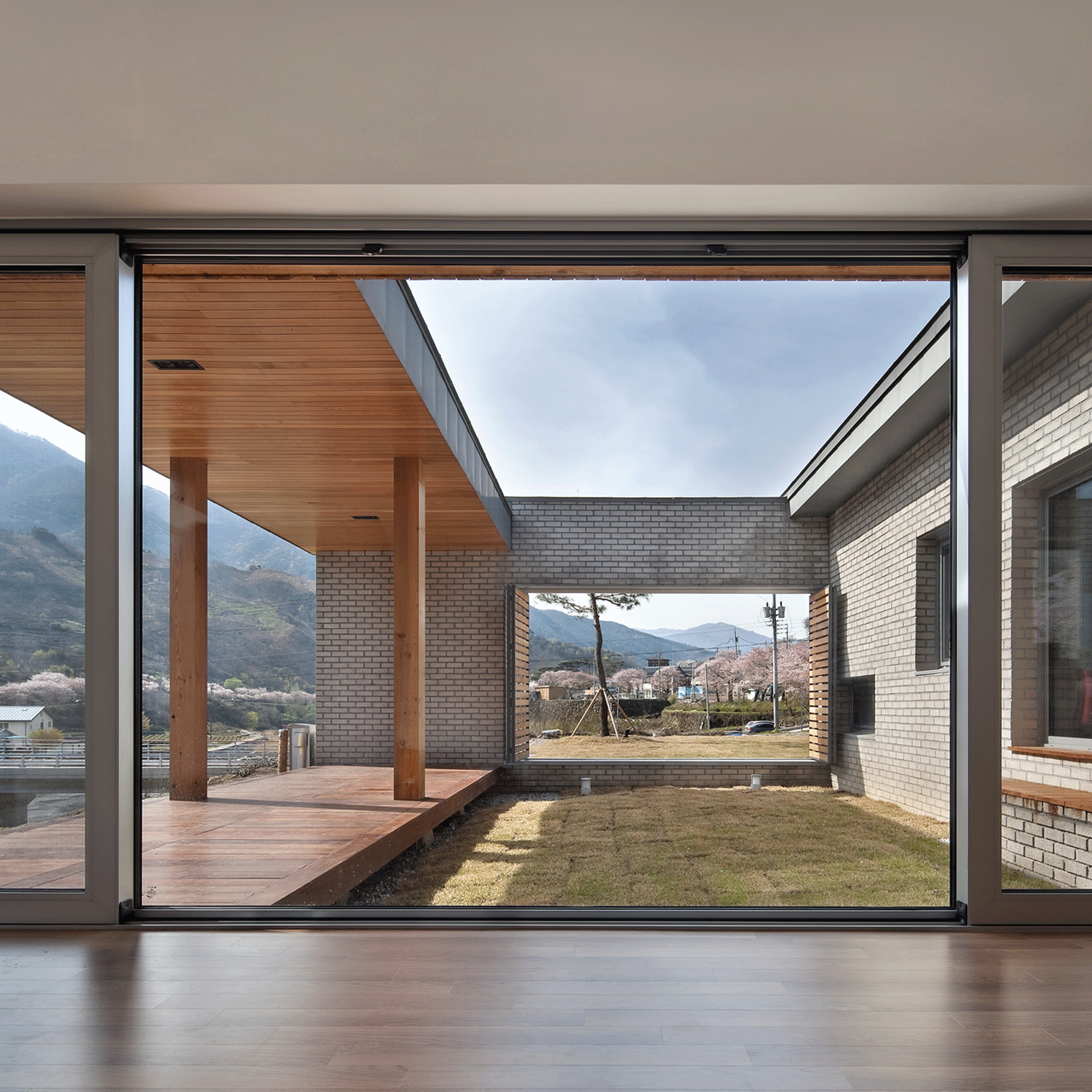
Rooftop bridge connects riverside house and roadside cafe in a South Korean valley


South Korean studio Lee Haan Architects has completed a house and cafe connected by a bridge and arranged around courtyards with views of a nearby river and cherry trees (+ slideshow). (more…)

http://ift.tt/2b28P9e

How to Be a Better Salesperson

Owning a business doesn’t make you a natural salesperson, yet selling is the most important thing you’ll do in your business. Here are tips to improve your selling skills.

http://ift.tt/2b21Ygd

The Secret Behind Successful Branding

Here’s what branding is – and isn’t – and help for clearly defining your business’s brand.

http://ift.tt/2b08OiX

6 Personal Branding Lessons to Learn from Trump and Clinton

Your personal brand has an effect on your success. Here are 6 personal branding lessons you can learn from the 2016 US presidential candidates.

http://ift.tt/2b21wyp

abandoned mall 01 by Monsieur Edward http://flic.kr/p/dQYy74

via Abandonedforgotten http://ift.tt/2bnMFAK

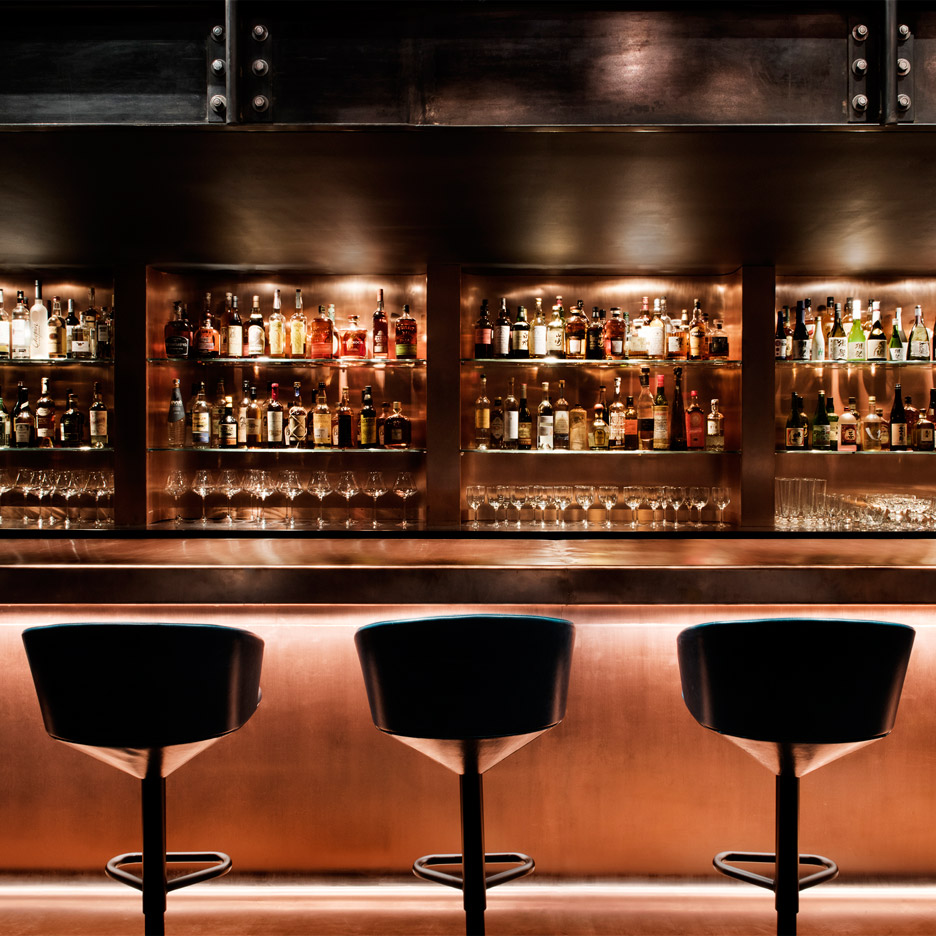
Tom Dixon designs “darkly theatrical” Himitsu cocktail lounge in Atlanta


British designer Tom Dixon has completed his first hospitality project in America: a speakeasy in Atlanta, Georgia, featuring a copper bar and pendants that resemble molten metal (+ slideshow). (more…)

http://ift.tt/2bfdFQ5