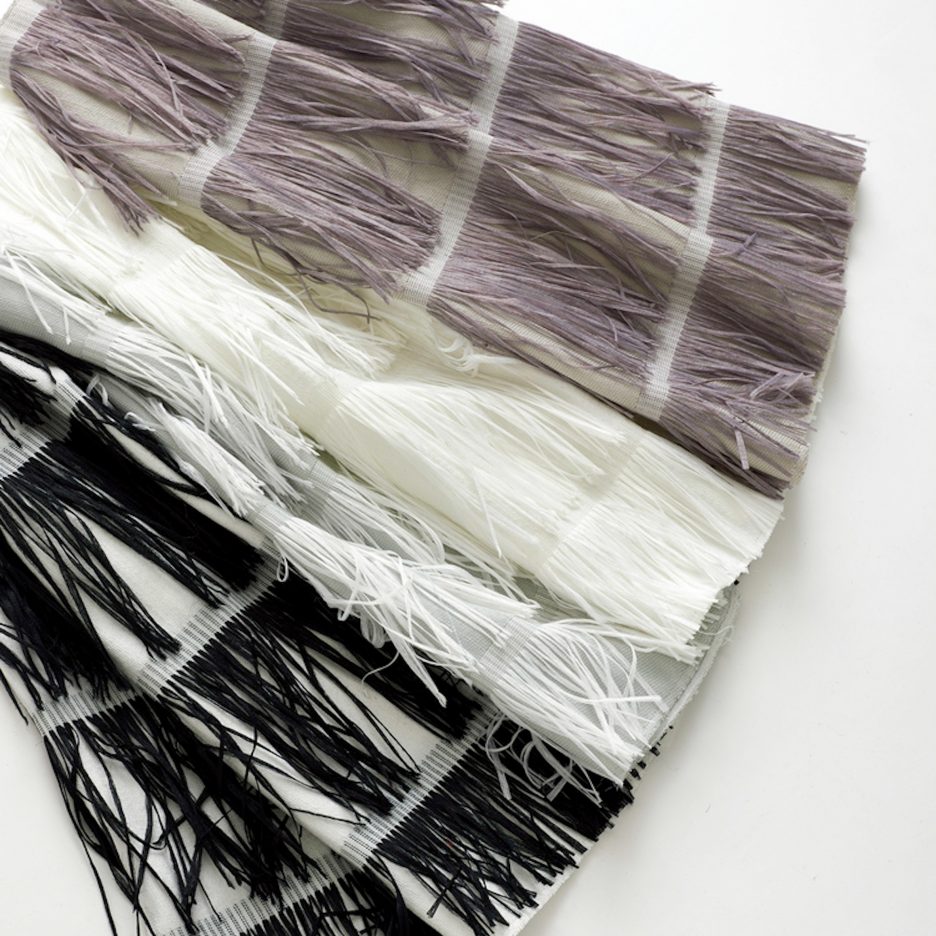
Dezeen promotion: an Issey Miyake fabric-pleating demonstration, a talk at Muji‘s flagship store and an installation made of recycled materials will take place during the inaugural New York Textile Month (+ slideshow) (more…)
Play is about finding ones place in the world and making sense of that world. We have created a plan that seeks to juxtapose two different worlds. The man made and the natural. The plan has an urban exterior and a wild natural interior, each space contains a different type of play.
The formal exterior is a place for sports and structured ordered games, while inside the wild interior children are encouraged and free to construct and destruct their own play spaces using natural materials. A boundary “ribbon” between the two worlds wraps and protects the interior, while adapting towards the exterior to allow games and integrate traditional playground elements.
Grevelingenveld known locally as Deltaplantsoen is a neighbourhood square in Rivierenbuurt, The Hague. The design of the 8.100m2 space links carefully with the development of a new neighbourhood school which faces onto the square.
The playground concept brings three different types of play together into one ensemble; the interior is a wild natural playscape, the exterior an urban sports court, and the threshold between the two known as “the ribbon” is a playful architectural element containing all the traditional playground equipment. This diversity of playing types arranged as an open ended playscape, creates a rich and dynamic world that offers children endless possibilities for play and to reinterpret and reimagine the space. In contrast to the many mono-functional playgrounds with standard equipment that exist everywhere today.
The central natural playground is a space where children are free to construct and destruct their own play spaces from natural materials and fast growing plants such as willow and reeds. Bringing a natural playscape like this into the heart of the neighbourhood will increase children’s daily contact with nature, an important factor for a healthy childhood and an experience that is missing from many urban neighbourhoods. The planting selection is chosen to provide maximum visual variety throughout the year while the biodiversity of flora and fauna will provide a rich context for environmental education offered by the school, and the continual growth of the plants and trees over the years provides an ever changing landscape.
The threshold between the urban and the natural is known as The Ribbon, it’s an undulating playscape where children can navigate between the two worlds in an engaging and inviting way. The Ribbon can be climbed over via the climbing wall, crawled through via the tunnels, slide via the slides, the edge has a steel coping for skating and scooting. It serves as a sitting element at the edge of the sandpit or a spectator stand for those watching the sports courts and much more.
In contrast, the external space is a formal hard surfaced square for sports and structured games. Here patterns of lines define sports courts such as football and basketball and also create an abstract patterns, a playful matrix that can set boundaries for new games.
The office of Peter Zumthor has been selected to design an expansion to the Beyeler Foundation, located just outside Zumthor’s childhood home of Basel, Switzerland. The Swiss architect was chosen from a prestigious shortlist of 11 firms to add to the existing museum building, designed by Renzo Piano Building Workshop and completed in 1997.
“The sky above Basel, the city and its surroundings–those are the landscapes of my youth,” said Zumthor. “It is heart-warming to be able to design a major building here.”
Zumthor’s design was unanimously named the winner by an international jury board, which included Swiss billionaire philanthropist Hansjörg Wyss, Chairman Emeritus of Vitra Rolf Fehlbaum, Tate Museums Director Sir Nicholas Serota and architects Roger Diener and Jean Nouvel.
“The interaction of human beings, nature, art and architecture is one of the keystones of the Fondation Beyeler’s success, and was also essential for the development of Renzo Piano’s award-winning museum. Peter Zumthor possesses the sensitivity and experience that are needed to create a building of outstanding quality in this very special location,” commented Fondation Beyeler’s Director, Sam Keller, on the decision.
The full shortlist for the competition was as follows:
The new building extension will be constructed on land previously off-limits to the public, opening up new areas of the park to Beyeler Foundation visitors. The project will be privately financed and is expected to cost CHF 80 million (~$8,000,000 USD), of which CHF 50 million has already been confirmed.
Images of the winning design will be released in late autumn/winter as Zumthor’s design is further developed.
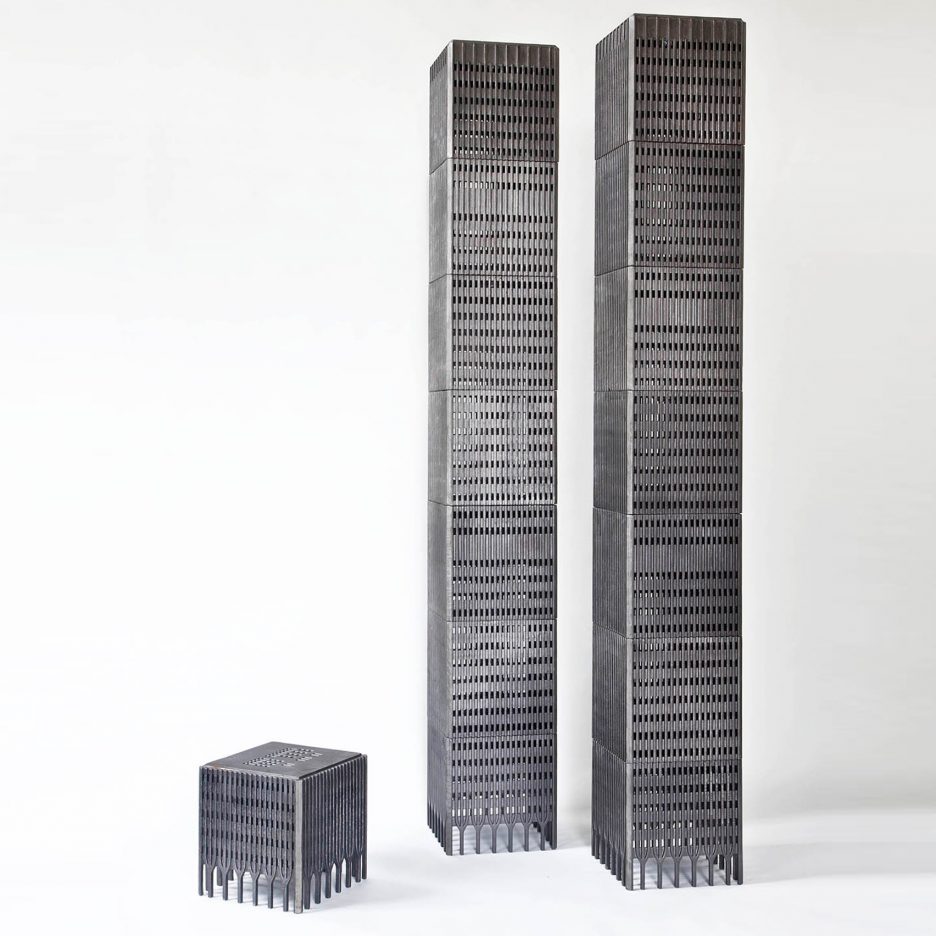
These World Trade Center models by Rolf Bruggink can be stacked to create a pair of columnar lanterns or collapsed to form stools (+ slideshow). (more…)
What to do if the children have grown up but want to stay at the parents house. There are the once who rebuild the house or decide to build another storey. A third option is to build a new house next to the old one; a so called “Auszugshaus”. In the Austrian countryside this is a traditional way to deal with the change of generation. The younger generation stays in the old family home whereas the parents move into a smaller house. And that is what this family chose to do. A wooden pavillon was placed next to the old family home.
The new elegant pavillon is perfectly designed for the parents needs. Instead of single rooms the architects decided to create a small open loft. A sanitary box in the middle and two side rooms structure the building. Moveable elements enable different areas according to the current needs. Room-high windows allow a surrounding view into the garden and make the living area look even bigger. Accessibility of course is ensured.
The pavillon was prefabricated with high precession. Walls and floors are made of KHL panels. The surface is painted white on the inside and black on the outside. For the windows larch wood was chosen. The wide roof creates a sheltered outdoor area and protects the facade against sun and rain.






 Sig Nordal