When Droplets Create Space: A Look at Liquid Architecture


Light in Water, 2015. Paris. Architects: DGT Architects. Photographer: <a href='http://ift.tt/2cXITio Shimmura</a>. Image © DGT Architects

Light in Water, 2015. Paris. Architects: DGT Architects. Photographer: <a href='http://ift.tt/2cXITio Shimmura</a>. Image © DGT Architects

Throughout the past century, architecture’s relationship with water has developed along a variety of different paths. With his “Fallingwater” house, for example, the American master Frank Lloyd Wright confronted the dramatic flow of water with strong horizontal lines to heighten the experience of nature. Since then, architecture’s use of water has become more varied and complex. A space made almost purely of water emerged with Isamu Noguchi‘s design at the Osaka World Expo: glistening water appeared to fall from nowhere and glowed in the dark. Later with digitalization and fluid forms as design parameters, the focus shifted towards liquid architecture made of water and light. The interpretations have ranged from architectural forms modeled after literal drops of water, like Bernhard Franken´s visionary “Bubble” for BMW, to spectacular walk-in installations made of lines of water, transformed into pixels by light.


Icelandic Pavilion. Hannover, Expo 2000. Image © Thomas Schielke


Blur Building. Exposition Pavilion: Swiss Expo, Yverdon-Les-Bains, 2002. Architects: Diller Scofidio + Renfro. Image © Diller Scofidio + Renfro


Olafur Eliasson: The reflective corridor, Draft to stop the free fall, 2002. (Der reflektierende Korridor, Entwurf zum Stoppen des freien Falls, 2002). Photographer: Werner J. Hannappel. Courtesy of Centre for International Light Art Unna, Germany. Image © 2002 Olafur Eliasson


Luce Tempo Luogo, 2011. Milano. Architects: DGT Architects. Photographer: Daici Ano. Image © DGT Architects


HtwoOexpo, Interactive Museum. Neeltje Jans Island, Netherlands, 1997. Architect: NOX, Lars Spuybroek. Image © NOX/Lars Spuybroek

HtwoOexpo, Interactive Museum. Neeltje Jans Island, Netherlands, 1997. Architect: NOX, Lars Spuybroek. Image © NOX/Lars Spuybroek

NOX fueled the discussion about the fluidity of water and light with their exhibition of real and virtual water at the Htwo0expo at Neeltje Jans, Netherlands, in 1997. Here, in a windowless and amorphous interior structure, Lars Spuybroek assigned the real water the role of being non-interactive, creating a sprayed mist that drained over the floors. As a counterpoint NOX introduced virtual water through interactive projections with sensors, which transformed wave patterns into ripples and blobs culminating in fascinating viewer experiences of water and light.


Icelandic Pavilion. Hannover, Expo 2000. Image © Thomas Schielke

Icelandic Pavilion. Hannover, Expo 2000. Image © Thomas Schielke

In contrast, the Iceland pavilion at Expo 2000 welcomed visitors with a water façade. Iceland, surrounded by water and boasting numerous spouting geysers on the island, presented a striking blue membrane cube in Hanover. A flowing film of water turned the pavilion into a cubic waterfall. With the sun shining on the cascading ripples and thereby reflecting the moving clouds, the façade generated a fresh and sparkling impression of the environment. In addition, the Icelandic pavilion revealed an artificial geyser in the interior, where guests could climb up a spiral ramp to admire the power of water. Thus the installation played with the a strong polarity of bright, brilliant falling water outside versus a dark geyser illuminated with stage lighting effects inside. After the Expo, the 28-meter-tall blue cube was recycled to present natural phenomena at the Universe amusement park in Nordborg, Denmark.


Blur Building. Exposition Pavilion: Swiss Expo, Yverdon-Les-Bains, 2002. Architects: Diller Scofidio + Renfro. Image © Diller Scofidio + Renfro

Blur Building. Exposition Pavilion: Swiss Expo, Yverdon-Les-Bains, 2002. Architects: Diller Scofidio + Renfro. Image © Diller Scofidio + Renfro

In comparison to the falling water theme at Hanover, the Swiss Expo in Yverdon-Les-Bains in 2002 gained international recognition with the remarkable “Blur Building” by Diller Scofidio + Renfro. Fine mist from 35,000 high-pressure nozzles created an artificial cloud, which changed with the strength and direction of the wind, altering where the tourists could walk in order to explore the effect of an optical white out. By opening their mouths, the visitors could actually drink the building. After ascending to the deck, a view opened softly into the blue sky. In that way the architects confronted the public with extreme interplays of light and water, from a diffuse white in the inside to brilliant fine water droplets in the sun and ultimately colorful rainbow effects. After sunset, another image appeared when the architecture turned into a powerful and mystical luminous cloud on Lake Neuchâtel.


Olafur Eliasson: The reflective corridor, Draft to stop the free fall, 2002. (Der reflektierende Korridor, Entwurf zum Stoppen des freien Falls, 2002). Photographer: Werner J. Hannappel. Courtesy of Centre for International Light Art Unna, Germany. Image © 2002 Olafur Eliasson

Olafur Eliasson: The reflective corridor, Draft to stop the free fall, 2002. (Der reflektierende Korridor, Entwurf zum Stoppen des freien Falls, 2002). Photographer: Werner J. Hannappel. Courtesy of Centre for International Light Art Unna, Germany. Image © 2002 Olafur Eliasson

However, several other architects and artists have also explored the effects of light and water in a strictly controlled interior environment. The Danish-Icelandic artist Olafur Eliasson tried to generate an image of freezing water drops in 2002. Deep down in the cellar of a former brewery, Eliasson benefited from a completely dark room as a black background at the Centre for International Light Art in Unna, Germany. Two parallel curtains of water frame a corridor made of water falling 5 meters to the ground. Due to bright strobe lights with a cold color temperature, the falling drops seem as if they are frozen. The mix of the loud sound of falling water droplets in the live space and the harsh contrast of white drops in a dark space definitely captivates the viewers.

Intrigued by digitalization, the MIT professor Carlo Ratti, together with his team at Carlo Ratti Associati and researchers from MIT Media Lab and MIT Senseable City Lab, created the “Digital Water Pavilion” for the Zaragoza Expo, Spain, in 2008. The digitally controlled water droplets enabled him to create two-dimensional patterns with water pixels, and to liquidate the traditional building wall. For visitors the curtain of water opened interactively, and the vertically moving curtain exposed a fascinating playful pattern. In the evening the illumination intensified the contrast of the bright falling curtain against the dark background.

Random International went beyond these two dimensional water curtains with their three-dimensional water installation “Rain Room” at the Barbican Centre in London in 2012. The visitor could actually walk through the falling water without getting wet, Thanks to a series of cameras which created a 3D-map of the presence and movement of visitors, a section of “dry pixels” was created in the Rain Room wherever there was a human presence. A bright spotlight at eye level at the end of the dark curving corridor attracted the viewers with a glaring light and sharply rendered all vertical lines of rain for an experiment that was rich in contrast.


Luce Tempo Luogo, 2011. Milano. Architects: DGT Architects. Photographer: Niki Takehiko. Image © DGT Architects

Luce Tempo Luogo, 2011. Milano. Architects: DGT Architects. Photographer: Niki Takehiko. Image © DGT Architects

When bringing the stroboscopic light effect, used by Eliasson in Unna, together with the constant illumination in the Rain Room by Random International, a new dimension of light experience emerges, where the water can transform from droplets into lines. DGT Architects used this approach in their rectangular installation “Luce Tempo Luogo” for the Toshiba Milano Salone in 2011. With an interval of seven microseconds they materialized a single point of light with water. However, over several minutes the viewers could follow the gradual transformation of water pixels into lines while the room changed from a dimly lit room to a space exclusively made of illuminated water. In 2015 DGT Architects adapted this concept to a circular layout for the “Light in Water” installation, as part of the exhibition “Lumière – The Play of Brilliants” in Paris. In addition, this project included a subtle light change regarding the color temperature, from a warm white to neutral white for the outer ring while the inner ring stayed constant in neutral white.


Light in Water, 2015. Paris. Architects: DGT Architects. Photographer: <a href='http://ift.tt/2cXITio Shimmura</a>. Image © DGT Architects

Light in Water, 2015. Paris. Architects: DGT Architects. Photographer: <a href='http://ift.tt/2cXITio Shimmura</a>. Image © DGT Architects

In comparison to the walk-in and self-contained installations by the artists and architects mentioned above, Shiro Takatani and the light artist Christian Partos regard the “3d Water Matrix” cube as a medium and not as a piece of art – comparable with the way a piano is a medium for the music it sends. The digitally controlled waterfall with a luminous ceiling enables numerous compositions in which the water pixels form lines, planes or amorphous volumes merging fluently from one graphical pattern to the next and thereby creating a dancing liquid sculpture. However, Takatani involved the frequency of light as another parameter for compiling patterns in his “ST/LL” work in 2015. Based on the light intervals of the field overhead he generated extraordinary images, where the liquid pixels seem to freeze in planes and volumes.

With the digitalization of falling water the element has relinquished its natural flow and ripples, and turned into sophisticated pixel patterns for liquid spaces. The response to the distinction of water pixels and non-pixel spaces has led to high-contrast installations of white droplets against black rooms. Consequently the fascination for digital process has extended to include light as well, with designers often preferring electrical light instead of natural daylight for its option of precise control. Due to the modulation of these droplets from pixels to falling vertical streams, attention has shifted from conventional light parameters like brightness or color temperature towards the timing and frequency of lighting. As the interplay of digital water pixels and digital light control has just started, we might therefore expect many more solutions for smart flying pixels which glow in the future.

Light matters, a monthly column on light and space, is written by Thomas Schielke. Based in Germany, he is fascinated by architectural lighting and works as an editor for the lighting company ERCO. He has published numerous articles and co-authored the books “Light Perspectives” and “SuperLux”. For more information check www.erco.com, www.arclighting.de or follow him @arcspaces

http://ift.tt/2d0Ckrf

Boston – Massachusetts – USA (by worldaroundtrip) 

Boston – Massachusetts – USA (by worldaroundtrip

House in Caramão da Ajuda / phdd arquitectos


© Francisco Nogueira

© Francisco Nogueira


© Francisco Nogueira


© Francisco Nogueira


© Francisco Nogueira


© Francisco Nogueira


© Francisco Nogueira

© Francisco Nogueira

The Caramão neighborhood in Lisbon, was built between 1940 and 1945 on the slope of Ajuda facing the Tagus and above the Restelo neighborhood.

Along with other social housing in Lisbon, such as Caselas, this neighborhood  was designed to represent small villages that provided, in the style of adjustment, a similar type of life of the more humble part of society, to which they were accustomed to and also occupied at the date of its construction.


© Francisco Nogueira

© Francisco Nogueira

It is characterized by townhouses of two floors with about 40m2 each and two backyards. One in front, smaller, and the other in the back, that is, mostly, a good part of each plot.

Characterized by very small and compartmentalized spaces the main challenge of these houses is the adaptation to a contemporary experience and the need for larger spaces with a relationship with the outside.


© Francisco Nogueira

© Francisco Nogueira

The project was developed based on an organizational principle of hierarchically house, floors. Each floor corresponds to a particular program so that the areas could be exploited to the maximum, generating spaces with quality.

The organization and distribution of spaces was based on the idea of privacy and garden usage for the social spaces of the house. 


Section

Section

The project adapts the existing construction to a contemporary house respecting the morphology of the neighborhood and the characteristic front elevation.

The intervention is mainly made in the back of the house with the addition of a volume with 3 levels, which increases the area to the double.


© Francisco Nogueira

© Francisco Nogueira

On the ground floor of house after the entrance, we can find the living room, dining room and kitchen. A large and continuous space that leads you into the garden.


© Francisco Nogueira

© Francisco Nogueira

In the basement floor we can find a bathroom and an office open to a patio and in the upper level bedrooms and a bathroom also open to the patio.


Section

Section

Opening yards, strategically placed inside the house, ensures the legally required areas, good lighting and privacy of the close and friendly neighbours.


© Francisco Nogueira

© Francisco Nogueira

http://ift.tt/2cpC5VA

Montreal’s Three-Million-Square-Foot Hospital to Become Largest Healthcare Project in North America


Courtesy of CannonDesign

Courtesy of CannonDesign

CannonDesign and NEUF architect(e)s have unveiled the design for the Centre Hospitalier de l’Université de Montréal (CHUM), the largest healthcare construction project in North America and one of the largest current healthcare projects in the world, which has been in the works for almost a decade. 

Spanning over 3 million square feet, the 22-story complex will merge three aging hospitals into one, creating a space with 772 single-bed patient rooms, 39 operating theaters, and more than 400 clinics and examination rooms.


Courtesy of CannonDesign


Courtesy of CannonDesign


Courtesy of CannonDesign


Courtesy of CannonDesign


Courtesy of CannonDesign

Courtesy of CannonDesign

Now nearing completion of its first phase, the CHUM teaching hospital is also the largest public-private partnership (P3) healthcare project in Canadian history, set to revitalize an entire sector of Montréal’s urban core – explained the architects.


Courtesy of CannonDesign

Courtesy of CannonDesign

Courtesy of CannonDesign

Courtesy of CannonDesign

Through this first phase, the hospital’s core capabilities will become available, including all patient rooms, operating theaters, diagnostic and therapeutics, as well as the oncology program, thus leaving offices, a conference center, and ambulatory spaces for Phase 2.


Courtesy of CannonDesign

Courtesy of CannonDesign

In order to break down the massive scale of the project, a public space component has been interwoven into the design to make it as open, transparent, and welcoming as possible. “Our team recognized the importance of creating a human experience that draws people in, to interact with the building in a variety of ways, without it feeling overbearing to visitors and patients. We wanted to completely redefine Montrealers’ image of what a hospital feels like” said Azad Chichmanian, partner, and architect with NEUF architect(e)s.


Courtesy of CannonDesign

Courtesy of CannonDesign

The new CHUM campus will feature 13 large-scale works of art, far surpassing the Quebec government’s requirement of dedicating a minimum of 1% of a public development’s budget to the integration of art. Through these artworks, the hospital seeks to provide a “more human” experience for visitors and staff.


Courtesy of CannonDesign

Courtesy of CannonDesign

CHUM has already won several awards, including an A’ Design Award in Italy, recognition at the Healthcare Design Forum in London, and a position as a finalist for the World Architecture Festival to be held in Berlin in November.


Courtesy of CannonDesign

Courtesy of CannonDesign

Courtesy of CannonDesign

Courtesy of CannonDesign

Courtesy of CannonDesign

Courtesy of CannonDesign

Courtesy of CannonDesign

Courtesy of CannonDesign

Learn more about the project here.

News via CannonDesign.

http://ift.tt/2cL7AOI

This Abstract Image Test Will Reveal Your True Self

We are how we are and we have to accept that, if we want to be happy. That’s why to know ourselves it is very important. However, we have to admit, that often we are not that sincere, not even with ourselves. But our subconscious doesn’t lie.

Let’s see what associations our mind will do and find out how we really are at our core.

see imagesTake this quiz now and find out your true self!

This Abstract Image Test Will Reveal Your True Self

//cdn.playbuzz.com/widget/feed.js

Tell us how accurate this was by leaving a comment below!

The post This Abstract Image Test Will Reveal Your True Self appeared first on Change your thoughts.

http://ift.tt/2ctvg7Q

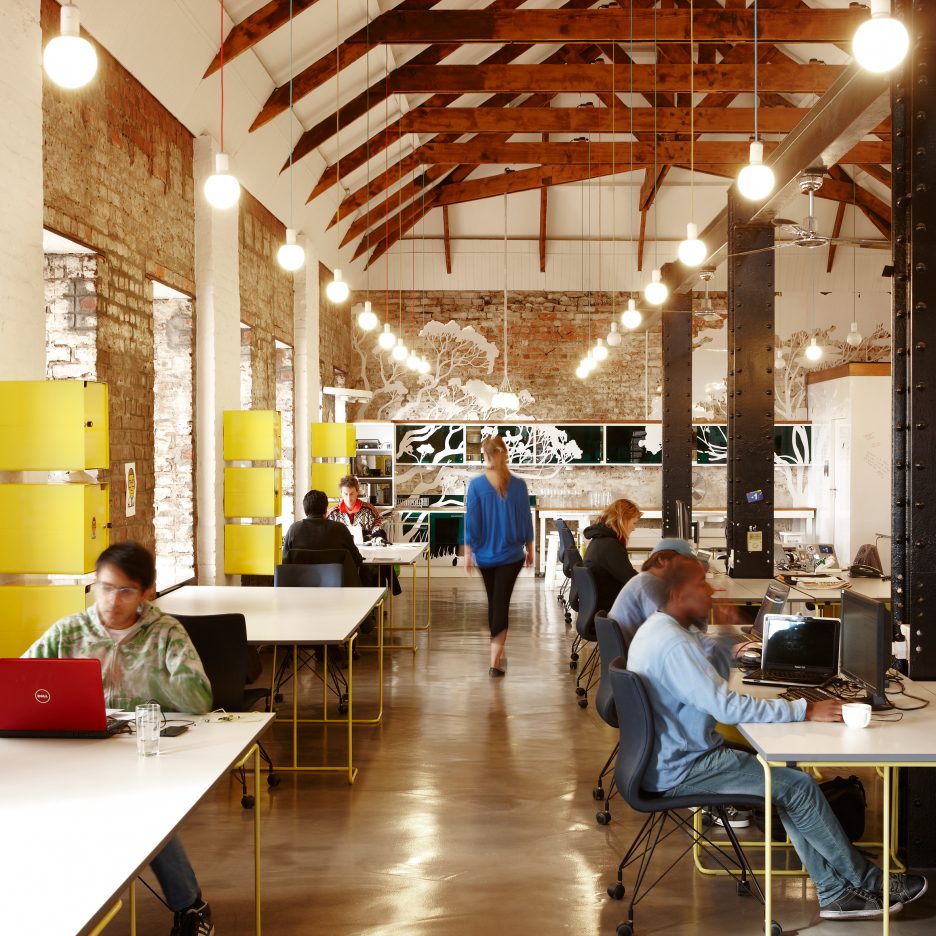
Open-plan offices make workers more unfriendly and less productive


Workers in open-plan offices are more distracted, unfriendly and uncollaborative than those in traditional workplaces, according to the latest industry survey. (more…)

http://ift.tt/2cttnrI

💙 »it will come over me as the sun goes down« on 500px by…

💙 »it will come over me as the sun goes down« on 500px by Daniel… http://ift.tt/1rDqSIx

http://ift.tt/2cXrV3I

How To Find Great Ideas For Writing A Story

//pagead2.googlesyndication.com/pagead/js/adsbygoogle.js

(adsbygoogle = window.adsbygoogle || []).push({});

Many writers, both professionals and beginners, often struggle to come up with good ideas for writing a story. Some of them even struggle to the point of quitting.

Contrary to what most people believe in, writing inspirations don’t just appear out of the blue. In most cases, we have to work hard to gain and find them.

Look into your past

On several occasions, Salinger stated that Catcher in the Rye was heavily influenced by his own rebellious past. This means that he did not need any external source of inspiration to make his great book. Instead, he simply wrote down what his inner voice told him.

In writing a story, it’s helpful if you can sit down for awhile to listen to your thoughts. Salinger showed how practicing introspection can help in writing great stories, and that’s exactly what every writer aiming to be successful needs to try.

Write down every thought

write-down-your-imagination

//c.amazon-adsystem.com/aax2/getads.js

//<![CDATA[
aax_getad_mpb({
"slot_uuid":"16dcbcd0-2124-4a85-9abe-c263dd9084e5"
});
//]]>

Freud once stated that daydreaming is innate in every human being. However, because humans are typically shy, they often feel ashamed to share their daydreams.

In his informal talk called “Creative Writers and Day-Dreaming”, Freud claimed that people who are able to overcome the shame of sharing their imaginations are writers. They are able to wrap their imaginations with meaningful and colorful words.

//pagead2.googlesyndication.com/pagead/js/adsbygoogle.js

(adsbygoogle = window.adsbygoogle || []).push({});

Because of this idea, it’s important that you become aware of your every thought. Make sure that you have a notebook or your phone with you so that you can easily jot down all ideas that come into your mind.

See Also: How to Organize Your Writing Workplace for Better Productivity

Meet new people

Getting outside of your comfort zone and talking to strangers can be a bit difficult, especially if it’s not your personality. However, meeting new people and hearing their stories can give you fresh ideas for writing a story.

Each person has a unique life story, and if you meet and hear a lot of them, you will be able to tell their tales in an amazing way. You can even use their personalities as characters in your project. You can travel to other countries and continents to meet a lot of amazing and inspirational people.

Explore the world

change-of-perspective

It’s a common knowledge that nature can enhance a person’s creativity.

Because of this, it’s important to get a change of scenery once in awhile. If you’ve been living in a heavily populated city for quite a long time, you can take a short trip and reconnect with nature. In case you’ve been residing in the countryside for years, you can explore some ideas by traveling to the city.

A change of perspective is often necessary if you want to create magnificent stories.

Open yourself up to the other creative things

It is scientifically proven that music enhances creativity. Aside from it, you can also find inspiration in painting, movies, theater, comics and other forms of art. Some of these creations can affect you while others may not even spark any ideas.

//pagead2.googlesyndication.com/pagead/js/adsbygoogle.js

(adsbygoogle = window.adsbygoogle || []).push({});

However, this shouldn’t deter you from exploring. By searching for and looking at a wide range of inspirations, you’ll be able to find something that can generate ideas for writing your story.

See Also: Here’s How to Get Creativity Bursting Out of Your Eyeballs

Conclusion

If you’re struggling to find great ideas for writing a story, it’s best if you can take a step back and think of ways on how you can generate them. Ideas don’t always appear whenever you need them. In some cases, you have to go out and look for them.

However, this doesn’t mean that the external world is your only source. You can also find great ideas within you and your past experiences if you can only just have the patience and time to listen to your thoughts really well.


//pagead2.googlesyndication.com/pagead/js/adsbygoogle.js

(adsbygoogle = window.adsbygoogle || []).push({});

(function(d) {
var params =
{
id: “cb4f919c-04fa-460c-b2ff-2c7f9ecf4472”,
d: “ZHVtYmxpdHRsZW1hbi5jb20=”,
wid: “165294”,
cb: (new Date()).getTime()
};

var qs=[];
for(var key in params) qs.push(key+’=’+encodeURIComponent(params[key]));
var s = d.createElement(‘script’);s.type=’text/javascript’;s.async=true;
var p = ‘https:’ == document.location.protocol ? ‘https’ : ‘http’;
s.src = p + “://api.content.ad/Scripts/widget2.aspx?” + qs.join(‘&’);
d.getElementById(“contentad165294”).appendChild(s);
})(document);

The post How To Find Great Ideas For Writing A Story appeared first on Dumb Little Man.

http://ift.tt/2cpo22j

Theodore + Theodore Architects Design a Home Overlooking the Atlantic Ocean in Maine

Lily Pond House by Theodore + Theodore Architects (3)

Lily Pond House is a private home located in Biddeford, Maine, USA. Completed in 2015, it was designed by Theodore + Theodore Architects. Lily Pond House by Theodore + Theodore Architects: “Located on the a granite knob 30′ above a lily pond the house overlooks the Atlantic Ocean to the south. It is an optimal orientation that combines water views with a positive solar aspect. The house replaced an existing..

More…