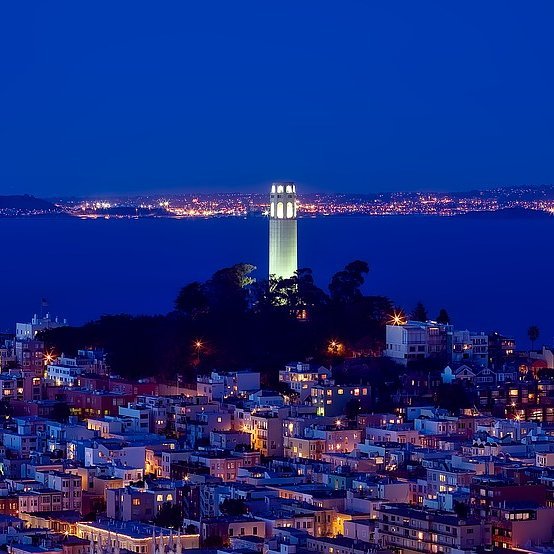
@signordal Coit Tower San Francisco California

via Instagram http://ift.tt/2cxv884

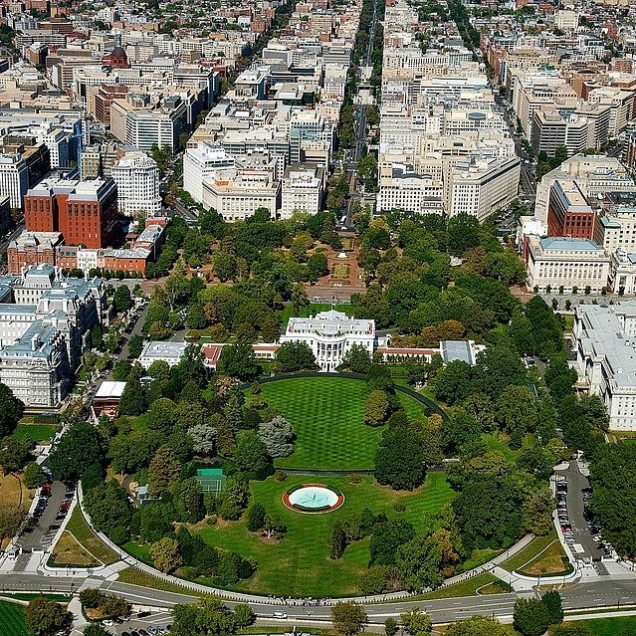
@signordal Washington DC

via Instagram http://ift.tt/2cy2GiZ

Heatherwick Studio’s “Vessel” Will Take the Form of an Endless Stairway at New York’s Hudson Yards


Interior View of the Vessel. Image Courtesy of Forbes Massie-Heatherwick Studio

Interior View of the Vessel. Image Courtesy of Forbes Massie-Heatherwick Studio

Thomas Heatherwick is bringing a new public monument to New York City. Today, Heatherwick Studio revealed the first renderings of “Vessel,” a 15-story tall occupiable sculpture comprised of 154 intricately interconnecting flights of stairs that will serve as the centerpiece of the new Hudson Yards development in west Manhattan.


View of the Special Events Plaza. Image Courtesy of VisualHouse-NelsonByrdWoltz


Upper Level View Through the Vessel. Image Courtesy of Forbes Massie-Heatherwick Studio


View of the Public Square and Gardens Looking South from 33rd St.. Image Courtesy of Forbes Massie-Heatherwick Studio


View of the Pavilion Grove. Image Courtesy of VisualHouse-NelsonByrdWoltz


View of the Public Square and Gardens Looking South from 33rd St.. Image Courtesy of Forbes Massie-Heatherwick Studio

View of the Public Square and Gardens Looking South from 33rd St.. Image Courtesy of Forbes Massie-Heatherwick Studio

Inspired by the mesmerizing geometries of Indian stepwells, Vessel’s lattice calls to mind a beehive or jungle gym – and will indeed offer a workout to visitors game enough to climb the almost 2,500 individual steps within the structure, nearly a mile’s worth of vertical pathways.

The object’s form takes on a conical shape, widening from 50 feet at the base to 150 feet at the top. And if the geometries alone weren’t eye catching enough, the steel structural frame has been clad in a polished copper-colored steel skin, which will provide warped reflections of the plaza below.


Upper Level View Through the Vessel. Image Courtesy of Forbes Massie-Heatherwick Studio

Upper Level View Through the Vessel. Image Courtesy of Forbes Massie-Heatherwick Studio

“We had to think of what could act as the role of a landmarker,” said Thomas Heatherwick. “Something that could help give character and particularity to the space.”

The structure will be located in the central plaza of Hudson Yards, where it will be surrounded by native perennial gardens and a canopy of native trees, as well as a variety of seating options where visitors to the nearby Culture Shed or High Line can rest their feet.


View of the Special Events Plaza. Image Courtesy of VisualHouse-NelsonByrdWoltz

View of the Special Events Plaza. Image Courtesy of VisualHouse-NelsonByrdWoltz

The plaza platform itself constitutes quite the technical innovation, as it acts as a ventilating cover for the rail yards while also serving as a reservoir for site drainage and storm-water management.


View of the Pavilion Grove. Image Courtesy of VisualHouse-NelsonByrdWoltz

View of the Pavilion Grove. Image Courtesy of VisualHouse-NelsonByrdWoltz

The cost of “Vessel” is estimated at $150 million, double the original budget of $75 million.

Read more about the unveiling, here.

http://ift.tt/2cJUJcS

Whidbey Island, Washingtonphoto via seattletimes    

Whidbey Island, Washington

photo via seattletimes    

Atelier Bow-Wow, OMA, and Amale Andraos Live From the 2016 Oslo Architecture Triennale


The After Belonging Agency: Carlos Minguez Carrasco, Ignacio Galán, Alejandra Navarrese Llopis, Lluís Alexandre Casanovas Blanco and Marina Otero Verzier. Image Courtesy of Oslo Architecture Triennale

The After Belonging Agency: Carlos Minguez Carrasco, Ignacio Galán, Alejandra Navarrese Llopis, Lluís Alexandre Casanovas Blanco and Marina Otero Verzier. Image Courtesy of Oslo Architecture Triennale

“Belonging,” the curatorial quintet of the 2016 Oslo Architecture Triennale, After Belonging, argue, “is no longer something bound to one’s own space of residence, or to the territory of a nation.” For this group of Spanish-born architects, academics and theorists—Lluís Alexandre Casanovas Blanco, Ignacio Galán, Carlos Minguez Carrasco, Alejandra Navarrese Llopis and Marina Otero Verzier—the very notion of our belongings and what it means to belong is becoming increasingly unstable.

After Belonging is the sixth incarnation of the Triennale and the first one in which a single curatorial thread has woven all of the festival’s activities together, including the international conference. The goal of the two primary exhibitions—On Residence and In Residence, including a series of Intervention Strategies—is to develop platforms with the aim of “rehearsing research strategies,” providing new ways for architects to engage with “contemporary changing realities.”

While the European Union and the Schengen Area (the first successful transnational non-federal agreement for free movement of people) is becoming increasingly strained by nationalist rhetoric and a growing fear of open borders, development of an all-African passport will, in the words of After Belonging’s curators, “allow many to expand the territories they can call home.” As such, being “at home” today has different definitions. The ways and places in which we reside—be it a rural farmstead, a studio apartment, or simply a room—are changing, and rapidly so. Our relationship to the objects that we “produce, own, share and exchange” is fundamentally tied to the question: “where do we belong?”


"In Residence" Exhibition (National Museum – Architecture, Oslo). Image Courtesy of Oslo Architecture Triennale

"In Residence" Exhibition (National Museum – Architecture, Oslo). Image Courtesy of Oslo Architecture Triennale

"On Residence" Exhibition (DogA, Oslo). Image Courtesy of Oslo Architecture Triennale

"On Residence" Exhibition (DogA, Oslo). Image Courtesy of Oslo Architecture Triennale

http://ift.tt/2cf8wbW

The After Belonging Conference

On September 9th, 2016, Snøhetta’s National Opera and Ballet in Oslo hosted the After Belonging conference, bringing together a wide collection of architects, thinkers, decision-makers, and local experts tasked with dissecting “the architectures entangled in the contemporary reconfiguration of belonging.” Topics addressing architecture’s relation to refugeeism, migration and homelessness were discussed, alongside new mediated forms of domesticity and foreignness, environmental displacements, tourism, and the technologies and economies of sharing.

During the course of the conference ArchDaily broadcast live discussions with a selection of the speakers in order to hear their take on the Triennale theme. You can watch them all again, here.

http://ift.tt/2cf9nZZ

http://ift.tt/2cxTsDv

http://ift.tt/2cf9kh0

http://ift.tt/2cxU1wY

http://ift.tt/2cf9k0u


Courtesy of Oslo Architecture Triennale

Courtesy of Oslo Architecture Triennale

http://ift.tt/2cJPgm9

Jeremy Corbyn v Owen Smith in Sky’s Labour leadership debate – Politics live

Rolling coverage of Jeremy Corbyn and Owen Smith in the final Labour party leadership debate, on Sky News

8.45pm BST

Jeremy Corbyn has tweeted a plug for the debate.

Join myself and @OwenSmith_MP for the last hustings of the #LabourLeadership contest. Live on Sky News at 9pm #LabourHustings

8.42pm BST

The Labour leadership contest is finally coming to an end and tonight we’ve got the last TV hustings, hosted by Sky News. Jeremy Corbyn is the clear favourite and he sailed through last week’s BBC Question Time hustings (which I covered here) quite easily. Owen Smith’s main argument has been that Corbyn does not have the leadership abilities to win an election but he will find that case a little harder to make than usual this evening in the light of the fact Corbyn’s performance at PMQs today was a rare triumph.

Corbyn and Smith are debating at Sky HQ before an audience of around 200 Labour supporters. According to Sky, they are split one third Corbyn supporters, one third Smith supporters and one third undecided. The presenter is Sky’s political editor Faisal Islam, whose interviews with David Cameron and Michael Gove were two of the TV highlights of the EU referendum campaign.

Here I am talking because I want people to know, as they come to vote, that if they inflict Jeremy back on us again, even if we all pledge loyalty to him, if we go and serve, he will not deliver electoral victory because he does not know how to.

Look, we all make mistakes. Jeremy and I have never been on frontbench positions. He’s been in parliament 30 years, I’ve been in parliament nearly 20 years, we’re all learning rapidly. I want to learn from our critics. In that way we can just come back together and form an effective opposition.

Continue reading…

Politics blog | The Guardian http://ift.tt/2cFwYUR
Here’s the tech that lets Uber’s self-driving cars…

Here’s the tech that lets Uber’s self-driving cars see the world

It’s official: the future is coming.

Starting Wednesday morning, a select few Uber customers can hail a ride in a self-driving caras part of the company’s Pittsburgh pilot. You need a special invite to try it out, and the car isfar from completely autonomous, but it’s the first time people can use a ride-hailing service to experience a driverless car.

There’s a lot of tech making sure these cars can navigate safely. Here’s our breakdown:

http://ift.tt/2cFwnCD

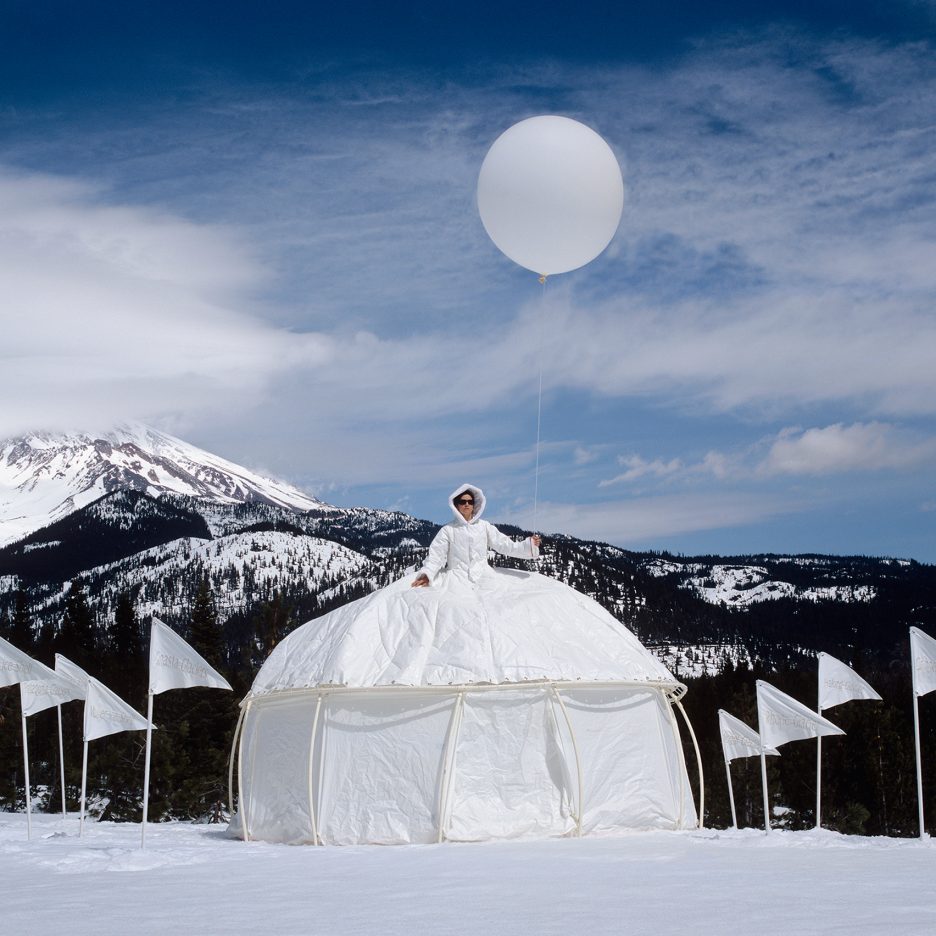
Dress Tents by Robin Lasser and Adrienne Pao are part shelter, part attire


These tents worn as giant dresses were created and photographed by artists Robin Lasser and Adrienne Pao as “wearable architecture” (+ slideshow). (more…)

http://ift.tt/2cYAya7

Byens Bro Foot and Cycle Bridge / Gottlieb Paludan Architects


© Lars R. Mortensen

© Lars R. Mortensen


© Lars R. Mortensen


© Gottlieb Paludan Architects


© Lars R. Mortensen


© Lars R. Mortensen


© Lars R. Mortensen

© Lars R. Mortensen

The Foot and Cycle bridge, named Byens Bro(The City’s Bridge), provides a link between Central Odense and the new urban developments by the harbor. The bridge provides better access to the platforms of the railway station, while it at the same time creates a magnificent new landmark for Odense, Denmark’s third-largest city.


© Lars R. Mortensen

© Lars R. Mortensen

The new foot and cycle bridge gives shape to Odense Municipality’s vision of a transport link for cyclists and pedestrians across the railway, using simple and effective architectural tools. The bridge is a dynamic and spectacular extension of the existing urban space of Odense, as it connects the urban quarters north and south of the railway. It has become a beautiful, practical and organic part of Odense’s urban space, and easy to use for all pedestrians and cyclists and for the many people travelling to and from Odense by train every day. This basic functional quality translates into a bridge that blurs the boundaries between architecture and engineering artistry and gives Odense an inspirational and efficient traffic solution as well as a striking landmark that will stand the test of time. 


Plan

Plan

The bridge is devised as an extension of Odense’s existing infrastructural grid and therefore it is actually two bridges in one: a cycle bridge designed to cater for cyclists’ traffic needs and a foot bridge providing the very best access conditions for pedestrians. For comfort and safety reasons, the two functions are segregated but visually and architecturally, they are brought together in one bridge. 


© Lars R. Mortensen

© Lars R. Mortensen

A prominent feature of the bridge and the city is the 30-metre pylon in mirror-finished steel carrying the longest span of the bridge and marking its roots in the city. The lighting of the pylon follows the same principles as that of the rest of the construction and reflects dynamically what it is all about, namely the motion of people and cyclists crossing the bridge. The bridge is designed through the natural traffic patterns and creates a beacon for Odense and a celebration of non-motorized traffic.


Plan

Plan

The bridge enriches the urban space of Odense with two new attractive squares — one in the centre of the city and the other near a new adult education center. The squares serve as meeting points and arrival areas for train passengers and provide room for some 1,400 bicycle parking spaces. The stairs can be used as seats when events take place on the squares and in King’s Garden — the park across the street.


© Lars R. Mortensen

© Lars R. Mortensen

© Lars R. Mortensen

© Lars R. Mortensen

Gottlieb Paludan Architects has acted as design architect and lead consultant on the project with subconsultants ES-Consult, NIRAS, Bartenbach and lighting-design artist Anita Jørgensen. The construction project has been carried out by Bladt Industries A/S. The bridge opened in the summer of 2015. Since the bridge has received a European Steel Design Award of Merit in 2015 and a prize for ‘beautiful buildings and structures’ from the city of Odense.


© Lars R. Mortensen

© Lars R. Mortensen

http://ift.tt/2cOa7DA