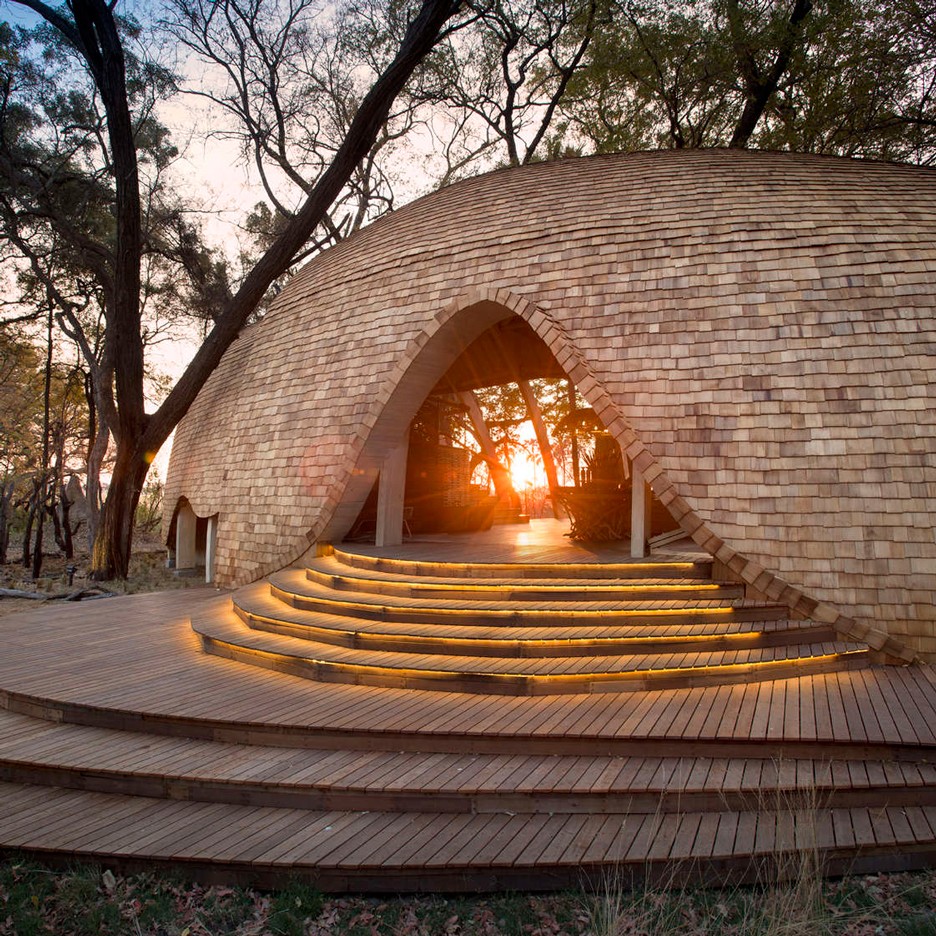
A+Awards: the African armadillo influenced the curved, scale-covered form of this boutique safari lodge in Botswana – one of the winners at this year’s Architizer A+Awards. (more…)
A+Awards: the African armadillo influenced the curved, scale-covered form of this boutique safari lodge in Botswana – one of the winners at this year’s Architizer A+Awards. (more…)

The strategy to reorganize the program of this house, consisted in taking advantage of its unusual arrangement in order to create a new spatial sequence. The project focused on the transformation of the house facing the street and whose blind facade contained a graffiti made by a neighbor artist and valued by the client.
The starting point was to remove all the existing informal constructions followed by the reorganization of the openings, doors and windows, seeking a more fluid integration between internal and external spaces. The adjustment of the courtyards levels created a more connected open space and made room to a rain water cistern, which required a reconfiguration of the residence´s water supply system.
Two spatial operations complete the routing: the multiplication of the outdoor space by creating a rooftop terrace and connecting the kitchen to the outside area.
The new program is contained within wooden volumes in order to make a clear distinction between the old and the new construction. These volumes are also visible from the street, announcing its internal reconfiguration and adjusting its scale to its surroundings morphology.

Iceland is a geological feast for the eyes. Over the last twenty million years, volcanic eruptions have created a rugged landscape dotted with diverse volcanic features like moss covered lava fields. The thick moss can be really soft and here is a friend of mine taking a short nap
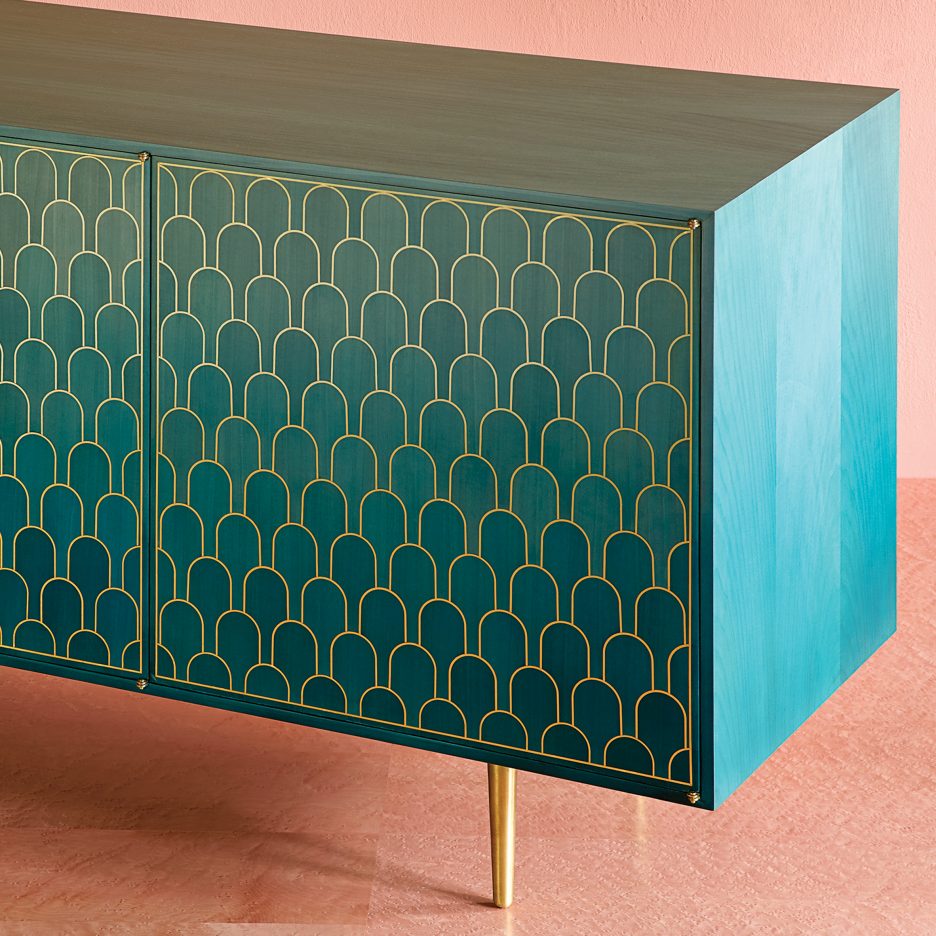
London Design Festival 2016: British designer Bethan Gray created her latest collection of handmade furniture using vibrantly stained wood and brass marquetry (+ slideshow). (more…)

Hallgrímskirkja Church Reykjavik Iceland by Benn Gunn Baker http://flic.kr/p/dvPxNi


Four leading architecture firms have been selected as finalists for a new Art Museum of Pudong in Shanghai, China. Located on the tip of Pudong’s Lujiazui Central Business District directly below the Oriental Pearl Tower, the museum site features views across the Huangpu River to the Bund. Because the new building will serve as an important part of the modern Lujiazui skyline, the site had been left deliberately vacant for several years in anticipation of becoming the new home of a significant cultural institute – with this competition, that void will now be filled with a world-class piece of architecture.
The competition consists of two rounds, from which OPEN, SANAA, Ateliers Jean Nouvel and David Chipperfield Architects emerged as the four firms selected to advance to the final round. The winning project will be announced by the government at a later date.
OPEN’s Competition Entry
From the Architects:
OPEN’s competition entry was highly recognized by the juries for its active intervention to the urban life. The Greater Lujiazui area as the site of the Pudong Art Museum, is a compelling example of the rapid urbanization of China in the past decades. An intense concentration of visual stimuli results in a hyper postcard of Pudong skyline built for admiration across the river from the Bund, yet when examined closely, a fragmented and alienating city is revealed.
“As we stand at the beginning of what is arguably a new post-bubble economy era, looking back to the results of such rapid growth, new place-specific strategies are urgently needed to remedy and revive the urban condition.” says Li Hu, the founding partner of OPEN.
OPEN’s design started with an urban concept that proposes the use of natural landscapes to connect and consolidate the existing isolated parklands, cultural facilities, and riverbanks to create an enormous new looped park system. Within this connecting natural landscape, new cultural, leisure and entertainment programs are inserted to complement the existing key nodes. Within the Shanghai metropolis, this parkland will in itself become a new cultural destination, and at the same time it will become an integral part of the lives of those who live and work around the Greater Lujiazui region.
The Pudong Art Museum is sited precisely at the critical junction within this new super looped parkway, together with the adjacent landscaped area to the east, it connects the Oriental Pearl Parklands with the Riverside. The existing eastern landscape is transformed into a sculpture garden and music park, as an extension of the art museum.
Conceptually the Art Museum is a visual link between the Greater Lujiazui area of Pudong and the Bund area of Puxi. Yet distinct from vertical and formal tendencies of the surrounding buildings, the Art Museum is more horizontal and seeks to fit into its surroundings. The minimalist geometry of the building sits like a diamond within Pudong’s urban horizon, its facets carved out and defined through urban forces.
The building was divided into two parts – the “Floating Gallery of Art” and the “Community Forum of Art”. They can accommodate a wide range of curatorial requirements and make Art and Culture become inseparable with urban life and cultural education. The intriguing void that’s held in suspense in between these two parts of the building is the most special place in this museum. It’s a completely open urban art plaza. To the east, it becomes a great urban stage set linked with the park, with the Oriental Pearl Tower as its magnificent back drop. While at the west end, the upper and lower parts of the building act to create a unique frame through which to survey the Bund and the historical urban fabric of Shanghai.
In this space, visitors are positioned at the junction between the upper and lower parts of the gallery, between the two parklands East and West, and between an urban imagination past and future. An entirely new relationship is created between City, Art, Nature and People.
Program: Art Galleries, Art Community, Urban Art Plaza, Art Park
Building Area: 36,486 sqm
Principals in Charge: Li Hu, Huang Wenjing
Project Team: Ye Qing, Zhou Tingting, Luo Ren, Ma Qiancheng, Hu Boji, Zhou Xiaochen, Anne Fang
Consulting Engineers: Arup
News via OPEN.
Buying a home-based franchise could be your ticket to having a home business. But how do you know which ones are legitimate and how do you choose the right one?
What should you do when your client or boss asks you to do something that’s illegal or unethical? Here’s what to do and why.
Finding customers is hard for many new and established business owners. Here are 15 ways to find customers for your new or existing small business.

