
Dindang House is a residential project completed by Archimontage Design Fields Sophisticated. The 8,826-square-foot home is located in Bangkok, Thailand. Dindang House by Archimontage Design Fields Sophisticated: “An alley where this house is located is a heavily populate urban area that surrounded by clothing factories in old shop houses. Yet this crowded and chaotic environment, which sometimes leads to unpredictable events, does not obstruct the house owner to buy the..
Jordanbad Sauna Village / Jeschke Architektur&Planung

© Sandra Wolf
- Architects: Jeschke Architektur&Planung
- Location: Biberach, Germany
- Area: 750.0 sqm
- Project Year: 2015
- Photographs: Sandra Wolf, Christina Jeschke
- Construction Management: RF Bauprojekt Management
- Structural Planning: Ingenieurbüro Rohmer
- Heating, Ventilation, Sanitation And Swimming Pool Technology: Ingenieurbüro Spleis
- Electro Planning: Ingenieurbüro Sulzer
- Landscape Planning: Freiraumplanung Sigmund,
- Building Physics: Institut für Bautenschutz, Baustoffe u. Bauphysik Dr. Rieche, Dr. Schürger GmbH & Co.
- Fire Protection: Brandschutzconsult
- Consulting: B.S. Consulting
© Sandra Wolf
From the architect. The former outdoor sauna huts of Jordanbad in Biberach, Germany, were supposed to be replaced by a new, durable and sustainable, larger and more spacious sauna village.
The extensibility of the sauna complex and grounds was planned in a comprehensive master plan in order to expand and add further saunas and relaxation rooms easily in later years.
Site Plan
All successful spa complexes should be designed as a constantly growing process. The aim of the redevelopment was to increase the appeal and feel-good factor of this spa and to create more interesting spaces for a larger number of visitors.
© Christina Jeschke
Sauna Village
The sauna village consists of a large infusion sauna for 110-120 persons, one herbal sauna and one fireplace sauna, each for around 25 people. Herbal and fireplace sauna ( ´double- sauna´) are accessed via a shared foyer.
© Christina Jeschke
The water / shower center is situated in a separate building – with a variety of shower facilities, outside there is a large open waterfall shower.
The overall complex is designed as a kind of new‚ ´modern´ village – with gabled-roof sauna houses.
Ground Floor Plan
Their side-facades and roofs are all structured in the same type of surface design with Robinia wood slats – in a vertical and horizontal pattern.
Particularly important was the arrangement of the various sauna houses with well-proportioned intermediate space, which forms the key quality of the village as sauna complex.
© Sandra Wolf
Landscape
In the center of the complex there is a large pond – with wooden decks and benches for sunbathing in the south-west sun on one side – with a soft pebble shore and big boulders for seating on the other side. On the soft, more natural side of the pond, there are semicircles of paved terraces for sunbathing.
© Christina Jeschke
Three immersion pools – each 2m2 – are located on the wooden deck, facing the pond – they can be filled with warm or cold water depending on the season.
A tree in front of the water center with a bench seat forms the central meeting point for the sauna users.
© Christina Jeschke
Sauna Cabins and experiences
The client preferred a more longlasting construction method for the buildings – after his sad experience with the previous short-living log-cabins. The result of these discussions was a concrete construction as center of all walls and roofs – covered inside and outside with layers of wood.
Outside all cabins have got extreme long-lasting slats of Robinia-wood. Inside, each sauna has its very own atmosphere with different wood materials and finish.
© Christina Jeschke
The volume of the infusion sauna is created by the intersection of two gabled houses – for combining several more intimate space volumes with one large space – for all kinds of Sauna ceremonies for up to 120 persons.
The visitors can sit with nice views outside, enjoy relaxing tranquility in the three areas on one side – and in the other direction the sauna users look into the center with a large sauna oven in the middle and enjoy the communal sauna experience in the large, high intersecting center space.
© Sandra Wolf
The intimate fireplace sauna has a large attractive fireplace as an eyecatcher at the front of the wide opening panoramic window and has walls out of especially narrow wood-strips.
The herbal sauna has an atmospheric ‘herbal oven‘ out of slate in its center with an integrated herb-basin out of natural stone. Herbal aromas flow through this sauna- and walls are covered with large wooden panels.
Light and atmosphere
A goal was the indirect illumination of all saunas and outdoor spaces. The quality of experience by light is achieved in all saunas by indirect LED lighting, allowing a subtle very slow change of color. Sitting in the sauna, the users can look out at the indirectly lightened trees and landscape.
The design style of the sauna village is a contemporary architectural language – free of kitch – creating rich extraordinary experiences for the visitors by careful use of space and form, light and material – inside and outside. Inside, each sauna has its own individual atmosphere – with carefully chosen views into various parts of the garden, landscape and pond through large panorama windows.
© Sandra Wolf
Energy and heat supply
A cost-saving, ecological form of energy supply has been chosen for the sauna village. The electric power and heat generated by the power unit (CHP) can cover the complete electricity and heat demand for hot water and heating.
© Christina Jeschke
By means of an exhaust gas thermal oil heat exchanger, the energy is transported through thermal oil (temp. about 260 ° C) into pipelines to the individual, specially designed thermal oil heaters.
A new feature of the outdoor sauna facility is, that no electricity, gas or oil and no solid fuels are used for heating the saunas. Only the exhaust gases of the CHP are used. The Saunas are heated by energy from a waste product
© Christina Jeschke
MacKay-Lyons Sweetapple Architects Create a Home Overlooking the Atlantic in Nova Scotia

Enough House is a residential project completed by MacKay-Lyons Sweetapple Architects in 2015. The 700-square-foot home is located in Upper Kingsburg, Nova Scotia, Canada. Enough House by MacKay-Lyons Sweetapple Architects: “Enough House is the newest addition to architect Brian MacKay-Lyons’ Shobac farm in Nova Scotia. The beautiful property overlooks the Atlantic Ocean and acts as both the satellite rural studio for Mackay-Lyons Sweetapple Architects and as an architectural testing ground…
💙 L-12082 on 500px by Wayne Simpson, Waterloo,…

💙 L-12082 on 500px by Wayne Simpson, Waterloo, Canada☀ 5d… http://ift.tt/21aPUuk
Philippe Starck designs modular Speetbox wood-burning stove
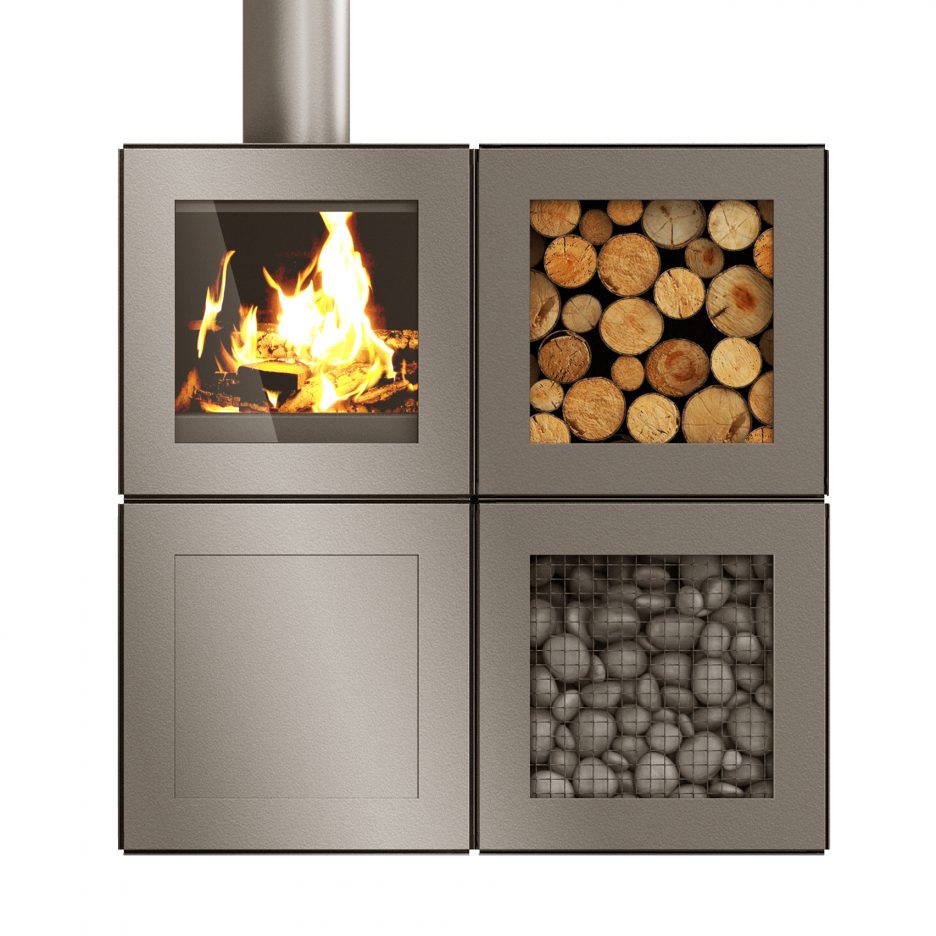
French designer Philippe Starck has created a wood-burning stove for heating brand Speeta that can be customised by combining different modules (+ slideshow). (more…)
Backyard beauty… by Sherrianne100 Spotted this…

Addressing Inferiority Complex

A constant and nagging fear that you are worth less than anyone else is what is generally referred to as an inferiority complex. This could emanate from your physical appearance, your mental acuity, your financial or social status, your personality or sometimes all of the aforementioned. It is a truly unpleasant psychological state of being and affects how you interact not only with others but also with yourself. Most people at some point in their life will have feelings of inferiority but some people have them for year upon year and one shortcoming becomes two and then multiplies to almost every aspect of their personality and life in general.
If you explain to others why you feel inferior be it because you are too thin, too fat or too ‘anything’ then usually they will compare you to themselves or just look at the fear objectively and think ‘that’s a silly fear.’ And, we all do it. Many of us have the fear of not ‘fitting in’ with a social group whatever it may be and we outwardly don a mask to cover up the screams inside of us. It’s normal to be nervous or uncomfortable. No one is perfect. I defy you to think that there is anyone in the world who thinks they are perfect as it is impossible. There are of course those who outwardly have the demeanour of being cock-sure and confident about everything they say or do but in others’ eyes they are viewed as self-righteous and arrogant. Ergo, if we continuously concern ourselves with the way others see us we will never win.
The trick to overcoming crippling feelings of inferiority however is to ‘accept’ certain factors about yourself if you are not able to achieve an alternative – and who is to say that the alternative would be any sort of improvement anyway? Many of us have a kind of ‘If only I was taller/slimmer/prettier then I would be happy’ attitude – you can maybe alter physique in many ways but it is not necessarily going to make you feel that much better than you do now. I know a woman who has been too fat then had weight issues and got too thin, has had obsessive behaviours in all manner of her life from partners, lifestyle, drugs, alcohol, compulsive self-invoked superstitious rituals and so on. Twenty five years later she still cannot figure out why she has such extremes in her personality (which remain) as there is no obvious reason for any of it. It is just the way it is for her. She self-analyses in the extreme but now, as a result, has begun to more readily ‘accept’ that this is the way she is and attempts to stop over-analysis about trivia and past transgressions with a ‘I never did care about the little things’ approach – to literally to stop her emotional thought dead in its tracks and refuse to allow it entry.
As I mentioned earlier, we all have flaws. It is only when we overtly dramatise a specific flaw or flaws and give them meaning that it results in an inferiority complex. It is the thought that people belittle you for your ineptitude and call you an idiot or are calling you derogatory names about your appearance that force you into feeling miserable and inferior. However, there are a few techniques to help you overcome these feelings. It is your thinking that has led you to this state and thus it is thinking that will be the answer to overcoming such feelings. What you need to do is to fight against the thinking patterns that you have twisted out of shape. You have to restart yourself by realising that your flaws are not as bad as you think and that it or them do not remove all the good qualities you have. Comparing yourself to others and wishing to be the same as them rather than learning from them is pointless. It is coming to realise that an inferiority complex only occurs when you feel bad about the fact that you may be inferior to others in some way.
One of the most beneficial systems to help overcome your attitude towards yourself is that of CBT (Cognitive Behavioural Therapy) whereby you assess your feelings, analyse them and make a dedicated change to your thinking on a step-by-step basis. Try to reduce your emotional thinking. Rather than simply feeling ‘down’ you need to be specific about what areas in life you feel inferior. If it is of a particular group of people to whom you feel inferior then try and list a few of the names of particular people within that group. People who feel inferior to others thrive on trying to be anyone that they aren’t. For example, members within a gym. We look and judge others all the time whether we are male or female. We ‘section’ them into categories and often stereotype certain types of people: the slim, toned, tattoo decorated women may fall into your ‘hmm, independent, mentally strong, determined and don’t mess with me type of women.’ And, the nervous or shy parts of your personality, may yearn to have one or two of what you perceive to be their qualities. Your own assumption is, of course, your perception of them – if you actually know the woman in question you may realise that she is just as insecure as you and, like you, hides it pretty well from other people!
Remember that it is you who is making yourself feel inferior by emphasizing what you think others are thinking about you. Eleanor Roosevelt once said ‘no-one can make you feel inferior without your permission’ which pretty much succinctly sums it up. In other words refuse to allow yourself to become depressed by how you perceive others may be judging you. In order to achieve higher self esteem and to gain confidence is to start to try and love yourself. Easier said than done I hear you say – indeed, many of us with an inferiority complex or depressive tendencies are hardly able to bring ourselves to even like ourselves let alone love ourselves. At some point in life we have either been told or assumed we were just not good enough to do something and have been carrying that heavy baggage throughout life. Take heed from Christian in Bunyan’s Pilgrim’s Progress who tumbled alone into the Slough of Despond and was unable to remove the Burden from his back. Whereas Christian needed Help to be lifted out, you need to pull yourself away from your own negativity and shed the burden of worrying about how people view you – feel how much lighter your journey will become as you start to celebrate your own identity and and rejoice in it!
The High-Tech Park Bridge / Bar Orian Architects

© Amit Geron
- Architects: Bar Orian Architects
- Location: Be’er Sheva, Israel
- Project Year: 2016
- Photographs: Amit Geron
- Construction: Rokach Ashkenazi – Consulting Engineers
- Lighting Design: Orly Avron-Alkabes Lighting Design
- Landscape Architecture: Eitan Eden
- Head Contractor: Shora (part of the Oron group)
- Steel Contractor: Adi 2000
- Project Management: Ramon Engineering
© Amit Geron
From the architect. The new pedestrian bridge, connecting the high-tech park and the Beer-Sheva Tzafon train station (and Ben-Gurion University), was officially inaugurated and opened on 12 June, 2016. At some 210 meters long, the steel bridge is a scenic point of reference as it spans over the active and operational and railways and the site of future ones. The bridge’s design incorporates over 200 types of different steel beam cross-sections, making up its unique geometry – four steel arches, curling and twisting, creating two broad lenses with openings of 110 meters and 70 meters. The credit for this unique design goes to Bar Orian Architects and Rokach Ashkenazi Engineers.
© Amit Geron
The high-tech park is located within walking distance from the Beer Sheva Tzafon train station. Until recently, employees who had arrived at their jobs in the park by car, and saw their offices just hundreds of meters away, had to take taxis or busses to bypass the train station and the adjacent neighborhood in order to arrive at work. This problem was already a known issue during the park’s design and construction, and to address it, the Municipality of Beer Sheva initiated an architectural competition for the design of the “perfect bridge.” The bridge was to provide a solution for the park’s access problem for pedestrians and bicyclists, as well as become a symbol to the new park and become a unique point of reference in the new emerging landscape. Many firms were invited to submit their suggestions for the future bridge, and Bar Orian Architects won the competition along with Rokach Ashkenazi Consulting Engineers.
Section
The pedestrian bridge provides a useful and convenient connection between the technological park and the train station, as well as a unique and significant point of reference in the evolving scenery. The goal was to create a bridging structure as opposed to a technical element connecting two ends – a structure that is an architectural element, generating movement and change. The engineering and design scheme are based on four steel arches which twist and undulate, creating two “eyes” in the space between them. The arched formation creates a protected space for pedestrians, an experiential and exclusive journey, in which each step reveals a surprising view of shapes, materials, and sights. The bridge embodies movement which can been seen in the design of the arches, the secondary foundations and the connecting elements, movement whose inspiration is suggested by the endless dynamics taking place among the train platforms below. The result is a structure that is a space with three supports – one at each edges of the bridge, the third at the planned train platform.
© Amit Geron
The bridge is 210 meters long. Its upper part is roofed to provide protection and shade from the sun, dust, sand storms, and rain. The sides are open to allow the flow of natural air and eye contact with the surrounding environment. This way, the shell serves as a climatic element, as the natural of the openings allow maximal control over air flow and filtration, shading, and filtering of natural light in the spaciousness of the desert.
© Amit Geron
The lighting design for the bridge was very much derived from the architecture of it; there was no intention of telling a different story at night than during the day. There was a process of deciding what to show at night – what to light. The result is that the bridge almost appears to be hovering at night as if it was lifted off the ground to allow the trains to pass underneath.
North Elevation
The light fittings are all integrated in the structure and are not obvious. The light creates a rhythm that enhances the flow of the structure at night.
© Amit Geron
There is a strong sense of safety and security at night but because what is mainly lit is the structure and not the path there is still a very relaxed and intimate atmosphere on the bridge.
Our new Pinterest board is full of packaging designs you won’t want to throw away

From beer cans to CD players, the trend for Minimalist packaging design isn’t going anywhere. We’ve pinned some of the best examples to a new Pinterest board.
Follow Dezeen on Pinterest | See more packaging design in our achive
Caldicot Castle, Wales photo via vemona


