Small business owners who struggle with marketing can improve their results by learning the top two reasons marketing fails–and developing a plan to address both.
Month: September 2016
Resort in House / ALPES Green Design & Build

© Hiroyuki Oki
- Architects: ALPES Green Design & Build
- Location: 42 Đặng Thai Mai, Thanh Khê, Đà Nẵng, Vietnam
- Architects In Charge: Ho Khue
- Design Team: Huynh Thanh Hai, Huynh Van Khanh, Mai Le Hoang
- Area: 240.0 sqm
- Project Year: 2016
- Photographs: Hiroyuki Oki
- Design And Construction: ALPES Green Design & Build
- Interiors Design And Build: Phi Thi My Dung
© Hiroyuki Oki
From the architect. Urban Vietnam today is rapidly expanding using symmetrical and uniform architecture (townhouses) providing boring and dry architectural morphology. Interiors often are closed in, cramped and absorb heat.
© Hiroyuki Oki
Alpes creates unique designs which are both beautiful and provide natural ventilation. Young couples and architects have concerns and different feelings regarding the main ideas for home design.
© Hiroyuki Oki
People want to create interesting features in Da Nang urban neighborhoods in order to:
•Live in cool, comfortable, and open living environments
•Enjoy indoor spaces with swimming pools, gardens, trees, and natural air flow.
•Have fluid transitions when moving around the house.
•Rooftop Gardens to absorb the heat and create usable living spaces.
•High quality natural materials add unique lasting beauty.
•Save Energy and Save Costs.
© Hiroyuki Oki
The 1st floor water element, a beautiful 9m long pool, allows the family to swim, and is a very important factor in cooling hot air in the house.
© Hiroyuki Oki
The central open green space provides airflow, access to different parts of the house via open stairs and bridges, the family always has a fresh and natural environment in every room.
© Hiroyuki Oki
Glass doors expand the visibility of the open green space. Split level transitions cleverly link rooms which is more inviting than closed solid walls. It creates visually beautiful scenes.
© Hiroyuki Oki
Skylights, open spaces, and vents in walls permit natural light to create a healthy and bright environment. The combination of natural light and airflow are extremely beneficial as opposed to houses with poor ventilation, artificial light that absorb a lot of heat.
© Hiroyuki Oki
For “Resort in House”, the architect designed creative solutions such as concrete louver curtains with a decorative function. They allow in natural light but not direct hot sun and allow the heat to escape. They are beautiful and soothing while controlling the light and temperature.
© Hiroyuki Oki
Danang, Vietnam is a sunny city. Rooftop gardens mitigate the heat absorbed through the roof of the house. The grass and plants create a protective “skin” or jacket for the house to reduce heat radiation.
Diagram
These rooftop gardens are also expand the living area and are great at night for stargazing, barbeques, and relaxing. A natural rooftop park in your home.
© Hiroyuki Oki
The west (heat exposed wall) was designed using special brick walls with ventilation holes created to reduce direct sun while allowing air flow. This idea uses the concept of the traditional curtains of the people in Central Region of Vietnam.
© Hiroyuki Oki
Creating the natural environment also utilized decorative concrete, natural rock and brick, and stone flooring which are known to be less heat absorbing and add natural beauty.
The synchronous interior architecture unifies the house with natural details such as iron decoration, wood furniture, bamboo, and pottery.
Diagram
The “Resort in House” at 42 Dang Thai Mai Street in Danang is a true gem marking the new nature of architecture in Vietnam. The unified design of the exterior and interior creates natural light, soothing materials, inviting spaces, and a healthy living environment.
© Hiroyuki Oki
The feeling, appearance, and natural cooling allow individuals to live and own houses that in the past could only be experienced in luxury resorts and villas.
Sarimanah Office / Arkides Studio

Courtesy of Arkides Studio
- Architects: Arkides Studio
- Location: Bandung, Bandung City, West Java, Indonesia
- Area: 160.0 sqm
- Project Year: 2016
- Photographs: Courtesy of Arkides Studio
Courtesy of Arkides Studio
Sarimanah Office is a renovation project converting a house to a design studio. Layout of the office space is made to be like the layout of a house, with the aim of giving a homey impression. This concept is based on the fact that designers spend very much time in the office as a result of design workload so that this office can be a second home for them.
Courtesy of Arkides Studio
This studio design is expected to make the staff more relaxed and productive by avoiding serious office atmosphere with its intimidating cubicle. The aim is to lower their stress level caused by project deadlines and stimulate creative ideas from the designers. A large kitchen and dining room becomes the core in the design to provide space for communication that can improve teamwork, which is then also used as a meeting room.
Plan 1
The design tries to present itself with 3 basic geometry; gable-shaped mass, cube-shaped mass, and rectangular plane; that is composed by making the rectangular plane as a basic foundation for the two masses. The masses are then separated by a transparent finishing as an effort to give a monumental impression to both masses. The expression of all three geometry is emphasized with 3 different materials applied to each geometry; ie wood, concrete and perforated plate.
Courtesy of Arkides Studio
Materials in the design uses 3 basic material, namely concrete, wood, and iron. With a composition of the 3 that is almost balanced. Material on the buildings are shown as it is, wood as wood and unpainted concrete, in order to show material honesty in design and give an impression of a more modern building.
Courtesy of Arkides Studio
Vatican, Rome, Italyphoto via claudine

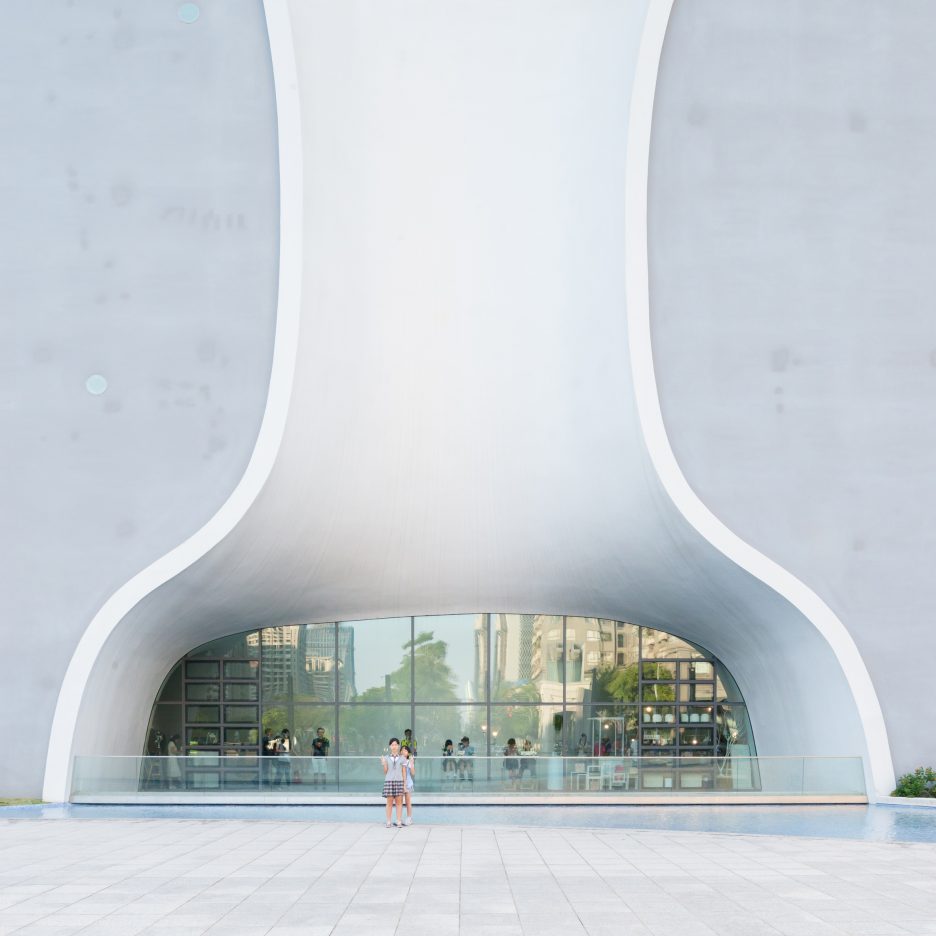
Toyo Ito’s Taichung Metropolitan Opera House in Taiwan nears completion
kitchen table by bob merco Kitchen table in the abandoned…

via Abandonedforgotten http://ift.tt/2dlXH5n
Concord House_I / Studio Benicio

© Katherine Lu
- Architects: Studio Benicio
- Location: Concord NSW 2137, Australia
- Architect In Charge: Ian Bennett
- Area: 230.0 sqm
- Project Year: 2016
- Photographs: Katherine Lu
- Builder : Trend House
- Lighting Consultant: Ted Smyth (InLite)
- Concreting : Performance Concrete
- Joinery: John Sacco (Homestyle Kitchens)
© Katherine Lu
This low maintenance, contemporary four bedroom house located in Concord, Sydney, completed in May 2016, has been designed to showcase the owners’ love for concrete and to provide more space and greater amenity for their family of four.
© Katherine Lu
The clients were after a new contemporary house that would make better use of their existing site than their tired, red brick cottage. The clients own and operate a formwork business, which in turn has garnered them a great love and appreciation for concrete and wanted their new house to feature this throughout.
Plan
Plan
Due to past struggles and time delays with Council, the clients requested we use the “Complying Development” approval system to expedite the process, which requires buildings to meet strict standards to ensure a fast tracked approvals process. The process applies to construction such as new homes (up to two storeys) renovations or extensions to an existing home, development of a ‘granny flat’, building a swimming pool and decks.
© Katherine Lu
The challenge lay in designing something quite contemporary, including all items of the brief (which included keeping the existing pool), without any flourishes that would make the home non-compliant – all on a modestly sized site.
© Katherine Lu
Once we understood the exact parameters of the “Complying Development” controls, we then worked on ensuring the indoor and outdoor living spaces related well to the existing pool location, as this couldn’t look, nor function like an add-on. Due to the modest size of the site we devised the solution of enabling the indoor and outdoor areas to work seamlessly as one – and with the retractable glass roof, this space can be enjoyed as an extension of the internal living space year round.
© Katherine Lu
Bestor Architecture uses “stealth density” at Blackbirds housing in Los Angeles
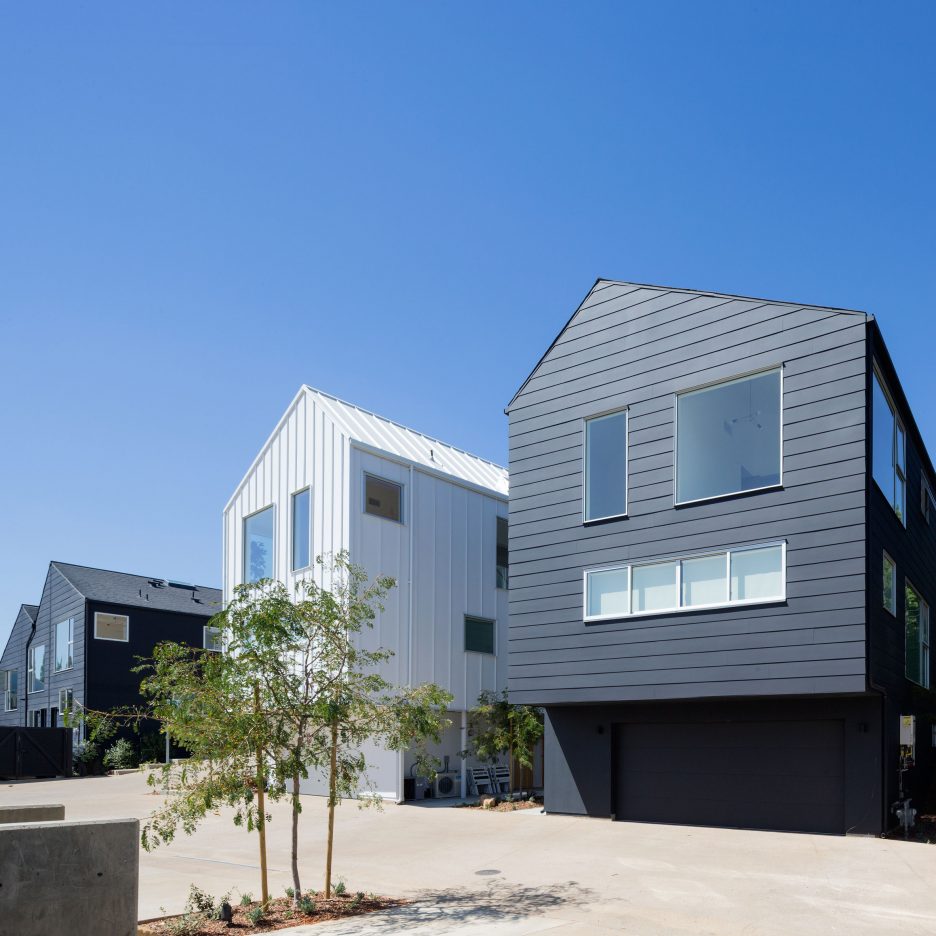
Multiple residences are combined into single house-shaped volumes at this development by Bestor Architecture in the Echo Park neighbourhood of Los Angeles. (more…)
breathtakingdestinations: Follow me on Instagram (@annajewels)

Serpentine Galleries Names Rogers & Adjaye to Pavilion Selection Board, Announces Zaha Hadid Exhibition

Images by Hélène Binet, Sylvain Deleu, John Offenbach, Luke Hayes, Claire Byrne, Iwan Baan, Neil MacWilliams, George Rex, NAARO, and Laurian Ghinitoiu
The Serpentine Galleries has announced a new process for the selection of architects for its successful Summer Serpentine Pavilion program.
For the event’s first 16 years, the annual commissions were selected by program founder and former Serpentine Galleries director Julia Peyton-Jones, who left her position earlier this year to pursue independent contemporary art and architecture projects. Replacing her are the Serpentine Galleries new CEO Yana Peel and Artistic Director Hans Ulrich Obrist, who will lead an advisory board featuring architects Richard Rogers and David Adjaye.
‘Vision for Madrid’, Spain, 1992. Image © Zaha Hadid Architects. Courtesy of Serpentine Galleries
Beginning with the 2017 edition, a group of architects will be invited to submit designs for the main pavilion and new summer house series, from which the advisory board will select the winning proposals. The chosen architects are expected to be announced early next year.
The new format comes as part of a newly announced initiative to expand gallery outreach through an expansion of the exhibition slate and a new emphasis on “artists, audiences, technology, partnerships, innovation and accessibility for everyone.”
Zaha Hadid: Hafenstrasse Development Hafenstrasse Development, Hamburg, Germany 1989. Image © Zaha Hadid Architects. Courtesy of Serpentine Galleries
Also announced was a major exhibition of early works by Zaha Hadid, which was planned in partnership with the architect before her passing last spring. The show will present a bevy of rarely seen paintings, drawings, sculptures, installations and digital by Hadid, as well as a selection of never-before-seen sketchbooks.
“Zaha Hadid once said that ‘there should be no end to experimentation’ and this has become a mantra for the Serpentine team,” said Peel and Obrist in a joint press conference.
“It is the reason why we continue to put artists at the core of everything we do, crossing disciplines, innovating and reaching out to new audiences.”
Zaha Hadid: Sketch Selection from Sketchbook 2001. Image © Zaha Hadid Architects. Courtesy of Serpentine Galleries
News via Serpentine Galleries.
Round-Up: The Serpentine Pavilion Through the Years
//cdn.embedly.com/widgets/platform.js
 Sig Nordal