12 Degrees / CORE Architects


Courtesy of CORE Architects

Courtesy of CORE Architects


Courtesy of CORE Architects


Courtesy of CORE Architects


Courtesy of CORE Architects


Courtesy of CORE Architects

  • Architects: CORE Architects
  • Location: Toronto, ON, Canada
  • Area: 89050.0 ft2
  • Project Year: 2016
  • Photographs: Courtesy of CORE Architects
  • Developer: BSaR Development Group
  • Interior Design: Munge Leung
  • Façade Consultants: SPL consultants Limited

Courtesy of CORE Architects

Courtesy of CORE Architects

12 degrees was designed as an urban infill project, fitting into the context of a mixed use residential area where the city block has buildings that include both the Art Gallery of Ontario and the Ontario College of Art and Design. Given the art/gallery nature of the city block, the design became a playful exercise in massing and an anchor to the south-west corner of the block. The design can be read as analogous to the stacking of toy blocks, with one of the blocks skewed at 12 degrees from the others. 12 Degrees is located in the historic Grange Park neighbourhood.  Grange Park is a mixed use, but predominantly residential neighbourhood. The residential vernacular varies with a mix of working class cottages, semi-detached homes to mansions from the former affluence one enjoyed by the neighbourhood. 


Courtesy of CORE Architects

Courtesy of CORE Architects

Many of the buildings have been converted to commercial use, art galleries, restaurants and offices. A large student population also makes up much of the neighbourhood given the close proximately to OCAD. The building mass has been broken into a base and a tower.  The base of the building is 3 stories high and is composed of townhouse style units that relate to the existing adjacent Victorian homes.  The townhouses repeat themselves in a series of glazed window bays and stone clad piers, that make reference to the Victorian roof peaks and projecting bays. 


Courtesy of CORE Architects

Courtesy of CORE Architects

The base opens up at the corner to expose the glazed main entrance and lobby, there is a hovering canopy of wood that signifies that this is the public part of the building. The tower is fully glazed above the base and is composed of 3 parts that playfully shift back and forth from the building orthogonal grid, there is one portion 3 floors high that is skewed 12 degrees. The skewed portion twists away from the corner above the main entry, helping to lighten up the building massing in that area. We also used the stepping nature of the building massing to reduce the impact of the building on the neighbourhood, shadowing was reduced and the building transitions down in height from 11 floors to 3 floors adjacent to the existing houses. Built on a compact 36m front x 31m deep urban site on Beverley Street, 12 Degrees consists of a three-storey glass and ledgerock-clad base under an eponymous rotated glass-clad mid-section; all topped by a cantilevered glass penthouse.


Plan

Plan

Plan

Plan

The bold massing holds its own with its arts and cultural district neighbors such as the Art Gallery of Ontario and the dramatically cantilevered Ontario College of Art and Design. The design also fits with its other neighbours. The 3-storey street-accessed townhouse-style units at the base of 12 Degrees share in common masonry cladding, projecting bay detailing and height with adjacent Victorian homes and row houses lining Beverley Street. In addition to its distinctive architectural appearance, 12 Degrees is noteworthy for its carefully considered urban design. The stepped form of the massing, transitioning down in height from 11 to 3 floors, reduces the shadow impact of the building on the neighborhood.  The main entry and elevator lobby for the tower, marked by a hovering wood canopy, is located at the southwest corner of the building, closest to the vibrant commercial activity at the intersection of Beverley Street and Queen Street West. 


Courtesy of CORE Architects

Courtesy of CORE Architects

http://ift.tt/2drYPW3

Here’s What Architect Andrew Tesoro Really Thinks of Donald Trump


The United States is currently embroiled in what is unquestionably one the most bizarre and unpredictable presidential races in its history. In this strange context, the world of architecture has unexpectedly found itself a hot political topic, with one architect at the center of the controversy: Andrew Tesoro.

Tesoro’s involvement in the presidential race began with a video created by Democrat nominee Hillary Clinton’s campaign. In the video, Tesoro tells a story of how Republican nominee Donald Trump “bullied” him and his architectural firm Tesoro Architects out of “many thousands of dollars” which were owed for their design services. Subsequently, Tesoro received something of a shout-out from Hillary Clinton in Monday’s presidential debate as evidence that Trump’s business experience does not qualify him to be president.

Given the nature of the campaign video, which was undoubtedly edited to paint Trump in a negative light, many have understandably questioned whether Tesoro’s opinions and story were accurately portrayed. This skepticism was then reinforced by a “condensed and edited interview” published by Forbes, which suggested that Tesoro’s opinion of Trump was much more forgiving than the one perpetuated by the Clinton campaign. Given the confusion around Tesoro’s true opinions, ArchDaily decided to give the architect a chance to present his message unambiguously. What follows are Andrew Tesoro’s responses to three simple questions about Donald Trump. These responses have not been edited by ArchDaily staff.

Above: The video produced by Clinton’s campaign featuring Andrew Tesoro.

What are your opinions on Donald Trump as a client?

The Forbes Magazine article was edited to grossly distort my intended message – Many of my remarks were taken out of context to imply that I simply and foolishly, would like to be buddies with Donald after he short-changed me by a lot of money. That’s wrong.

Donald Trump was a demanding client, difficult and impatient but also congenial, involved in the project, and not generally unpleasant to work with on a day-to-day basis, in the context of an architectural project.

What are your opinions on Donald Trump as a businessman in general?

I am not qualified to judge Mr. Trump’s business abilities broadly. However Donald Trump, and his organization’s way of managing relationships with professionals, contractors, vendors – is driven by an aggressive machine – motivated by an infatuation with money (holding greedily onto every dime, often deceitfully) to squeeze every possible dollar without regard for the value of the work, the responsibility to honor agreements, or fairness to those who worked hard on Trump’s behalf.

Above: A clip of the first presidential debate on Monday September 26th in which Clinton references Tesoro.

What are your opinions on Donald Trump as a presidential candidate?

Mr. Trump should not be a presidential candidate. His behavior is disgraceful – (I don’t think he is as hateful and mean-spirited as he seems on the campaign trail). The bizarre nature of his inflated ego, his lack of patience and ability to listen to others, his distorted instinct to measure all matters in only monetary terms – are disqualifying realities. He wants to win the race, but I am reasonably certain that in his heart, he does not want to do the job. Hillary Clinton is a far superior candidate.

http://ift.tt/2d7dOcC

David Shrigley releases “thumbs up” teaser for his Really Good Fourth Plinth sculpture

David Shrigley releases "thumbs up" teaser for his Really Good Fourth Plinth installation

Artist David Shrigley is set to unveil his gigantic “thumbs up” installation on the Fourth Plinth in London’s Trafalgar Square tomorrow and has released a gif to accompany it. (more…)

http://ift.tt/2dtDf7w

Brock Carmichael Architects Wins Competition to Transform the World’s Most Remote Inhabited Island


© Flickr user ctbto. Licensed under CC BY 2.0.

© Flickr user ctbto. Licensed under CC BY 2.0.

The Royal Institute of British Architects (RIBA) has announced a team led by Brock Carmichael Architects as the winners of the Tristan da Cunha Design Ideas Competition, a call for proposals on how to create “a more self-sustainable future” for the island of Tristan da Cunha, the world’s most remote inhabited island.

The competition, run by RIBA on behalf of the Government of Tristan da Cunha, encouraged architects to submit “innovative and cost-effective proposals for the re-design and consolidation of Tristan’s government (community infrastructure) buildings” in the community of Edinburgh of the Seven Seas, the only permanent settlement on the island.


© Brock Carmichael Architects. Courtesy of RIBA

© Brock Carmichael Architects. Courtesy of RIBA

The remote nature of the community (2,173 kilometres (1,350 mi) away from the nearest settlement, St. Helena), demands residents live a lifestyle built around planning for the future. The competition brief called for initiatives to assist this lifestyle, including improvements to the performance of residential properties and the island’s agrarian systems to support livestock grazing and year-round farming.

The winning scheme from Brock Carmichael Architects (with Oval Partnership, Arup International Development, Multi QS and Dr Gerda Speller from the University of Surrey) was selected from a shortlist of teams including: Lateral Office (Toronto, Canada); John Puttick Associates (New York, USA); Scott Brownrigg (Cardiff, UK) and Javier Terrados and Fernando Suárez (Seville, Spain).    


© Brock Carmichael Architects. Courtesy of RIBA

© Brock Carmichael Architects. Courtesy of RIBA

“The Tristanians are very grateful for all the hard work involved and the different ways in which teams responded to the Brief and the unique set of challenges posed by delivering a project on the World’s remotest inhabited island,” said H Alex Mitham, Tristan da Cunha Administrator and Head of Government. “The Island Council felt the Brock Carmichael team had developed a very strong set of proposals that demonstrated both a practical approach and an in-depth understanding of the issues.”


© Brock Carmichael Architects. Courtesy of RIBA

© Brock Carmichael Architects. Courtesy of RIBA

Arrangements will now be made for members from the winning team to visit the island to begin the first steps towards realizing the project.

“We are delighted and honoured to have been chosen as the winners of this unique competition and would like to pass on our thanks to the people of Tristan for selecting our team,” said Martin Watson, Partner at Brock Carmichael Architects. “We are very much looking forward to forging a long-term partnership with the community to deliver practical solutions for the benefit of future generations to come”.

News via RIBA Competitions.

http://ift.tt/2dfhHsn

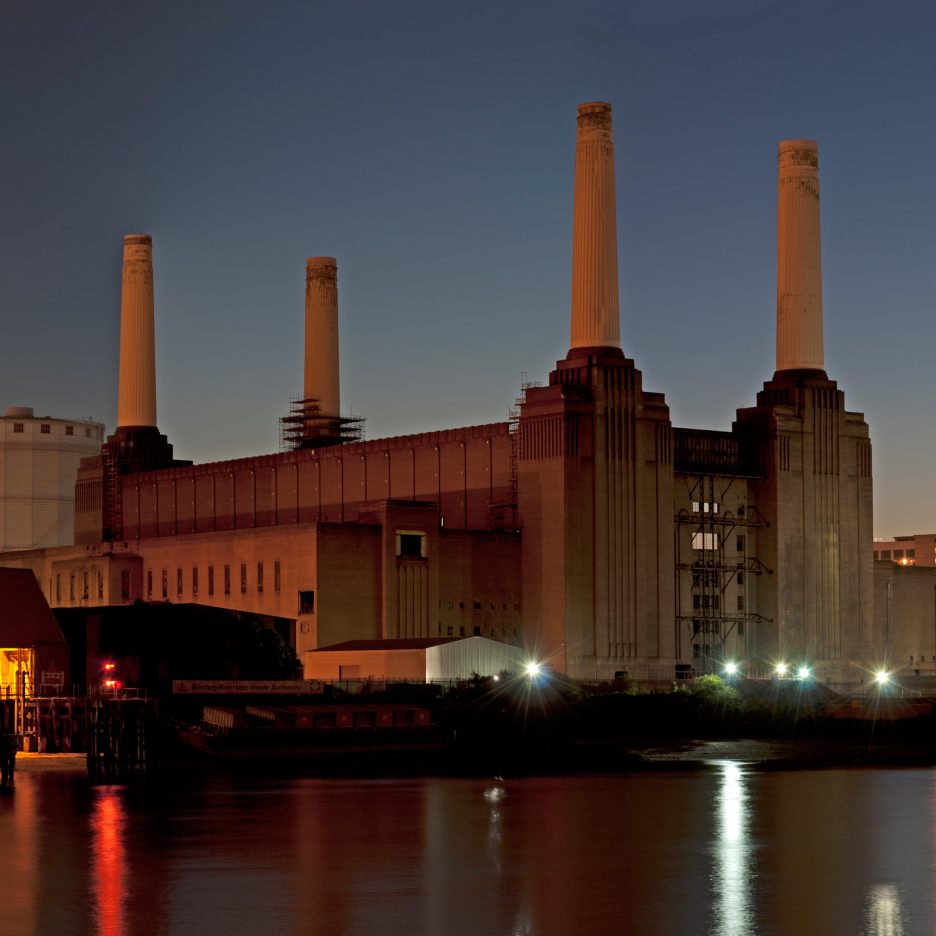
Apple to set up campus in London’s Battersea Power Station


Apple has announced it will create a new London headquarters inside Battersea Power Station, taking over six floors of the former industrial building on the bank of the River Thames. (more…)

http://ift.tt/2dzNuna

Black Water

Doughty Black Water Side by Side

Louise Doughty is one of those rare writers who can infuse a moment of stillness, of waiting, with palpable dread. Her superb 2013 novel Apple Tree Yard, for example, opens at the fatal instant when the narrator, standing trial for murder, is caught out in a series of lies; the moment when “it is all about to tumble.” And Doughty’s new novel Black Water sets us down in a tropical forest in 1998, inside the mind of a man waiting for his killers to arrive. If not that night, then soon. “The roof above him creaked, the night insects chirruped and hollered – but there was no rain. One thing he was sure about: they would wait for rain.”  John Harper should know; he is a professional. Now in his mid-fifties, he has returned from Holland to Indonesia where his murky career began and where, thirty years later, it is about to end. Is he a spy?   A scapegoat? Doughty keeps us guessing, allowing only glimpses of Harper’s life to emerge in the pitch-dark night: an ex-wife, an alcoholic mother, a boss in Amsterdam, and the memory of “black water, long strands of hair, clinging like seaweed to his wrist.”

The narrative rewinds briefly to1965. In a dank backroom in Jakarta, a man is tortured as Harper looks on because “his handler at the embassy had told him to win the trust of a filthy gangster who may or may not have good contacts with the military.” The scene is a poisonous sliver, expertly inserted. Doughty returns to 1998, to daylight and to Harper’s first encounter with Rita whose love may offer him escape if not redemption, but the novel’s dark course is set. It will take us back to Harper’s childhood in Indonesia and California, to Holland where he drifts into his covert career and to the Far East of the 1960s where Communist insurgencies, military coups and Western-backed dictatorships jostle for supremacy. (And where corporate interests are always paramount.) This shadowy terrain, so familiar from the novels of Graham Greene, John le Carre and Eric Ambler, is new ground for Doughty, but she makes it her own, creating an enveloping sense of intimacy with the elusive Harper and the treacherous world he inhabits.

“You’re not so stupid as to believe…that ugly things can’t happen in beautiful places,” a local agent jokes, “What Abang meant was, you’re not white.” Harper’s mother is Dutch, his father was Dutch/Indonesian; his real name is Nicolaas Den Herder and he is the perfect rootless recruit for “The Institute of International Economics,” a Dutch intelligence contractor whose major clients are American. “There was a community of shadow men out there,” young Harper learns, “around the world, in airports and railway stations – on the streets, hidden in hotel rooms, disguised as ordinary people and indistinguishable to everyone but others of their kind…all playing the same game.” Ugly things do happen. In 1968 Harper delivers a list of names to the military, for example, and hundreds are tortured and killed. He suffers attacks of panic, then of conscience and is recalled to a desk job. But one bloodbath stains him irrevocably, the truth behind it emerging only when Harper returns to Jakarta in 1998, this time on an economic assignment. “Thirty years of human rights suppression had brought the foreign investment flooding in,” he observes when he lands, “momentarily dazzled by the light striking the silent spin of the glass revolving door that swept him through to an air-conditioned lobby.”

Black Water is rich in such details. Whether Doughty is describing “a vast steep wall of misted palm trees” or imagining the condemned “kneeling next to ditches by the sides of the roads with their hands tied behind their backs” each scene materialises with cinematic clarity. At the same time, more is suggested than seen. The air seems to thicken for example, when Harper notes of some dawdling boys, “…there was something in their smiles he didn’t like,” and from the first page the novel’s brooding atmosphere feels charged with inchoate danger. Those familiar with Doughty’s fiction will not be surprised. Menace has always been a stealthy presence in her novels whether the setting is contemporary London (Whatever You Love, Apple Tree Yard among others) or Nazi-era Bohemia (Fires in the Dark.) But here malevolence is woven into every strand of an elegantly coiled narrative. And the novel’s darkest revelation — perfectly timed and brilliantly understated — binds Harper’s past and present together in a deadly, final twist. When Rita protests, “The world is different now,” Harper responds, “They thought the world was different then.”

The Barnes & Noble Review http://ift.tt/2dkYzHn

A Body in Common: Anuk Arudpragasam


Story of a Brief Marriage Side by Side Crop

“Most children have two whole legs and two whole arms but this little six-year-old that Dinesh was carrying had already lost one leg, the right one from the lower thigh down, and was now about to lose his right arm.” From the very first sentence of Anuk Arudpragasam’s astonishing debut novel, The Story of a Brief Marriage, the reader is made fiercely aware of the body on the page, and what it’s like when bodies are stretched to their extreme limits. Focusing on a single day in a Sri Lankan refugee camp near the end of the Sri Lankan Civil War, Arudpragasam follows a young man in his twenties, Dinesh, and teenage Ganga, his new wife. They barely know each other but marry to satisfy her father’s wish. It’s a bittersweet arranged marriage during a moment of extreme duress.

The Story of a Brief Marriage is a claustrophobic tale that is deeply uncomfortable to read, but it’s also one of the most extraordinary novels of the year. We follow Dinesh as he bathes and defecates, during his most intimate routines in a place where individualism and humanity are a distant memory.

An astonishing number of civilians were killed toward the end of the twenty-six-year war between the Sinhalese rulers and Tamil rebels seeking self-determination: approximately 40,000. Anuk Arudpragasam grew up as a Tamil in Colombo, the capital city, but was sheltered from the war because he came from a privileged family. He was an undergraduate studying philosophy at Stanford, comfortable in his academic life, when grainy cell phone photos and videos of dismembered, bloody bodies began to emerge on the Internet.

Anuk Arudpragrasm (Photo Credit: Halik Azeez)

Anuk Arudpragrasm (Photo Credit: Halik Azeez)

“I wrote this book out of violence to myself,” Arudpragasam said recently in the backyard of a Cobble Hill bakery. It was a bright, sunny day, one of the last lazy summer afternoons. Our pleasant surroundings — the lush greens of the plants — stood out as a vivid contrast to our intense conversation. “I wrote this out of a desire to mock myself for living a life in ignorance of these things . . . and so I guess the reader is [also] being mocked in so far as the reader is like me.”

The self-taught writer never even took a literature class. He wasn’t allowed to leave the house by himself until he was sixteen, so he spent a lot of time on his roof, reading books like The Republic by Plato and Descartes’s Meditations on First Philosophy.

When he was twenty, a friend turned him on to Robert Musil’s The Man Without Qualities. It was then that he realized he wanted to write his own books. After he graduated from Stanford, he lived in the Indian state of Tamil Nadu for a year and spent eight hours a day rewriting stories that he liked by famous authors, such as James Joyce, and setting them in Sri Lanka.

When he returned to the United States, he enrolled in a Ph.D. program at Columbia. It was there, in the fall of 2011, that he started writing The Story of a Brief Marriage and focusing on the startling images from his home country.

“There was just a sense of ‘Where was I when this happened?’ ” Arudpragasam said. “What was I thinking? I don’t know what I was doing, whether I was laughing or joking or reading or obsessed with whatever I was obsessed with and this was all happening and I didn’t know.” His fiction emerged partly “in response to the sense of guilt that comes from [the fact that] I speak the same language; we share a history; we share a culture.”

So why did the author choose to focus on the corporeal in such a devastating scenario, where land and language and relationships have been taken away from people? “The only thing I could think of that I had in common with them was my body or a body,” Arudpragasam says. “It was my mode of access.”

This idea for the first scene he wrote – in which Dinesh is given the opportunity for a long-awaited bath — came from a photo the author saw of an actual refugee camp boy holding a bucket over his head as water cascaded over his body. In the novel, this moment gives way to a sudden reflection on everything the boy has lost: “He could no longer remember the faces of his mother, father, or brother, could no longer remember anything of the routine of their lives or the mood in which they had lived, and anything he said about that time would have been devoid of substance, like black-and-white outlines in a children’s coloring book,” Arudpragasam writes.

For such a bleak topic — writing about people who may very well not survive — the author focuses on “a gratitude that comes from saying goodbye.” There’s a particularly devastating moment when Dinesh talks about a doorknob he found, one of the very few objects he possessed, and “out of a slowly mounting fear that he would lose or be forced to abandon his companion, he decided at last to preempt the possibility by saying goodbye to it once and for all.” So he buries this object in the earth.

The marriage, conducted quickly by Ganga’s father, is a last attempt at perhaps protecting his daughter. But it’s also an eye-opener for Dinesh; he possesses his memories once again, and he’s confronted with the severity of his situation. “There’s all this stuff about saying goodbye,” Arudpragasam says. “Feeling sad at having to depart from your body, from your arms and legs and hairs and your eyebrows. And this gratitude to [his body] for having worked for him all his life.”

One writer Arudpragasam credits as an inspiration is Peter Nádas, the Hungarian author of The Book of Memories. “He focuses a lot on gaze, on gesture, on gait, on body language, on sex, on shitting, on urinating, on mood,” Arudpragasam says. “And in a really meticulous way. There will be four or five pages on two people, like one person lifting their gaze up to make eye contact with another and then moving away. There’s a scene in which — maybe five to ten pages, two boys are in the snow in their childhood. The main character’s remembering it. And he looks up and he looks down, and the whole ten pages is structured around it. It’s really meticulous with the body.”

And so, too, is Arudpragasam. The Story of a Brief Marriage is a profound meditation on bodies in turmoil. It’s a book that lives in the body long after you finish it.


The Barnes & Noble Review http://ift.tt/2dDaAw5

Competition: win a book documenting contemporary Scandinavian design and interiors


Competition: Dezeen has teamed up with German publishing house Gestalten to give away five copies of its new book Scandinavia Dreaming. (more…)

http://ift.tt/2cBuq6d

House in Aldeia da Serra / MMBB Arquitetos + SPBR Arquitetos


© Nelson Kon

© Nelson Kon


© Nelson Kon


© Nelson Kon


© Nelson Kon


© Nelson Kon

  • Architects: MMBB Arquitetos, SPBR Arquitetos
  • Location: Aldeia da Serra, Santana de Parnaíba – SP, Brazil
  • Authors: Angelo Bucci, Fernando de Mello, Franco Marta Moreira, Milton Braga
  • Design Team: Anna Helena Vilella, Eduardo Ferroni, Maria Júlia Herklotz, André Drummond
  • Area: 750.0 sqm
  • Project Year: 2002
  • Photographs: Nelson Kon
  • Structural Engineer: Ibsen Pulleo Uvo
  • Constructor: Paulo Balugoli Nelson Cabeli

© Nelson Kon

© Nelson Kon

The site’s topography has a 20% slope, which means exactly 8 m difference between lowest and highest points. A 16 m square-shaped house was spotted in a single store above the inclined topography. In such a way that it results in two equal additional useful spaces: under and over it, like a yard in the shadow and another one in the sun, places to stay outdoor either in a rainy or a sunny day. Due to the slope, from any of the three levels we can always reach the ground at the same level, even on the roof we can cross a bridge and find the ground level again.


© Nelson Kon

© Nelson Kon

© Nelson Kon

© Nelson Kon

The house structure rests on four columns. The two waffles slabs — 50 cm high including all the beams that stand each 90 cm — were made by casting premixed concrete on plastic mold. Although the structure construction has been done on spot, its process is very industrialized.


Site Plan

Site Plan

Floor Plan

Floor Plan

Floor Plan

Floor Plan

The house’s roof has a 20 cm depth pool as a reflecting pool. The water was poured when the slab had just been cast avoiding cracks due to the heating during the cure process. Also by keeping the water we also avoid cricks from sudden variation of temperature. By this way the concrete become impermeable by itself, it means free from membrane and thermal insulation.


© Nelson Kon

© Nelson Kon

The external walls are made in concrete and they have only 5 cm of thickness. Then, to improve its thermal performance we had to protect them with a second layer, made with pre-cast panels out of pressed wood and cement.


© Nelson Kon

© Nelson Kon

Section

Section

© Nelson Kon

© Nelson Kon

The side windows were made with tempered glass without frameworks, they are like a guillotine balanced with a counterweight hidden between the panel and the wall of concrete. 


© Nelson Kon

© Nelson Kon

http://ift.tt/2drGYyE

First Renderings Revealed of Revamped Plan for New York’s Penn Station


via the New York Times

via the New York Times

Penn Station is finally getting its much-needed makeover. The transportation hub, the busiest train station in the country, has been the target of much ire and disdain ever since its Beaux-Arts predecessor, designed by McKim, Mead & White, was demolished in 1963, forcing the station to retreat into the dark, cramped passageways below Madison Square Garden. The ordeal lead critic and Yale University Professor Vincent Scully to memorably quip: “One entered the city like a god. One scuttles in now like a rat.”

But today, after years of scrapped schemes, New York Governor Andrew Cuomo announced a fast-track plan that will give New York’s scuttling visitors and commuters some breathing room as early as 2020. Led by Skidmore, Owings & Merrill, the design calls for a new 255,000 square foot train hall and retail space in the James A. Farley Building, also known as the General Post Office, across 8th Avenue from Madison Square Garden and the current Penn Station entrance.

The building will contain 112,000 square feet of retail space and 558,000 square feet of office space, as well as new waiting areas for Amtrak and Long Island Railroad passengers. The plan also proposes renovating the deteriorating underground passageways and platforms that currently support nearly three times as many users as they were designed for.

Read more about the news, here.

News via the New York Times. H/T NY Yimby.

http://ift.tt/2drzHyQ