AD Classics: Museo de Arte de Ponce / Edward Durell Stone


© Mary Ann Sullivan

© Mary Ann Sullivan

Among the dignitaries in attendance at the dedication ceremony of the Museo de Arte de Ponce (MAP) in Puerto Rico was Roberto Sánchez Vilella. In his capacity as Governor of the island, he gave a tongue-in-cheek speech[1] directed at his political opponent and founder of the museum, Luis A. Ferré:

I feel that I have contributed, in my small way, to the building of this museum. Had I not defeated Luis Ferré in the election, he would not have had sufficient leisure time to devote to this cultural project.


© Mary Ann Sullivan


© Mary Ann Sullivan


© Mary Ann Sullivan


© Mary Ann Sullivan


© Mary Ann Sullivan

© Mary Ann Sullivan

It is certainly true that this new building, designed by Edward Durell Stone and inaugurated in 1965, would not have existed without Ferré’s singular vision and extraordinary generosity. Stone’s design for the museum earned him an American Institute of Architects (AIA) Honor Award and, together with Ferré’s unwavering commitment to the success of the institution, produced what is now one of the most recognized and respected cultural landmarks in the Caribbean.


© Mary Ann Sullivan

© Mary Ann Sullivan

Prior to pursuing a political career, Ferré had amassed a small fortune through industrial enterprises. He spent much of his wealth on philanthropic ventures, of which the MAP was the most significant; as well as founding the museum, Ferré was initially its sole patron. The museum’s original collection comprised seventy-one artworks, all of which had been purchased by Ferré himself. At the time of the museum’s founding, his native city of Ponce was poorly connected to the capital city of San Juan, and thus did not benefit from international tourism. Ferré’s decision to open a major public art museum in his hometown was partly driven by a desire to provide a boost to tourism outside the capital and, ultimately, create a more even distribution of wealth across Puerto Rico.[2]


© Mary Ann Sullivan

© Mary Ann Sullivan

The museum was initially located in an old colonial house but the compact size of these premises was quickly outstripped by the scale of Ferré’s ambitious plans. His expansion of the collection, which included artworks donated by other charitable organizations, demanded a larger exhibition space. The American Modernist architect Edward Durell Stone, whose previous work included the original Museum of Modern Art (MoMA) building in New York City, was commissioned to design a dedicated building for the collection. Ferré’s vision for the museum extended to its architecture, and he laid out certain basic requirements for the design – namely that it should “express, with simple and sedate lines, the noble spirit of Ponce and, while being modern, should also be serenely classical.”[3]


© Mary Ann Sullivan

© Mary Ann Sullivan

By this stage of his career, Stone’s architectural style had evolved through several incarnations. His early designs of the 1930s were in the International Style, which he had studied while spending two years travelling in Europe. Subsequently, having found the style to be overly austere, his work began to display the influence of Frank Lloyd Wright, whom Stone visited at Taliesin East in the 1940s.[4] By the late 1950s, Stone had developed a more independent architectural style, carving a distinctive architectural niche with his design for the U.S. Embassy Building in New Delhi.[5] Nevertheless, certain references to his earlier stylistic influences remain in his later work, as evidenced by his design for the MAP.


© Mary Ann Sullivan

© Mary Ann Sullivan

Stone designed a rectangular building of two stories to house the museum. The first floor contains a lobby and seven rectilinear galleries, while the second floor houses seven hexagonal galleries encircled by a terrace. The two floors are linked by an elegant double staircase located in the lobby, which acts as an architectural centerpiece for the building. Additionally, two gardens to the north and east of the building were designed by Stone’s son, Edward Durell Stone Jr. (a third garden was added in 1991). The heavy roof, which forms deep eaves over the balcony, and the low horizontal composition of the building appear to reference Frank Lloyd Wright’s Prairie houses. The choice of materials, however, is closer to the International Style; the marble aggregate with which the building is clad recalls the formal purity of European Modernism.


© Mary Ann Sullivan

© Mary Ann Sullivan

The use of natural lighting is characteristic of Stone’s work, and he became adept at using textured surfaces to fragment sunlight as it fell on and into his buildings. At the MAP, a geometric pattern of recessed triangles makes up the hung ceiling, which is punctured by skylights in the center of each upper-story gallery. The double staircase aside, these skylights are perhaps the building’s most visually arresting architectural features. Hexagonal in shape, the skylights diffuse the harsh Caribbean sun to softly light the interior spaces and artworks. The sunlight even reaches the lower floor, as it streams down the double staircase and the circular light-wells installed in two of the upper galleries. Further natural lighting is provided by narrow windows at each corner of the upper galleries, ensuring the rooms are evenly lit.


© Mary Ann Sullivan

© Mary Ann Sullivan

The various components of the museum are unified by Stone’s harmonious design. The hexagonal skylights, for instance, echo the hexagonal plan of the galleries themselves. The tessellated pattern of the ceiling is mirrored on the floor of the upper galleries, where the triangles are delineated in bronze. Elsewhere, the molding pattern found on the cornice of the roof is repeated on the openings of the stairwell and lightwells. Both the floor and ceiling patterns continue from the galleries to the outdoor terrace, creating a sense of spatial continuity which blurs the boundary between interior and exterior. The corner windows of the galleries were originally operable, allowing a tropical breeze to flow around the galleries and drawing the surrounding environment further into the building.


© Mary Ann Sullivan

© Mary Ann Sullivan

Not only did Stone’s design respond to the local climate, it also paid homage to local vernacular architecture, differentiating this project from the architect’s work in America. While San Juan was dominated by Spanish Revival architecture as a result of its colonial history, in Ponce a unique style of architecture had developed, known as Ponce Creole. Borrowing and blending design elements from multiple sources, Ponce Creole is characterized by the use of Neoclassical columns, Art Deco detailing, and the long balconies of French Creole – the style’s namesake. These features can all be found at the MAP, where the monumental balcony stretches the length of the building and a row of slender columns support the overhanging roof. Symmetrical Art Deco patterns, meanwhile, are formed by the exterior grills of the upper gallery windows and by the cornice moldings.


© Mary Ann Sullivan

© Mary Ann Sullivan

With regard to Ferré’s goal of attracting international tourists to Ponce, the MAP has been a resounding success; in 2011 the museum welcomed over seventy thousand visitors, of which almost nine thousand were tourists from overseas.[6] Due to the growing popularity of the museum, in 2010 a large-scale extension was added and Stone’s original building, which had weathered over the years, was carefully restored. The ever-expanding collection of the museum now comprises 4,500 works, with Pre-Raphaelite, Renaissance and Spanish Golden Age paintings presented alongside the work of Puerto Rican artists.

The diversity of the museum’s collection is reflected in the character of its architecture; though Stone’s design shows international influences, it remains rooted in the visual culture and heritage of its locality. By referencing traditional Ponceñan architecture and incorporating the Caribbean climate into the building, Stone created a design specific to its context and unique within his body of work.

Photography of this project has been shared by Mary Ann Sullivan’s Digital Imaging Project (Bluffton University), which contains a growing archive of more than 24,000 images of sculpture and architecture.

References
[1] Ash, Agnes. “New Art Museum Attracts Tourists to Ponce”. New York Times, Jan 23, 1966, p. 358
[2] Ibid.
[3] “Edificio Edward Durell Stone”. Museo de Arte de Ponce. Translation author’s own. Accessed 12 July, 2016. [access]
[4] James, Elizabeth A. “Arkansas Listings in the National Register of Historic Places: Edward Durrell Stone Buildings”. The Arkansas Historical Quarterly, 66:1, 2007. p.61
[5] Ibid. James. p.63
[6] “Informe Annual 2011-2012”. Museo de Arte de Ponce. Accessed 12 July, 2016. [access]

http://ift.tt/2d8GJL8

5 Reasons Procrastinating Isn’t So Bad

We’ve been getting in trouble for procrastinating since our earliest days in school. Teachers used tell us to get on our homework, our parents used to tell us to stop playing so many games, and eventually our earliest employers used to tell us to stop sleeping on the job (maybe not everybody!). Our tendencies to slack off from responsibility are indicative of our enjoyment of relaxing. In today’s day and age, despite any troubles we might have, we largely have a stress free life. Food and shelter come easy, and if we had to we could go days drinking free tap water and eating our household leftovers.

Through most of our life we are constantly goaded into production by our teachers, family and workmates. We are conditioned to live life with an effective work ethic and responsible perspective. That said, it’s easy for us to pass to buck and procrastinate every now and then; and why not? We are provided for. Rarely do we feel so stressed about food or money anymore that we cannot afford to laze around, read a book for too long, or watch too much TV. It may not be the healthiest thing we can do sometimes, but taking a break every now and then is worth it, as long as it is not the status quo.

Let’s see why procrastinating isn’t such a bad thing after all.

1. Give yourself some time to think

It’s great if you love the work you do, and strive to do even more work when you’re off, in the form of homework or having some hobbies. But if we get too caught up, then we don’t have time to clear our thoughts out. Procrastinating is our chance to let ourselves free and let our mind be vulnerable to silly thoughts and the R&R it deserves.

2. Realize what your real priorities are

If our mind is too clouded, so is the way you order the things in your life. If you’re procrastinating on something, perhaps it’s not something that is particularly important to you. In that case, maybe taking a break from it is a good idea to relax the synapses and reflect on what is important in your life. This could be your Eureka moment when you decide to finally switch careers, or stumble upon a website or resource that gets you thinking about something else. If that’s happened, then you’ve started something new and exciting, giving you something exciting to think about and maybe something new to prioritize.

3. Don’t act quickly!

Procrastinating doesn’t have to mean playing video games on your phone for two hours before doing the dishes. It could mean the difference between waiting a few seconds before going through a green light when a driver was still speeding through in the perpendicular direction. Procrastinating for a few seconds can mean the difference between making a natural decision that results in danger, or acting on the instinct of passion too quickly. This is how most arguments are started – by people acting with haste on their feelings rather than taking a moment to consider all the options.

4. Practice your intuition

While intuition is generally seen as your impulsive reaction to something, sometimes your intuition is in fact the result of long hours of practice and consideration. By all means, you did not become yourself overnight. Your intuition took years of fine tuning and practice to develop. While we are procrastinating, we are letting our unconscious mind loose to think, dream, imagine and shape our idle state. Maybe this is the leverage you need and maybe this is the time you need to tweak your intuition into a more perfect state for you.

5. Foster your creativity

It’s easy to procrastinate on stressful things. There’s a reason students are famous for leaving their work for “the night before,” and as it looks, it pays off much of the time as well. During the time you are slacking off from tackling your chore, your mind is in fact developing and building ideas to bring to the project. You have not ignored it completely, and your brain is secretly teething and growing with ideas while you remain idle. Now suddenly, the deadline is approaching and by some act of God you are able to summon the power and substance to build a remarkable work of academia with time to spare. How did you do it? Just thank all that procrastinating.

The post 5 Reasons Procrastinating Isn’t So Bad appeared first on Change your thoughts.

http://ift.tt/2d8GwYb

Max Kasymov Designs a Private Residence in Moscow, Russia

A Posteriori by Max Kasymov (1)

A Posteriori is a private residence designed by Max Kasymov. The 1,400 square-foot home is located in Moscow,Russia. A Posteriori by Max Kasymov: “Simple shapes — square, circular, rectangular, and their combination creates an asymmetrical, but at the same time balanced composition in the interior. Color emphasizes the architecture of the space and each individual item of furniture. White, black, beige and shades constitute the base color palette: orange, yellow,..

More…

Door Shopping! : Top questions to consider when buying new doors

apartment-m-12

Summer is an ideal time to consider transforming your home with brand new doors. Whether you think your home needs updating, or even if you’re taking on a huge renovation project, fitting new stylish doors can give your home a completely different look. Often our internal doors fail to match the period or style of our homes, so restoring them accordingly to suit our individual styles, can give our homes..

More…

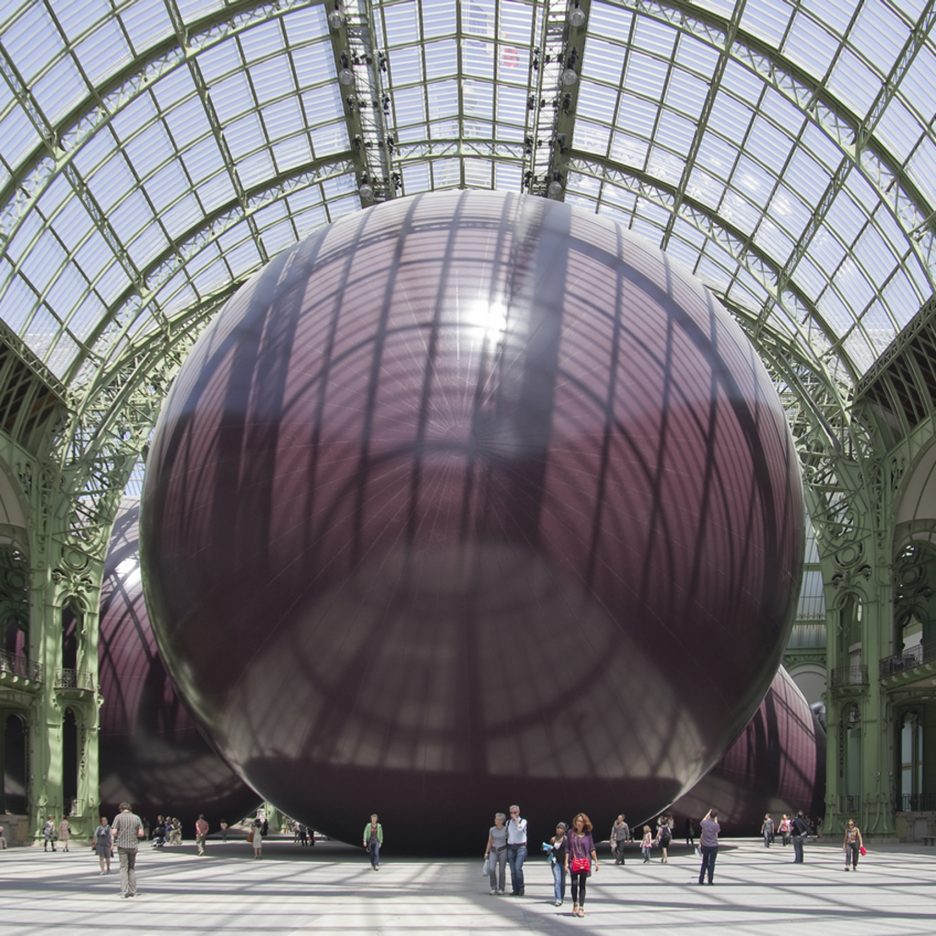
10 inflatable buildings designed to blow you away


There was a time when inflatable pavilions were all the rage, but now architects are creating blow-up buildings for all kinds of uses. Here are 10 of the most inventive examples, including a mobile concert hall, a black PVC nightclub and a field of giant mushrooms. (more…)

http://ift.tt/2drGP28

Labour conference: Jeremy Corbyn says migrants make ‘enormous contribution’ to UK – Politics live

Rolling coverage of all the day’s developments at the Labour conference in Liverpool, including Jeremy Corbyn’s keynote speech

8.01am BST

Jeremy Corbyn will wind up the Labour conference with his keynote speech this afternoon and he wakes up to a row about immigration. Last night his team released some extracts from his speech in advance and, at a briefing, a spokesman said that Corbyn was “not concerned” about the number of EU migrants coming to the UK. The Guardian’s story is here.

Related: Jeremy Corbyn rules out pledge to cut immigration

Wednesday’s Guardian front page:
Corbyn rules out cutting immigration#tomorrowspaperstoday #bbcpapers http://pic.twitter.com/FhB8oVAdB8

Wednesday’s Daily Mail:
Now Mr Corbyn’s in La La Land on migrants#tomorrowspaperstoday #bbcpapers http://pic.twitter.com/JwrlLVlCi0

Migrants make an “enormous contribution” to the UK, @jeremycorbyn tells @MishalHusainBBC: https://t.co/ghzaqUs82a #r4today #Lab16 http://pic.twitter.com/37VYyBxGSQ

“I don’t think Donald Trump and I have much in common on anything,” Jeremy Corbyn tells @MishalHusainBBC https://t.co/JZ56wHpHmQ #r4today http://pic.twitter.com/TEkHTVbDE0

Continue reading…

Politics blog | The Guardian http://ift.tt/2drHTTv

La Pinada House / Fran Silvestre Arquitectos


© Fernando Guerra | FG+SG

© Fernando Guerra | FG+SG


© Fernando Guerra | FG+SG


© Fernando Guerra | FG+SG


© Fernando Guerra | FG+SG


© Fernando Guerra | FG+SG

  • Interior Design: Alfaro Hofmann
  • Collaborators: María Masià, Estefanía Soriano, Fran Ayala, Ángel Fito, Pablo Camarasa, Sandra Insa, Santi Dueña, Ricardo Candela, David Sastre, Sevak Asatrián, Álvaro Olivares, Paloma Márquez, Eduardo Sancho, Esther Sanchís, Vicente Picó, Erika Angulo, Alba Monfort, Ruben March
  • Structure: Josep Ramón Solé (Windmill)
  • Project Manager: Studio 2
  • Technical Architect: Carlos García

© Fernando Guerra | FG+SG

© Fernando Guerra | FG+SG

From the architect. Twenty-one plateaus and seven volumes tell the story of this house.

The aim of the project is to give a new and even identity to a house belonging to the same family for several generations. The original house formed by the aggregation of different interventions at different times, with different construction systems. Each of the rooms in the house describes a moment in life of this family story. Thus it was essential to maintain the structure, spaces, uses, garden and memories, presenting them in a new way.


© Fernando Guerra | FG+SG

© Fernando Guerra | FG+SG

Plan

Plan

© Fernando Guerra | FG+SG

© Fernando Guerra | FG+SG

The further layer built in the history of this place employs new volumes used for new parts of the program. In this way leisure areas are projected, containing always the scale of the building and are presented as a sort of aggregation of small parts, which draws courtyards and narrows areas, as the traditional Mediterranean architecture does.


© Fernando Guerra | FG+SG

© Fernando Guerra | FG+SG

Section

Section

© Fernando Guerra | FG+SG

© Fernando Guerra | FG+SG

The interior respects the intermediate levels system producing a large spatial heterogeneity in rooms with a wide variety of sizes and heights. The supporting structure of the original house is housed inside the furniture that has the same gray shade as the trunks of some of the species that inhabit the garden.


© Fernando Guerra | FG+SG

© Fernando Guerra | FG+SG

© Fernando Guerra | FG+SG

© Fernando Guerra | FG+SG

The house is woven both among the trees and among the good memories that live in this pine forest.


© Fernando Guerra | FG+SG

© Fernando Guerra | FG+SG

http://ift.tt/2dqqCKO

Hans Verstuyft Renovates a Historical Residence in Ghent, Belgium

Footbridge, Shelter and Bench on Straník Hill / 2021+LABAK


© Jana Makroczy

© Jana Makroczy


© Jana Makroczy


© Jana Makroczy


© Jana Makroczy


© Jana Makroczy

  • Architects: 2021, LABAK
  • Location: Stranik, 010 03 Žilina, Slovakia
  • Area: 1227.0 sqm
  • Project Year: 2016
  • Photographs: Jana Makroczy
  • Labak: Michal Marcinov, Andrej Badin, Zuzana Demovičová
  • Construction Company: SOAR
  • Client: Tourist Board Small Fatra – an organization founded by the city of Žilina, 8 other municipalities and 16 private companies

© Jana Makroczy

© Jana Makroczy

From the architect. Originally, the local government aimed to construct an observation tower at Straník, as the hill offers an exceptional view of Žilina – an 80 thousand industrial city in the Northwest Slovakia. Since the 1930’s the hill of Straník has been used for flying gliders. In a favorable weather, one can enjoy the view as well observe rogallos, paragliders and gliders taking off. Local authorities therefore initiated a workshop at the site, which brought together architects (2021 and LABAK), students of architecture and all stakeholders. The outcome of this gathering generated a consensus, that the idea of constructing a lookout tower at Straník should be reconsidered.


Axonometric

Axonometric

Obstacles
Firstly, Straník itself makes a great viewpoint, because much of the hill’s crest is not forested. Moreover, eventually it came to light that the crest of the hill was a protected national heritage site – around 10th – 12th century B.C. a hill-fort had existed here. Although no complex archeological excavations and research have taken place here just yet, it is only a matter of time. And that further complicates any kind of intervention into the environment. So in the end the ambitions to develop Straník narrowed down to: how to make this place attractive for tourists, while taking into consideration claims made by heritage conservationists, paragliders as well as forestry, because the area is also used for logging timber.


© Jana Makroczy

© Jana Makroczy

Solution
Instead of introducing new elements, 2021 and LABAK mapped the existing infrastructure – the pathway, provisional shelter and the bench and translated it into contemporary architectonic language.


© Jana Makroczy

© Jana Makroczy

The subtle footbridge aims to controllably manage movement of tourists, away from the flying, and at the same time provide an easy access to the top of the hill for visitors with limited mobility. The footbridge levitates above the terrain and the only physical contact is through ground screws. “Since we are located in an area of potential archeological excavations and an eventual need to present them to the public, the construction is reversible. So in case a need emerges, we can adjust the footbridge or move it,” says Peter Lényi, who is one of the authors of this project.


© Jana Makroczy

© Jana Makroczy

Shelter Detail

Shelter Detail

© Jana Makroczy

© Jana Makroczy

In the last stretch to the crest of the hill, the footbridge is discontinued in order to allow passage for the timber-logging logistics. Then it further continues to a shelter roof, from where visitors can observe the picturesque images of rogallos, paragliders and gliding planes taking off and flying above the landscape, while munching on a sausage from a near-by food stall. The pathway leads visitors to its end with a bench, where they can sit and enjoy the  panoramic view of Small Fatra mountain range and national park, as well  Žilina’s car factory.


© Jana Makroczy

© Jana Makroczy

This project used local black locust wood, which is maintenance-free, resilient to vermins as well as to changing weather conditions. 


© Jana Makroczy

© Jana Makroczy

http://ift.tt/2d5Apqf

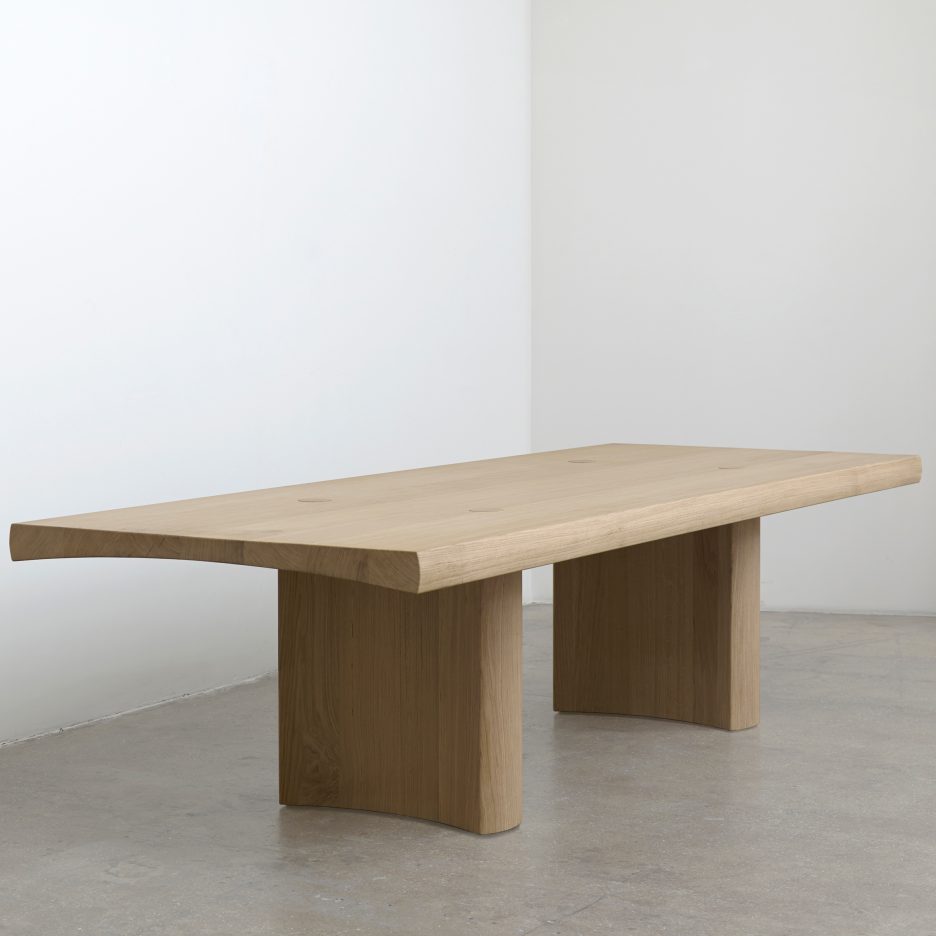
Barber and Osgerby base minimal wooden table on Japanese joinery


London Design Festival 2016: design duo Barber and Osgerby have created a limited-edition table constructed from just three curved pieces of oak (+ slideshow). (more…)

http://ift.tt/2d8GKx2