Month: September 2016
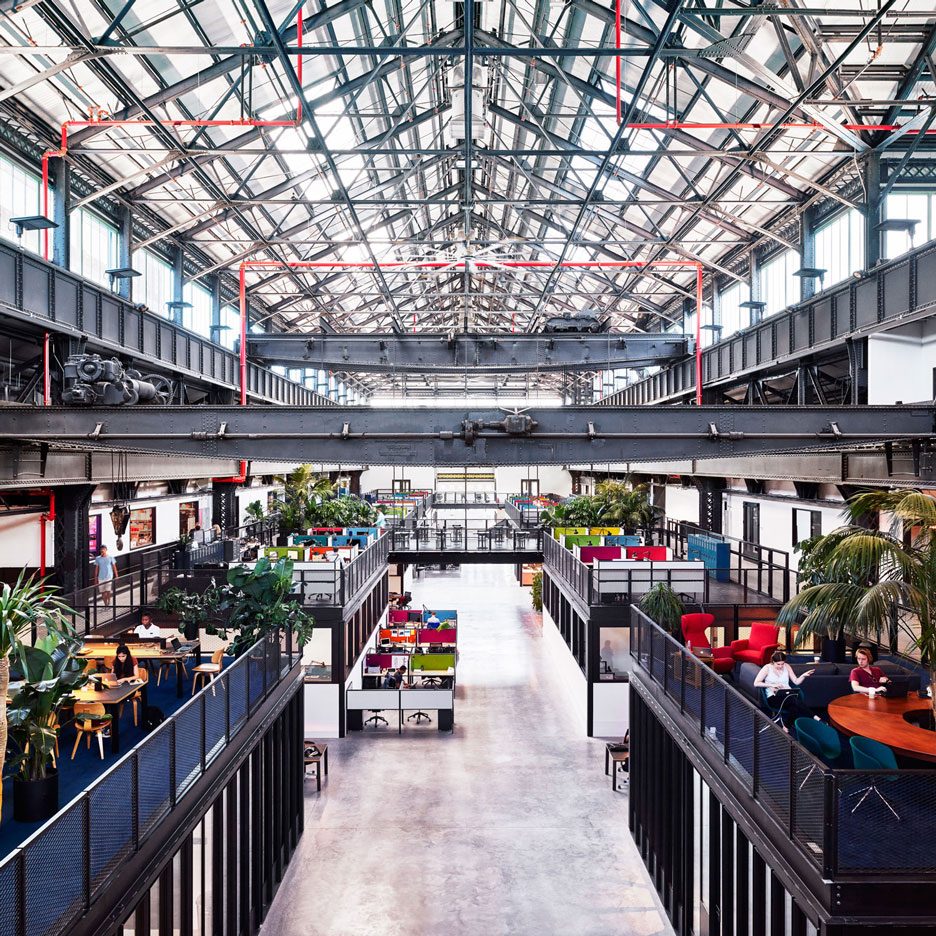
Alessandro Zambelli creates furniture inlaid with patterns of oxidised metal
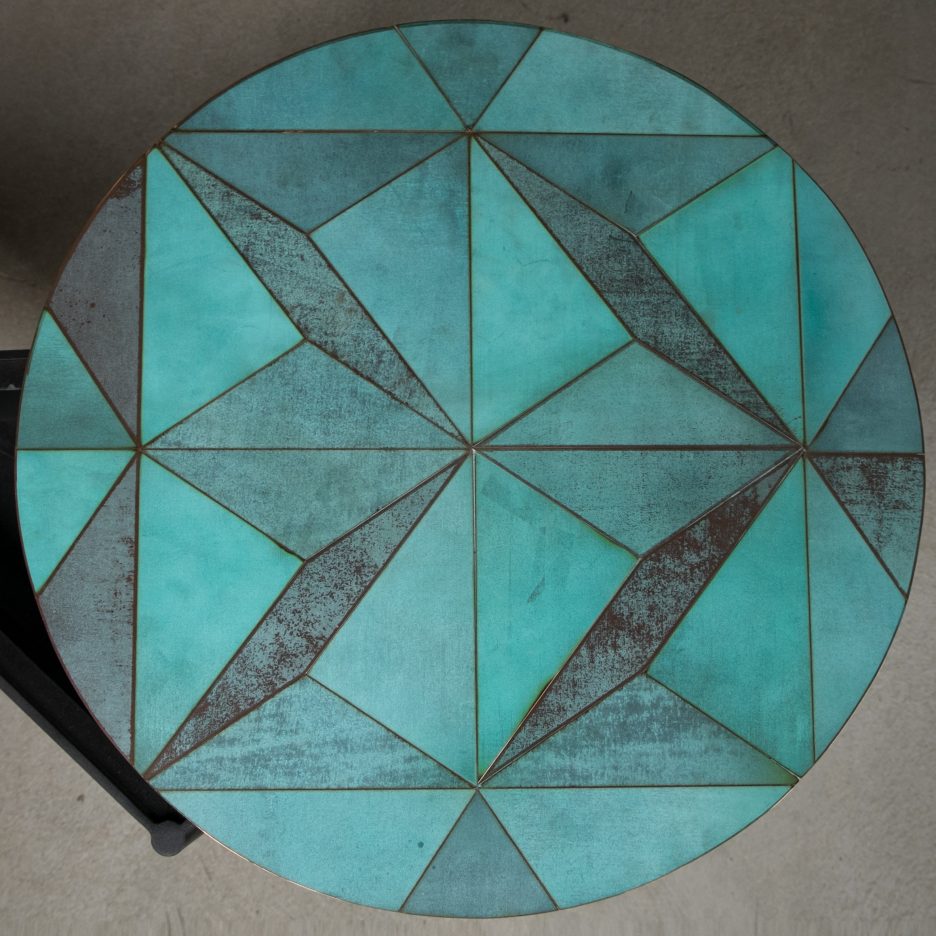
London Design Festival 2016: this furniture collection from designer Alessandro Zambelli features a puzzle of metal pieces that have been oxidised to different degrees (+ slideshow). (more…)
Zorgvlied Crematorion / GROUP A

© Digidaan
- Architects: GROUP A
- Location: Amsteldijk 273, 1079 LL Amsterdam, The Netherlands
- Team: Maarten van Bremen, Jos Overmars, Folkert van Hagen, Adam Visser
- Area: 250.0 sqm
- Project Year: 2016
- Photographs: Digidaan
- Main Contractor: Bouwbedrijf van Schaik BV, Breukelen
- Structural Engineer: Breed ID, Den Haag
- Structural Engineer Tent: Tentech bv, Utrecht
- M Installations: Kemp Installatie BV, Amstelveen
- E Installations: Hirdes Energie Techniek, Amsterdam
- Client: Municipality Amstelveen
© Digidaan
Zorgvlied Crematorion, situated in the historical Zorgvlied Cemetery in Amsterdam, opened last spring. The word Crematorion is composed of the words cremate and Orion (constellation), and represents a new approach to cremation allowing mourners to accompany the remains of their beloved ones as far as possible towards the cremation furnace. GROUP A has designed the innovative structure in such a way it facilitates this new approach.
© Digidaan
A Fitting Way of Leave-taking
The Crematorion is a stand-alone building, housing a cremation furnace and processing room, separate from the usual auditorium. The structure is designed to focus the minds on the ritual of leave-taking. It is designed to evoke personal involvement, allowing each participant to shape it and give it meaning in his or her own particular way. The farewell ceremony may be held in the auditorium of Zorgvlied or elsewhere – even at home. After this ceremony, the relatives accompany the remains of their dear deceased loved one through the beautiful grounds of Zorgvlied to the Crematorion. The next of kin get to choose whether they want to leave the casket in the special forecourt, or whether they want to enter it into the furnace themselves. The furnaces opening is connected directly to the outside. Also, unlike a regular service at a crematorium, all invitees can be present at the moment the casket enters the furnace. It allows differing cultures the opportunity of taking leave in their own way, employing the rituals they consider most appropriate.
© Digidaan
Ritual in Architecture and Environment
The 16-metre high Crematorion is carefully embedded in the leafy surroundings of the cemetery and the vegetation on both sides of the path continues rising along the walls of the exterior. The Crematorion has a base made of stone and a light, tent-like superstructure over it, ending into a glass covered opening. The contrasting materials symbolise the tension between the heaviness of the earth and the insubstantiality of the heavenly and spiritual. The opening in the top is oriented to the sun and the rotation in the tent-structure stems from the difference between the incidence of sunlight and the direction of the site. Daylight comes from above into the forecourt, where it illuminates the glass mosaic wall. This wall also separates the forecourt from the technical area of the Crematorion.
Plan
Section
The Final Journey
The distinctive pavilion is a friendly and recognizable building, with its subtle hints of something higher than the earthly sphere. In GROUP A’s design, the routing through the historic Cemetery – the journey of the deceased and the next of kin, from the auditorium to the Crematorion – plays an important role. The verticality of the design reinforces the idea of the spirit of the departed, rising to the imaginary stars. It helps to turn this final journey into a meaningful ritual.
© Digidaan
Video: President Obama Inaugurates the Smithsonian National Museum of African American History and Culture

© Darren Bradley
“What we can see of this building, the towering glass, the artistry of the metalwork, is surely a sight to behold.”
These were the words spoken by President Barack Obama as he inaugurated the most recent addition to the National Mall in Washington D.C., the Smithsonian National Museum of African American History and Culture, this past weekend. The opening ceremonies featured musical performances and celebrations, as well as a look at the museum’s place in American history.
“This national museum helps to tell a richer and fuller story of who we are,” said Obama. “It helps us better understand the lives, yes, of the president but also the slave, the industrialist but also the porter, the keeper of the status quo but also the activist seeking to overthrow that status quo.”
Also speaking at the opening event were former President George W. Bush, Chief Justice John G. Roberts Jr., Smithsonian Secretary David Skorton, Rep. John Lewis and Lonnie G. Bunch III, as well as prominent figures such as Oprah Winfrey and Will Smith.
Designed by David Adjaye as the leader of the Freelon Adjaye Bond/SmithGroup (FAB) team, the 400,000 square foot building is the first national museum dedicated to the history and culture of African Americans, and includes exhibition space for the display of more than 3,000 artifacts.
Check out the video above to see the Dedication Ceremony in its entirety, and watch the video below for a timelapse of the building’s construction.
News via Smithsonian National Museum of African American History and Culture.
Smithsonian National Museum of African American History and Culture / Adjaye Associates
//cdn.embedly.com/widgets/platform.js
Vaðlareitur in Eyjafjörður by Völundur Jónsson Today me and…

Vaðlareitur in Eyjafjörður by Völundur Jónsson Today me and Helga went to three different locations, one to get some pictures of flowers (Helga made this one: http://ift.tt/1ROOqmI). Then we decided to take a short walk in the small forest Vaðlareitur, and finally we drove towards the orange sunset. http://flic.kr/p/a5DWau
Germanyphoto via ikria

Her Mother’s Daughter
The first volume of Louisa May Alcott’s Little Women was published on September 30, 1868. The novel was an immediate bestseller, bringing the thirty-five-year-old Alcott a cult following of teenage girls and a hero status she grew to regret. “Don’t give anyone my address,” she wrote her publisher before leaving on a European tour in 1870. “I don’t want the young ladies’ notes.” Similar thoughts occurred during the writing of the book: “I plod away,” she wrote in her journal, “though I don’t really enjoy this sort of thing. Never liked girls or knew many, except my sisters . . . ”
But the novel, along with three dozen other books and hundreds of stories, made good Alcott’s vow that, though a woman, she would make both her own and her parents’ living, and do it by writing. This vow was made necessary by Bronson Alcott, a madcap for schemes of high ideal and low pay. Recognizing that her father was unlikely to change, “Duty’s Faithful Child” (Bronson’s term for her) set aside her aspirations for serious writing and, urged on by her publisher, turned her eye to the market.
Alcott’s fiction ranged from wholesome, sentimental tales of family life to, at the other extreme, dark fantasies of romantic desire and frustration — the kind of thing that Jo, Alcott’s Little Women heroine, might have peddled to “The Weekly Volcano.” Published under various pseudonyms, Alcott’s potboiler romances often featured female protagonists determined to triumph, and dangerous if thwarted:
Never had she looked more beautiful as she stood there, an image of will, daring, defiant, and indomitable, with eyes darkened by intensity of emotion, voice half sad, half stern, and outstretched hand on which the wedding ring no longer shone. (Pauline’s Passion and Punishment)
In Marmee and Louisa: The Untold Story of Louisa May Alcott and Her Mother, Eve LaPlante attributes the highest biographical and literary significance to the above passage. The usual view, developed in John Matteson’s Pulitzer-winning biography, Eden’s Outcasts, is that Bronson Alcott was the dominant formative influence on Louisa. In contrast, LaPlante shows how Abigail Alcott’s defiant resistance to her husband’s naïve utopian plan, the Fruitlands group living experiment, salvaged the family and cemented a bond between “the most famous mother-daughter pair in American literary history”:
Louisa and Abigail were born into a world that constrained and restricted them, but they dreamed of freedom. The story of their struggle to forge a new world began with Abigail. Indeed, we cannot understand Louisa without knowing her mother . . . The imaginative child of an inspirational mother, Louisa studied Abigail’s life and character, appropriated them, and embedded them in her fictional worlds.
LaPlante says that, a century and a half on, women continue to grapple with the dilemmas faced by Abigail and given voice by Louisa in her novel — how to balance work and love, public and private, relationships and independence. Alcott scholar Anne Boyd Rioux agrees that the problems faced by the women in the novel remain relevant and compelling, as do the solutions:
Little Women is about four very different girls, and so many readers can find themselves in at least one of the March sisters. Perhaps that is why we still have today so many novels and television shows about four sisters or girlfriends trying to figure out how to grow up on their own terms . . . [T]hey can all be traced back to Little Women, the original story of four women coming of age, helping us see that we have choices in life and that different ways of growing up are valid. That is a powerful message still in a world that tries to limit our horizons to a one-size-fits-all ideal of womanhood.
Rioux is at work on Reading Little Women, due out in 2018 to coincide with the 150th anniversary of the novel’s publication. Rioux’s study will explore both the back-story and the legacy — how the book became a children’s and feminist classic, adapted and argued by generations. Gabrielle Donnelly’s The Little Women Letters is one recent fictional application of exactly that, with three imagined descendants of Jo March borrowing from her story to shape and empower their own.
The Barnes & Noble Review http://ift.tt/2d43iCY
How to Travel Without Seeing: Dispatches from the New Latin America
“Perhaps the greatest travel book, the most unpredictable of all,” Andrés Neuman suggests in the closing paragraphs of How to Travel Without Seeing: Dispatches from the New Latin America, “would be written by someone who doesn’t go anywhere and simply imagines possible movements. Facing a window that seems like a platform, the author would lift his head and feel the rush of the horizon.” It’s a line that operates as both valedictory and epigraph. How to Travel Without Seeing, after all, is a travel book by an author who is ambivalent about travel . . . or, at least, about travel’s theoretical rewards. “These days,” he insists, “we go places without moving. Sedentary nomads, we can learn about a place and travel there in an instant. Nevertheless, or perhaps consequently, we stay at home, rooted in front of the screen.”
If this sounds like a contradiction, that’s part of the point. This elusive travelogue offers an epigrammatic record of Neuman’s 2009 book tour of Latin America, beginning in Buenos Aires, where he was born and lived until he was fourteen, when his family moved to Spain. The intent is to craft a record of disruption, to frame travel not as connective so much as the other way around. “I deal with the trauma of displacement through writing,” Neuman told The New York Times in 2014, shortly after his novel Talking to Ourselves appeared in English. That book, too, opens with a journey, although it is a journey of a very different sort. “Each novel,” he has said, “should refute the previous one” — which explains the shifts from book to book. And yet, this also provokes (for American readers, anyway) one more layer of dislocation, since of Neuman’s eighteen books, only four have been published in the United States.
Such fragmentation highlights one of the challenges of literature in translation: We can only read what is available to us. And yet, in Neuman’s work, that is almost paradoxically the point. Traveler of the Century, the first book of his to be translated into English, is a 600-plus-page picaresque, unfolding along the boundary of Saxony and Prussia, in an imagined Europe that blends history and allegory. The Things We Don’t Do gathers thirty-four stories, many of them microfictions, including four “bonus tracks,” or dodecalogues, which string together a series of aphorisms in an extended commentary on the storyteller’s art. “The extreme freedom of a book of short stories,” he writes there, “derives from the possibility of starting from zero each time. To demand unity from it is like padlocking the laboratory.” A similar argument might be made about all his books. Talking to Ourselves is a prime example, a novel so riveting that no sooner had I finished than I started reading it again. Comprising three alternating first-person narratives — a ten-year-old boy, his terminally ill father, and his mother, who plays her mourning out by way of sexual conflagration — it describes a family unraveling, one misunderstanding or betrayal at a time. For Neuman, though, the only betrayals that matter are those we visit upon ourselves. “From then on,” the mother tells us, in the wake of her first dalliance, “everything that happened, how can I put it? acted like an antidote. Every word, every gesture conspired to block my path and prevent my escape.” She is referring both to the relationship and to her family: a situation in which there are no rules, no codes of behavior, just a set of specific circumstances that determine their response.
What Neuman is after is to play with our expectations, as well as his own. His work is constantly creating its own vernacular. Certainly, that’s the case with How to Travel Without Seeing, which makes a point of sticking to the surfaces. “[E]verything is possible because nothing happens,” he writes, articulating such a point-of-view. The idea, in other words, is to deconstruct what it means to travel — not to immerse in other landscapes so much as to express the self as it moves through these places, by turns alien and contained. Thus, even as we follow Neuman from Argentina to Uruguay to Chile, Peru to Ecuador to Venezuela, what we learn about these locations is glancing, indirect. In La Paz, he discovers a poem graffitied by the feminist collective Mujeres Creando: “After making your dinner / and making your bed / I lost the desire / to make love to you.” In Guatemala City, he comes across the Kafka bar, named, a waitress tells him, for “a Swedish writer the owner likes a lot.” The ironies and inconsistencies only heighten the experience, for in a globalized world, everything is up for grabs. Neuman quotes the Argentine poet Santiago Sylvester:, “Whatever is not a window is a mirror.” The statement is worth keeping in mind. As How to Travel Without Seeing progresses, it increasingly functions on these terms, as a set of vignettes, reflections, shards of memory or observation that add up in the only way such fragments can, as an approximation of consciousness.
That such consciousness is discontinuous goes without saying; the world through which Neuman moves is an unapologetically postmodern one. Even our definitions are open to conjecture, an idea he makes explicit by including Miami and San Juan, Puerto Rico, in his travelogue. Still, the question this raises is not whether these cities are part of Latin America but rather whether all of it, Neuman’s whole itinerary, illuminates a broader notion of the Americas, in which the border is first and foremost a psychological, or an emotional, dividing line. “To travel the world today,” he writes from Lima, “is to witness the same debates in different languages and dialects.” It’s an impression that echoes throughout the book. In San Juan, the Spanish-speaking capital of an unincorporated U.S. territory, he riffs on the evolution of language: “Puerto Rican bilingualism sometimes works like Google Translate, copying words and syntactic structures from English. When I arrive, they announce that the airport is under construction — bajo construcción rather than en obra. In the hotel, they explain to me that Wi-Fi is complimentary — complementario rather than gratis . . . The Spanish they speak here is simultaneously familiar and strange, under construction and complimentary. If the language needs something, it takes it. And it no longer knows where it’s coming from.” Neuman is describing a condition all of us recognize, that odd feeling of statelessness bestowed by contemporary travel, in which “movement itself was the last of our concerns.” Late in the book, while flying from El Salvador to Costa Rica, he offers a telling anecdote. “From the window of the plane,” he recalls, “I see the dark green squares of the fields, the blue dent of a lake among the folds of the mountain range. With a mixture of knowingness and emotion, I think: It looks like Google Earth! This is the way things are. This is the way our eyes work. Birds-eye images on screens don’t evoke the feeling of being on planes. For us, it’s the reverse: planes are like screens.”
I love, I have to say, that exclamation point, its breath of recognition, even (or especially) if the recognition is generic and belongs to everyone. This is what it means to travel now, Neuman tells us, not the shock of the new but of the familiar, the ways in which identity blends. The book was written in 2009, but it’s impossible to read without reflecting on current realities; what does all this mean beneath the shadow of a border wall? Neuman doesn’t shy away from such complexities; How to Travel Without Seeing is full of references to the politics and culture of the countries he visits, although the most ubiquitous signifiers are the effects of a region-wide flu epidemic and the death of Michael Jackson, which occurs as Neuman embarks. In any case, his offhand, aphoristic structure flattens out reaction, rendering each impression as just another momentary idea. What ties them together is that nothing ties them together — there is no master narrative. There is only the self, moving through a world of mass migration and entertainments, inauthentic and authentic at the same time, as travel always is.
In the end, that makes How to Travel Without Seeing less a book about travel than about boundaries, a succession of airports and border guards. The experiences it describes are liminal, occupying the interstices between departing and arriving, being there and being gone. “Before I leave,” Neuman writes, “a friend tells me, ‘If you publish the notes you’re writing, at some point you’ll have to present them in every city that appears in the book.’ ” Double image, double mirror. The tension sits at the center of Neuman’s work. “I imagine myself,” he continues, “presenting the book in every place that appears in it and writing, at the same time, a journal about that second trip, which could be presented again, city by city, and so on to infinity. Once you start on a journey you can never quite end it.”
The Barnes & Noble Review http://ift.tt/2d41REJ
Zaha Hadid’s Nanjing International Youth Cultural Centre nears completion
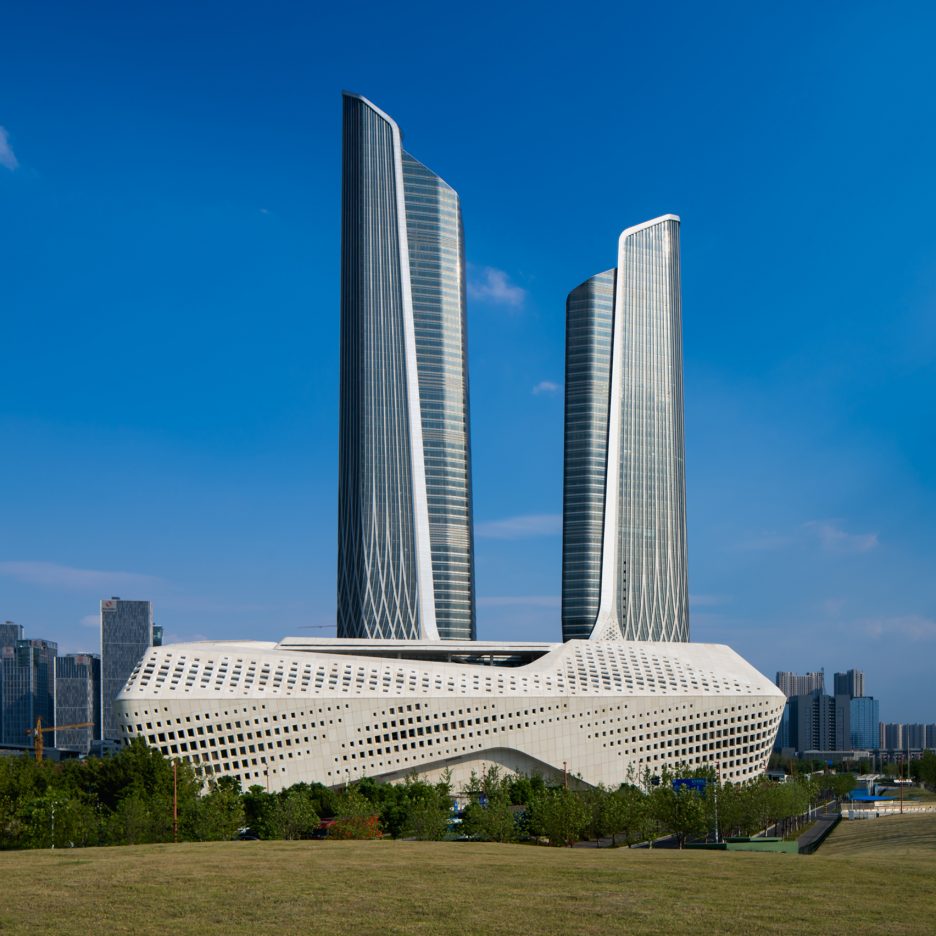
These new photographs reveal a vast cultural complex by Zaha Hadid Architects, which is reaching its final stages of construction in the Chinese city Nanjing (+ slideshow). (more…)
C17 House / XXStudio

© 21estudio + XXStudio
- Architects: XXStudio
- Location: Quintas Del Tamarindo 2, Villa Del Rosario, Norte de Santander, Colombia
- Architect In Charge: Balmor Pereira
- Area: 382.0 sqm
- Project Year: 2016
- Photographs: 21estudio + XXStudio
- Collaborators: 21estudio; Lina Quintero, Milena Duarte
- Structural Calculation: Luis Carlos Rivera Cáceres
- Builder: XXStudio + 21estudio
- Sanitation Installation: HMS Constructores
- Electric Installation: HIBRICA
© 21estudio + XXStudio
From the architect. An order is received and according to the evaluation of the initiative it offers limited financial benefits, but simultaneously has excellent conditions to start a creative process, represented in a bet that assumes the premise: “the possibility of generating a project that is a CREATION and not a replica of something already imagined.”
© 21estudio + XXStudio
The proposal comes as a result of the relationships and conflicts between three basic components: the natural, anthropic and metaphorical; each component is approached from a key variable for its morphological interpretation (formal – spatial):
Model
In this way the dialogic triad is obtained: LAND – PLANT – ROOF Addressing the analysis of joints and contradictions present and possibles between these three components, leads to find a complex interlocutor to establish simple relationships (above – below, outside – inside and solid – transparency, among others), from the previous EXPLORATIONS made about THE GRID, allow assuming the project as a testing laboratory of concepts and relationships.
© 21estudio + XXStudio
Taking lessons: “Para no contradecir la realidad, el arquitecto debería atenerse a los hechos arquitectónicos que a partir de ella se puedan formular” (Pérez, Aravena y Quintanilla, 2007:15). Based on this reflection it asks for an assessment of reality in search of the purposes to which must answer the triad. FIRST: Addressing the pedestrian and vehicular accessibility in relation to the adjacent street to 45°. SECOND: To form a permeable frontal plane to the breezes coming down from the Venezuelan Andes to clean the warm meadows and the reed fields. THIRD: Floating perpendicularly the parking integrating to the house exoskeleton, as opposed to the prevailing separate proposal. FOURTH: Structuring the central yard of 6 * 6 meters, which serves as a flow collector in both directions. FIFTH: An opening of 12.00 meters that allows integrating kitchen – bar – dining room – living room in a unit space conditioned for the furniture. SIXTH: Solving generic variables as:
© 21estudio + XXStudio
[the tectonic]
…inverted beams…
Three grids that cross each other, the first one forming the LAND as a stepped floor, situating the house in downward cascade, allowing expand the section from the entrace to the interior; the next one forms the PLANT, a sequence of horizontal planes sized in relation to the housing program, working to compression and supporting the ROOF falling from above in a grid of inverted beams.
Section
Concept
Section
[program]
…domestic skeleton-…
A set consisting of roof – study – patio – parking – hangs from above by subjecting the inverted beams working simultaneously as hanging beams, two groups of load-bearing planes that fit with the program by way of partition walls, the first one groups rooms and the study on the northeast side integrating the intimate area of the house, while on the southwest side, kitchen, laundry area and guest bedroom, make up the structural corbel what affixed to the floor gives balance to the imposing cantilever. On the floor, under an opening of 12 meters in a continuous space, the furniture is placed demarcating living room – dining room – bar, while the accordion unfolds delimiting the outside terrace facing the pool.
Floor Plan
[materiality]
…exposed concrete skeleton …
A exposed concrete skeleton defines the materiality of the house, which is subtly added three materials: MURO-CEL in black concrete redefines its use forming the permeable vertical plane in a openwork way. Urapo and pardillo wood treated with natural wax bee impose their presence marking the space whit its horizontal grains, and the glass communicates that supports and not that is supported, desmaterialize with multiple reflections.
© 21estudio + XXStudio
[the bioclimatic]
… permeable planes…
The oblique beam receives breezes from the northeast and send them giving natural aceleration, toward the permeable frontal plane that as a filter allows its path and simultaneously controls solar radiation of the access corridor, while the horizontal planes float laterally supporting this strategy and minimize the east – west sunlight.
© 21estudio + XXStudio
On the southwest side as an accordion, urapo wood partitions allow the passage of the evening breezes and filter the afternoon sun giving a magical atmosphere of shadows and reflections. The system is complemented by a central yard formed by hanging beams that work as a flows collector and link the house with the outside.
© 21estudio + XXStudio
[the technique]
…setting up the metals…
… “As family members that project-planning-in-the-making” (Smithson & Smithson, 2001:30) We have learned from the master to put together things that Mies had; simple self-imposed rules show a clear intention to achieve the maximum benefit of a standard shuttering; to join two planes requires dilate, the inability to use paints and this way the “gray work”… is “white work”.
 Sig Nordal