I’m Saying Thanks For Breaking My Heart

//pagead2.googlesyndication.com/pagead/js/adsbygoogle.js

(adsbygoogle = window.adsbygoogle || []).push({});

No matter how strong or weak you are, dealing with a heartbreak isn’t an easy feat. I am not undermining the fact that your family and friends really care about you and want you to snap out of it as soon as possible; it’s just that going through it yourself is a very different story.

Heartbreaks vary from person to person. For some people, it can happen after breaking up from a long-term relationship. For other people, heartbreaks can happen even during the pre-dating stage of a relationship. Timing doesn’t determine the degree of pain. Instead, it has something to do with the intensity of the feelings.

It can also be about perspective. Very often, I see two people that get into a relationship for the sole reason that they like each other and they want to see where it goes. For these people, it’s much easier to get out of it as opposed to people getting into a relationship with marriage and their future in mind.

The Process Of A Heartbreak

process-of-heartbreak

//pagead2.googlesyndication.com/pagead/js/adsbygoogle.js

(adsbygoogle = window.adsbygoogle || []).push({});

Getting through a heartbreak is a process. In the initial stages, you’ll be really upset and that’s the only thing you’ll feel. After you pass that stage, it’s when reality will hit you.

Your sadness will be reduced but it’ll be replaced by a state of emptiness. There’s this sudden sinking feeling that someone has removed a part of you and that something majorly is missing. This is when you’ll start to feel incomplete.

The next phase is where you’ll start to feel fine. This is when you’ll start to analyze your past relationship and the person you were with. This is when you’ll come to the realization that although you miss that person and you feel incomplete without him, it’s just the habit of being with that person that you’re missing.

It’s the fact that you had become so attached to that person’s constant presence in your life to the point that his absence makes you feel incomplete. Think of it this way:  you were living a completely happy and satisfied life before this person came into your life and you will live a happy and satisfied life once you’re over that person.

See Also: 5 Universal Truths to Tell Yourself After a Horrific Break-up 

Being Genuinely Thankful for The Heartbreak

thankful-heartbreak

//pagead2.googlesyndication.com/pagead/js/adsbygoogle.js

(adsbygoogle = window.adsbygoogle || []).push({});

The moment you have come to terms with your feelings is when you will realize that there is light at the end of the tunnel. This is when you’ll realize the importance of getting hurt, getting over someone and how strong these things will make you.

Heartache is one of the hardest kinds of pain that you can experience in your life. Despite this, it’s also one of the strongest lessons you’ll learn.

It will make you realize what your real priorities are and how hard you should be working for them. It’ll make you realize what kind of a person you want in your life and what characteristics of that person you shouldn’t compromise.

Every heartbreak is a new experience that can make you realize what you want in life and how you want your life to be. It will give you a fresh new approach to life that you wouldn’t have known if your life kept moving the way it was with your previous partner.

As the cliche goes, the best fruit is always the highest hanging one. The same is true when it comes to heartbreaks.

//pagead2.googlesyndication.com/pagead/js/adsbygoogle.js

(adsbygoogle = window.adsbygoogle || []).push({});

We need to be patient and learn from our mistakes so that we could work on making ourselves better. If things didn’t work out for us, it is because something better is in store for us.

Take this extremely important advice and move on because that’s the most mature thing to do. I feel we should all go through the process of hurting after a breakup for us to fully recover from it.

It’s what will enable us to finally say “thanks for breaking my heart”.

Conclusion

Lastly, I would like to say that you don’t need a relationship to validate your existence. If we have so much love to give to others, it’s very important that we reserve some of that love for ourselves. We should treat ourselves the way we want to be treated.

You need to make yourself happy, do what is right for you and what you feel is right. Don’t expect someone to make you feel better about yourself. You need to do that on your own.

//pagead2.googlesyndication.com/pagead/js/adsbygoogle.js

(adsbygoogle = window.adsbygoogle || []).push({});

You can take up a hobby, volunteer, take a trip and explore life. Life is too short to be sad over one person.

Somewhere along the way, when the time is right, someone will come and fit the missing pieces of your life. When that time comes, you’ll be able to fully appreciate your past heartbreaks and say thanks for breaking my heart.

See Also: The Role of Karma in Your Relationships 


(function(d) {
var params =
{
id: “cb4f919c-04fa-460c-b2ff-2c7f9ecf4472”,
d: “ZHVtYmxpdHRsZW1hbi5jb20=”,
wid: “165294”,
cb: (new Date()).getTime()
};

var qs=[];
for(var key in params) qs.push(key+’=’+encodeURIComponent(params[key]));
var s = d.createElement(‘script’);s.type=’text/javascript’;s.async=true;
var p = ‘https:’ == document.location.protocol ? ‘https’ : ‘http’;
s.src = p + “://api.content.ad/Scripts/widget2.aspx?” + qs.join(‘&’);
d.getElementById(“contentad165294”).appendChild(s);
})(document);

//pagead2.googlesyndication.com/pagead/js/adsbygoogle.js

(adsbygoogle = window.adsbygoogle || []).push({});

The post I’m Saying Thanks For Breaking My Heart appeared first on Dumb Little Man.

http://ift.tt/2cJvDej

The Sociology of Coliving: How WeLive Creates a “Third Place”


Courtesy of WeLive

Courtesy of WeLive

This article was originally published on Autodesk’s Redshift publication (formerly known as Line//Shape//Space), under the title “Live, Work, Play: WeLive’s Live-Work Spaces Reveal a ‘Third Place.’

According to urban sociologist Ray Oldenburg, people need three types of places to live fulfilled, connected lives: Their “first place” (home) for private respite; their “second place” (work) for economic engagement; and their “third place,” a more amorphous arena used for reaffirming social bonds and community identities.

This third place can be a barbershop, neighborhood bar, community center, or even a public square. The desire for these three separate spheres drives how human environments are designed at a bedrock level, but increasing urbanism—as well as geographic and economic mobility—are collapsing these multiple spaces into one. The result is a new hybrid building type: a live-work multiunit dwelling that is home, office, and clubhouse.

WeLive, an offshoot of coworking-space company WeWork, recently opened two such projects, one in New York City and one in the Northern Virginia neighborhood of Crystal City, just outside of Washington, DC. The company is making huge bets on WeLive as a way to meet massive investor expectations. Wall Street (where the New York project is located, incidentally) valuated WeWork at $16 billion, and the company is looking for WeLive to generate 21 percent of its revenue in the next few years.

WeLive senior designer Quinton Kerns says coliving spaces and WeLive will swell in popularity as cities swell in population. For him, increasing urbanization means “smaller living and more communal living,” he says. “I think this is what cities are moving to.”

Both WeLive spaces, at 110 Wall St. and in Crystal City, are multistory buildings with about 200 rental units, offering a range of studio to four-bedroom apartments that are furnished and finished down to wall art and silverware. Leases (called “membership agreements”) run month-to-month, and there’s a WeWork co-working space on the bottom floor of each building.

A social-media app tracks activities and interaction across the building—from a startup reaching out to fellow WeLive-ers for an impromptu focus group to a few neighbors picking out a dinner reservation together. It’s low-impact living for young professionals more attracted to a hive-like cluster of like-minded entrepreneurs than they are to any particular place.

Anita Shannon, a community manager at 110 Wall St., says only a handful of people there live and work in the same building every day, so the WeLive concept is less about “a collapse of the three [places],” she says. “You definitely still have that separation [between living, work, and social spaces].”

But the close proximity of these zones inside a single building means that the spectrum of private-to-public spaces needs to be nuanced and carefully articulated. That’s the job of Kerns, who describes the transitions between public and private spaces as “fluid.”

From bedrooms to large event spaces and communal kitchens, there are about a half dozen types of spaces that each cater to different levels of social interaction. Beyond purely private individual units, hallways have small lounge spaces and phone booth–style workstations.

Groups of three floors are branded and identified as “neighborhoods,” each with a different graphic identity. For example, floors seven through nine at 110 Wall St. have a synchronized-swimmer graphic wall-covering theme. And each neighborhood has a communal kitchen and larger lounge space. “We try to accommodate all aspects of live-work,” says Kerns, who lived at the Wall Street location for six months.

There are subtle differences between the two WeLive projects, but both have a matching aesthetic heavy on particle board, plywood, exposed ductwork, and subway tile. This sensibility correlates to the more than 100 WeWork spaces, which Forbes dubbed “reformed bro meets upscale IKEA.”

One of Kern’s biggest design challenges with WeLive was how to create furnished apartments that would encourage what he calls an “asset-light living situation” while still offering ways for residents to make their home their own. To strike this balance, he used a selection of customizable materials in strategic places that give residents a chance to color outside his lines: felt walls in bedrooms for hanging photos; pegboard in the kitchen to arrange shelving for a cookbook collection; chalkboard walls for scrawling down grocery lists; and modular, movable shelving systems. “It’s like building with building blocks within the unit,” he says.

This adds up to a stylishly appointed, if mildly anonymous, ready-made apartment—one with the potential to allow the personalities of the unit and the resident to align. “You can literally show up with just a toothbrush and clothes,” Shannon says. “Actually, we do give you a toothbrush.”

Shannon says residents want to use this kind of coliving space to engage in the kind of neighborly camaraderie that seems almost antiquated: borrowing cups of sugar and gathering a quorum to go see a movie. But residents don’t necessarily have to talk to people to make this happen, hence the app. “A lot of members are more comfortable communicating on a digital platform as opposed to knocking on a neighbor’s door,” she says.

The WeLive buildings are certainly an extension of its app, which contains much of the social interaction the company says is critical to its value. The wine tastings, family-style dinners, and art classes planned by WeLive residents attract a broader cross section demographically than you might expect for a building that almost requires you to have a smartphone.

The average age of residents is about 30, and there are a decent number of recent college graduates, but there’s also a handful of 50- to 60-year-olds and families with kids. Kerns says that attracting a diverse audience is a critical goal for WeLive, and his designs for various spaces (high-energy yoga studios and exercise rooms for younger residents and a whiskey lounge with more refined materials and a mature setting) reinforce this.

“The most core characteristic through all of the members,” Shannon says, “is people going through a transition.” This could mean someone seeking a conveniently furnished apartment after moving to a new city or one needing to cut back on infrastructure and labor in anticipation of a new business venture that might not be profitable over the course of a traditional lease.

For a certain class of worker, mobility and flexibility are critical needs not served by traditional living arrangements. WeLive is betting that as the information economy whirls people around the globe faster and faster, they’ll need more places to land softly—toothbrush in hand or not.

http://ift.tt/2cNRsN0

New Deal Design’s Scrip device brings tactility to digital payments


San Francisco studio New Deal Design has devised a small copper-coloured device that allows users to make purchases by swiping its textured surface, as “a modern replacement for cash” (+ slideshow). (more…)

http://ift.tt/2cNMRL8

Irving Place Carriage House / LOT-EK


© Danny Bright

© Danny Bright


© Danny Bright


© Danny Bright


© Danny Bright


© Danny Bright

  • Architects: LOT-EK
  • Location: Brooklyn, NY, USA
  • Architects In Charge: Ada Tolla, Giuseppe Lignano
  • Area: 2500.0 ft2
  • Project Year: 2015
  • Photographs: Danny Bright
  • Structural Engineer: RSA, Eytan Solomonoff
  • Mep Engineer: Kevin Gallen
  • Principals: Francesco Breganze, Project Architect
  • Client: Markus Linnenbrink, Cindy Rucker
  • Area: 2,500 SF interior + 1,200 SF outdoor

© Danny Bright

© Danny Bright

The Irving Place Carriage House is a single family residence for an artist, a gallerist and their daughter. 


© Danny Bright

© Danny Bright

Diagram 2

Diagram 2

© Danny Bright

© Danny Bright

The project involved the remodeling of an existing two-level carriage house from the 30ies and the addition of a penthouse above. 


© Danny Bright

© Danny Bright

The space is organized through the insertion of a single volume that–as a jellyfish, resting its bell or umbrella on the roof–crosses with its tentacles the entire house extending from the roof to the ground. 


© Danny Bright

© Danny Bright

The penthouse, retrofitted from four shipping containers, provides access to the decked and shaded roof. The vertical volume—orange, like the penthouse containers—intersects the carriage house and organizes kitchen, bathrooms, mechanical space and the stairs, the incline of which generates all of the diagonal cuts. This volume also separates the space in two—entrance/mud room in the front with kitchen/dining/living space on the rear at the ground level, and master and kids bedrooms at the second level.


© Danny Bright

© Danny Bright

http://ift.tt/2cokOLJ

What Emotion Is Your Subconscious Hiding?

Tarot is a well known divination method. It can reveal our past, our present and our future. Of course it would be wise to take our decisions based on a thorough analysis and on our inner voice, but sometimes, tarot can reveal some hidden things.

Today the cards will show you something hidden in your soul. But take care, this is only for entertaining purposes.

tarotTake just now this quick and easy quiz and find out what emotion is your subconscious hiding!

What Emotion Is Your Subconscious Hiding?

//cdn.playbuzz.com/widget/feed.js

Leave a comment below to tell us what you’ve got!

The post What Emotion Is Your Subconscious Hiding? appeared first on Change your thoughts.

http://ift.tt/2cNzGK5

Green Urban Park Floating Above a Highway Unifies Buckhead Neighborhood in Atlanta


Aerial view looking south at dusk. Image Courtesy of Roger Partners / Nelson Byrd Woltz

Aerial view looking south at dusk. Image Courtesy of Roger Partners / Nelson Byrd Woltz

Rogers Partners Architects+Urban Designers and Nelson Byrd Woltz Landscape Architects have released preliminary designs for a new park floating above a divisive highway and commuter rail line in the Buckhead neighborhood of Atlanta, Georgia. A 2,400-foot-long elevated traverse, Buckhead Park Over GA400 aims to bring the community together with safe, convenient access to the amenities and cultural attractions in Buckhead. 


Courtesy of Roger Partners / Nelson Byrd Woltz. ImageView from Peachtree looking north


Courtesy of Roger Partners / Nelson Byrd Woltz. ImageView from PATH400 looking south


Courtesy of Roger Partners / Nelson Byrd Woltz. ImageView from plaza looking south


Aerial view looking toward Downtown Atlanta. Image Courtesy of Roger Partners / Nelson Byrd Woltz


View from allee looking north. Image Courtesy of Roger Partners / Nelson Byrd Woltz

View from allee looking north. Image Courtesy of Roger Partners / Nelson Byrd Woltz

Lined by shade trees spanning the full length of the elevated traverse, the park itself provides a specialized experience to its visitors. The north end includes a common area complete with an intimate amphitheater suitable for both formal and casual gatherings. A plaza in the heart of the park features retail, restaurants, and MARTA rail access. On the southern end is a garden oasis that will help mitigate the urban heat-island effect. The park will also add a destination to PATH400, a multipurpose recreational and commuter greenway trail running along the spine of GA400.


Courtesy of Roger Partners / Nelson Byrd Woltz. ImageView from Peachtree looking north

Courtesy of Roger Partners / Nelson Byrd Woltz. ImageView from Peachtree looking north

The design endeavors to improve the quality of life in Buckhead, such as by boosting the city’s walkability. With extensive pedestrian paths linking the park to neighboring streets, Buckhead Park Over GA400 encourages city dwellers to use the park as they travel between work, home, and leisure. Custom-engineered stormwater capture systems will sustainably irrigate the gardens, while native Atlanta flora will minimize maintenance while maximizing aesthetic impact.


View from Peachtree looking east. Image Courtesy of Roger Partners / Nelson Byrd Woltz

View from Peachtree looking east. Image Courtesy of Roger Partners / Nelson Byrd Woltz

We truly feel we have struck the right balance with this initial design to make big change with artfully-considered efforts, said Robert M. Rogers, FAIA, founding partner of Rogers Partners. We see Buckhead leading a national trend to create value, enhance quality of life, and improve connectivity by constructing inspired public spaces.


Aerial view looking toward Downtown Atlanta. Image Courtesy of Roger Partners / Nelson Byrd Woltz

Aerial view looking toward Downtown Atlanta. Image Courtesy of Roger Partners / Nelson Byrd Woltz

The Buckhead Community Improvement District board will review community feedback and discuss the next phase of the project in October. Read more about the design here.

News via: RogersPartners 

http://ift.tt/2cFkwkB

New York City – New York – USA (by Phil Dolby)

New York City – New York – USA (by Phil Dolby)

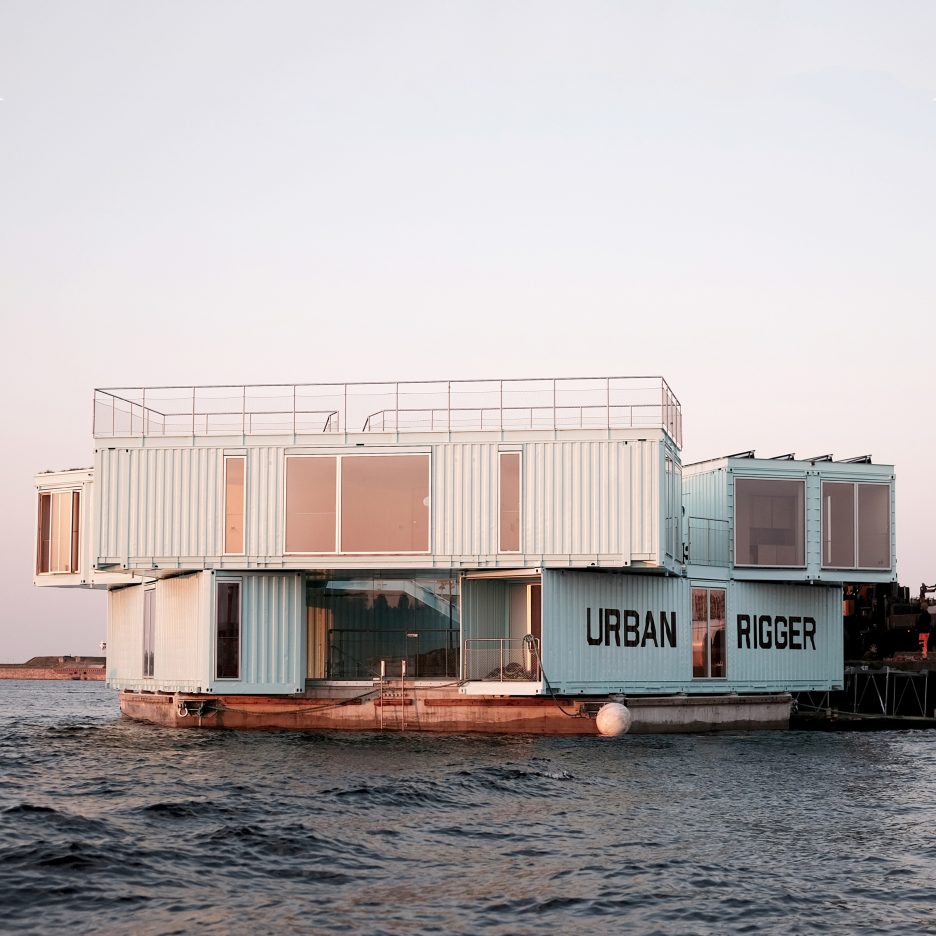
BIG stacks shipping containers to create floating student housing in Copenhagen harbour


Shipping containers are stacked on a floating platform to create these buoyant student halls of residence designed by Bjarke Ingels’ firm for Copenhagen harbour (+ slideshow). (more…)

http://ift.tt/2d2cjdM

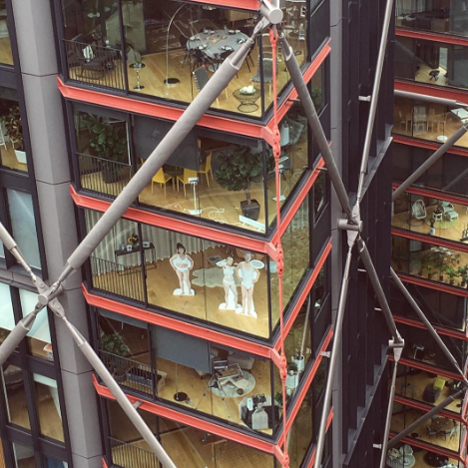
Neo Bankside residents should add net curtains to stop gallery visitors spying says Tate director


Outgoing Tate galleries director Nicholas Serota has waded into the feud between Neo Bankside residents and Tate Modern, whose new viewing platform overlooks the luxury housing development on London’s South Bank. (more…)

http://ift.tt/2djzygX

💙 summer view on 500px by Emil Jovanov, Horn,…

💙 summer view on 500px by Emil Jovanov, Horn, Austria☀  NIKON… http://ift.tt/26XDASv

http://ift.tt/2dlXrr7