Opinion: Why Our Cities Need Less Jane Jacobs


Mrs. Jane Jacobs, chairman of the Comm. to save the West Village holds up documentary evidence at press conference at Lions Head Restaurant at Hudson & Charles Sts. (1961). Public Domain

Mrs. Jane Jacobs, chairman of the Comm. to save the West Village holds up documentary evidence at press conference at Lions Head Restaurant at Hudson & Charles Sts. (1961). Public Domain

This article was originally published in the Literary Review of Canada as “Tunnel Vision: Why our cities need less Jane Jacobs.” It has been partially re-published with permission.

My introduction to Jane Jacobs was completely ordinary. Like many, many architecture students since its publication in 1962, I read The Death and Life of Great American Cities for an introductory course in urbanism. Jacobs was a joy to read, whip-crack smart and caustically funny, and she wrote in impeccable, old-school sentences that convinced you with their unimpeded flow. She explained her ideas in utterly clear and simple language. Planners are “pavement pounding” or “Olympian.” There are “foot people and car people.”

Why were we reading her? I expect it was to encourage us to look harder at the city, and to imbibe some of her spirited advocacy for experience over expertise. It was a captivating message and delivered at the right time. Today it seems as though everybody interested in cities has read at least part of Death and Life and found personal affirmation in it. Michael Kimmelman wrote, “It said what I knew instinctively to be true.” For David Crombie, “she made it clear that the ideas that mattered were the ones which we understood intimately.”

This quality was important, and one of the reasons that Jacobs endures in our culture is the facility with which we can identify with her. She is one of “us,” whoever that is—not an expert, more like an aunt than a professor. Her speciality was the induction of rules from patterns discovered by individual observation, like a 19th-century gentleman scientist. Her work gave seriousness to reactions that might otherwise be dismissed as taste, ignorance or prejudice.

Embed from Getty Images

Yet for all that, the Village, the neighbourhood she loved so fiercely and immortalized in Death and Life, has died. It was not levelled by the planners; it was slowly strangled by the invisible hand. Of course, it does not look dead. If anything, it looks recently repainted. But the vitality is gone. Its rich new residents have closed in on themselves, and more businesses serve tourists than locals. Writing in Slate recently, Peter Moskowitz bemoaned its state: “The same neighborhood Jacobs lauded for its diversity in the 1960s and ’70s is today a nearly all-white, aesthetically suburban playground for the rich.” But if Jacobs won, how did her neighbourhood lose?


Google Doodle for Jane Jacob's 100th birthday, May 4, 2016 (via <a href="http://ift.tt/2dCT6i7; Google Doodles Archive</a>)

Google Doodle for Jane Jacob's 100th birthday, May 4, 2016 (via <a href="http://ift.tt/2dCT6i7; Google Doodles Archive</a>)

“The starting point must be the study of whatever is workable, whatever has charm in city life,” Jacobs wrote in 1956. She appealed to pragmatism and common sense based on a conviction that her discoveries on the street could be generalized. Part of her near-mythic status comes from the fact that, at a historical peak of institutional power guarded by men, she was a woman who dared to make people trust their own eyes. As Marshall Berman wrote, Jacobs gave us “a language to appropriate our own experience.”

Embed from Getty Images

Her inattention to racism, whether in the form of American housing markets or in official policies like redlining, is well known—at least within the academy, and it was noticed before Death and Life was published. In 1961 her editor, Jacob Epstein, wrote her that he was worried about the absence of any discussion of the race issue: “I don’t think that you can proceed as though the question didn’t exist.” Jacobs replied that she had her reasons but no time to explain them. Sociologist Nathan Glazer wrote her that he agreed with Epstein, then shrugged off the concerns they both had as unrealistic: “on the other hand, you can’t do everything.”


Original illustration by Lisa Vanin (www.lisavanin.com) for the Literary Review of Canada

Original illustration by Lisa Vanin (www.lisavanin.com) for the Literary Review of Canada

Step outside Jacobs’s crackling narrative, and suddenly all you can see is what she leaves out.

Unfortunately, there are a lot of things you do not see, especially if you are a middle-aged, middle-class white lady in 1950s New York. What you see depends on who you are, and many of Jacobs’s appealing dictums seem much less universal once you consider race, class, ethnicity or other less visible relationships of power. Tweak to those and step outside Jacobs’s crackling narrative, and suddenly all you can see is what she leaves out. It is unpleasant but it is necessary, for whoever today invokes her blindly invokes also her blindness.

Read the rest of the article at the Literary Review of Canada

http://ift.tt/2ew3MwF

House in Charbonnières-les-Bains / Atelier Didier Dalmas


© Jérôme Ricolleau

© Jérôme Ricolleau


© Jérôme Ricolleau


© Jérôme Ricolleau


© Jérôme Ricolleau


© Jérôme Ricolleau

  • Other Participants: Agibat, Nicolas, Atelier.annegardoni (engineering consultancy)

© Jérôme Ricolleau

© Jérôme Ricolleau

From the architect. Built on a ground with strong slope, the building takes advantage of the site by working on two levels.


© Jérôme Ricolleau

© Jérôme Ricolleau

Indeed, on a low level a garage and a studio take place. We can also find all the technical elements necessary for the efficiency of the house. The accesses to these spaces are completely hide since the outside, by dint of the rigor of the drawing.


Long Section

Long Section

Above the low level in lacquered aluminium, the main level is as “posed”. As if it placed naturally on it on one side and on the ground of other one, so catching up the slope. Its decline in cantilever on the east façade not only allows the living room to open up existing vegetation but also to cover the entrance and access to the garage.


© Jérôme Ricolleau

© Jérôme Ricolleau

All the rooms of the house have natural light. Even the corridor, which is in the heart of the house, can enjoy natural light. Firstly, it is lighted by its roof window and secondly, by the glazed upper part of the thick wooden wall separating the rooms.


© Jérôme Ricolleau

© Jérôme Ricolleau

The entire house has been realized in reinforced concrete combined with external insulation. The main cladding is in Anstrude stone. Its bright colour contrasts with the dark grey lacquered aluminium that is at the bottom.


© Jérôme Ricolleau

© Jérôme Ricolleau

1st Level

1st Level

© Jérôme Ricolleau

© Jérôme Ricolleau

Inside, two pure materials meet. On the one hand raw concrete, the other of wood panels called “Tilly”. These are oak panels in the careful and delicate appearance that fit berries, hide a fireplace, and draw an office according to their precise pattern layout.

Product Description. The building is characterized by the purity of the materials that are used. The thin lacquered aluminium carpentry on the south facade contrast with the parapet. This one has an important overhang and its facing in stone of Anstrude, aims to be massive. From the entrance (East elevation), the facing turns around in facade and becoming a guardrail.


© Jérôme Ricolleau

© Jérôme Ricolleau

http://ift.tt/2ek6OrH

Denver – Colorado – USA (by Max and Dee Bernt)

Denver – Colorado – USA (by Max and Dee Bernt)

109 Architectes Proposes Beirut Museum Design Based on “The Little Prince” Book


Courtesy of 109 Architectes

Courtesy of 109 Architectes

109 Architectes has released its proposal for the Beirut Museum of Modern Art (BeMA), for which a competition was recently held. The proposal was shortlisted, but did not ultimately win. In this proposal, BeMA is a box—“a generic form that belongs to everyone”—based on a scene in The Little Prince, where a traveler is asked to draw a sheep. The Prince rejects each sheep drawing until the traveler draws a box, inside of which a sheep is hidden. “The cube is a neutral form in the Little Prince’s search for identity. Within it, he sees what he wants to see.”

Within this generic box, visitors will thus be able to project their views of Beirut—the city’s chaos, diversity, creativity, history, streets, people, and more.


Courtesy of 109 Architectes


Courtesy of 109 Architectes


Courtesy of 109 Architectes


Courtesy of 109 Architectes


Courtesy of 109 Architectes

Courtesy of 109 Architectes

The box portion of the Museum stands alone in the heart of the plot, surrounded by event space, and facing the National Museum of Beirut so that the two buildings are linked by an open plaza. The building is separated into two halves by an inner street, representing the concept of the box “cracking” after failing to contain Beirut’s intensity. This central space will additionally act as a gateway to the Museum, as well as eventually to the city.


Courtesy of 109 Architectes

Courtesy of 109 Architectes

The inner street is present on each floor of the building, connecting exhibition spaces on both sides via bridges, and contrasting with the outer portion of the building in its transparency.


Courtesy of 109 Architectes

Courtesy of 109 Architectes

Courtesy of 109 Architectes

Courtesy of 109 Architectes

In a second phase, ground floor development and a network of streets and plazas will activate the space, turning BeMA into a place to gather and socialize, and allowing the Museum to connect more with its surrounding neighborhood.

Learn more about the project here.

News via 109 Architectes.

http://ift.tt/2dCF00f

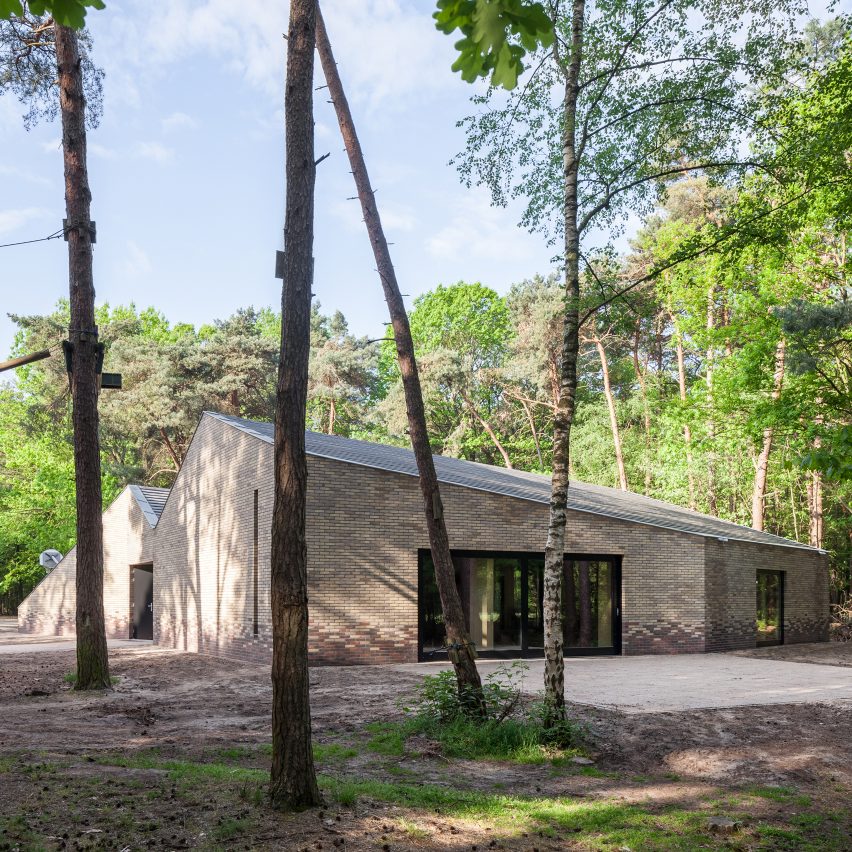
Angular brick theatre by Reset Architecture sits in a woodland clearing

reseta-zonnewende-theatre-hall-architecture-brick-netherlands_dezeen_sq-a

This theatre at a Dutch holiday camp features a pair of differently sized gables and patterned brick cladding that harmonises with the tones of its woodland site. Read more

http://ift.tt/2evJgw3

💙 Grasshopper on 500px by Anton Starikov, Saratov,…

💙 Grasshopper on 500px by Anton Starikov, Saratov, Russia☀  … http://ift.tt/1sPMjXB

http://ift.tt/2e9kVPN

How to be a Good Husband to Make Your Life a Bed of Roses

Every woman dreams of a life with a perfect husband who will sweep her off her feet into a magical world of love and romance. She fantasizes an ideal husband who will be both ideal life partner and best friend.

To be truthful, it is not only difficult but impossible to find a man possessing all the qualities a wife wishes for. But if a husband makes an effort, he can go a long way in improving his relationship with his wife and live more peacefully and happily as a result.

Here’s the things you need on how to be a good husband.

Trust & understanding

Trust is the main quality on which all relationships are based. A good husband needs to trust his wife immensely to make their bond stronger.

In fact, both the husband and wife need to be understanding and truthful to each other if they want to make their relationship into a bed of roses. Should any misunderstanding arise, each one should try communicate with the other while setting ego aside.

See Also: 5 Ways to Get What You Want in Your Relationship

Always be faithful to your wife

faithful-husband

Faithfulness is the biggest factor in a relationship. Being faithful to each other will help to make your relationship a happy and a long lasting one.

This does not mean that a husband is not allowed to mingle with other women, but he should neither lie nor cheat on his wife. A wife should be at ease and not suspect the worst when her husband goes for a night out with his friends.

Dependable and supportive

A good husband should support his wife in good times as well as bad, guiding and supporting her decisions whether personal or professional. She should also be able to depend on her husband whenever she requires help whether it is just grocery shopping or planning a big event together.

Possess a good sense of humor

A man with a good sense of humor is definitely a great asset making his wife laugh all the time and keeping their relationship fresh and healthy. Sharing jokes and having a good laugh with your better half is great fun and will help to add some spark to your daily life.

Pamper and spend time with your wife

couple-spending-time

Women love to be pampered so a husband who pampers his wife can never go wrong. Besides remembering birthdays and anniversaries and giving gifts, small gestures like bringing flowers for her occasionally, writing love notes, singing songs and dancing with her to her favorite tunes can all bring a smile to her face.

All these actions will make her realize how thoughtful you are. It might even make her fall for you all over again.

Taking an interest in her hobbies is also a good idea. You can do gardening, or do early morning walks together. These little things mean a lot to women and gives them a sense of belonging and a feeling of being loved. Even little things such as helping with the house work will score you big points as she can appreciate how you make an effort to take some load off her shoulders.

See Also: 4 Original Ways to Be Romantic in the Digital Age 

Be respectful and be a man of principle

All women like their husbands to be sweet, endearing and chivalrous. Opening doors for her, pulling out a chair, or taking her out for a date are things all wives appreciate and love.

Being respectful, however independent she might be, is an act of understanding. Keeping your promises, coming on time, or picking up the kids from school are excellent ways to show your respect for her time.

Another way to respect her is to actually listen to what she has to say instead of pretending to do so. There will be times when she needs a listening ear or a shoulder she can lean on so be there for her.

Never raise your voice

A good husband will never raise his voice or physically abuse his wife however bad the circumstances may be. Always keep your cool and reason out with your wife and never let emotions get the better of you.

All of the above go both ways for both husband and wife.  However, some men may focus solely on work or on other things outside of the family. If you want a happy and peaceful family life, learn how to be a good husband and see how your life becomes easier henceforth.


The post How to be a Good Husband to Make Your Life a Bed of Roses appeared first on Dumb Little Man.

http://ift.tt/2e3PTYj

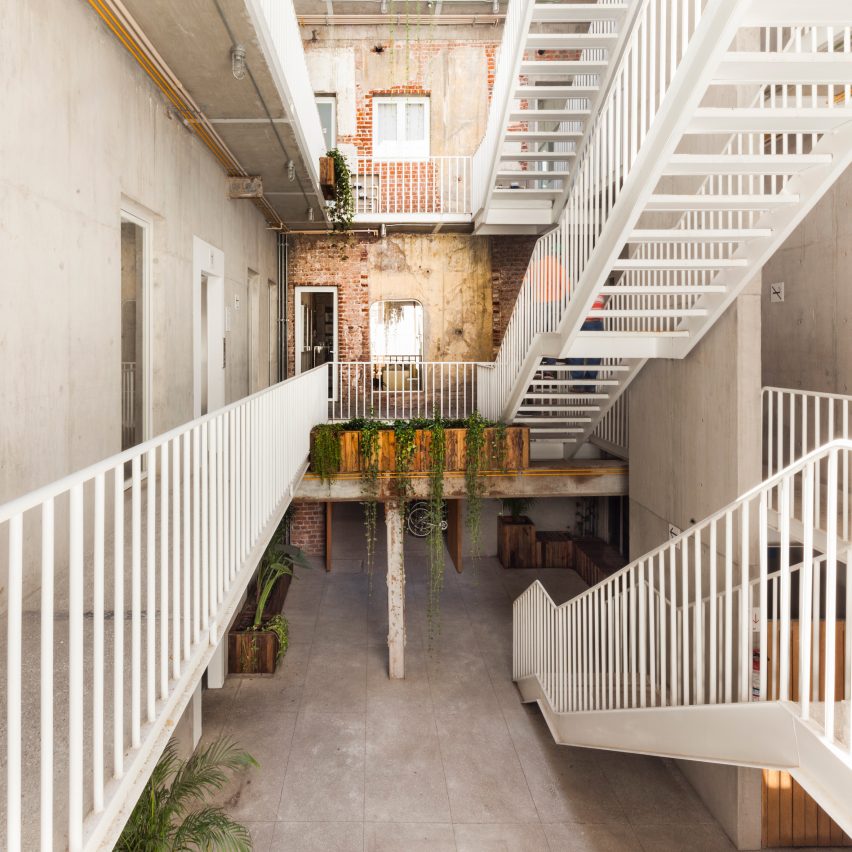
Cadaval & Sola-Morales transforms abandoned building in Mexico into apartments and offices

CH-Reurbano by Cadaval & Sola-Morales

Cadaval & Sola-Morales has converted a derelict block in Mexico City‘s La Roma neighbourhood into apartments, offices and shops set around a courtyard with white staircases and trailing planting. Read more

http://ift.tt/2emYjJk

iPabo University of Applied Sciences / Mecanoo


Courtesy of Mecanoo

Courtesy of Mecanoo


Courtesy of Mecanoo


Courtesy of Mecanoo


Courtesy of Mecanoo


Courtesy of Mecanoo

  • Client: College van Bestuur iPabo, Amsterdam

Courtesy of Mecanoo

Courtesy of Mecanoo

iPabo University of Applied Sciences in Amsterdam trains students to become teachers in primary education. Mecanoo designed the comprehensive building overhaul and extension needed for the substantial increase of students expected in the coming years.


Plan 1

Plan 1

Part renovation, part new build

The existing iPabo building’s core dates from the 1960s. The adjustments and enhancements made in last few decades resulted in a fragmented building that lacked clear organisation and had limited ties to the surrounding area. Renovation of the school coincided with iPabo’s quest for a new identity to express their independence. Mecanoo worked with the board of iPabo to realise inspirational, transparent environments where there is space to meet in a building that is part renovation, part new build.


Courtesy of Mecanoo

Courtesy of Mecanoo

Learning landscape

The building is designed according to the principle of a learning landscape and the emphasis is on the integration of three different zones: knowledge-sharing in classes and project rooms; enhanced concentration in offices and quiet areas; and social interactions in the entrance hall, restaurant and atrium. The atmosphere is warm, comfortable and inviting – people are connected with each other and their surroundings. The renovated building encourages planned and spontaneous meetings amongst users. It surprises, but it is also transparent and feels safe.


Courtesy of Mecanoo

Courtesy of Mecanoo

Three-storey central atrium

The new entrance hall, with its large glazed facade, has a strong visual connection to the neighbourhood, making the school a part of the community. The entrance hall offers views of the three-storey central atrium which connects two building wings, creating circulation routes in place of  previously dead-end passageways. An auditorium and restaurant are located on the ground floor of the atrium. Freely cantilevered above are the library and study areas.


Courtesy of Mecanoo

Courtesy of Mecanoo

Clear identity

The facade consists of vertical wooden slats mounted on a black surface, providing an interesting visual unity between existing and new build parts. The atrium borders a patio on one side and an educational courtyard on the other. Large quantities of daylight filter through the glazed facade, blurring the difference between inside and outside. To reinforce this experience, the wooden slats of the facade continue inside. Natural and easy-to-maintain materials such as wood, glass and aluminium create a pleasant interior with a human touch. Combining renovation and new build gives iPabo a clear identity, befitting a college that educates the teachers of tomorrow.


Courtesy of Mecanoo

Courtesy of Mecanoo

http://ift.tt/2dCf8Bz

Burnazzi Feltrin Architetti Design a Private Residence in Trento, Italy

CW Apartment by Burnazzi Feltrin Architetti (7)

CW Apartment is a residential project completed by Burnazzi Feltrin Architetti. It is located in Trento, Italy and was finished in 2016. CW Apartment by Burnazzi Feltrin Architetti: “CW apartment is located in an area on the south part of Trento, a green and rural cameo nestled inside the urban pattern. The flat is set in a new row house surrounded by fields mostly of which are apple orchards. Nearby..

More…