Funeral Chapel and Memorial Place / Modum


© András Krizsán + Alexandra Varbai

© András Krizsán + Alexandra Varbai


© András Krizsán + Alexandra Varbai


© András Krizsán + Alexandra Varbai


© András Krizsán + Alexandra Varbai


© András Krizsán + Alexandra Varbai

  • Architects: Modum
  • Location: Harkány, Terehegy, 7815 Hungary
  • Architect In Charge: András Krizsán (project leader), Stefánia Radnai, Csaba Székely, János Korpás and Máté Kis (students of architecture)
  • Area: 15.0 sqm
  • Project Year: 2015
  • Photographs: András Krizsán + Alexandra Varbai
  • Other Participants: István Fülöp, József Domokos, Árpád Kaszás, István Bata, Ádám Horváth, Emese Plenter, András Szabó, Tamás Szász, Dávid Szemes, Alexandra Varbai

© András Krizsán + Alexandra Varbai

© András Krizsán + Alexandra Varbai

From the architect. A towering building on Terehegy was designed by the students of Szent István University (SZIE) – Ybl Miklós College of Building, Faculty of Architecture and Civil Engineering (Stefánia Radnai, Csaba Székely, János Korpás and Máté Kis) under the guidance of instructors: István Fülöp and András Krizsán DLA, and built with widespread local support.


© András Krizsán + Alexandra Varbai

© András Krizsán + Alexandra Varbai

At the border of the village, at the side of the road next to a vineyard, the Protestant cemetery is located like a green grove among the large shield of agricultural lands. The cemetery garden overgrown with bushes and trees is now only used occasionally. The funeral ceremonies were held in the open air – sometimes in the rain and mud, in undignified conditions. There was not a designated area, an indoor space where to lay out the coffin, where the priest could pray and the relatives could say their final goodbye to their loved one.


Plan

Plan

Section

Section

The task was to design a multi-purpose community building and funeral home, what is a simple half-covered construction, protects against rain and sunshine. Where is place for the feretory and the relatives, and give the impressive ambience of passing away – but also captures the atmosphere of the landscape. It must be a determinative but not excessive construction in the graveyard, linking the environmental elements (road, slope, graves, stairs) with the funeral ceremony. It has to show a sacral function together with architectural value of the structure.


© András Krizsán + Alexandra Varbai

© András Krizsán + Alexandra Varbai

Because of a local initiative András Krizsán went to István Fülöp who organizes annually construction camps. At first this project was the topic of the workshop-week at the Masters courses ended with an exhibition. After some valuable, inspiring suggestions the Bsc students gave the final form of this project in their exam exercises of the semester. Working in teams the students designed the plans, refined and clarified the concept week after week. It was a motivating factor that this plan can be their first built project, but they also had to pay attention to make it feasible and easily performed. The common thinking deepened the contact between client and designers: for the client this project was a personal story and it became an alive challenge for the students.


© András Krizsán + Alexandra Varbai

© András Krizsán + Alexandra Varbai

http://ift.tt/2etbEz7

Mendes da Rocha, FUKSAS & PJAR Architects Design Pre-Fab Pavilions for Revolution Precrafted


Courtesy of Revolution Precrafted

Courtesy of Revolution Precrafted

Adding to their collection of pre-fabricated houses by top designers and architects, Robbie Antonio’sRevolution Pre-Crafted” has released 3 new designs by Paulo Mendes Da Rocha + Metro, Massimiliano & Doriana Fuksas, and Philip Johnson Alan Ritchie Architects.

The three designs follow Revolution Pre-Crafted’s goal of democratizing the design of pre-fab structures, as they offer a line of products that incorporate the distinct spatial and social brands of master designers. The new houses join options from architects including Zaha Hadid, Sou Fujimoto, Daniel Libeskind and Gluckman Tang.

Matilda Home by Massimiliano and Doriana Fuksas


Matilda Home by Massimiliano and Doriana Fuksas. Image Courtesy of Revolution Precrafted

Matilda Home by Massimiliano and Doriana Fuksas. Image Courtesy of Revolution Precrafted

The idea to bring design also in common life attracted us. This is a new concept of habitat of house. It’s a mobile home it can be everywhere around the world; everybody can be a client. It’s a modular unit so many of them can be added together like a cloud. It can even be a city.

This is not an object, it is a concept, it can be a city, a landscape or simply a home. Easy to build, it can be done in different materials more or less expensive. Matilda is a completely different space since nowadays we don’t need so much storage space, you just need to have a screen. The only thing is important is to have a nice place to eat, to seat and to sleep but also this can be done with something you close when you don’t need.


Matilda Home by Massimiliano and Doriana Fuksas. Image Courtesy of Revolution Precrafted


Matilda Home by Massimiliano and Doriana Fuksas. Image Courtesy of Revolution Precrafted


Matilda Home by Massimiliano and Doriana Fuksas. Image Courtesy of Revolution Precrafted


Matilda Home by Massimiliano and Doriana Fuksas. Image Courtesy of Revolution Precrafted

Modular Glass House by Philip Johnson Alan Ritchie Architects


Modular Glass House by Philip Johnson Alan Ritchie Architects. Image Courtesy of Revolution Precrafted

Modular Glass House by Philip Johnson Alan Ritchie Architects. Image Courtesy of Revolution Precrafted

The original Glass House, designed seventy years ago by Philip Johnson as his home in Connecticut, has become a classic representation of modern architecture. The Glass House was not only Philip Johnson’s private residence; it was also his viewing platform for the world. The primary function of a house is to provide for the basic need of shelter. The beauty of a glass house is that it becomes a framework for the viewing of one’s surroundings.

The modular glass house was inspired by the original but has been re‐imagined as a series of modular components that can be pre‐fabricated and shipped to any site. The design follows the principals of the original by introducing a typical window bay and structure that become the outer skin of the building. Alan Ritchie sees residing in a glass house as an enhancement of the living experience by being immersed in your natural surroundings.


Modular Glass House by Philip Johnson Alan Ritchie Architects. Image Courtesy of Revolution Precrafted


Modular Glass House by Philip Johnson Alan Ritchie Architects. Image Courtesy of Revolution Precrafted


Modular Glass House by Philip Johnson Alan Ritchie Architects. Image Courtesy of Revolution Precrafted


Modular Glass House by Philip Johnson Alan Ritchie Architects. Image Courtesy of Revolution Precrafted

Modular Living Unit by Paulo Mendes Da Rocha + Metro


Modular Living Unit by Paulo Mendez Da Rocha + Metro. Image Courtesy of Revolution Precrafted

Modular Living Unit by Paulo Mendez Da Rocha + Metro. Image Courtesy of Revolution Precrafted

MODULAR LIVING UNIT by PMR + METRO for Revolution Precrafted is a proposal for a prefabricated dwelling system. The project provides a multi-functional solution through the principles of reduced design grammar and refined construction technique. This flexible system can be employed in a variety of contexts and environments: urban and rural, tropical and temperate, individual and collective.

The basic living unit is 65m2 and is composed of a living room, kitchen, bathroom, bedroom, and two verandas. This module can be distributed over a given lot in a variety of situations, creating diverse spatial combinations through multiple units. It may also be extended to two stories.


Modular Living Unit by Paulo Mendez Da Rocha + Metro. Image Courtesy of Revolution Precrafted

Modular Living Unit by Paulo Mendez Da Rocha + Metro. Image Courtesy of Revolution Precrafted

A simple structural frame permits a great range of arrangements. Its composing elements are dimensioned to allow ease of transportation and to minimize the need for the use of supporting equipment during installation.

An innovative facade system is constructed of durable, fibre-reinforced Ductal® concrete panels with different levels of insulation for different climates. The tone of the concrete may also vary: white, gray and black. The interior is made of a combination of concrete, glass and wooden panels.


Modular Living Unit by Paulo Mendez Da Rocha + Metro. Image Courtesy of Revolution Precrafted


Modular Living Unit by Paulo Mendez Da Rocha + Metro. Image Courtesy of Revolution Precrafted


Modular Living Unit by Paulo Mendez Da Rocha + Metro. Image Courtesy of Revolution Precrafted

For more information on the designs and to see the full collection, visit Revolution Precrafted’s website, here.

News via Revolution Precrafted.

Zaha Hadid and Sou Fujimoto Among 30 to Design Pre-Fab Pavilions for Revolution Pre-Crafted
//cdn.embedly.com/widgets/platform.js

http://ift.tt/2ej2zv9

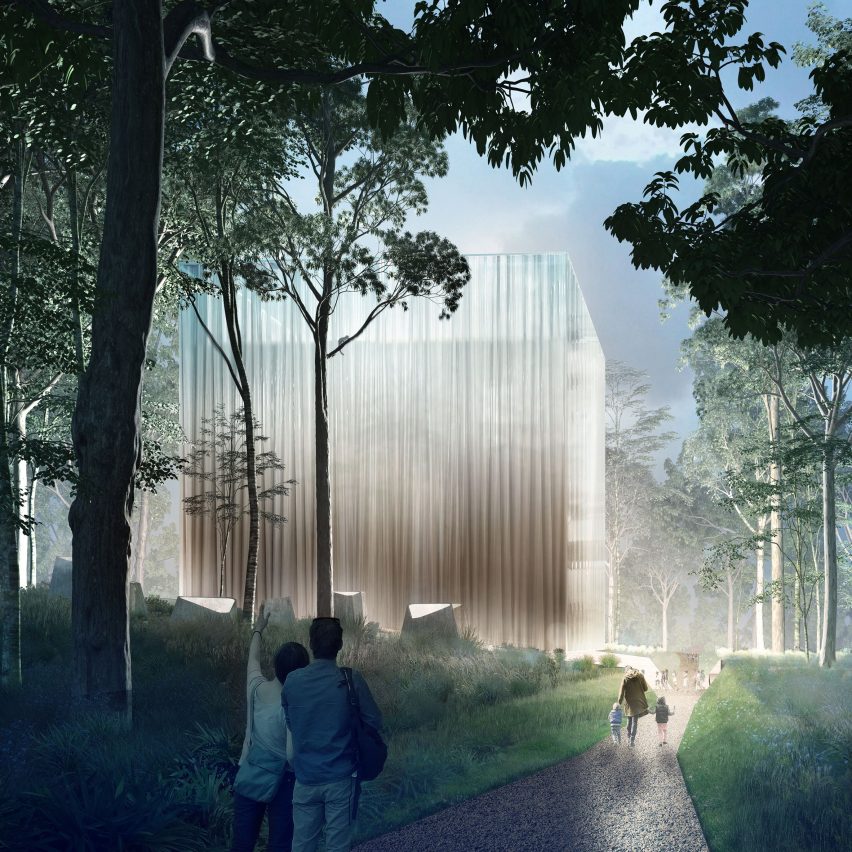
CHROFI wins Australian conservatory contest with “hovering cube” design

The Ian Potter National Conservatory by CHROFI

Sydney studio CHROFI has won a competition to create a new conservatory at the Australian National Botanic Gardens in Canberra with plans for a raised cube dressed in curtain-like glazing. Read more

http://ift.tt/2dnVb34

Sunset at Grotta lighthouse. by Brynjar Jakobsson Sunset at…

Sunset at Grotta lighthouse. by Brynjar Jakobsson Sunset at Grotta lighthouse just outside Reykjavik. http://flic.kr/p/NNnZS

http://ift.tt/2dAvdrI

Beyond the Summer People

Robin MacArthur Anna Noyes Crop

A few weeks ago, at Barnes & Noble on Manhattan’s Upper West Side, Robin MacArthur and Anna Noyes, authors of the 2016 Discover New Writers selections Half Wild and Goodnight, Beautiful Women, sat down with award-winning memoirist and Oprah.com books editor Leigh Newman to talk about the art of the short story, and how their two brilliant collections take the New England territory well known by these writers and expose a side of it only seen by those who are there past Labor Day. The following is an edited transcript of their conversation.– Miwa Messer

Leigh Newman: I have a love affair with the short story that is almost embarrassing. I feel that perhaps it separated me from my children and my husband several times. Other people get in trouble for being an Instagram husband. My husband is probably a short story husband.. It was so exciting to read these two books together. Of course, they are absolutely different; every artist creates a different kind of collection. But these two writers have so many points of complicity, even if they are creating very different, distinctive voices and very different and distinctive takes on the life of a female, life in rural America, class, gender, love, heartbreak, disappointment, loss, confusion, and maybe some slight glimmer of grace.

Half Wild is Robin MacArthur’s brilliant, wonderful book about rural Vermont. A lot of the stories—although they come in different perspectives, from men, from women, from old women, from young girls, different time periods—do reflect on the female experience in sort of a…I wouldn’t call it a hardscrabble Vermont, but I would call it not the Vermont of the beautiful NPR commercial with the Volvo station wagon careening through a green grass with cows. It’s a Vermont, the people that live in it, in all of its complicated socioeconomic levels, and all of its utopian dreams maybe not quite as realized as the dreamers wanted them to be.

Anna Noyes’ collection, Goodnight, Beautiful Women, all takes place in Maine. It similarly shows a side of Maine and reveals it in a beautiful way—a Maine landscape that could be harsh and confusing and… I hate to go back to the word “beautiful.” Once you put “beautiful” in the title and then you read her prose, you realize it actually belongs there. But it’s a land that isn’t the Maine where you go and you crack lobsters, and you eat them, and you have your corn, and you stay in your beautiful white-shuttered house on your windswept coast. It’s a Maine where there’s poverty and there’s drug use, and there’s love, and there’s very-very complicated women who live in all of these stories.

I thought we’d talk first, actually, about writing against geographic stereotype. Because both of you come from New England. I’m from Alaska, so I’m the last person who would know about New England. I don’t know anything about New England! I’ve been learning, because I’ve been living in New York for 15 years. But this is not the New England you read about. I wanted you to talk about why you felt so compelled to write this way, and how it was received, and what you were thinking about, writing against geographical stereotype.

Robin MacArthur Author SFRobin MacArthur: I thought a lot about that. I grew up in a small town in Vermont, where my dad also grew up, so I kind of had this perspective of 67 years of class and economic disparity in Vermont, and knew… I went to public schools. I knew these kind of backwater, backwoods lives that were not represented at all in our cultural utopian vision of what Vermont is. Vermont and Maine both are such tourism destinations and second-home destinations… I went to Brown after public high school, where everybody I met said, “Oh, I love Vermont; I have a second home there” or “I have a ski house there” or “I love Ben and Jerry’s.” I just felt this gut-wrenching need to say, “Actually, that’s not at all the Vermont that I know, and it’s a much more complex picture.” Even people who live there, I think it’s easy to see the surface beauty and not see the poverty and the hardship, and just disparity of…the nuance of place that, if you’ve been there for one of more generations, you get access to.

Anna Noyes: Yeah, I totally relate to that. The funny thing for me is I actually didn’t intend to write a book about Maine, even though this is clearly a book that is very geographically rooted. But my thoughts on what a book about Maine was, was based on narratives I’d seen and I’d read that felt overly romanticized, and I had this dread of having a book marketed or sort of brought out into the world with, like, a woman on a lobster boat, like, zooming into the sunset on the cover…

LN:   Just her back would be to you.

Anna Noyes Author SFAN:   Yes, exactly. Gazing out at the waves and stuff. I didn’t want to identify my book as that kind of a book. So it took me sort of a process of coming to terms with the fact that, in fact, it really was a book rooted in Maine.

I didn’t intentionally go about writing stories that illuminated the place in a particular way. I was just drawing on the weft of my real life. People keep talking about what a class book it is, and the disparity between classes. My grandparents were summer people. They winterized their home. My parents were the first ones to live there year-round. Then I was there year-round, and grew up with my friends, and lived a very different sort of life. So I think I sort of had a foot in both those camps. The sort of telling exemplary details of place and class and unromanticized Maine are just born from me trying to be true to what I’ve seen there.

LN:   Was there some nervousness, just because… Whether or not, when you’re writing about a place, in some way you’re representing your place. Right? Whether you want to or not. Was there some hesitation about portraying this place in this way? I mean, veering off the postcard? Or were you like, “I’m doing it,” and everybody was behind you.

AN:   I wanted to be sensitive to was summer people. I don’t want to isolate them. Not just as readers, but they are very near and dear to me, and I know a lot of summer people. In my community, in the winter it’s 250 people and in the summer it’s 1,000. So through all my life, I’ve had a pretty complex relationship with them, where they’re my family, some of them, but then they sort of didn’t quite let me in, and I got very bitter, and now I’m like with them again in an intimate way. I know that is an experience of Maine that is very dear to people, and to readers, editors, people that read this book, like, they resonate with it—and they summer there, too. I didn’t want to diminish the intensity or poignancy of that connection to the state either, because I think for them it’s very true. I just don’t think it’s the whole picture.

RM:   I’d say that I felt kind of feisty about it. Like, “Here! Here’s my Vermont. Here’s my real Vermont.” That “real” in quotation marks, because everybody has their sense of place.

I also try to write from a variety of perspectives, including the daughter of a woman who moved to Vermont in the 1960s as a hippie and started a commune. So these are not all third and fourth generation Vermonters. I tried to create as many perspectives as I could.

LN:   That was a conscious choice?

RM:   That was a conscious choice, to come at it from as many different angles… I love short stories also. My kids, I think they feel the threat of short stories in their lives, like, “Oh, no! My Mom is reading them again and writing them again.”

LN:   Many of the stories seem to talk to each other. That’s one thing I noticed in both collections. Whether it was intentional or not, people talk about a linked story collection, and I think nobody knows what that means. Honestly, nobody does. It could mean anything from everyone might use the word “broccoli” in every story (and I have seen that collection), or it could mean that the same characters appear in different stories. In these stories, you wouldn’t necessarily call them a linked collection, but they are definitely talking to each other. They are definitely in conversation with each other. Why would you choose that instead of the easier route of writing a novel in terms of success and glamor?

AN: I will say that I’m writing a novel, and it’s not easier. It’s so much harder!

I love collections that are set in place, and they have this inherent structure built in that you can just write on. If you are doing stories set in one places, it’s facets, it’s different angles, different perspectives, and the place can be a main character. So I never had to question what the collection was about. I had to figure out the heart of every story individually. But the book had an inherent built-in structure that I never had to second guess like I have to wonder about my novel on a daily basis.

LN:    I felt, too, that your collection had a very painterly touch, where you felt you were lighting on one life and then lighting on another life. It was very impressionistic, the way these things were running. Your stories felt more individuated.

AN: Yeah, I think their linked elements are more due to the fact that I’m just obsessed with the same things, and I cannot run from them, and I just tell the same sort of emotional story again and again in different masks and in different ways. But I think I’m naturally definitely a short story writer. I think at the heart of each story, I’m trying to touch on something that I don’t want to unveil really in my own life, something uniquely vulnerable or some sort of secret or secret tale that I don’t particularly want to tell. So I think each of them has its own singular shame of that sort, that I don’t think you combine them all into one huge, shameful novel, because it might defuse the emotional risk and potency and of it. And also, I write really, really quickly. I wrote these all over the course of maybe two days, or one overnight. So I could really, like, confess what I needed to confess in one, like, dictatorial moment without having all the self-doubt and fear come out that happens when you try to write a novel, which I am trying to do now, too. But it’s a lot harder to keep the faith, like, day-in and day-out, to risk things in that way.

LN:   For me, that’s amazing that you wrote them in one to two days.

AN: Well, I gestated them for like ten years, you know, then I…

RM:   It took me about 8 years to write these, but I was also writing a lot of them at 4 a.m. because I had a young baby or that was the only hour that my kids were not awake. I wrote some of them while nursing my kids and trying to type. But I’m wildly impressed.

AN:   I think that’s the best time, though. 4 a.m.. Now I’m a seasoned 28-year-old, and I can’t stay up past midnight without getting weird.

LN:   I think this leads us to another point that I was thinking about. There were a lot of interesting perspectives on female life in rural America. I want to mention one story where a young woman in Anna’s collection gets pregnant, and is deciding whether not to have the baby or have the baby with the mother of her boyfriend, without the boyfriend knowing. It’s kind of one of those flinching hard moments that are so confusing but so true to how things, as a woman, kind of unroll.

It did feel like you guys were grabbing hold of experiences in a woman’s life, in all kinds of different ways, even if it came from a different perspective, even if it came, you know, from a grandmother or a boyfriend. Could you talk a little bit about that?

AN:   There was a nice, sort of defining moment that I’ve talked about a few times, where I’ve been writing these stories for a while, but in college I had a class where they assigned a story, where they had us read a story called Bactine by Molly McNett, and it was about a 10-year-old girl’s sort of emerging sexuality, and grappling with all these adult ideas and a threatening sexual world through her 10-year-old’s body. She has these sort of strange fantasies. It seemed to me like a very true representation of how a child might deal with an external threat that she doesn’t quite understand, and how it is sort of manifested in a girl’s body. I hadn’t really read anything quite like that before, and it felt really fresh and exciting. I got to class, and the class was completely silent. I remember there was just this deluge of disgust and dismay, and everybody was like, “This was so gross, I couldn’t even talk about it, I couldn’t read it, I had to put it down.” It was an illuminating moment of how often we read stories of women’s bodies and girls’ bodies, which I think is not that often… We see a lot of narratives of sort of disembodied women and girls, or violence upon women and girls, or sexualization. But to have a narrative from that perspective seems to me a lot more rare and a lot more troubling for readers. And I’ve seen that echoed again and again, these narratives that have an inhabited experience of womanhood, people really recoil from or think are remarkably edgy or something… So then I sort of thought: Why don’t I try to tell stories that have an inhabited female experience? So that led to the rest of the collection in the back of my mind.

RM: I would say that similarly it was a hunger for the kind of stories that I was craving and I wasn’t seeing. I read so much rural fiction written by men, about men’s experiences in the natural world and their relation to the natural world. That’s a huge genre of men go out into the woods and have these encounters and these experiences. And I do… My mother knows how to wield a shotgun, and she rides a motorcycle, and she’s a farmer—she works 14 hours a day out in her berry fields and vegetable gardens. I grew up surrounded by these reallytough, original, intrepid kind of wonderfully solitary women in the woods, and I never saw them portrayed in fiction. So it was this hunger. I went looking for it. I think if I had found your stories, I would have been so gratified, when I was 28 especially, and just looking to find myself on the page and my mother on the page. So then I decided that I just had to write those women into my own fiction. That experience is inherently…includes sexuality and desire and our physical bodies. So that just naturally came in.

LN: Yeah. I saw that these are women who do have sex, and they do think about men, in the most natural, in the most understandable in motive of ways as a reader. I also felt exactly what you were talking about, most especially in the last story, which is called “The Women Where I’m From” and your story “Goodnight, Beautiful Women.” You see these women who are very flawed. Many of them are very flawed. They have drinking problems. They are living alone on a property. They are not the best mothers. They go through some men. Occasionally they fall on an opiate or take it, or take a lot of them—or maybe it’s not even occasional. But somehow, all of these women come off as heroines to me in some way, or alter-egos, and I felt very full as a woman reading these stories. I felt very excited to be a woman. Can we talk about that a little bit more? You mentioned it a little bit, but I think it’s a super-important point to see… We often read stories where men are flawed, like they abandon their kids, they lose their job, they move to Florida, they’re trying to pull it together but they’re still comically or flawedly heroic. But we don’t really see the women who bust it up, get fired, end up alone because they’ve wrecked it all, you know what I mean, but are still wonderful human beings and we love them. I wonder if we could talk about that a little bit.

AN:   I am moved to hear you say that. Because there is a certain response to the book of people who really don’t want to see themselves in the book at all, or say “It’s so dark, I can’t relate to any of these people.” Then about one in five women, like a 70-year-old woman, will be like, “It is dark, but you just might see yourself. I did.” Yes! It’s like I found you. I’m so happy to make that connection with you.

To me, it was important that there be an element of tenderness in these stories, even with characters that are…some might see them as being bad mothers, or bad partners or daughters… That may be true. But my hope was at the end there’s some sort of redemption, and throughout that there is great strength and some humor.

I think that’s true of the people of Maine in particular, and of Vermont, too, I think. You’re showing an underbelly, I guess, but it’s not like it’s void of these beautiful qualities and really remarkable presences, and I hope that comes through. In your stories, it definitely does.

RM:   I would say alongside the genre of men who go out into the wilderness is rural women who are victimized, or who are victims of their circumstances. Which is a very real thing, and that’s a wonderful thing to write about. But I didn’t want to write about women who are victims. I wanted to write about women who are choosing their flawed lives, are choosing to live alone, are choosing solitude, are choosing those edges, and they crave it—just like I crave it. Somebody was saying… I feel like my mother is half of the mothers in these books, and I am the other half. I am the mother who is always heading out to the garden with the wine and trying to disappear into the woods. As a mother and a daughter, I seek that wildness. I seek that escape and that edge, and I wanted to write about that hunger and that desire, because I’m sure a lot of people feel it. I hope.

LN: In both of your cases there’s stories about mothers and sisters. Yours take place in a quarry, not the first story, but the second story with the two sisters in the quarry, and then Creek Dippers with the mother. I know this sounds crazy, and not even really specific, but I think there’s some relationship with water, or why you’re saying these stories about women and water, and what it somehow means. It means some kind of freedom in both cases. There’s people that want to swim and there’s people that don’t want to swim.

AN:   The genesis of that for me was that I lived beside a rock quarry when I was 4 years old with my mom in an Airstream trailer for like two months, and I was absolutely forbidden to go anywhere near the edge, because, of course, quarries are very, very dangerous places and they really do have all kinds of old machinery, and old cars, and hypodermic needles on the cliffs, and all this threat is really real. Even when I was older, my mom would never let me swim there, and would say I would catch a yeast infection if I even dared to swim there. And I still haven’t swam in one.

So I think it built this very mythological depth and resonance in my mind of this place, because it was this sort of forbidden locale. Of course, it’s very rich like other forbidden things, and mothers trying to protect their daughters from certain things. So it seemed like a very evocative place to set stories.

LN: We always had lakes. I felt the same way about your creeks, that somehow this is what people did. You had a couple of glasses of wine and you went swimming in the creek.

RM:   My parents’ house is set right above a creek, and I spent a lot of time by the creek when I was young, and now my house is on the other side of that creek, so I have this creek reference. But I also read an academic essay at one point about water in Eudora Welty’s stories, and the symbolism of water and how it connects to female sexuality. I never thought of that…

AN:   Nobody thinks of that when you’re writing.


The Barnes & Noble Review http://ift.tt/2ekZsWa

Tamuche Lake, British Columbiaphoto via cathy

Tamuche Lake, British Columbia

photo via cathy

Five of the best exhibitions to see at Dutch Design Week 2016

Dutch Design Week roundup

With Dutch Design Week just around the corner, we’ve rounded up five of the event’s best exhibitions, including a gastronomic venture from Maarten Baas and a show exploring erotic displeasure. Read more

http://ift.tt/2ekUI2V

Hartrow / Ström Architects


© Martin Gardner

© Martin Gardner


© Martin Gardner


© Martin Gardner


© Martin Gardner


© Martin Gardner

  • Structural Engineer: Barton Engineers
  • Quantity Surveyor: APS Associates
  • Contractor: Tim Marolia Building Contractor

© Martin Gardner

© Martin Gardner

Hartrow is a substantial detached 1960s house in Winchester.

Background

We were approached by the client in 2010 to look at completely remodelling and extending the existing house – which had not been touched since the sixties and was in dire need of a complete overhaul. 


© Martin Gardner

© Martin Gardner

The existing building was essentially a split 5-level house, and the original internal arrangement made no connection between the levels. There was also no connection between the inside and the outside, as both the kitchen and living areas were on the top levels.  The carport at the bottom of the house was virtually unusable due to the steep access down the side of the house.

Our brief was to transform this outdated 1960s arrangement into a 21st century family home.


© Martin Gardner

© Martin Gardner

Project Design

We started by enclosing the carport under the house with large glazed sliders and turning this into a new family room with kitchen. This allows for an inside – outside connection that didn’t exist before. To avoid this family room being detached from the rest of the house, we punched a vertical hole through the five split stories. This void now allows all levels to connect through the house. 


© Martin Gardner

© Martin Gardner

The existing timber cladding was in a very poor state, and needed replacing.  Poor detailing and inadequate ventilation aged this otherwise durable timber prematurely. Along with replacing timber cladding we added insulation, appropriate building paper, and allowed for adequate insulation behind the weatherboarding.


Lower Floor Plan

Lower Floor Plan

Top Floor Plan

Top Floor Plan

Intermediate Floor Plan

Intermediate Floor Plan

The existing roof is supported on hardwood beams at 1250mm centres that run the length of the building. On top of these are 2-inch thick balsawood planks and hardboard, onto which a bituminous roof was laid. Internally, the ceiling was visually attractive, although the roof did not provide enough thermal insulation and the building suffered from overheating in the summer, whilst being very cold in winter.  We installed plenty of new insulation and replaced the existing felt roof with crisp black zinc. Internally we went to great lengths to preserve the character of the original roof and we carefully refurbished the hardwood beams and balsawood planks. We also retained the existing beech hardwood floor, which was sanded and oiled.


© Martin Gardner

© Martin Gardner

We refurbished the house throughout including replacing windows, re-plumbing and re-wiring. The work was carried out in two phases and completed in the summer of 2014.


© Martin Gardner

© Martin Gardner

Product Description. The sliding Reynaers glazing on the bottom floor has been instrumental in achieving the light, open, flexible space that the clients wanted. By recessing the lower and upper tracks in the ceiling and floor finishes we were able to achieve a more seamless transition from the family room to the terrace when the doors are open. When closed, the façade appears uncluttered thanks to the large size of the sliding panes that Reynaers could provide, allowing just two panes to be used for each face.  


© Martin Gardner

© Martin Gardner

http://ift.tt/2ekWMn6

Fashion Hacks That Can Save You Big Bucks

Are you looking for ways to save money? Let me share my fashion hacks with you.

I have spent most of my life crafting ways to cut corners. I am your normal girl. I like fashion and beauty products just as much as the next person, but it’s not always possible to look like the beauties on TV.

First of all, let’s be real here. I’m not tall enough to pull off some of those ridiculous runway trends.

I have come to terms with my “short girl” status and actually embrace it. Sure, I want to look good. Who doesn’t? But my teaching salary doesn’t necessarily leave me with an abundance of cash floating around to spend on the “funsies”.

Here are a few savvy hacks that I use on the regular to balance my love for all things girly AND save myself from overspending.

Hair

use-salon-products

I have always been told that I have great hair. No, I’m not bragging. I just hear this a lot.

So here’s my first confession. I am a bit of a hair product snob. Yes, really. It has been years since I’ve used a supermarket brand shampoo or conditioner. Salon quality products really are much healthier for your luscious locks. And if you use them consistently, you really do see a difference in the overall health and appearance of your hair.

In case you’re confused as to what this has to do with saving money, keep reading. If you love salon products as much as I do, you have to be stealthy. BOGO deals are your friend.

Yassss! Keep a watchful eye on the sale ads for your favorite products. The upcoming holidays are an excellent time to stock up!

And buy the liter sizes, not the teeny tiny bottles! I generally swoop in a couple times a year when I see advertisements for “buy one get one” products that I love.

Buy two or three of each! I don’t know about you, but 2 or 3 liters of my very favorites will last most of the year.

See Also: 7 Hair and Makeup Looks to Try This Week

Make-up

This one is important! Are you paying attention?

My love for topnotch hair products sometimes overflows into the make-up aspect of my life as well. As a former make-up consultant in my college days, I can tell you that the concept of quality applies here, too. Sort of.

When it comes to skin care and foundations – use the good stuff. I love a good skin care system. However, you can some really good products at the local drug stores as well.

My point is, you are your best asset! Especially those of you out here in the cyber realm trying to make a name for yourself. The entrepreneurial world is on fire right now! Appearances DO matter. Don’t feel guilty about purchasing a product that is going to boost your confidence and potentially make your skin look better!

Now, hold the phone. Here’s the money saver: when it comes to color –eyeshadows, blushes, bronzers, lips, liners – it’s just color. Any old brand will do. You don’t need to worry about your skin if you’re treating it well and using a good quality foundation. The colors you add to your face are like paint on a primed wall. You can go cheap!

See Also: 7 Easy Steps To Aging Skin Repair

Clothes

fashion-hacks-clothes

Take inventory of your closet with every season change. We all tend to forget about certain pieces that we have hanging up. Or maybe something has fallen behind the dresser or off the hanger.

Comb through your items. Sometimes this alone is enough to keep me from going out and spending exorbitant amounts of money on new things, because “oh yeah” I’ve already got something similar.

Here’s a ninja trick I have put into use just this week. Don’t put your cute skinny jean capris away for the winter. It’s the start of tall boot season, people! No one is going to know that the jeans you have on are actually capris if you’re wearing boots up to your knees.

Ta-da! I just saved you from going out to buy a few pairs of pants.

Lastly, when it comes to clothes, if you just HAVE to have a new something – do not be ashamed to look somewhere other than an overpriced boutique. Honest Abe, there are some really cute lines of clothing now at the local mainline stores.

As adults, our “cool girl” clothes don’t have brand names proudly displayed across the chest anyway. Who cares where it came from if it’s cute? If it saves some major dough, I’d be doing a happy dance. And seriously, if someone is going to critique you on where you purchased your super cute outfit, you probably don’t want to be friends with them anyway.


The post Fashion Hacks That Can Save You Big Bucks appeared first on Dumb Little Man.

http://ift.tt/2ehqqwr

Ten Thousand Towns

Sinclair Lewis Home Crop

Here — she meditated — is the newest empire of the world; the Northern Middlewest; a land of dairy herds and exquisite lakes, of new automobiles and tar–paper shanties and silos like red towers, of clumsy speech and a hope that is boundless. An empire which feeds a quarter of the world — yet its work is merely begun. They are pioneers, these sweaty wayfarers, for all their telephones and bank–accounts and automatic pianos and co–operative leagues. And for all its fat richness, theirs is a pioneer land. What is its future? she wondered.

Sinclair Lewis’s Main Street was published on October 23, 1920. Lewis’s satiric portrayal of middle-class Midwestern life in Main Street and its sequel, Babbitt (1922), is the cornerstone of his Nobel Prize-winning career  — and of his embattled relationship to his hometown of Sauk Centre, Minnesota.

Gopher Prairie, Minnesota, the fictional setting of Main Street, is inspired by Sauk Centre, but Lewis saw his hometown as representative of the kind of Middle America that in the early decades of the century could be found in “ten thousand towns from Albany to San Diego.” When Lewis’s protagonist, the city-born Carol Kennicott, arrives to Gopher Prairie, she is appalled by its blinkered, small-minded ways and unable to find many encouraging answers to her question about the Midwest’s future. Viewed throughout the region not as a challenge but a condemnation, Lewis’s novel was banned by some libraries, but after his rise to fame, and after small-town life was treated reverentially by others — in the paintings of Norman Rockwell, for example, and the movie It’s a Wonderful Life — views began to change. Outside the Sauk Centre library today, a plaque describes how the book that had at first brought ridicule, making Sauk Centre “synonymous with narrow-minded, small-town provincialism,” eventually conferred on the town “a special dignity” as an embodiment of Middle America’s “virtues and simplicity.”

Almost 100 years after Main Street, with small-town America now besieged on all sides, many are again asking, “What is its future?” In Caught in the Middle: America’s Heartland in the Age of Globalism, Richard C. Longworth returns from an 11,000-mile tour of Iowa, his home state, with a discouraging answer:

I found dying farm villages and crumbling old factory towns, which may not survive. I found once great cities that have become empty shells, and I found displaced farmers and workers, adrift in communities consumed by denial and bitterness and a real political anger. I found inadequate schools and a political system that seems almost designed to fail. I found people left behind by a new economy for which nothing prepared them.

Longworth is adamant that the current instability and bitterness throughout the Midwest must be channeled toward a new future rather than allowed to retrace a simplified, make-America-great-again past: “The first era of Midwestern history is over. The next one has begun. We can make of it what we will.” In Remaking the Heartland, the eminent Princeton sociologist (and small-town Kansas native) Robert Wuthnow says that Middle America’s midcentury golden years are a myth anyway, and that an improved Midwest, one better adapted economically and socially to an inevitable future, is already in sight:

Thirty miles from where I was raised, a massive wind farm has emerged with more than a hundred towering machines that produce energy free of ill effects to the environment. Nearby is a new ethanol plant that has weathered uncertain government policies and is bringing new jobs to the area. My hometown recently celebrated the construction of a new hospital that dramatically improves its medical capabilities. There is a small industrial park and a new community center. At the high school, where nearly 100 percent of the students used to be white Anglos, 30 percent are now Hispanic.

The Barnes & Noble Review http://ift.tt/2e6wYxu