Chaimiduo Farm Restaurant and Bazaar / Zhaoyang Architects


© Pengfei Wang

© Pengfei Wang


© Pengfei Wang


© Pengfei Wang


© Pengfei Wang


© Pengfei Wang

  • Architects: Zhaoyang Architects
  • Location: Dali, Yunnan, China
  • Design Team: Yang Zhao, Peigen Shang
  • Interior Designer For The Restaurant:: XuCai
  • Area: 631.0 sqm
  • Project Year: 2015
  • Photographs: Pengfei Wang
  • Client: Chaimiduo Team

© Pengfei Wang

© Pengfei Wang

From the architect. This is a renovation project. The property was originally an abandoned office facility located at the center of Dali old town, including a traditional Bai style timber building, a bungalow made of brick and concrete and a 200 sqm courtyard. The property has been rented by a local lifestyle brand “Chaimiduo” and renovated into a farm restaurant, a farmer’s supermarket, a gallery for local handicraft and space for “Chaimiduo Bazaar” that opens once a week. 


Axnometrical drawing with program arrangement

Axnometrical drawing with program arrangement

The idea of the renovation is mainly about redefining the courtyard’s four different sides using ad-hoc strategies. A second floor is added to the bungalow at the north side of the courtyard, with a traditional Bai style tiled roof (responding to the design code of Dali old town). An irregular shaped steel pavilion extrudes into the courtyard, connecting the restaurant interior with the courtyard space. The pavilion is wrapped with bamboo to emphasize its volume and to filter sunlight for its interior. The bamboo façade is operable towards the courtyard, allowing more interaction during bazaar hours. The bamboo facade also extends upward and becomes the banister for the terrace. The profile of the banister is tilted, directing the spatial orientation towards the preserved upper floor facade and tiled roof of the neighboring timber building.


© Pengfei Wang

© Pengfei Wang

The timber building was constructed according to traditional methods. We demolished the partition wall on the ground floor and also the timber doors with wood lattice. The space of the ground floor therefore opens up to the outside. We also added to the facade a system of bamboo sliding doors and then the openness can be adjusted. The bamboo system hides the original timber columns and introduces a new appearance responding to the transformed open spatiality. While canceling the reading of the traditional image on the ground floor, this new façade also highlights the more refined details of the preserved facade of the upper floor and tiled roof. 


© Pengfei Wang

© Pengfei Wang

The southern side of the courtyard is the main entrance to the whole property. We added a wedge shaped pavilion to redefine the entrance space. It provides shelter and also transforms the spatial sequence. Bamboo is used here as the ceiling and can be visually related to other bamboo facades and create a more unified impression.


© Pengfei Wang

© Pengfei Wang

First floor plan

First floor plan

© Pengfei Wang

© Pengfei Wang

The west side of the courtyard has an iron fence with lush local ivy that provides the property with a soft and semi-transparent protection. We simply added a wide timber platform that covers the flowerbed and can be used as a long bench and a place for children to play during bazaar hours. 


© Pengfei Wang

© Pengfei Wang

http://ift.tt/2eiGaNJ

Agence d’Architecture A. Bechu & Associés Wins Competition for New University Campus in Moroccan Oceanside Town


Courtesy of Agence d’Architecture A. Bechu & Associés

Courtesy of Agence d’Architecture A. Bechu & Associés

Agence d’Architecture A. Bechu & Associés has won a competition to design a new campus for the University of Laâyoune to be located in the oceanside town of Foum el Oued, Morocco (Western Sahara). Launched by King Mohammed VI last February, the competition was named a national priority project supported by Office Chérifien des Phosphates (OCP), a Moroccan company and the world’s leading producer of phosphate. The project was aimed at contributing to the economic and social boom of the region by creating a new platform for innovation and research & development.


Courtesy of Agence d’Architecture A. Bechu & Associés


Courtesy of Agence d’Architecture A. Bechu & Associés


Courtesy of Agence d’Architecture A. Bechu & Associés


Courtesy of Agence d’Architecture A. Bechu & Associés


Courtesy of Agence d’Architecture A. Bechu & Associés

Courtesy of Agence d’Architecture A. Bechu & Associés

AAAB & Associés’ design responds to this call by envisioning a campus integrated with the natural desert site to create a dialogue between building and its environment. Responding to the local climate, and taking inspiration from the lines of nearby sand dunes, the buildings come together via a central, canopied artery that creates shaded, public space for meeting and interaction. This interior street takes the form of a large crack in the dried desert earth, but will instead be filled with vegetation to contribute to cooling and atmosphere.


Courtesy of Agence d’Architecture A. Bechu & Associés

Courtesy of Agence d’Architecture A. Bechu & Associés

Courtesy of Agence d’Architecture A. Bechu & Associés

Courtesy of Agence d’Architecture A. Bechu & Associés

The campus will also follow the dual objectives given by the OCP. First, to make the University of Laayoune a ground for experimental teaching methods in fields such as water, energy and desert agriculture through the installation of living laboratories dedicated to new environmental technologies and biomimicry; and secondly, to develop a building capable of exemplary energetic passivity.


Courtesy of Agence d’Architecture A. Bechu & Associés

Courtesy of Agence d’Architecture A. Bechu & Associés

Courtesy of Agence d’Architecture A. Bechu & Associés

Courtesy of Agence d’Architecture A. Bechu & Associés

Teaming with structural engineers DVVD, environmental consultant Ennesys and planning consultants EMBIX, the architects developed a sustainable strategy that will allow the campus to obtain 80% of its energy from passive sources, as well as recycle dust, water and organic waste into reusable water and high-value bio fertilizer. The approach will mix traditional and modern technologies to create an intelligent grid inspired by the local environment. These techniques will allow the complex to approximate zero-waste metrics.


Courtesy of Agence d’Architecture A. Bechu & Associés

Courtesy of Agence d’Architecture A. Bechu & Associés

Courtesy of Agence d’Architecture A. Bechu & Associés

Courtesy of Agence d’Architecture A. Bechu & Associés

The project hopes to set an example of how to design sustainable cities in the harsh African desert – by 2050, the African population is predicted to double to 2.5 billion inhabitants, for whom new architecture will need to be developed to accommodate.

The University of Laâyoune will be completed in 2018 and will hold its grand opening in September of that year.

News via Agence d’Architecture A. Bechu & Associés.


Courtesy of Agence d’Architecture A. Bechu & Associés

Courtesy of Agence d’Architecture A. Bechu & Associés
  • Architects: Agence d’Architecture A. Bechu & Associés
  • Location: Foum el-Oued, Morocco
  • Architect: AgenceArchitecture A. Bechu & Associés
  • Client: OCP
  • Associate Architect: Benounna
  • Structural Engineer: DVVD
  • Environmental Consultant: Ennesys
  • Planning Consultatn: EMBIX
  • Area: 100000.0 sqm
  • Project Year: 2016
  • Photographs: Courtesy of Agence d’Architecture A. Bechu & Associés

http://ift.tt/2eir6i3

@signordal Free your mind, nurture your soul.

via Instagram http://ift.tt/2ef0JfY

@signordal Feeling blue? Listen, never lose hope! Everything can be solved believe me

via Instagram http://ift.tt/2dynBpy

Póstelek’s Castle, Hungaryphoto via celeste

Póstelek’s Castle, Hungary

photo via celeste

@signordal Amazing Sunset Bora Bora

via Instagram http://ift.tt/2eCKV83

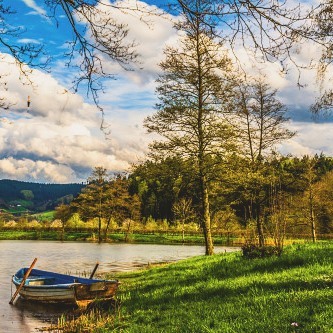
@signordal Let’s go fishing! The boat is ready…

via Instagram http://ift.tt/2dZn9QI

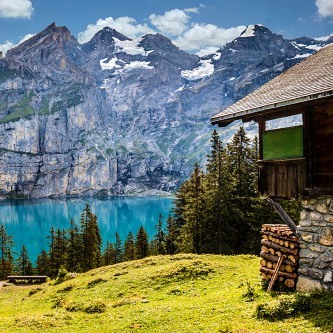
@signordal Weekend at the cottage

via Instagram http://ift.tt/2dlA6Gv

New York, New York – Las Vegas – Nevada – USA (by Mark Freeth) 

New York, New York – Las Vegas – Nevada – USA (by Mark Freeth

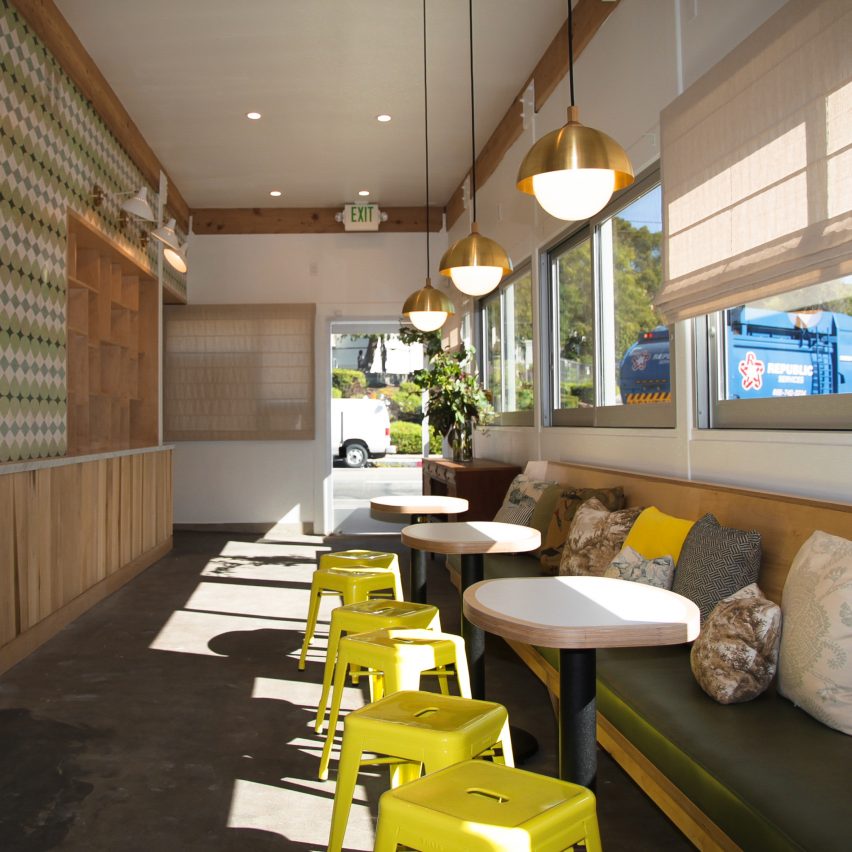
Moby’s Little Pine vegan cafe features modernism-influenced interior by Studio Hus

Little Pine by Studio Hus

This cafe owned by Moby in Los Angeles was designed by local firm Studio Hus to reflect the musician’s love of the mid-century modern style. Read more

http://ift.tt/2eijTPT