Cold Pressed Juicery-Shop Prinsengracht / Standard Studio


© Wouter van der Sar Photography

© Wouter van der Sar Photography


© Wouter van der Sar Photography


© Wouter van der Sar Photography


© Wouter van der Sar Photography


© Wouter van der Sar Photography

  • Team: Jurjen van Hulzen, Marc Brummelhuis, Felix Stadie
  • Graphic Designer: Build in Amsterdam
  • Project Management : Den Dekker Project Management
  • General Contractor : Jan van Esseveld
  • Interior Fit Out : Job Interieur Bouw

© Wouter van der Sar Photography

© Wouter van der Sar Photography

From the architect. After the successful completion of the first and second design for the Cold Pressed Juicery at the Willemsparkweg and the Herengracht, Standard Studio got asked to create their third store. Located opposite the Anne Frank Museum, right in the corner where the busy Prinsengracht meets the calm and peaceful Bloemengracht. Every morning the street is full of cyclists rushing to work and during the day the tourists will appear, trying to find their way around or simply enjoying the beautiful city. Either way, this store is located right in the center where everyone can enjoy a healthy tasty juice.


© Wouter van der Sar Photography

© Wouter van der Sar Photography

The layout has made it possible to create two different worlds. As the front we have the entrance to the Prinsengracht, a canal with so much happening that life never stops. As you enter you will notice how Standard Studio has kept the monumental characteristic of the marble floors, where the fridges are located, containing the “take away” products. The fridges are set up in a way that has been inspired by the intersection of both canals following two different directions. Commuters in the morning pop in for a few minutes, go straight to the fridges, grab their juices, and off they go to work.


Floor Plan

Floor Plan

The calmer world is at the back of the store. This area is elevated by a few steps and is designed as a concrete box. The contrast in material and in height creates the division between both worlds. A very calming and relaxing atmosphere has been created thanks to the possibility of having the space for cosy living room setting, the addition of some plants and the pretty view onto the Bloemengracht.


© Wouter van der Sar Photography

© Wouter van der Sar Photography

Both worlds are connected with a huge tree trunk that was cut to create the counter that houses a smoothie station and the cash desk. This counter was made entirely out of a solid wooden beam weighting over 4 tons. The wood that came out of the beam was used to create a screen that refers to the graphic identity of the brand which was made by Build Amsterdam. The wood was also used to create windowsills and benches outside. For a strong spatial effect a mirror is used in the back to make the space look bigger.


© Wouter van der Sar Photography

© Wouter van der Sar Photography

If you find yourself in the center of Amsterdam, stop by and grab a juice at The Cold Pressed Juicery, and if you need to take a break just pop into the back of the store where you will find enough space to relax and enjoy the beautiful sight both of the inside and outside world.


© Wouter van der Sar Photography
© Wouter van der Sar Photography

http://ift.tt/2dcEuHV

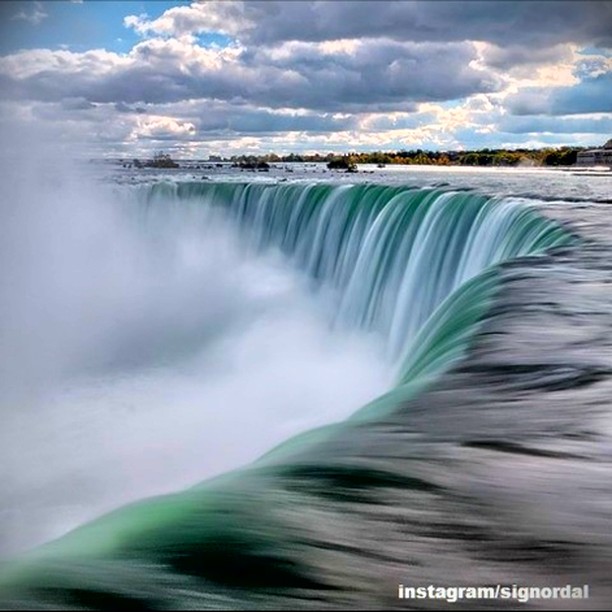
@signordal The beautiful Niagara Falls Canada/USA

via Instagram http://ift.tt/2dToImW

@signordal Let’s go hiking!

via Instagram http://ift.tt/2epj6QH

Strokkur by doctor_steve Canon EOS 7D Canon EF-S 10-22…

Strokkur by doctor_steve Canon EOS 7D
Canon EF-S 10-22 http://flic.kr/p/ai24o3

http://ift.tt/2dcyEpI

In Wake of Revolution, Francis Kéré Envisions a Transparent New Architecture for the Burkina Faso Parliament Building


Courtesy of Kéré Architecture

Courtesy of Kéré Architecture

On October 30, 2014, as Burkina Faso President Blaise Compaoré was preparing to make an amendment to the country’s constitution that would eliminate presidential term limits and allow him to extend his 27 year rule, tens of thousands of Burkinabé citizens in the capital city of Ouagadougou broke through police lines to set fire to several government buildings, including city hall, the ruling party headquarters, and the National Assembly Building. The following day, Compaoré stepped down, ushering in a new era of democratic rule and resulting in the country’s first ever pluralistic and competitive Presidential election in 2015.

But the revolution left the former government complex in tatters and in need of a clear direction forward both culturally and architecturally. A former French colony, Burkina Faso is home to 19 million people, 50 different ethnicities and more than 60 languages. The country would require a new Parliament that could serve as a common ground for these diverse groups, while providing the technology and education necessary to create opportunities and a better quality of life for all Burkinabés.

To find this solution, last year, the new head of Parliament approached architect and Burkina Faso native Francis Kéré to develop a building and masterplan for the Assembly Building. The new building, in the architect’s words, would need to be one that could “not only address the core democratic values of transparency, openness and equality, but could also become a catalyst for growth and development for the capital city of Ouagadougou as a whole.”


Courtesy of Kéré Architecture


Courtesy of Kéré Architecture


Courtesy of Kéré Architecture


Image of the capital city of Ouagadougou. Image © Francis Kéré


Image of the capital city of Ouagadougou. Image © Francis Kéré

Image of the capital city of Ouagadougou. Image © Francis Kéré

At the 2016 Venice Biennale, as part of the exhibition “In search of a new Ouagadougou” at the 15th International Architecture Exhibition, Francis Kéré and his firm Kéré Architecture, unveiled the plans for their design for the first time.

Kéré’s design takes the form of a grand, stepped ziggurat that invites people to climb, enter or occupy the entire building surface. At 6 stories tall, the building would stand out from the low profile and radically flat topography of Ouagadougou, giving residents a new elevated perspective on the entirety of their city. These design decisions combine to create a new sense of democracy that is both literal and symbolic.


Courtesy of Kéré Architecture

Courtesy of Kéré Architecture

Image of the capital city of Ouagadougou. Image © Francis Kéré

Image of the capital city of Ouagadougou. Image © Francis Kéré

“In a village setting, the process of decision-making is not a private matter occurring behind closed doors; community-members are free to sit near the gathering and observe the proceedings. In this true spirit of transparency and openness, the outer facade of the parliamentary structure is designed to be inhabited by the public,” explain the architects.

The design also draws inspiration from Burkina Faso’s agricultural economy, where nearly 90% of the labor force is employed in farming. For this reason, Kéré has integrated several green terraces along the occupiable facade to create a communal laboratory for pioneering new urban agricultural techniques. The vegetation would be supported by solar shading elements, which would also provide cooling and air circulation to the building’s interior.


Image of the destroyed parliament house. Image © Francis Kéré

Image of the destroyed parliament house. Image © Francis Kéré

Courtesy of Kéré Architecture

Courtesy of Kéré Architecture

Inside the building, the new 127-seat Parliament Assembly hall has been designed not to replicate western models for government chambers, but to respond to local needs, resources and climate. To achieve this, Kéré looked to traditional Burkinabés government settings.

“In rural areas, the elders of a village gather to discuss important matters under the shade of a great tree. Kéré reinstated this Arbre à palabres, or tree of discussion, in a private garden directly adjacent to the formal assembly hall where members of parliament can convene more directly.”


Photo from "In search of a new Ouagadougou" at the 15th International Architecture Exhibition at the Venice Biennale. Image Courtesy of Kéré Architecture

Photo from "In search of a new Ouagadougou" at the 15th International Architecture Exhibition at the Venice Biennale. Image Courtesy of Kéré Architecture

Photo from "In search of a new Ouagadougou" at the 15th International Architecture Exhibition at the Venice Biennale. Image Courtesy of Kéré Architecture

Photo from "In search of a new Ouagadougou" at the 15th International Architecture Exhibition at the Venice Biennale. Image Courtesy of Kéré Architecture

The new parliament building will sit within a larger masterplan that will also pay homage to the site’s history – in place of the ruin of the old assembly building, Kéré has designed a memorial in the form of a shaded depression and pool in the earth where rainwater can be collected for on-site irrigation and to serve as a passive cooling system for the interior. The space is intended to create a serene atmosphere where “visitors can relax in the shade and reflect upon those who lost their lives in the revolts.”

Surrounding the memorial, a grove of native trees will provide shaded areas for seating and gathering. Nearby, new commercial storefronts and exhibitions spaces will activate the space.


Building Diagram. Image Courtesy of Kéré Architecture

Building Diagram. Image Courtesy of Kéré Architecture

In a transformative time for Burkina Faso, Kéré Architecture’s design tackles the question of “How do we move forward?” by creating a building and masterplan that are truly for its people. Says Kéré:

“We want the entire building to be a platform for people to take ownership of.”

This project is currently on display at the 15th International Architecture Exhibition Reporting from the Front for the Venice Biennale. The exhibition is on view until November 27th 2016.


Courtesy of Kéré Architecture

Courtesy of Kéré Architecture

Project Credits

Architect: Kéré Architecture
Location: Ouagadougou, Burkina Faso
Design Team: Francis Kéré, Adriana Arteaga, Jaime Herraiz, Andrea Maretto, Diego Sologuren Martin, Nina Tescari, Blake Villwock

News via Kéré Architecture.

http://ift.tt/2e466MW

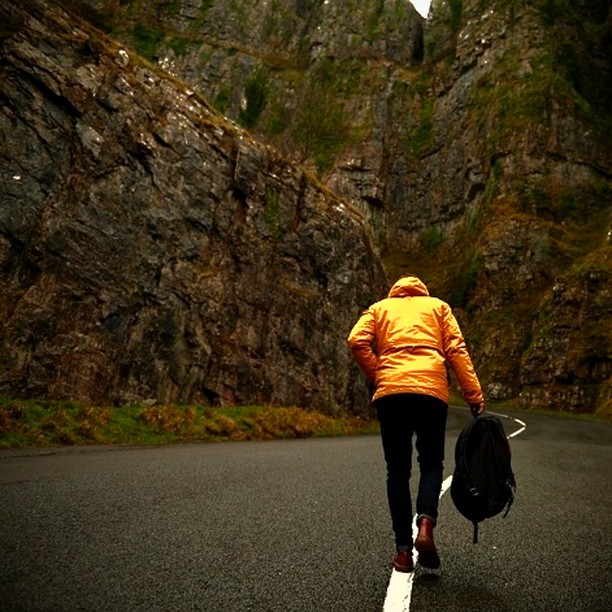
Gloucestershire, England photo via aryanna

Gloucestershire, England

photo via aryanna

5 Ways to Balance Work and Family Time Even if You’re a Workaholic

There is nothing as fulfilling as reaping the fruit of your labor. All those long hours at work, and countless meetings, phone calls and emails may have made you successful in your career but your family had to pay the price for it. You hardly spend time with your wife anymore. And your kids are growing up knowing less and less about you.

Striking a balance between work and your family can be a challenge but, as it is with everything challenging, there is a way out. With proper structuring of your habits and daily routines you’ll be able to create enough time to spend with your family.

You’ll no longer have to miss out on precious moments and getting to know your kids. In the end, you’ll be glad you made the change.

  1. Reassess Your Priorities

know-your-priorities

The first step to finding a balance is to review your priorities. What do you value the most: Bagging a new business deal or being able to partake in special moments in your kids’ lives?

The change begins when you realize that there is something more important in life than work. You could lose your job tomorrow but you’ll get a chance to have another. But when you lose your family, you lose a part of you. You’ll spend your life with a void that only a family can fill.

See Also: 10 Things You Should Know About Creating Your Happiness

  1. Delegate Responsibilities

One of the reasons many men end up workaholics is because they are dead scared of delegation. I know, I was scared too. It;s a trust issue and you need to shake it off and realize that there are many others who can do it just as good as you can. Or, even better. You need to explore the massive benefits of delegation.

Are there tasks that you can delegate? Most times, unknown to you, you may be doing work that is not significant. Take on major tasks but delegate minor or shallow tasks effectively to ease your workload.

Once you see your operations running smoothly and your staff effectively handling the tasks delegated to them, ignore the temptation to micro-manage. Use this time instead to be with your family more.

  1. Schedule Time For Your Family

Every time you write your to-do list, factor in a special slot for your family. Yes, put family time on your schedule. Use reminders on your phone if possible and engage technology.

The idea is to avoid doing anything work-related during the time you set aside for your family.

  1. Restrict The Amount Of Work You Bring Home

family-time

Just because you’re at home doesn’t actually mean that you’re spending quality time with your family if what you’re doing in reality is working anyways. Your focus could be on your work even though physically you’re at home. It’s as good as not seeing your family at all.

Your family wants you to be physically AND emotionally present with them.  They want and need your love and attention.

If at all possible, leave work in the office when you go home. This will give you the opportunity to fully dedicate your time and attention to your family.

  1. Set Limits

Are you taking on more jobs than you’re meant to? Learn to say “no” when someone asks you to take on an extra project and begin to set boundaries.

Although the more projects is generally good, there should be a limit on what you can and cannot handle. You need to realize that every minute devoted to work is less time from your family.

See Also: Saying No As Much As Yes To Enjoy Life More 

So the next time you are faced with a multitude of new projects, or having to postpone that long-planned trip, think again. I hope you decide that the family is a priority. Every good man is only as good as the attention he gives his family.


The post 5 Ways to Balance Work and Family Time Even if You’re a Workaholic appeared first on Dumb Little Man.

http://ift.tt/2dpz1vC

Moretti Residence / Norman D. Ward architect


© Charles Davis Smith, AIA

© Charles Davis Smith, AIA


© Charles Davis Smith, AIA


© Charles Davis Smith, AIA


© Charles Davis Smith, AIA


© Charles Davis Smith, AIA

  • Landscape Design: Gearheart Construction

© Charles Davis Smith, AIA

© Charles Davis Smith, AIA

From the architect. An undeveloped sixty-foot wide parcel of land, extending three blocks is a result of two residential developments merging in the 1930’s. In time, houses were built on each end of the three blocks. Moretti’s house began with the purchase of one of these 60’ x 300’ lots, the only lot without an existing house.


© Charles Davis Smith, AIA

© Charles Davis Smith, AIA

The street elevation gives an appearance of solid. Once past the green entry gate, the courtyards open to the sky and the living areas open to a private garden filled with sunlight.


Site Plan

Site Plan

The main volume of the house is clad in CMU. The two courtyards and porch are clad in paint-grip metal. The studio in the garden is clad with Douglas fir. A glass bridge connects the main house to the studio.


© Charles Davis Smith, AIA

© Charles Davis Smith, AIA

Two cubic courtyards are inserted within the main house composition. The courtyards serve as “light wells” filling the interiors with ambient light. The north walls of the courtyards are composed of a steel frame with white translucent panels. The sunlight is cast on the white fiberglass panels and the sunlight is constantly in motion within these courtyards. The movement of sunlight is cast onto the white translucent panels through the roof portal, reflecting the passage of the day.


© Charles Davis Smith, AIA

© Charles Davis Smith, AIA

The deep overhang above the south-facing porch prevents direct sunlight from reaching the window wall; even in winter when the sun’s arc of movement is lowest. The porch runs the length of the garden and serves as a threshold between the interiors and the landscape.


© Charles Davis Smith, AIA

© Charles Davis Smith, AIA

A rain chain is designed with eight strands, one for each grandchild. An aluminum pipe collects the chains, representing their grandmother’s embrace


© Charles Davis Smith, AIA

© Charles Davis Smith, AIA

http://ift.tt/2dPXnzn

Five emerging Mexican designers and studios to watch

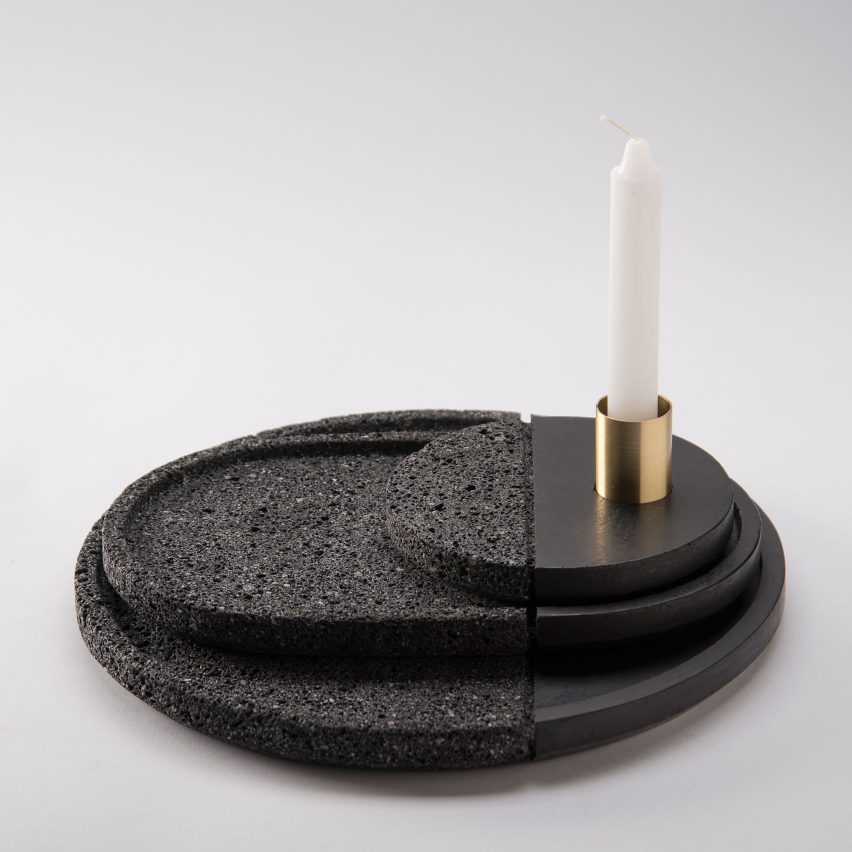
Lava plates by Peca

Following this year’s Design Week Mexico, Dezeen’s US editor Dan Howarth has picked five designers and studios from the country who he is tipping for international success. Read more

http://ift.tt/2e7rf84

Dutch Design Week reveals 2016 programme

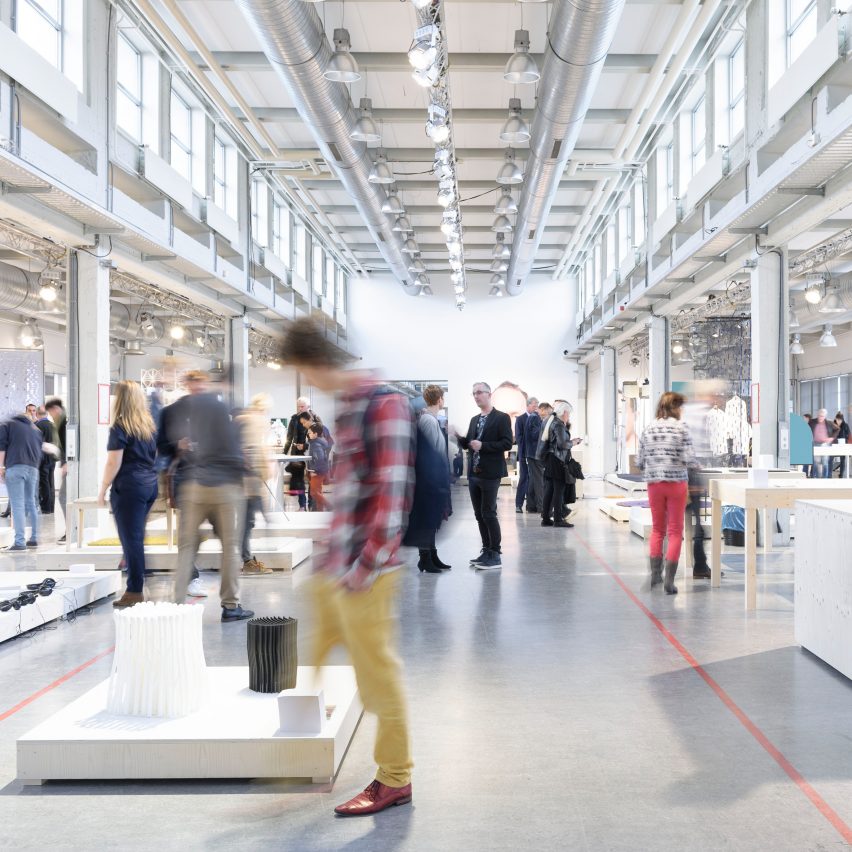
Dutch Design Week 2016

Dezeen promotion: this year’s Dutch Design Week will focus on makers and the creative process, and will include exhibitions, lectures, prize ceremonies, networking events and debates. Read more

http://ift.tt/2dZFdKR