Yamashina House / ALTS Design Office


© Fuji-shokai, Masahiko nishida

© Fuji-shokai, Masahiko nishida


© Fuji-shokai, Masahiko nishida


© Fuji-shokai, Masahiko nishida


© Fuji-shokai, Masahiko nishida


© Fuji-shokai, Masahiko nishida


© Fuji-shokai, Masahiko nishida

© Fuji-shokai, Masahiko nishida

“A house on a narrow plot with space”.

It is a rebuilding project for a residential area lined with houses from ancient times. The project is in a 104.81 sqm (31 tsubo) low-rise area, and on a narrow piece of land with setback restrictions and limitations set forth under the Landscape Act.


Floor Plan

Floor Plan

For this reason, the surrounding houses are built to fill up the land, creating the cramped housing unique to Kyoto, and this makes it difficult to create areas with gardens and green spaces that give a sense of nature.


© Fuji-shokai, Masahiko nishida

© Fuji-shokai, Masahiko nishida

Under such circumstances, we wondered whether we might be able to develop houses with a sense of space, while ensuring the number of rooms required.


Section

Section

Therefore, on this occasion, we made a point of creating a space on a narrow plot.We set three boxes of different volumes on the plot and set each one at an angle. On the plot, we started creating the spaces produced by the angles.


© Fuji-shokai, Masahiko nishida

© Fuji-shokai, Masahiko nishida

We greened the spaces so as to make it possible to get a sense of the outdoors from any room. Rather than taking a building as being one large volume, by bringing together several small volumes, and connecting small spaces together, it is possible to have green areas dotted around the site, incorporate the exterior area into the building and create rich space even with minimal space.


© Fuji-shokai, Masahiko nishida

© Fuji-shokai, Masahiko nishida

In addition, by making use of corner lots and leaving them open without fenced off, you can no doubt further enhance the feeling of lush greenery.


© Fuji-shokai, Masahiko nishida

© Fuji-shokai, Masahiko nishida

http://ift.tt/2e1zYvf

@signordal We must take care of our planet. It’s the only home we have. Follow me on #instagram @signordal #fb #twitter

via Instagram http://ift.tt/2dQBJxr

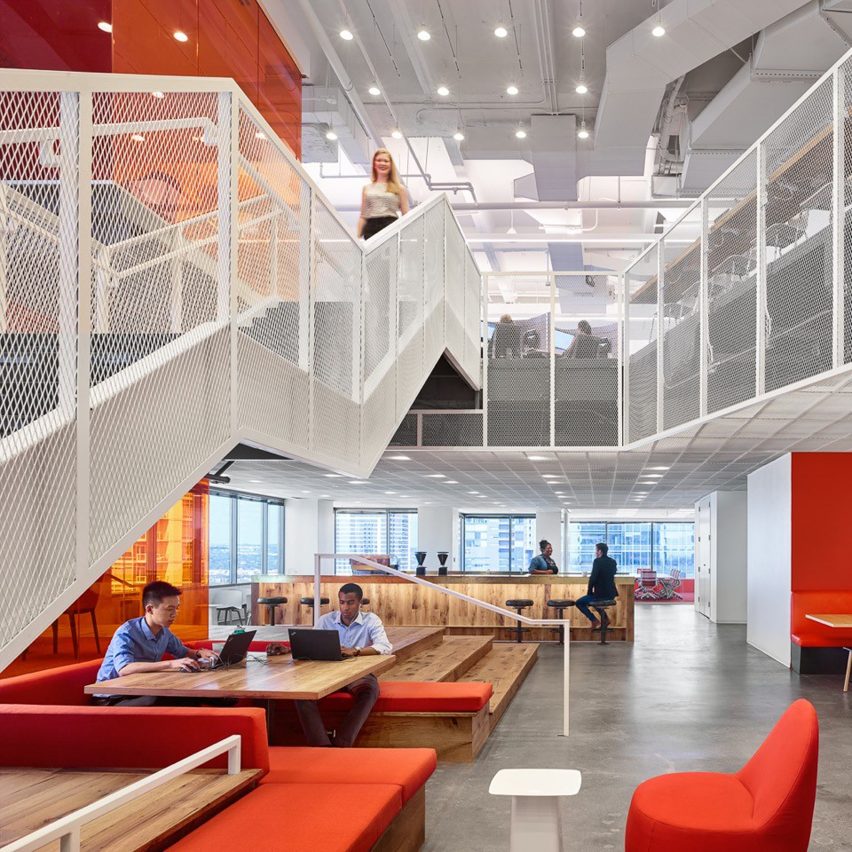
Clive Wilkinson designs Austin workplace with no cubicles or corner offices

GLG Austin office by Clive Wilkinson

US studio Clive Wilkinson Architects has completed a new Texas office for tech company GLG, which features an open-office plan and a variety of communal workspaces. Read more

http://ift.tt/2ewOyvx

House Under Eaves / MRTN Architects


© Anthony Basheer

© Anthony Basheer


© Anthony Basheer


© Anthony Basheer


© Anthony Basheer


© Anthony Basheer

  • Architects: MRTN Architects
  • Location: Point Wells 0986, New Zealand
  • Architect In Charge: Antony Martin
  • Area: 240.0 sqm
  • Project Year: 2016
  • Photographs: Anthony Basheer

© Anthony Basheer

© Anthony Basheer

From the architect. Located in a new subdivision less than an hour from Auckland this new house was one of the first built on a flat site that has been split up to create well sized semi-suburban semi-coastal sections on what was once pastoral land.


© Anthony Basheer

© Anthony Basheer

Floor Plan

Floor Plan

© Anthony Basheer

© Anthony Basheer

Faced with a flat vacant lot with no neighbours the design strategy was to anticipate the soon to be context and also to create a sense of retreat from the street. We also wanted to respect the client’s privacy and provide a layered separation from front to back.


© Anthony Basheer

© Anthony Basheer

We proposed the use of shadow as a design material, creating an oversized dark roof that rests on thick cedar clad walls. The roof protects from the elements, heavy downpours are common, but also the extended black eaves and long shadows are protective in nature. From the interior the black eaves frame the landscape views and enhance the appearance of the surrounding greenery.


© Anthony Basheer

© Anthony Basheer

As you approach the subdivision from a car the house appears as a simple gable form, referencing the work of the early New Zealand modernist Group Architects. From the street the roof is held up by the cedar clad walls and the front door is screened by a poured in place concrete wall. Moving through the home however it is apparent that the house is a spilt gable form and the plan is dived in two, the front half is the garage, street entry and guest bedrooms while the rear half is the living spaces and owners bedroom. A glazed link connects the two wings located at the highest point of the roof. The glazed connection also provides, to the east, a secondary garden entry and, to the west, a sheltered evening outdoor dining
space.


© Anthony Basheer

© Anthony Basheer

The living areas are arranged either side of a wide cedar lined wall that continues from the garden to the rear through to the entry. This wall acts as a threshold separating the kitchen from the living and dining spaces. These spaces are also set on a lower level to the kitchen, so to enter you pass through the wide cedar wall and down a few steps creating separation through level change and material rather than walls and doors. 

A high raked ceiling with exposed rafters to the living room as opposed to the flat ceilings found elsewhere. The high walls create room for the owner’s art collection but also imparting the sense of being in a covered outdoor room, which is enhanced by the glazed opening leading to an al fresco sitting room.


© Anthony Basheer

© Anthony Basheer

House Under Eave has a shifting scale; from the street the house appears as a compact assemblage of parts. On entering however the scale expands as you move through the plan and spills out to a verdant garden. It is in this space the owner can retreat to, connected to the garden but sheltered by the eave.


© Anthony Basheer

© Anthony Basheer

http://ift.tt/2dnEOSp

Watch Jean Nouvel Explain the Design Process Behind his Most Recent Projects in New Documentary

The biggest temptation is to jump right in. There are solutions that come to you. There are images that spontaneously appear. My method is rather to hold back as long as possible, to really imagine it spatially, so to be sure I have something to say.

Award winning documentarian and critic Matt Tyrnauer (director of Valentino: The Last Emperor, Citizen Jane: Battle For The City) has released a new documentary taking a look into the mind of world-renowned architect Jean Nouvel and his design process.

The film, titled Jean Nouvel: Reflections, follows the French architect around the world to visit his most recent works, including the Philharmonie de Paris, Institut du Monde Arabe, Fondation Cartier, Musée du Quai Branly, and Doha Tower and future projects, notably the National Museum of Qatar, his New York skyscraper, 53W53, and the Louvre Abu Dhabi.


Courtesy of Unknown


via Altimeter Films


via Altimeter Films


via Altimeter Films


via Altimeter Films

via Altimeter Films

The footage captures Nouvel working through problems at all scales and in all stages of his process: from conceptualizing, to sketching, to deciding the hue of the stones to be used in the galleries of the forthcoming Louvre Abu Dhabi, as he explains the inspiration behind his landmark works.

Jean Nouvel: Reflections recently premiered at the 2016 New York Film Festival, and is also an official selection at Milano Design Film Festival, Savannah Film Festival and the Chicago Film Festival.

More information about the documentary can be found here.

News via Altimeter Films.

http://ift.tt/2elwEfO

@signordal Protect the planet

via Instagram http://ift.tt/2e18DcR

Chicago – Illinois – USA (by Anh Dinh) 

Chicago – Illinois – USA (by Anh Dinh

@signordal Let’s go!

via Instagram http://ift.tt/2ewFTsZ